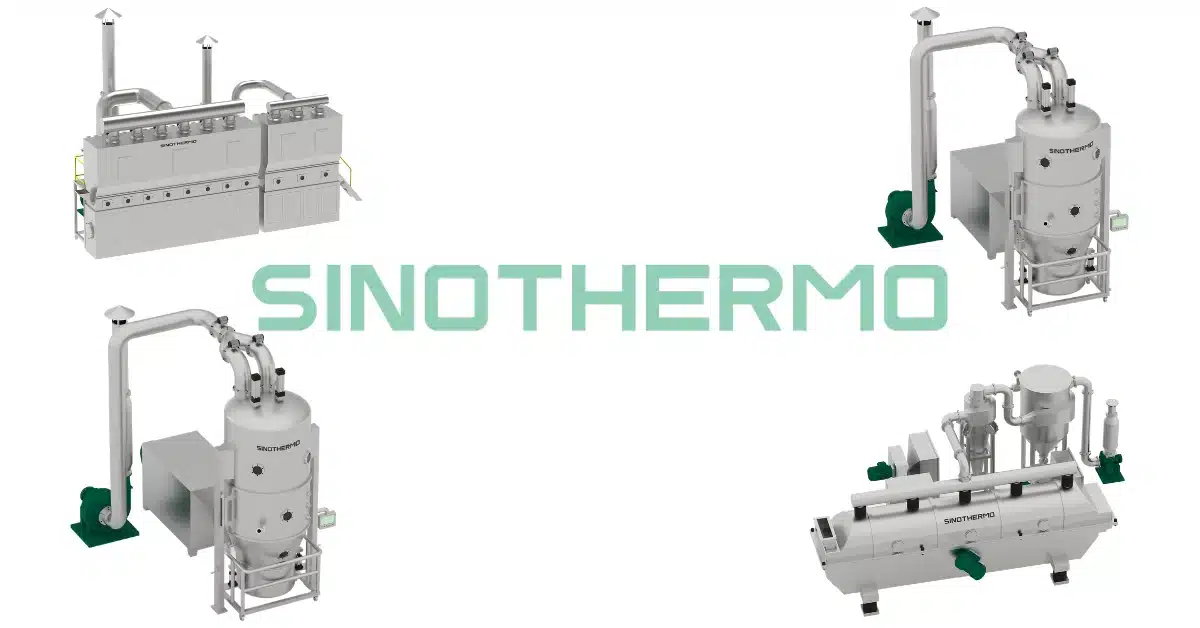
Pengering lapisan bendalir (fluid bed dryer) mengeringkan granul dan serbuk basah dengan meniupkan udara panas ke atas melalui plat pengagih berlubang, sekali gus mengangkat zarikel ke dalam keadaan tergantung seperti bendalir. Oleh sebab setiap zarah dikelilingi secara individu oleh udara panas, pengeringan berlaku dengan pantas, sangat seragam, dan lembut — inilah sebabnya pengering lapisan bendalir menjadi teknologi standard bagi granul farmaseutikal, serbuk makanan, dan bahan kimia halus. Jika anda sedang menentukan spesifikasi pengering untuk pepejal yang mengalir bebas dan keseragaman adalah keutamaan, ini biasanya menjadi teknologi pertama yang perlu dinilai.
Panduan ini menerangkan prinsip pengeringan lapisan bendalir, tiga jenis mesin (kelompok, berterusan, getaran), parameter proses yang menentukan sama ada bahan anda dapat terbendalir dengan bersih, tujuh aplikasi terbukti, dan bagaimana pengering lapisan bendalir dibandingkan dengan pengering putaran dan pengering semburan. Ia ditulis untuk jurutera proses, perolehan, dan R&D yang perlu menentukan spesifikasi dengan tepat pada kali pertama.
Bagaimana pengering lapisan bendalir berfungsi
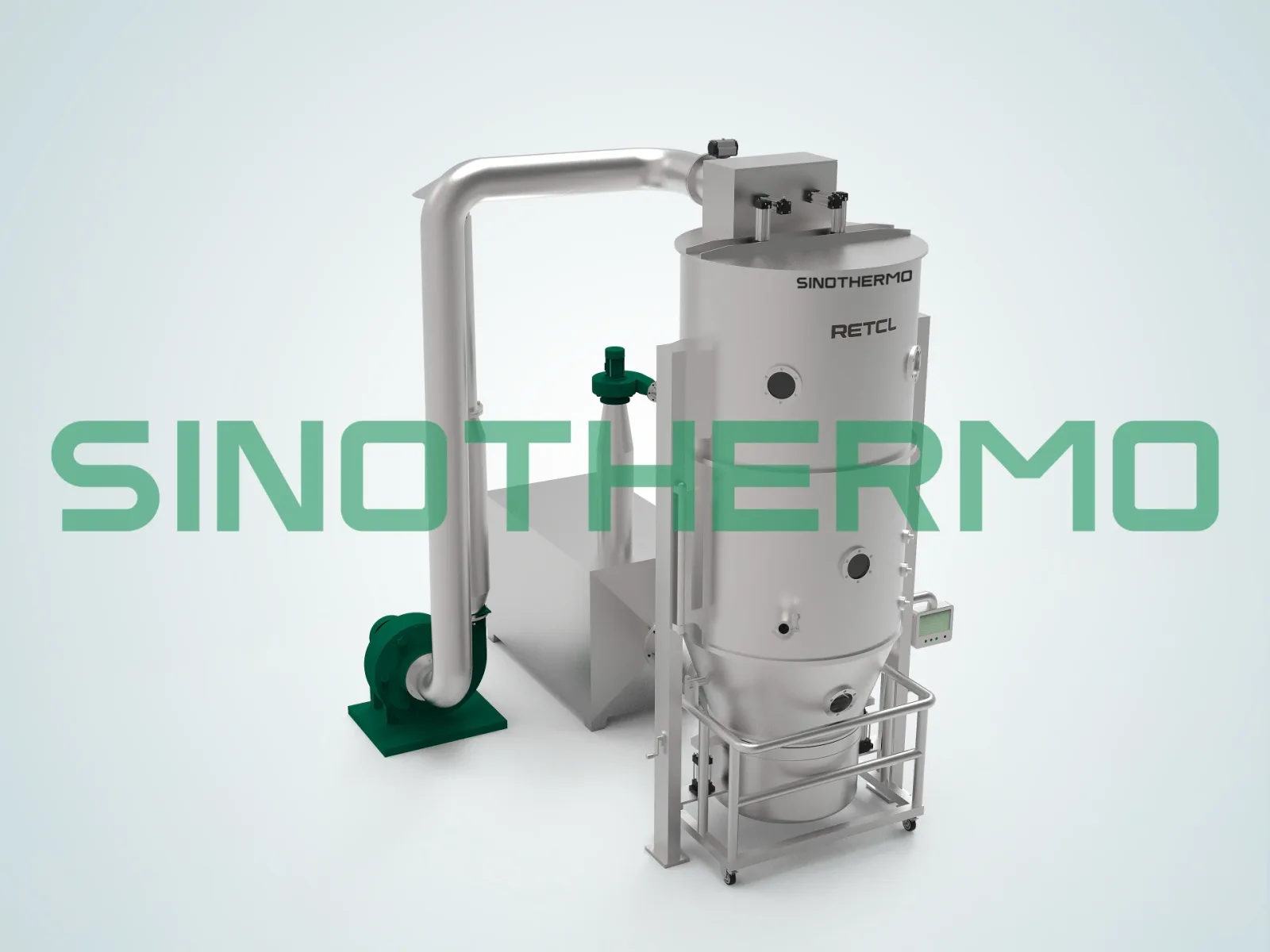
Prinsip pengeringan lapisan bendalir kelihatan mudah tetapi kritikal untuk proses jika hendak dilaksanakan dengan betul. Kipas menolak udara yang telah ditapis dan dipanaskan ke atas melalui plat pengagih di bahagian bawah bekas produk. Apabila aliran udara meningkat, daya seretan pada setiap zarah turut meningkat sehingga ia mengimbangi berat zarah tersebut — pada ketika itu lapisan tersebut “terbendalir” dan pepejal berkelakuan seperti cecair yang mendidih perlahan, bergolek dan bercampur secara berterusan. Keadaan terampai inilah yang memberikan teknologi ini kawasan sentuhan gas-ke-pepejal yang sangat besar.
- 1.Pengagihan udara — Kipas bekalan menarik udara ambien melalui penapis dan sumber haba (gegelung stim, elektrik, atau penukar haba gas/minyak terma), kemudian menolaknya ke atas melalui plat pengagih. Kawasan terbuka dan corak lubang plat direka khusus untuk menyebarkan udara secara sekata dan mengelakkan zon mati.
- 2.Pembendaliran — Apabila halaju udara ke atas mencapai halaju pembendaliran minimum, lapisan tersebut naik dan bercampur. Di bawah takat ini, bahan kekal sebagai lapisan pejal statik; di atas halaju bawaan keluar, ia akan tertiup keluar sebagai habuk. Julat operasi antara kedua-dua had ini adalah faktor paling penting.
- 3.Pengeringan — Oleh sebab setiap zarah direndam dalam udara panas dengan kawasan sentuhan yang besar, kelembapan menyejat dengan cepat dan sekata. Penyejukan sejatan mengekalkan suhu permukaan zarah jauh lebih rendah daripada suhu udara masuk sehingga bahan hampir kering — sebab itulah produk sensitif haba dapat dikekalkan kualitinya.
- 4.Ekzos dan penapisan — Udara lembap keluar melalui beg penapis atau kartrij di bahagian atas ruang, yang menahan zarah halus dan secara berkala menggegarkan atau mendenyutkannya kembali ke dalam lapisan supaya produk tidak hilang.
Hasilnya ialah lengkung pengeringan yang didominasi oleh tempoh kadar-tetap yang panjang dan lembut, diikuti tempoh kadar-menurun yang singkat apabila kelembapan terikat disingkirkan — tepat, boleh diulang, dan mudah untuk diinstrumentasikan.
Jenis-jenis pengering lapisan bendalir
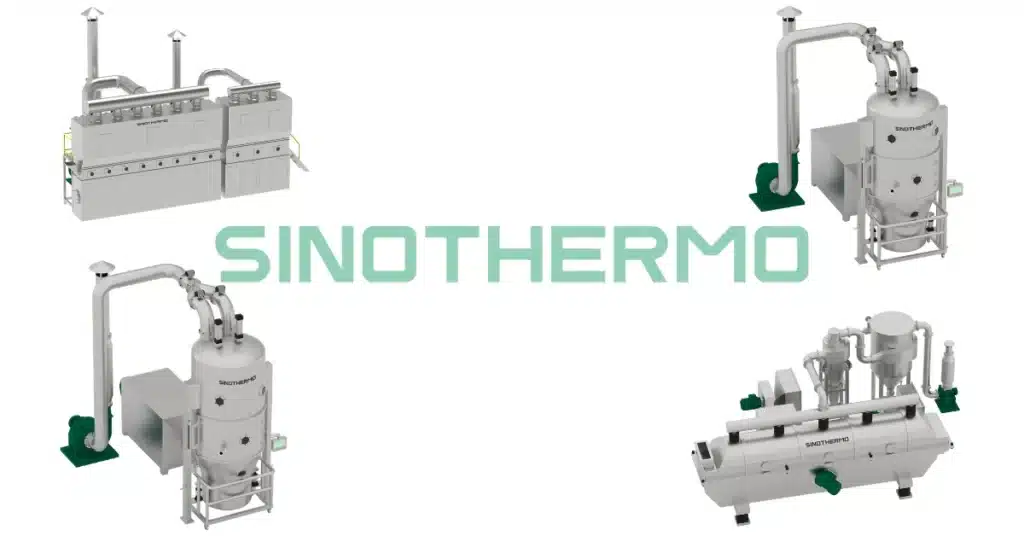
Memilih konfigurasi yang betul sebahagian besarnya bergantung kepada saiz kelompok, kapasiti pengeluaran, dan sejauh mana bahan anda dapat terbendalir dengan baik. Terdapat tiga jenis utama.
| Jenis | Operasi | Sesuai untuk |
|---|---|---|
| Pengering lapisan bendalir kelompok | Muatan tetap dikeringkan setiap kitaran, kemudian dikeluarkan | Granul farmaseutikal, kelompok kecil hingga sederhana, pertukaran produk yang kerap, kebolehjejakan penuh |
| Pengering lapisan bendalir berterusan | Bahan mengalir secara stabil merentasi plat dari saluran masuk ke saluran keluar | Serbuk makanan, kimia, dan mineral berkapasiti tinggi pada kadar suapan yang stabil |
| Pengering lapisan bendalir bergetar | Pergerakan lapisan dibantu oleh getaran mekanikal | Julat saiz zarah yang lebih luas; bahan melekit, rapuh, atau sukar terbendalir |
Unit kelompok adalah lalai standard dalam farmaseutikal: ia mengeringkan satu caj yang ditetapkan, memunggah, dan membersih, memberikan pemisahan lot yang bersih dan rekod mesra pengesahan. Unit berterusan menukar fleksibiliti pertukaran dengan daya pemprosesan — ideal apabila satu produk dijalankan untuk kempen jangka panjang. Pengering lapisan bendalir bergetar menambah getaran pengangkutan yang lembut yang membantu bahan terbendalir pada halaju udara yang lebih rendah, melindungi kristal rapuh, dan menangani taburan saiz zarah yang luas yang jika tidak, akan menyalur atau terasing.vibrating fluid bed dryer guide for the full working principle and a specification checklist.
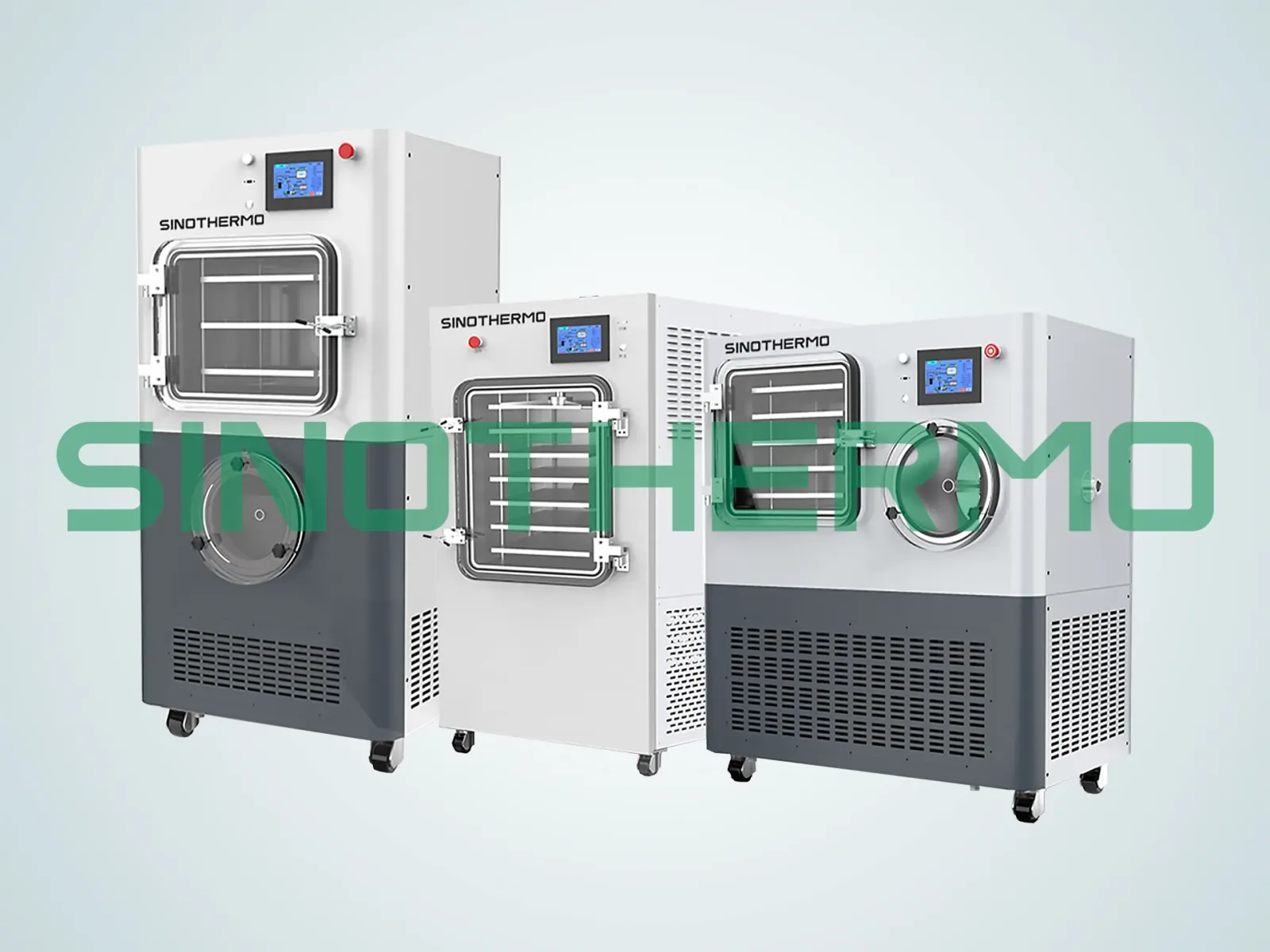
SINOTHERMO membekalkan pengering lapisan bendalir jenis kelompok, berterusan, dan bergetar, serta menggabungkan pengeringan lapisan bendalir dengan granulasi atau salutan apabila proses memerlukannya. Terokai Horizontal Vibrating Fluidized Bed Dryer, Vertical Fluidized Bed Dryer, Horizontal Fluidized Bed Dryer, dan Vertical Blending Fluidized Bed Dryer untuk memadankan gaya badan dengan bahan anda.
Parameter proses utama
Sama ada serbuk terbendalir dengan bersih — atau menyalur, tersumbat, atau tertiup keluar — bergantung kepada empat parameter yang saling berinteraksi. Mendapatkan parameter ini dengan betul adalah perbezaan antara pengering yang berprestasi mengikut spesifikasi dan yang tidak pernah mencapai kelembapan sasaran.
- Halaju udara — Mesti melebihi halaju terbendalir minimum untuk mengangkat lapisan, namun kekal di bawah halaju penghanyutan (elutriasi) yang boleh membawa zarah ke dalam penapis. Serbuk halus memerlukan julat yang sempit dan dikawal dengan teliti; granul kasar memerlukan halaju yang lebih tinggi untuk mengangkatnya sama sekali.
- Suhu dan kelembapan udara masuk — Menentukan kadar pengeringan dan had maksimum suhu produk. Bagi API dan protein yang sensitif kepada haba, suhu masuk dikekalkan sederhana dan bergantung kepada penyejukan sejatan; kelembapan ambien mempengaruhi jumlah kelembapan yang dapat dibawa keluar oleh udara, yang penting dalam iklim tropika.
- Ketinggian dan muatan lapisan — Mengawal masa penahanan dan kejatuhan tekanan. Terlalu cetek, pengeringan menjadi tidak sekata; terlalu dalam, kipas tidak dapat membendalirkan jisim secara sekata, mewujudkan sumbatan dan salur.
- Saiz dan taburan zarah (Pengelasan Geldart) — Serbuk Kumpulan A/B Geldart yang mengalir bebas terbendalir dengan baik; serbuk Kumpulan C yang sangat halus dan lekit sukar terbendalir dan cenderung menyalur; pepejal Kumpulan D yang besar dan padat memerlukan halaju tinggi. Taburan yang luas berisiko menyebabkan bahan halus terhanyut sementara pecahan kasar kekal statik — sering berlaku bagi unit bergetar.
Parameter-parameter ini saling berkait: menaikkan suhu mungkin memendekkan masa penahanan; menambah muatan bermakna anda perlu menaikkan aliran udara. Inilah sebabnya mengapa anggaran meja makmal tidak boleh dipercayai dan uji kaji fizikal amat penting — lihat bahagian makmal perintis di bawah.
7 kegunaan terbukti pengering lapisan bendalir
Merentasi pelbagai industri, pengering lapisan bendalir membuktikan kehebatannya di mana-mana sahaja pepejal yang mengalir bebas perlu dikeringkan dengan cepat, sekata, dan lembut. Tujuh aplikasi terbukti:
- 1.Granul farmaseutikal — Mengeringkan campuran tablet yang telah digranulasi basah kepada kandungan lembapan baki yang tepat dan seragam untuk pemampatan tablet yang konsisten.
- 2.Bahan aktif farmaseutikal (API) dan eksipien — Pengeringan lembut bagi bahan aktif dan eksipien fungsian yang sensitif terhadap haba di bawah keadaan yang disahkan dan boleh dijejak.
- 3.Serbuk tenusu dan protein — Memproses akhir serbuk susu, whey, dan protein tumbuhan, termasuk sebagai peringkat kedua selepas pengeringan semburan untuk mencapai kelembapan akhir tanpa kerosakan haba.
- 4.Serbuk minuman dan makanan segera — Minuman segera, perasa, dan campuran larut yang aliran serta pelarutannya bergantung kepada kelembapan yang sekata.
- 5.Mangkin dan bahan kimia halus — Mengeringkan mangkin, pigmen, detergen, serta PVC dan resin lain yang perlu kekal mengalir bebas.
- 6.Garam gred makanan dan pepejal berkristal — Mengeringkan dan menyejukkan produk berkristal sambil melindungi integriti kristal.
- 7.Granul agrokimia — Granul boleh sebar air (WDG) dan baja yang memerlukan kelembapan terkawal untuk kestabilan penyimpanan dan penyebaran.
Kerana teknologi ini sesuai secara semula jadi dengan langkah hulu dan hilir, ia turut memproses akhir serbuk yang dikeringkan semburan dan melengkapkan pengeringan berterusan yang lebih kasar yang dikendalikan oleh pengering dram putaran.
Kelebihan dan batasan
Kelebihan. Pengeringan yang pantas dan sangat seragam berkat kawasan sentuhan yang luas; lembut terhadap bahan sensitif haba kerana penyejukan sejat mengehadkan suhu produk; ruang legar yang padat berbanding barisan putaran dengan kapasiti yang sama; kawalan proses dan instrumentasi yang cemerlang; serta integrasi mudah dengan granulasi, salutan, dan penyejukan dalam satu bekas.
Batasan. Pengering lapisan bendalir direka untuk granul dan serbuk yang mengalir bebas — bukan pes, kek turas, atau slari, yang tidak akan terbendalir. Serbuk yang sangat halus atau sangat lekit (Geldart C) cenderung membentuk saluran; lapisan bendalir bergetar atau pengering flash sering menjadi pilihan yang lebih baik. Pengendalian debu memerlukan penurasan bersaiz sesuai, dan bahan yang menghakis boleh mengaus bahagian dalaman. Mengetahui had had bagi bahan spesifik anda adalah perkara yang disahkan melalui ujian.
Pengering lapisan bendalir berbanding pengering lain
Memilih pengering adalah satu latihan perbandingan, bukan keputusan produk tunggal. Dua teknologi yang paling kerap dibandingkan:
| Berbanding dengan | Perbezaannya | Bila lebih sesuai gunakan lapisan bendalir |
|---|---|---|
| Pengering dram putaran | Putaran menggolek pepejal pukal melalui silinder yang dipanaskan; mengendalikan suapan yang lebih basah, melekit, menghakis, dan bertan lebih tinggi | Apabila anda memerlukan pengeringan seragam dan lembut bagi pepejal berbutir yang sudah mengalir bebas |
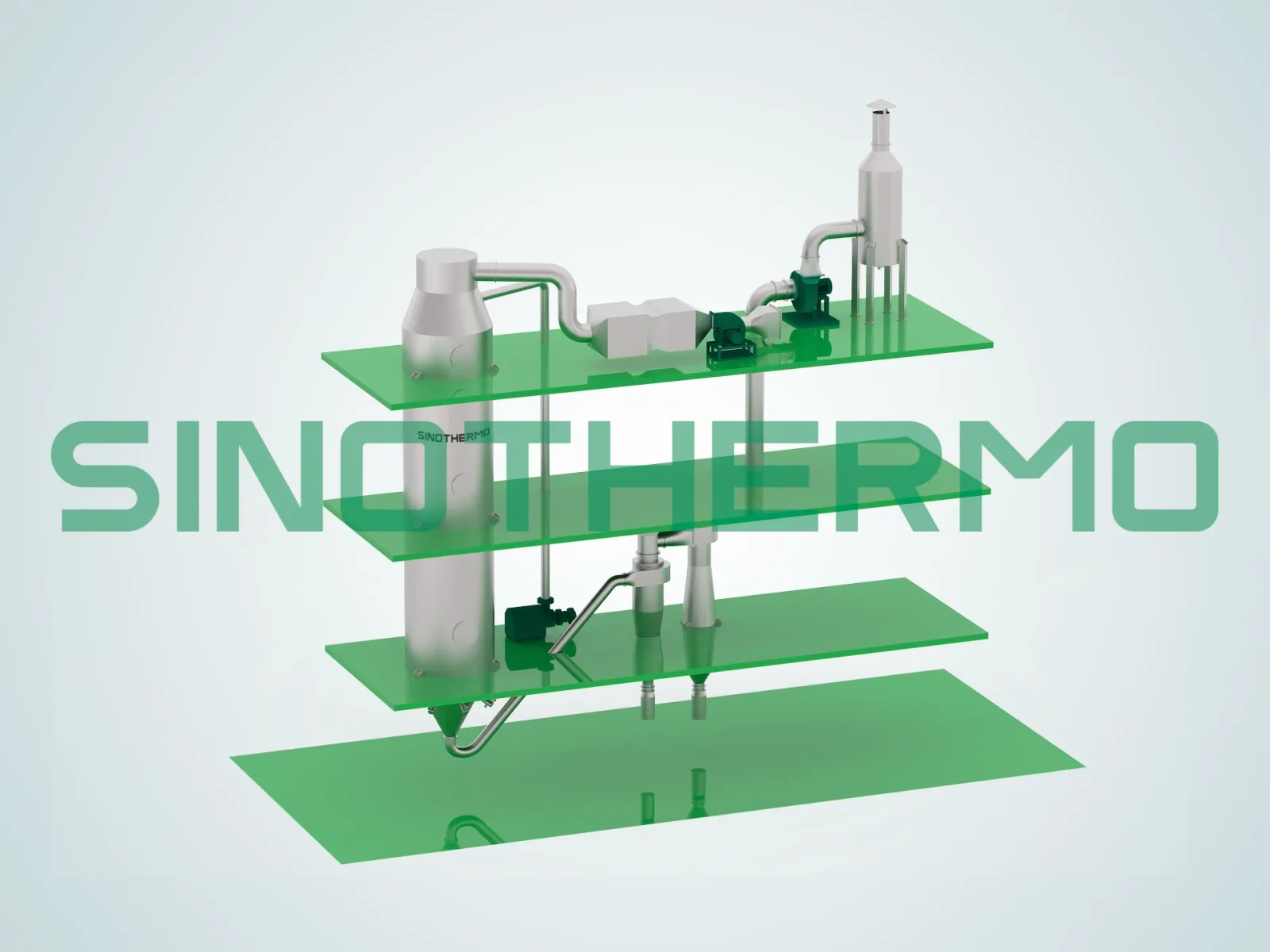
| Pengering semburan | Pengering semburan menukar suapan cecair menjadi serbuk dalam satu langkah | Apabila suapan sudah berbentuk granul basah pepejal, atau untuk memproses akhir/menyejukkan serbuk yang dikeringkan semburan kepada kelembapan akhir |
Ringkasnya: pengering semburan menghasilkan serbuk daripada cecair; pengering putaran menggagahi pepejal pukal yang sukar; pengering lapisan bendalir menyempurnakan pengeringan pepejal yang mengalir bebas. Banyak barisan proses menggunakan dua daripadanya secara bersiri. Untuk peta teknologi lengkap, lihat panduan peralatan pengeringan industri.
Kesilapan biasa yang perlu dielakkan
- Menentukan spesifikasi daripada helaian spesifikasi, bukan bahan itu sendiri. Dua serbuk dengan saiz zarah nominal yang sama boleh berkelakuan sangat berbeza semasa proses pembendaliran. Kohesi, kelembapan, dan bentuk yang menentukan perlakuannya — sentiasa uji bahan sebenar.
- Mengabaikan julat pembendaliran. Menetapkan saiz kipas berdasarkan keadaan purata tidak memberi ruang toleransi; jika halaju jatuh di bawah pembendaliran minimum, lapisan akan menjadi statik, manakala jika melebihi had penghanyutan, ia akan tertiup ke dalam penapis. Reka bentuk perlu merangkumi keseluruhan julat operasi.
- Menetapkan saiz penapisan yang terlalu kecil. Bahan halus yang terbawa keluar bukan sekadar gangguan kecil — ia bermakna kehilangan hasil dan isu keselamatan habuk. Luas penapis, pembersihan denyut, dan (jika habuk mudah terbakar) perlindungan letupan mesti direka bentuk secara menyeluruh, bukan ditambah kemudian.
- Menganggap bahan sensitif haba sebagai bahan yang tahan lasak. Bergantung semata-mata pada suhu masuk mengabaikan hakikat bahawa penyejukan sejat berhenti sebaik permukaan menjadi kering; bahagian akhir tempoh kadar susut adalah masa produk paling berisiko terlalu panas. Kawal suhu keluar, bukan hanya suhu masuk.
- Melupakan proses tukar produk dan pembersihan. Bagi kilang farmaseutikal atau makanan yang mengendalikan pelbagai produk, unit berterusan yang dipilih semata-mata untuk throughput boleh menyebabkan kos pengesahan pembersihan yang tinggi. Padankan jenis mesin dengan cara operasi sebenar anda.
- Melangkau ujian perintis. Kesilapan paling mahal ialah terus meningkatkan skala ke pengeluaran tanpa ujian dan baharu menyedari bahan tersebut membentuk saluran. Ujian ringkas dapat menghapuskan risiko ini.
Dapatkan hasil yang tepat di makmal perintis
Sebab utama projek lapisan bendalir gagal hampir tidak pernah disebabkan oleh mesin — sebaliknya disebabkan oleh bahan yang berkelakuan berbeza pada skala sebenar berbanding jangkaan di atas kertas. Ini adalah masalah kejuruteraan proses, dan inilah bidang yang menjadi tunjang SINOTHERMO. SINOTHERMO — Infrastruktur Kejuruteraan Proses. Kami bukan sekadar menjual pengering; kami mengesahkan bahawa bahan anda akan mengalami pembendaliran, kering ke tahap kelembapan sasaran, dan kekal dalam had suhu yang selamat sebelum sebarang bahagian pengeluaran ditentukan spesifikasinya.
Bawa bahan anda dan ujilah sebelum menentukan spesifikasi. Di MAKMAL PERINTIS dalaman kami, kami menjalankan ujian menggunakan serbuk atau granul sebenar anda, mengukur julat pembendaliran, merekod lengkung pengeringan, serta menyesuaikan halaju udara, suhu masuk, dan masa penahanan. Data ini membolehkan pengering pengeluaran ditentukan saiznya dengan tepat pada kali pertama. Keupayaan ini disokong oleh lebih 20 tahun pengalaman — dengan penyesuaian mendalam supaya mesin sesuai dengan proses anda, bukan sebaliknya.
Kesimpulan
Jadi, adakah serbuk anda akan mengalami pembendaliran dengan lancar dan kering mengikut spesifikasi? Jawapan jujurnya ialah hanya ujian ke atas bahan sebenar anda yang dapat memberikan kepastian — dan ujian itulah yang mengubah pembelian berisiko menjadi pembelian yang yakin.
✉️ mark.gu@sinothermo.com · 📱 WhatsApp: +86 180 2197 2660 · 🌐 www.sinothermo.com
SINOTHERMO — Infrastruktur Kejuruteraan Proses.
Soalan Lazim
Apakah kegunaan pengering lapisan bendalir?
Pengeringan yang pantas, seragam, dan lembut untuk granul dan serbuk basah — paling kerap digunakan untuk granul farmaseutikal, serbuk makanan dan tenusu, mangkin, dan bahan kimia halus — di mana-mana pepejal yang boleh mengalir bebas perlu mencapai tahap kelembapan yang tepat dan seragam.
Bagaimanakah pengering lapisan terbendalir berfungsi?
Udara yang dipanaskan ditiup ke atas melalui plat pengagih pada halaju yang menggantung zarah dalam keadaan seperti bendalir, supaya setiap zarah dikelilingi oleh udara panas dan kering dengan cepat serta seragam, manakala penyejukan sejat mengehadkan suhunya.
Apakah perbezaan antara pengering lapisan bendalir kelompok dan berterusan?
Pengering kelompok mengeringkan muatan tetap bagi setiap kitaran — sesuai untuk industri farmaseutikal dan proses tukar produk yang kerap dengan pemisahan lot yang bersih. Pengering berterusan pula memasukkan bahan secara berterusan bagi kempen throughput tinggi untuk satu produk sahaja.
Bolehkah pengering lapisan bendalir mengendalikan bahan sensitif haba?
Ya. Penyejukan pewapan mengekalkan zarah di bawah suhu udara masuk sehingga ia hampir kering, dan udara masuk boleh diselaraskan pada suhu rendah — menjadikan pengering lapisan bendalir amat sesuai untuk farmaseutikal, protein, dan makanan. Kawal suhu udara keluar untuk melindungi bahagian akhir lengkung pengeringan.
Bolehkah pengering lapisan bendalir mengeringkan pes atau buburan?
Tidak. Pes, kek turasan, dan buburan tidak akan membentuk lapisan terbendalir. Untuk cecair gunakan pengering semburan; untuk bahan suapan yang melekit atau kohesif, pertimbangkan pengering flash atau lapisan bendalir bergetar, yang disahkan melalui uji kaji perintis.
Bagaimana saya menentukan saiz pengering lapisan bendalir untuk bahan saya?
Penentuan saiz bergantung pada kadar suapan, penyingkiran kelembapan, sensitiviti haba, dan cara serbuk khusus anda membentuk lapisan terbendalir. Uji kaji makmal perintis pada bahan sebenar anda memberikan julat pembendaluran, lengkung pengeringan, dan suhu gas yang diperlukan untuk menentukan saiz unit pengeluaran dengan tepat.

Mark Gu
Passionate about enhancing customer experiences and streamlining operations, Mark focuses on building strong relationships, fostering innovation, and leading teams to achieve exceptional service and efficiency.
Emel: mark.gu@sinothermo.com
Telefon: +86 18021972660