การจัดหาเครื่องจักรเภสัชกรรมสำหรับยาเม็ดชนิดของแข็งนั้นแทบไม่เคยเป็นเรื่องของการซื้อเครื่องจักรเพียงเครื่องเดียว ยาเม็ด แคปซูล หรือซองยาคือผลลัพธ์ของกระบวนการต่อเนื่องหลายขั้นตอน — ผสม แกรนูล อบแห้ง คัดขนาด เคลือบ — โดยผงที่ไหลออกจากแต่ละขั้นตอนจะกลายเป็นวัตถุดิบป้อนเข้าสู่ขั้นตอนถัดไป หากเลือกเครื่องจักรผิดในขั้นตอนใดขั้นตอนหนึ่ง ปัญหาจะปรากฏขึ้นในอีกสองขั้นตอนถัดมา ไม่ว่าจะเป็นการไหลของผงที่ไม่ดี ยาเม็ดที่เปราะบาง ความแปรปรวนของปริมาณสาร หรือแบตช์ที่ไม่ผ่านมาตรฐาน
คู่มือนี้จะพาคุณไล่เรียงกระบวนการผลิตยาเม็ดชนิดของแข็งทีละขั้นตอน พร้อมอธิบายว่าเครื่องจักรแต่ละชิ้นทำหน้าที่อะไร ควรใช้เมื่อใด และจะเลือกให้เหมาะกับสูตรตำรับของคุณได้อย่างไร บทความนี้เขียนขึ้นสำหรับผู้มีอำนาจตัดสินใจด้านการจัดซื้อและวิศวกรกระบวนการที่กำลังประเมินเครื่องจักรแปรรูปยา โดยมีเป้าหมายเพื่อช่วยให้คุณกำหนดสเปกสายการผลิตที่เหมาะสม ไม่ใช่แค่เปรียบเทียบรุ่นเครื่องจักร
เหตุใดมุมมองแบบสายกระบวนการจึงดีกว่าการทำรายการช้อปปิ้ง
การซื้อเครื่องจักรทีละขั้นตอนโดยแยกจากกันคือสาเหตุที่ทำให้สายการผลิตไม่สอดคล้องกัน เช่น เครื่องทำเม็ดที่ผลิตแกรนูลซึ่งเครื่องอบแห้งไม่สามารถรองรับได้อย่างมีประสิทธิภาพ หรือเครื่องเคลือบที่มีขนาดไม่เหมาะกับแบตช์ เครื่องจักรการผลิตยาจะทำงานได้ดีที่สุดเมื่อถูกกำหนดสเปกในลักษณะสายกระบวนการที่เชื่อมโยงกัน โดยผลผลิตของแต่ละหน่วยถูกจับคู่อย่างตั้งใจให้เข้ากับวัตถุดิบป้อนเข้าของหน่วยถัดไป การทำความเข้าใจสายกระบวนการทั้งหมด แม้กระทั่งขั้นตอนที่ผลิตภัณฑ์ของคุณอาจไม่จำเป็นต้องใช้ คือสิ่งที่ช่วยให้คุณหลีกเลี่ยงการกำหนดสเปกสายการผลิตที่สูงหรือต่ำเกินไป
ภาพรวมสายกระบวนการผลิตยาเม็ดชนิดของแข็ง
| ขั้นตอน | วัตถุประสงค์ | เครื่องจักรทั่วไป |
|---|---|---|
| 1. การผสม | กระจายตัวยาสำคัญและสารเสริมให้สม่ำเสมอ | เครื่องผสมความเร็วสูง, เครื่องผสมแบบริบบอนหรือกรวย |
| 2. การแกรนูล | แปลงผงละเอียดให้เป็นแกรนูลที่ไหลลื่น | การแกรนูลเปียกแรงเฉือนสูง, ฟลูอิดเบด หรือการอัดลูกกลิ้งแบบแห้ง |
| 3. การอบแห้ง | กำจัดความชื้น/ตัวทำละลายให้ได้ตามสเปกเป้าหมาย | การอบแห้งแบบฟลูอิดเบด สเปรย์ หรือสุญญากาศ |
| 4. การคัดขนาด | ปรับแกรนูลให้มีขนาดสม่ำเสมอและควบคุมได้ | เครื่องทำเม็ดแบบออสซิลเลต |
| 5. การเคลือบ | เคลือบฟิล์มเชิงหน้าที่หรือเชิงป้องกัน | เครื่องเคลือบฟลูอิดเบด (Wurster) |
ขั้นตอนที่ 1 — การผสมและการปั่นผสม
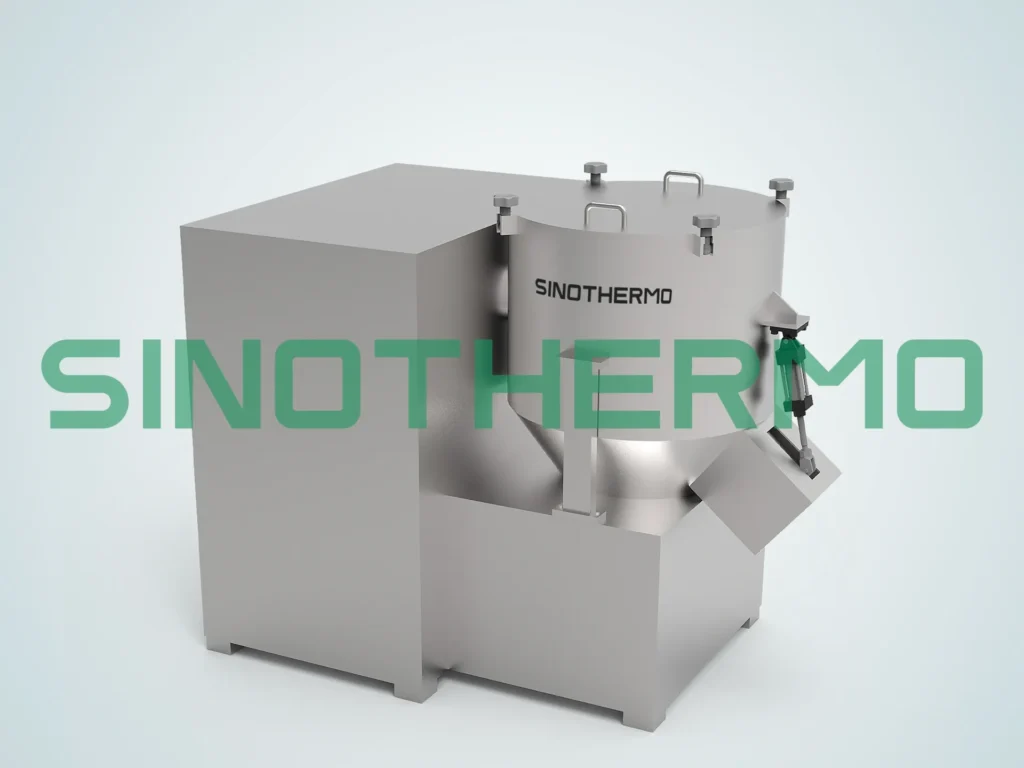
ก่อนอื่นใด ตัวยาสำคัญและสารเสริมต้องถูกกระจายให้สม่ำเสมอ เพราะความสม่ำเสมอของปริมาณสารในยาเม็ดสุดท้ายขึ้นอยู่กับขั้นตอนนี้ สำหรับผงยาที่ต้องการการผสมอย่างรวดเร็วและเข้มข้น — รวมถึงขั้นตอนการทำให้ชื้นเล็กน้อย — เครื่องผสมความเร็วสูง (High Speed Mixer) ใช้ใบพายความเร็วสูงในการสลายและกระจายวัสดุ ทำให้ได้ส่วนผสมที่เป็นเนื้อเดียวกันภายในไม่กี่นาที ส่วนการผสมแห้งแบบอ่อนโยนสำหรับแกรนูลสำเร็จรูปก่อนการตอกเม็ด เครื่องผสมแบบโรตารีในกลุ่ม เครื่องผสม (Mixer and Blender) สามารถทำงานนี้ได้โดยมีการสึกหรอของวัสดุน้อยที่สุด
ขั้นตอนที่ 2 — การแกรนูล: การตัดสินใจที่กำหนดรูปแบบสายการผลิต
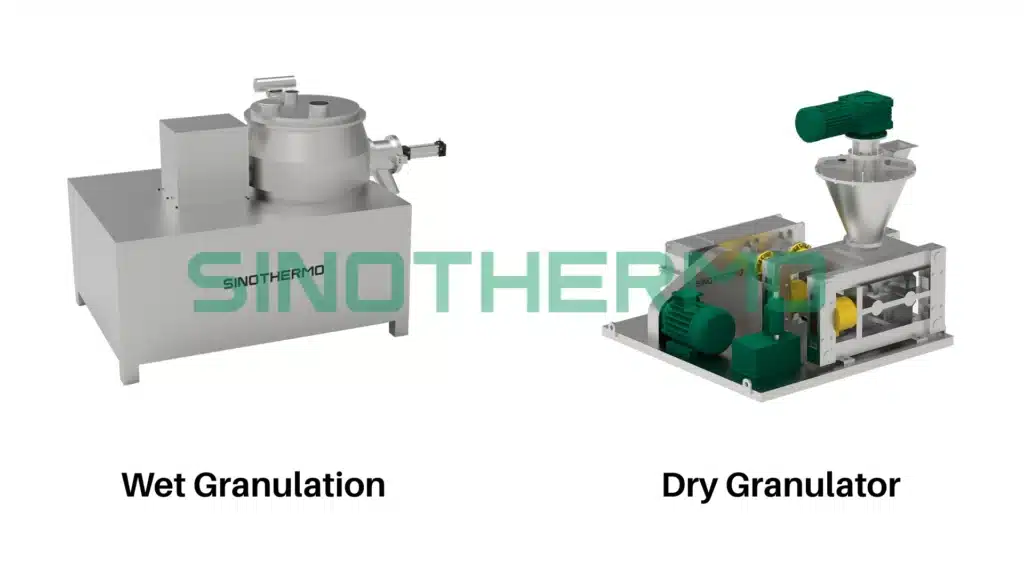
การแกรนูลคือจุดที่ต้องอาศัยดุลยพินิจทางวิศวกรรมมากที่สุด คำถามแรกคือควรเลือกแบบเปียกหรือแบบแห้ง และคำตอบขึ้นอยู่กับคุณสมบัติเพียงหนึ่งเดียวคือ ตัวยาสำคัญของคุณสามารถทนต่อความชื้นและความร้อนได้หรือไม่
- การแกรนูลแรงเฉือนสูงแบบเปียก — เครื่องผสมแกรนูลแบบผสมเปียกอย่างเร็ว (Wet Rapid Mixing Granulator) ผสมผงและสารยึดเกาะด้วยใบพัดด้านล่าง ขณะที่ใบมีดด้านข้างจะตัดมวลเปียกให้เป็นเม็ดที่มีขนาดสม่ำเสมอและป้องกันการจับตัวเป็นก้อน การผสมและการแกรนูลจะเสร็จสิ้นภายในไม่กี่นาที โดยสามารถติดตั้งแจ็คเก็ตเพื่อให้ความร้อนหรือความเย็นเพิ่มเติมได้ ผลลัพธ์ที่ได้คือเม็ดแกรนูลที่แข็งแรงและร่วนซุยที่ความชื้นประมาณ 15% — ซึ่งจำเป็นต้องผ่านการอบแห้งต่อไป
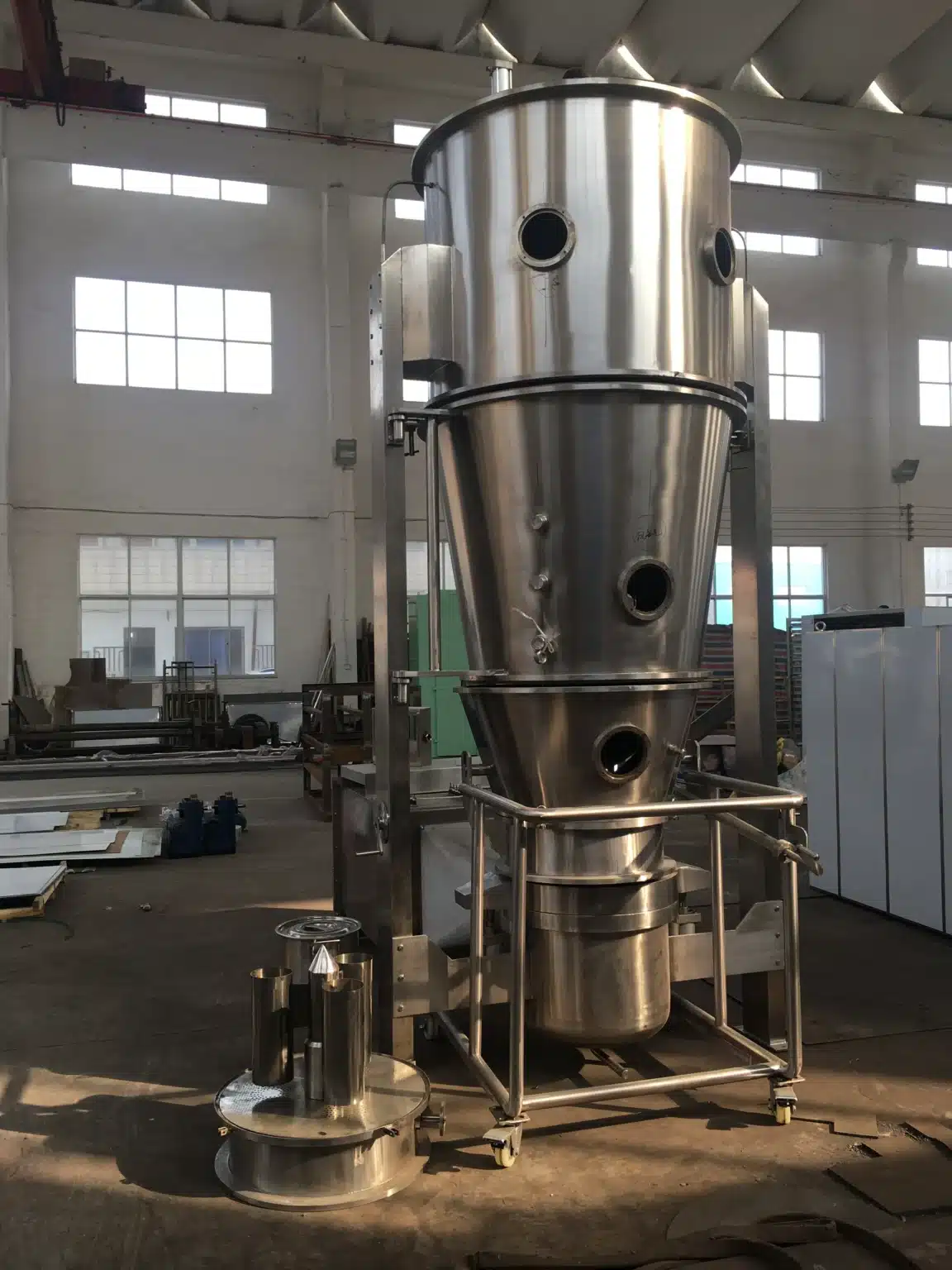
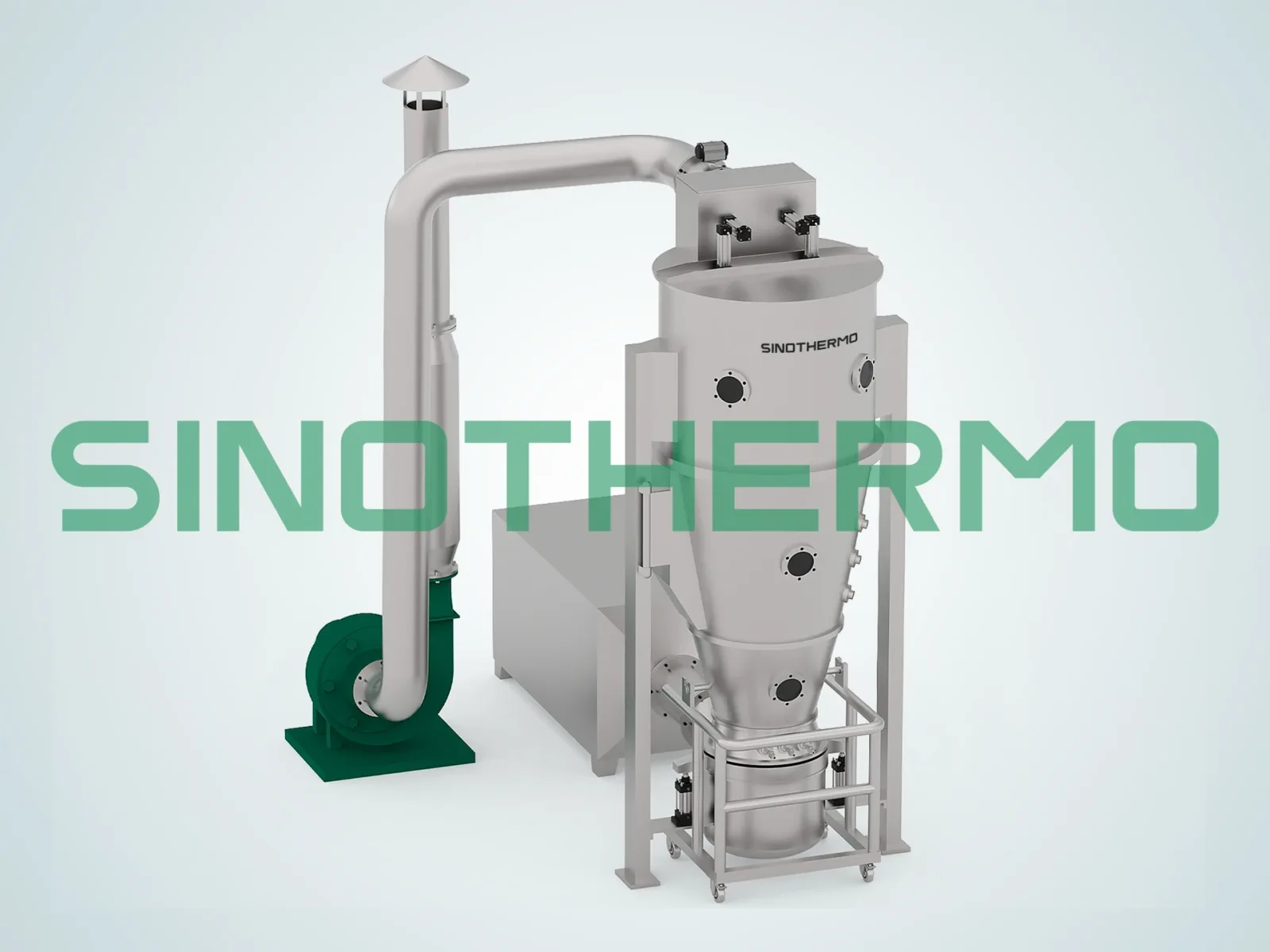
- การแกรนูลฟลูอิดเบด — เครื่องแกรนูลฟลูอิไดซ์เบด (Fluidized Bed Granulator) ทำการแกรนูลและอบแห้งในห้องเดียวกัน ทำให้ได้เม็ดแกรนูลที่มีน้ำหนักเบา มีรูพรุน และละลายเร็ว ที่ความชื้น 3–5% ส่วน เครื่องแกรนูลแบบพ่นในฟลูอิไดซ์เบด (Fluidized Bed Spray Granulator) เป็นตัวเลือกที่เหมาะสมเมื่อสูตรตำรับมีสัดส่วนสารช่วยสูงและตัวยาสำคัญเป็นของเหลวปริมาณน้อย — เหมาะสำหรับตัวยาสำคัญและสารสกัดที่ไวต่อความร้อน
- การแกรนูลแห้ง — เมื่อตัวยาสำคัญไม่สามารถสัมผัสน้ำหรือความร้อนได้เลย ลูกกลิ้งอัดในกลุ่ม เครื่องทำเม็ดและเครื่องอัดรีด (Granulator and Extruder) จะอัดผงให้เป็นแผ่นแน่นซึ่งจะถูกบดเป็นเม็ดแกรนูล โดยไม่ใช้สารยึดเกาะและไม่มีขั้นตอนการอบแห้ง
การเลือกระหว่างแนวทางเหล่านี้สมควรได้รับการวิเคราะห์เฉพาะของตัวเอง — เราครอบคลุมตรรกะการตัดสินใจทั้งหมด รวมถึงคุณสมบัติของเม็ดแกรนูลและข้อแลกเปลี่ยนต่าง ๆ ในบทความคู่กันของเรา: การแกรนูลเปียก vs การแกรนูลแห้ง: จะเลือกอย่างไร
ขั้นตอนที่ 3 — การอบแห้งให้ได้ตามข้อกำหนด
หากคุณทำการแกรนูลเปียก ขั้นตอนต่อไปคือการอบแห้ง วิธีการอบแห้งส่งผลต่อความชื้นคงเหลือ ความสมบูรณ์ของอนุภาค และ — ซึ่งสำคัญอย่างยิ่งสำหรับอุตสาหกรรมยา — ว่าตัวยาสำคัญที่ไวต่อความร้อนจะยังคงสภาพอยู่ได้หรือไม่
- การอบแห้งแบบฟลูอิดเบดเป็นวิธีหลักสำหรับเม็ดแกรนูล เพราะรวดเร็ว สม่ำเสมอ และอ่อนโยนเพียงพอสำหรับตัวยาสำคัญส่วนใหญ่
- การอบแห้งแบบพ่นฝอยเหมาะสำหรับกรณีที่ต้องอบแห้งวัตถุดิบที่เป็นของเหลวโดยตรงให้กลายเป็นผง — เปลี่ยนสารละลาย อิมัลชัน หรือสารแขวนลอยให้เป็นอนุภาคที่ควบคุมขนาด ความชื้น และสัณฐานวิทยาได้ภายในไม่กี่วินาที เครื่องอบแห้งแบบพ่นฝอยแรงเหวี่ยง (Centrifugal Spray Dryer) รองรับกระบวนการนี้ที่ความชื้นคงเหลือ 3–5% ในช่วงอุณหภูมิลมเข้า 150–500°C หัวพ่นละอองเป็นตัวกำหนดคุณสมบัติของผงที่ได้ — ซึ่งเราได้เปรียบเทียบไว้อย่างละเอียดในคู่มือ การพ่นละอองของเครื่องอบแห้งแบบพ่นฝอย
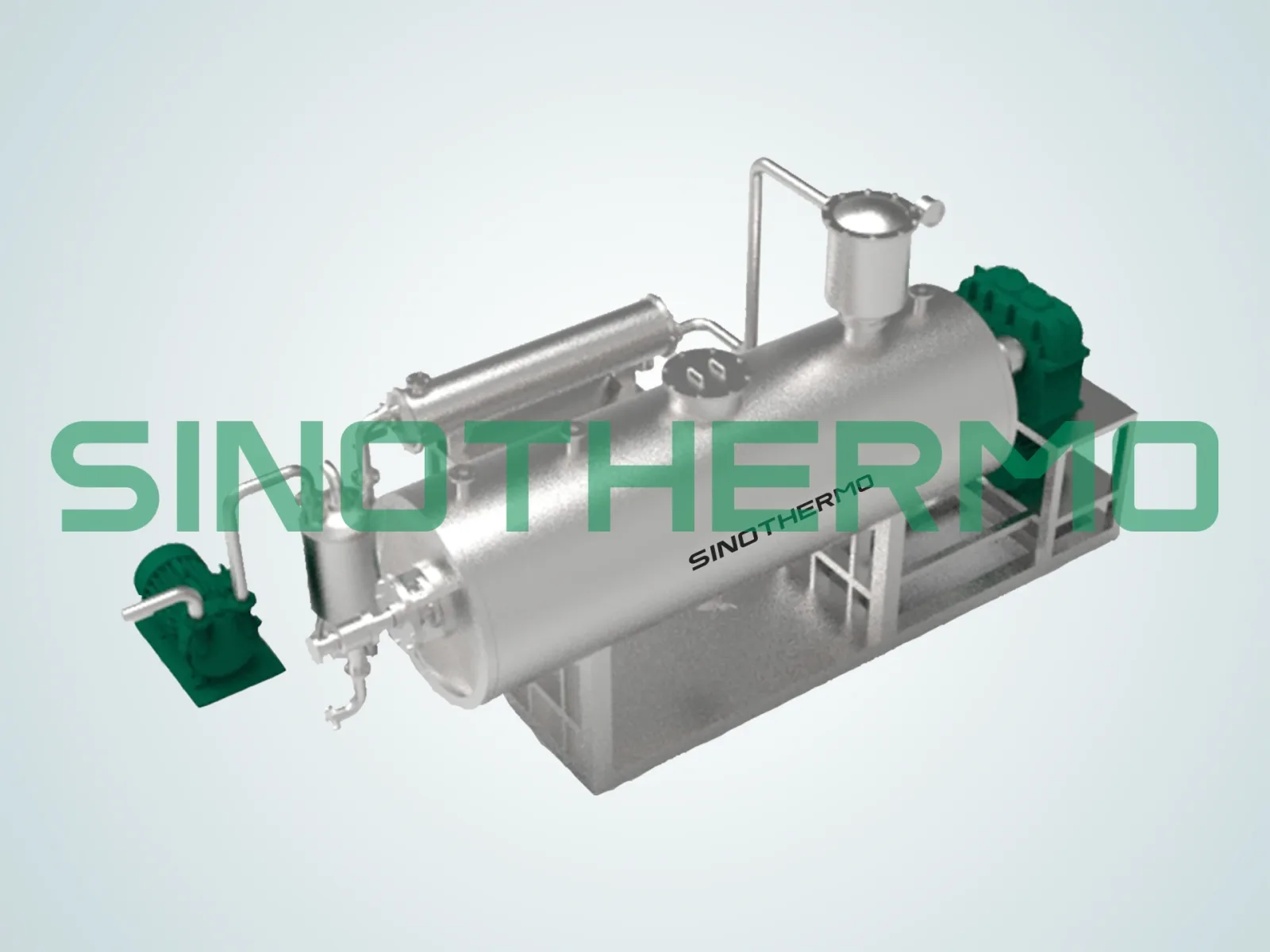
- การอบแห้งแบบสุญญากาศอุณหภูมิต่ำช่วยปกป้องวัสดุที่บอบบางที่สุด เครื่องอบแห้งแบบตู้สุญญากาศคงที่ (Static Vacuum Cabinet Dryer) ทำการอบแห้งภายใต้สุญญากาศด้วยแหล่งความร้อนต่ำกว่า 100°C สามารถจัดการวัสดุที่ไวต่อความร้อน ติดไฟง่าย หรือมีตัวทำละลายตกค้างได้อย่างปลอดภัย พร้อมทั้งรักษารูปแบบและคุณสมบัติดั้งเดิมไว้
ขั้นตอนที่ 4 — การปรับขนาดอนุภาค
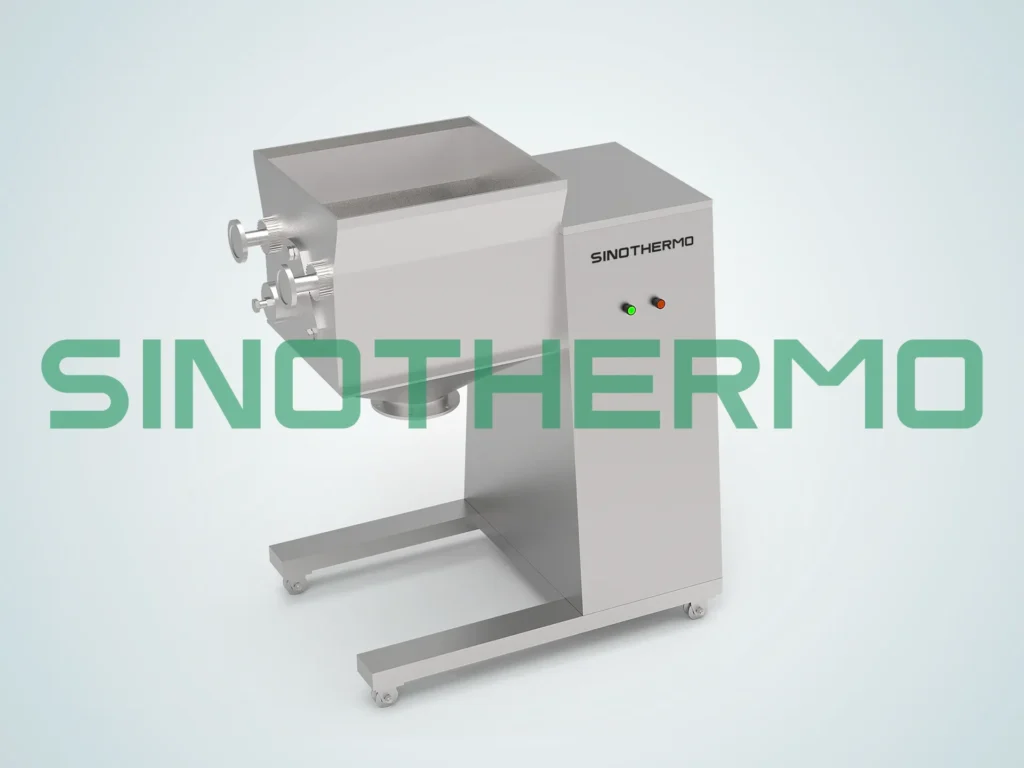
เม็ดแกรนูลที่ผ่านการอบแห้งแล้วมักจะมีขนาดไม่สม่ำเสมอ เครื่องแกรนูลแบบออสซิลเลต (Oscillating Granulator) จะย่อยก้อนเกาะตัวและแผ่นที่แห้งแล้วให้เป็นขนาดอนุภาคที่ควบคุมได้และสม่ำเสมอ — ขั้นตอนนี้เป็นตัวตัดสินว่าเม็ดแกรนูลจะไหลและตวงปริมาณได้อย่างน่าเชื่อถือหรือไม่
ขั้นตอนที่ 5 — การเคลือบ
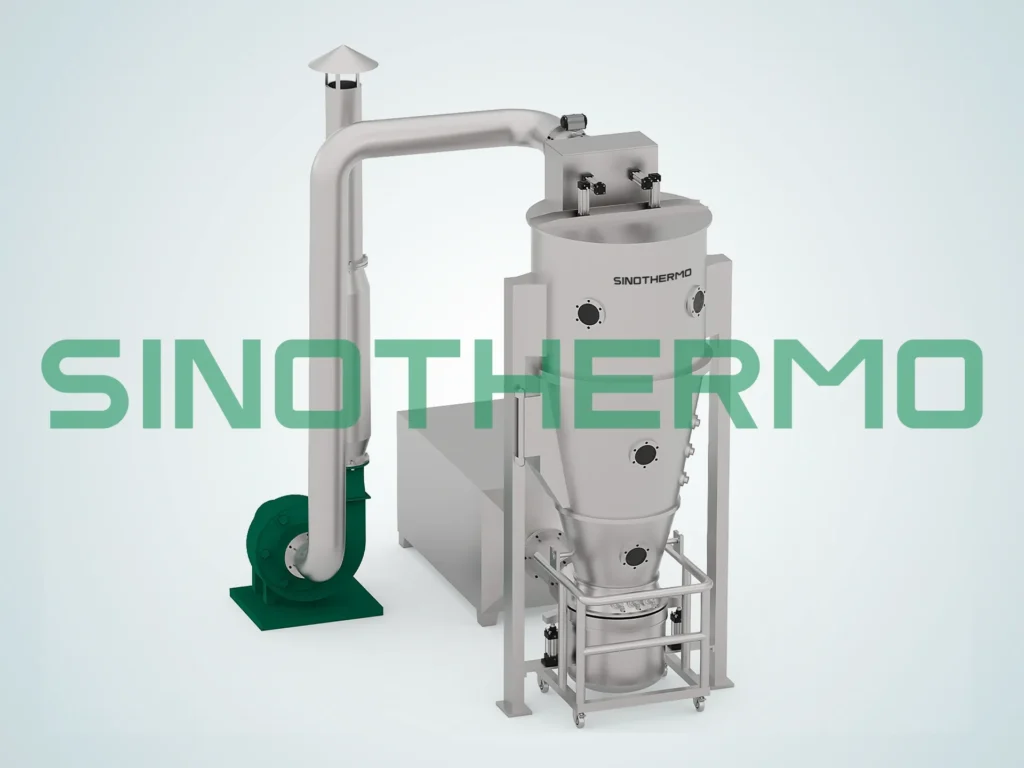
รูปแบบยาเม็ดจำนวนมากต้องการการเคลือบฟิล์ม เพื่อกลบรสชาติ ปกป้องแกนที่ไวต่อความชื้น หรือควบคุมการปลดปล่อยตัวยา เครื่องเคลือบด้วยการเกล็ดในฟลูอิไดซ์เบด Wurster (Wurster Fluidized Bed Granulation Coater) — ซึ่งโดยพื้นฐานแล้วเป็นเครื่องเคลือบยาเม็ดแบบบูรณาการสำหรับเม็ดแกรนูลและเพลเลต — รวมการผสม การแกรนูล การเคลือบ และการอบแห้งไว้ในแพลตฟอร์มเดียว หัวฉีดด้านบนสร้างเม็ดแกรนูลในฟลูอิไดซ์เบด ขณะที่หัวฉีดด้านล่างหรือด้านข้างทำการเคลือบ การรวมหลายขั้นตอนไว้ในเครื่องเดียวช่วยลดการเคลื่อนย้าย การสูญเสียระหว่างการจัดการ และพื้นที่ใช้งาน
มุมมองด้านวิศวกรรมกระบวนการ: กำหนดสเปกจากหลักฐานที่พิสูจน์ได้
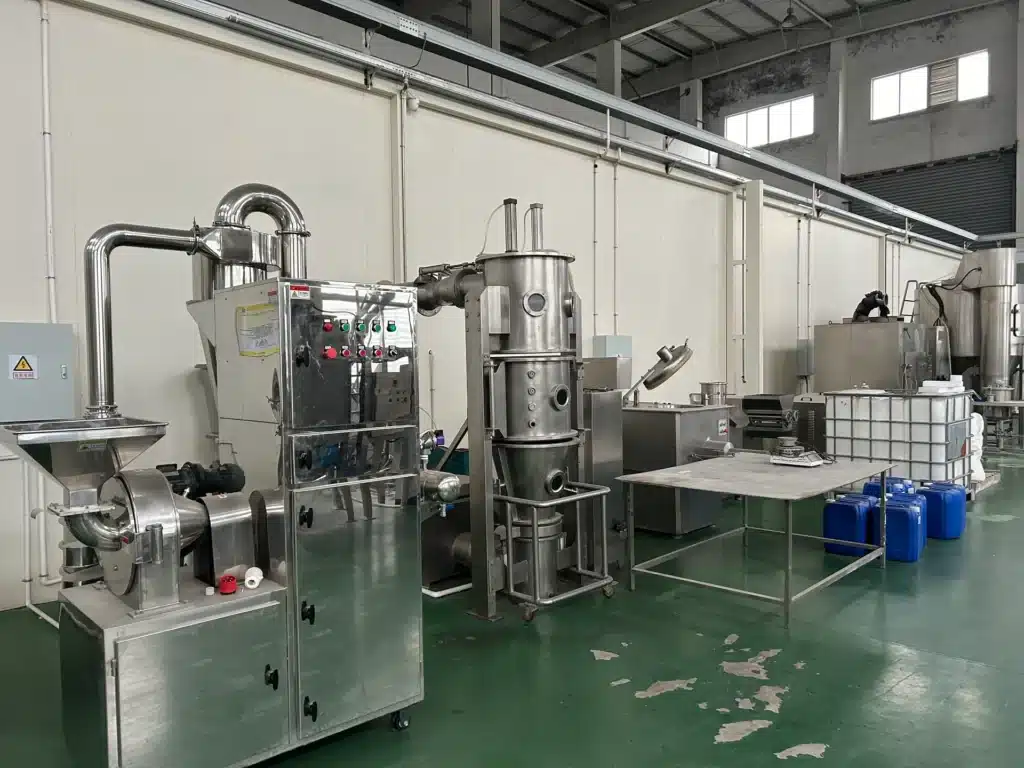
ประเด็นที่วนซ้ำในทุกขั้นตอนคือสิ่งเดียวกัน นั่นคือสูตรวัตถุดิบสองแบบที่ดูเหมือนกันบนสเปกชีทอาจแสดงพฤติกรรมแตกต่างกันมากเมื่อถูกใช้แรงเฉือน สารยึดเกาะ ความร้อน และการไหลของอากาศเข้าไปเกี่ยวข้อง วิธีที่เชื่อถือได้ในการกำหนดสเปกไลน์การผลิตคือการทดลองวัตถุดิบของคุณเองก่อน แล้ววัดผลลัพธ์ที่ได้ ไม่ว่าจะเป็นขนาดแกรนูล ความหนาแน่น ความชื้น การไหล ความสามารถในการอัดตัว และผลผลิต ก่อนที่จะตัดสินใจลงทุน
นี่คือจุดที่ SINOTHERMO ทำงานแตกต่างจากผู้จำหน่ายตามแคตตาล็อกทั่วไป ในฐานะผู้ผลิตที่เชี่ยวชาญด้านวิศวกรรมกระบวนการ มีประสบการณ์กว่า 20 ปี ได้รับการรับรอง ISO 9001:2015 เราจับคู่ทุกคำแนะนำกับห้องปฏิบัติการนำร่องภายในองค์กรของเราเอง นำสูตรวัตถุดิบของคุณมาทดลองบนอุปกรณ์ผสม การแกรนูล การอบแห้ง และการเคลือบระดับเต็มรูปแบบ แล้วให้ข้อมูลบอกคุณว่าไลน์การผลิตของคุณควรเป็นอย่างไร จากนั้นเราจะสร้างแต่ละระบบขึ้นโดยยึดตามกระบวนการที่ผ่านการตรวจสอบแล้วของคุณ ซึ่งเป็นการปรับแต่งเฉพาะทางสูง ไม่ใช่แบบสำเร็จรูป
ข้อผิดพลาดที่พบบ่อยซึ่งควรหลีกเลี่ยง
- การซื้ออุปกรณ์ทีละขั้นตอนแบบแยกส่วน ควรกำหนดสเปกทั้งสายการผลิตให้ผลลัพธ์ของแต่ละหน่วยสอดคล้องกับข้อมูลนำเข้าของหน่วยถัดไป ความไม่สอดคล้องกันระหว่างขั้นตอนเป็นข้อผิดพลาดที่พบบ่อยที่สุด — และมีค่าใช้จ่ายสูงที่สุด
- การปล่อยให้ความพร้อมของอุปกรณ์เป็นตัวกำหนดเส้นทางการแกรนูล ควรให้ความไวต่อสภาพของวัตถุดิบเป็นตัวตัดสินก่อนว่าจะใช้วิธีเปียกหรือแห้ง
- การประเมินขั้นตอนการอบแห้งต่ำเกินไป เส้นทางแบบเปียกจะเพิ่มขั้นตอนการอบแห้งเข้ามา ทั้งในแง่ต้นทุน เวลา และพื้นที่ใช้งาน ควรตั้งงบประมาณรองรับไว้
- การมองข้ามอัตราการติดไฟและการระเบิด อุปกรณ์แรงเฉือนสูงและฟลูอิดเบดหลายรุ่นไม่ได้รับการรับรองสำหรับวัสดุที่ติดไฟหรือระเบิดได้ ควรระบุประเด็นนี้ตั้งแต่ขั้นตอนการกำหนดสเปก
- การข้ามขั้นตอนการตรวจสอบความถูกต้องของกระบวนการ การทดลองนำร่องด้วยสูตรวัตถุดิบของคุณเองเป็นวิธีที่มีประสิทธิภาพที่สุดเพียงวิธีเดียวในการป้องกันความผิดพลาดที่มีค่าใช้จ่ายสูงในสายการผลิต
บทสรุป
การกำหนดสเปกอุปกรณ์เภสัชกรรมสำหรับยาเม็ดชนิดของแข็งหมายถึงการคิดในเชิงห่วงโซ่กระบวนการ ไม่ใช่เครื่องจักรเดี่ยวๆ ต้องผสมให้สม่ำเสมอ แกรนูลตามเส้นทางที่ตัวยาสำคัญของคุณสามารถทนได้ อบแห้งให้ได้ตามสเปกโดยไม่ทำให้เสื่อมสภาพ ปรับขนาดให้การไหลสม่ำเสมอ และเคลือบในกรณีที่ผลิตภัณฑ์ต้องการ ควรชั่งน้ำหนักปัจจัยด้านความไวของวัตถุดิบ ระดับการผลิต การปรับแต่งเฉพาะทาง การปฏิบัติตามข้อกำหนด และที่สำคัญที่สุดคือการตรวจสอบความถูกต้องของกระบวนการ สเปกชีทช่วยจำกัดขอบเขตตัวเลือก แต่การทดลองนำร่องด้วยวัตถุดิบของคุณเองคือสิ่งที่ยืนยันไลน์การผลิตที่แท้จริง
กำลังวางแผนสายการผลิตยาเม็ดชนิดของแข็ง หรือต้องการเปลี่ยนขั้นตอนใดขั้นตอนหนึ่ง? พูดคุยกับวิศวกรกระบวนการของเราและจองการทดลองในห้องปฏิบัติการนำร่องของเรา เราจะช่วยคุณกำหนดสเปกโดยอิงจากหลักฐานจริง
คำถามที่พบบ่อย
ต้องใช้อุปกรณ์อะไรบ้างในการผลิตยาเภสัชกรรมชนิดของแข็ง?
สายการผลิตยาเม็ดชนิดของแข็งทั่วไปครอบคลุมห้าขั้นตอน ได้แก่ การผสม (เครื่องผสมแรงเฉือนสูงหรือเครื่องผสม) การแกรนูล (แรงเฉือนสูงแบบเปียก ฟลูอิดเบด หรือการอัดด้วยลูกกลิ้งแบบแห้ง) การอบแห้ง (ฟลูอิดเบด สเปรย์ หรือสุญญากาศ) การปรับขนาด (เครื่องทำเม็ดแบบออสซิลเลต) และการเคลือบ (เครื่องเคลือบฟลูอิดเบดแบบ Wurster) ไม่ใช่ทุกผลิตภัณฑ์ที่ต้องผ่านทุกขั้นตอน แต่การกำหนดสเปกให้เป็นห่วงโซ่ที่เชื่อมโยงกันจะช่วยป้องกันความไม่สอดคล้องกัน
ฉันควรเลือกระหว่างอุปกรณ์แกรนูลแบบเปียกและแบบแห้งอย่างไร?
เริ่มต้นจากการพิจารณาว่าตัวยาสำคัญของคุณสามารถทนต่อความชื้นและความร้อนได้หรือไม่ หากทนได้ การแกรนูลแบบเปียก (แรงเฉือนสูงหรือฟลูอิดเบด) จะให้แกรนูลที่หนาแน่นและอัดตัวได้ดี หากทนไม่ได้ การแกรนูลแบบแห้งด้วยการอัดลูกกลิ้งจะปกป้องผลิตภัณฑ์โดยไม่ใช้ของเหลวและไม่ต้องผ่านขั้นตอนการอบแห้ง ดูคู่มือการเปรียบเทียบการแกรนูลแบบเปียกกับแบบแห้งของเราโดยเฉพาะสำหรับตรรกะการตัดสินใจแบบเต็มรูปแบบ
วิธีการอบแห้งแบบใดเหมาะสมที่สุดสำหรับวัสดุเภสัชกรรมที่ไวต่อความร้อน?
สำหรับวัสดุที่ไวต่อความร้อน ติดไฟง่าย หรือมีตัวทำละลายตกค้าง การอบแห้งแบบสุญญากาศอุณหภูมิต่ำที่ใช้แหล่งความร้อนต่ำกว่า 100°C จะช่วยปกป้องผลิตภัณฑ์ในขณะที่รักษารูปแบบและคุณสมบัติไว้ได้ การอบแห้งแบบฟลูอิดเบดเหมาะกับแกรนูลมาตรฐานส่วนใหญ่ ส่วนการอบแห้งแบบสเปรย์เหมาะกับวัตถุดิบที่เป็นของเหลวซึ่งถูกอบแห้งโดยตรงให้เป็นผง
เครื่องจักรเครื่องเดียวสามารถแกรนูล เคลือบ และอบแห้งได้พร้อมกันหรือไม่?
ใช่ เครื่องเคลือบแบบฟลูอิไดซ์เบด Wurster ผสานรวมการผสม การทำเม็ด การเคลือบ และการอบแห้งไว้ในแพลตฟอร์มเดียว ช่วยลดการเคลื่อนย้ายวัสดุ การสูญเสียจากการจัดการ และพื้นที่ติดตั้งเครื่องจักร — มีประโยชน์เมื่อผลิตภัณฑ์ต้องการทั้งการทำเม็ดและการเคลือบฟิล์ม
ควรตรวจสอบอะไรบ้างก่อนซื้อเครื่องจักรแปรรูปเภสัชกรรม?
ประเมินความไวของวัสดุ (ความชื้น ความร้อน การเกิดออกซิเดชัน ความเสี่ยงจากการระเบิด) ระดับการผลิตและรูปแบบการทำงานแบบแบตช์เทียบกับต่อเนื่อง ความสามารถในการปรับแต่งของผู้จำหน่าย ระบบมาตรฐานและคุณภาพ เช่น ISO 9001:2015 และที่สำคัญที่สุดคือคุณสามารถทดสอบยืนยันกระบวนการของคุณบนเครื่องจักรได้ก่อนตัดสินใจซื้อหรือไม่
เหตุใดการทดสอบระดับนำร่องจึงสำคัญเมื่อจัดหาเครื่องจักรเภสัชกรรม?
เพราะสูตรตำรับมีพฤติกรรมที่คาดเดาไม่ได้ ผลิตภัณฑ์สองชนิดที่ดูเหมือนกันในเอกสารสเปกอาจให้ผลลัพธ์แตกต่างกันมากภายใต้แรงเฉือน สารยึดเกาะ ความร้อน และการไหลของอากาศจริง การทดลองระดับนำร่องด้วยวัสดุของคุณเองจะวัดขนาดเม็ด ความหนาแน่น ความชื้น การไหล และผลผลิต เพื่อให้คุณระบุคุณสมบัติของสายการผลิตจากหลักฐานจริง ไม่ใช่จากการคาดเดา

Mark Gu
Passionate about enhancing customer experiences and streamlining operations, Mark focuses on building strong relationships, fostering innovation, and leading teams to achieve exceptional service and efficiency.
อีเมล: mark.gu@sinothermo.com
โทรศัพท์: +86 18021972660