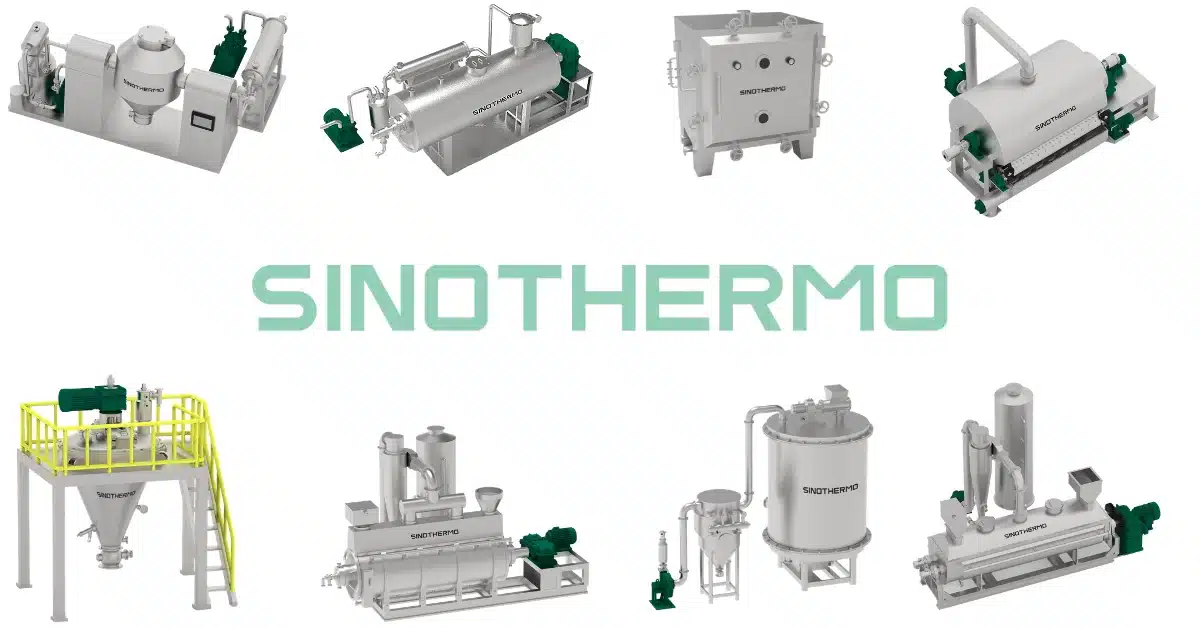
Un sécheur sous vide est un équipement de procédé qui élimine l'humidité ou le solvant d'une matière à basse température en abaissant la pression environnante, de sorte que les liquides entrent en ébullition et s'évaporent bien en dessous de leur point d'ébullition normal — l'eau à 30–50 °C au lieu de 100 °C. C'est ce principe unique qui a fait du sécheur sous vide la solution de référence pour les matières sensibles à la chaleur, sujettes à l'oxydation ou humides de solvant : produits pharmaceutiques, produits chimiques fins, ingrédients alimentaires à haute valeur ajoutée et matériaux de batteries pour les nouvelles énergies, qui se dégraderaient, se décoloreraient ou perdraient leur efficacité dans un sécheur conventionnel à air chaud. Ce guide explique la physique en jeu, détaille étape par étape le fonctionnement d'un sécheur sous vide industriel, compare les quatre types éprouvés, et présente la logique de sélection réelle utilisée par les ingénieurs de procédé avant de rédiger un cahier des charges.
Pourquoi sécher sous vide plutôt qu'à l'air chaud ?
Le comportement qui rend le séchage sous vide si intéressant relève d'une thermodynamique simple : le point d'ébullition de tout liquide diminue lorsque la pression au-dessus de lui baisse. À pression atmosphérique, l'eau bout à 100 °C, mais en appliquant un vide poussé dans la chambre, cette même eau s'évapore à 30–50 °C. Pour un produit sensible à la chaleur, cette différence est celle qui sépare un lot commercialisable d'un lot compromis.
Trois avantages découlent directement du fonctionnement sous pression réduite. Premièrement, le séchage à basse température protège le produit : les principes actifs sensibles à la chaleur, les vitamines, les enzymes et les protéines conservent leur efficacité et leur structure, car elles ne sont jamais exposées aux températures déclenchant la dégradation thermique. Deuxièmement, l'absence quasi totale d'oxygène prévient l'oxydation et la décoloration — l'évacuation de la chambre élimine la majeure partie de l'air, de sorte que les intermédiaires réactifs, les pigments et les catalyseurs ne brunissent pas, ne s'oxydent pas et ne se détériorent pas comme cela peut arriver dans un flux d'air chaud ouvert. Troisièmement, la récupération des solvants devient pratique et rentable : la vapeur extraite de la matière est condensée et récupérée plutôt qu'évacuée, ce qui permet de récupérer des solvants coûteux ou dangereux (méthanol, éthanol, acétone, toluène, etc.) en vue de leur réutilisation, améliorant ainsi à la fois la rentabilité et la conformité environnementale.
Le séchage à l'air chaud, en revanche, oblige à travailler à des températures plus élevées pour évacuer la même quantité d'humidité dans le même temps, et il inonde le produit d'oxygène. Pour une poudre robuste et thermiquement stable, cela peut être parfaitement acceptable. Pour un principe actif pharmaceutique ou une enzyme spécialisée, c'est souvent rédhibitoire. Le séchage sous vide sacrifie un peu de débit au profit de l'intégrité du produit, de l'exclusion de l'oxygène et de la gestion des solvants en circuit fermé — c'est la raison pour laquelle il domine dans les procédés réglementés et à haute valeur ajoutée.
Fonctionnement d'un sécheur sous vide industriel
Quel que soit le type spécifique, un sécheur sous vide industriel suit le même cycle de fonctionnement en quatre étapes :
- 1.Chargement. La matière humide est introduite dans le sécheur. Selon la conception, elle peut être placée sur des plateaux chauffants à l'intérieur d'une enceinte étanche, ou dans une cuve chauffée et étanche telle qu'un sécheur à râteau, à double cône ou rotatif.
- 2.Mise sous vide. Une pompe à vide abaisse la pression dans l'enceinte. Plus le vide est poussé, plus la température à laquelle l'humidité ou le solvant s'évapore est basse.
- 3.Chauffage doux. La chaleur est fournie par les plateaux ou par une double enveloppe, en utilisant de l'eau chaude, de la vapeur ou de l'huile thermique comme fluide caloporteur. La pression étant faible, cette chaleur douce suffit à évaporer le liquide sans surchauffer le produit.
- 4.Extraction et condensation des vapeurs. La vapeur produite est aspirée en continu et acheminée vers un condenseur, où elle est retransformée en liquide — récupérant ainsi le solvant ou l'eau tout en protégeant la pompe à vide contre la charge de vapeur.
L'interaction de ces quatre étapes est ce qu'une bonne conception doit maîtriser. Le niveau de vide et la température de la double enveloppe sont ajustés ensemble afin que le produit subisse l'historique thermique le plus doux possible, tandis que le condenseur est dimensionné pour suivre le débit de vapeur maximal. Si l'équilibre est mal calculé, le séchage sera soit trop lent, soit la surface surchauffera.
Les 4 types éprouvés de sécheur sous vide
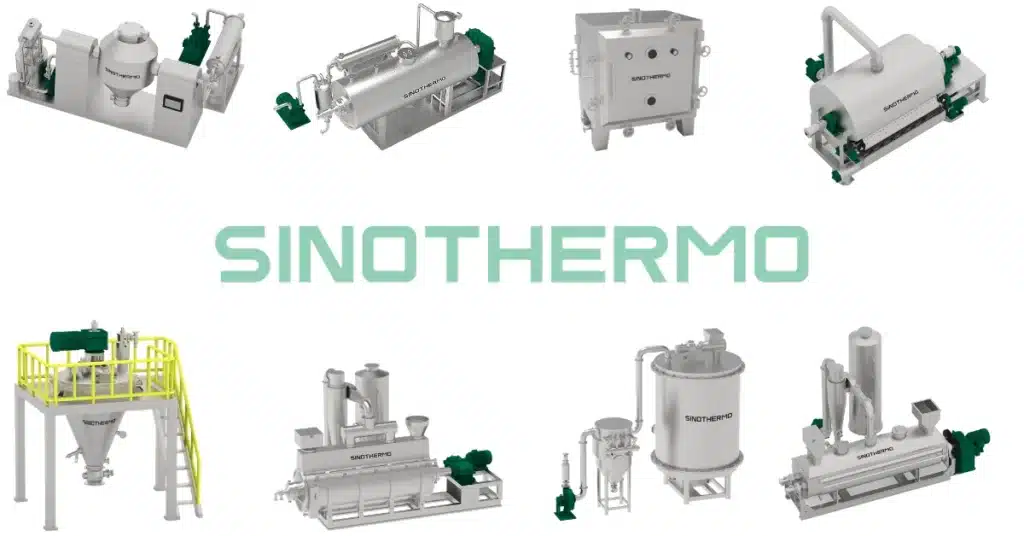
Il n'existe pas de sécheur sous vide universel. Le choix correct dépend presque entièrement de la forme physique de votre matière — s'agit-il d'un solide délicat, d'une pâte collante, d'une poudre à écoulement libre ou d'un grand lot ayant tendance à s'agglomérer ? Les quatre types éprouvés ci-dessous correspondent directement à ces cas de figure.
| Type | Principe de fonctionnement | Idéal pour | Produit SINOTHERMO |
|---|---|---|---|
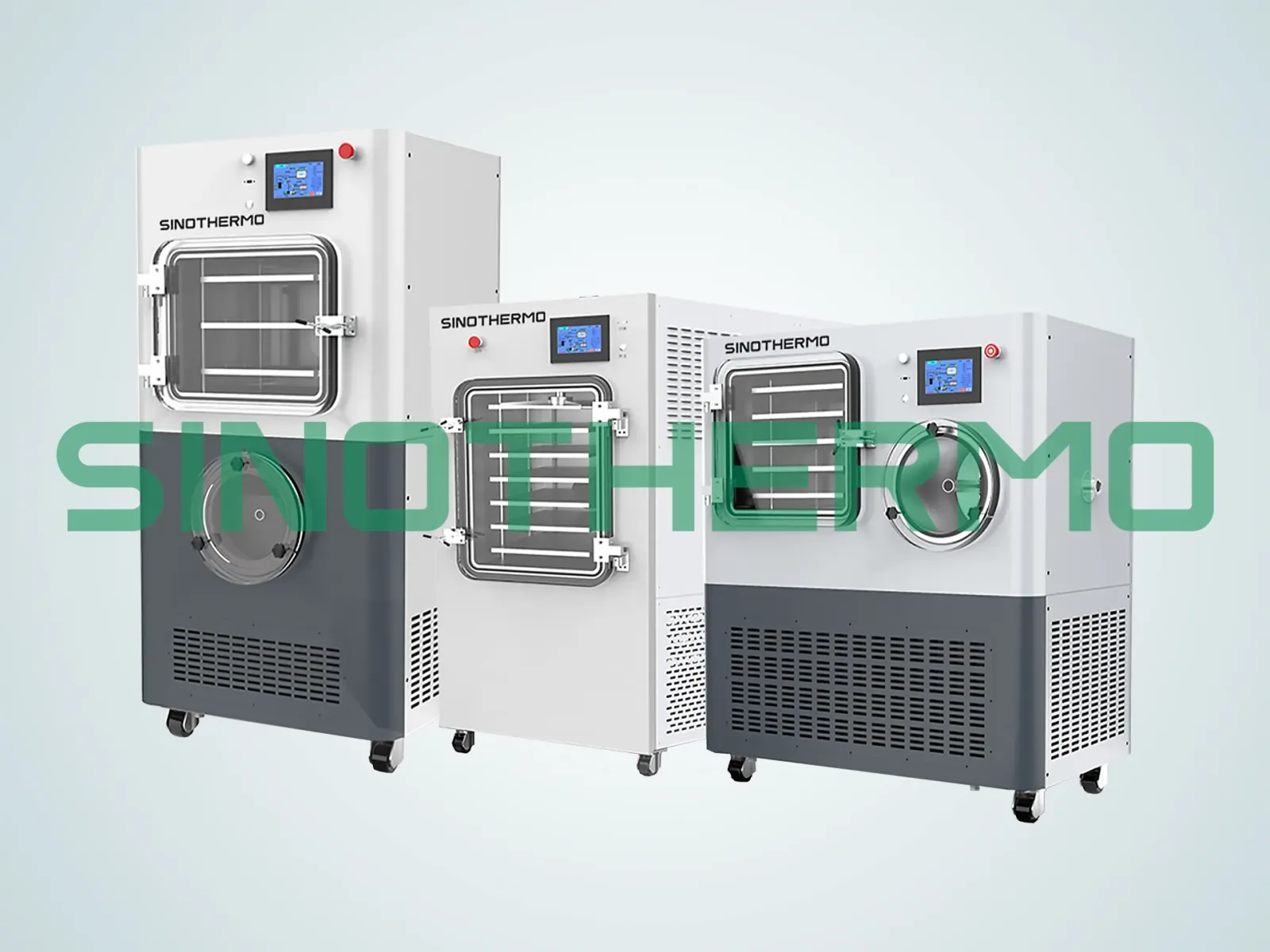
| Étuve de séchage sous vide (à plateaux) | Plateaux chauffants statiques à l'intérieur d'une chambre étanche ; aucun mouvement du produit | Laboratoire et petits lots, solides délicats, poudres thermosensibles ne devant pas être perturbées | Sécheur à armoire sous vide statique |
| Sécheur sous vide à râteau / herse | Cuve horizontale à double enveloppe équipée d'un râteau à agitation lente qui retourne la matière | Pâtes, gâteaux de filtration et matières ayant tendance à s'agglomérer ou à croûter | Sécheur sous vide à râteau |
| Sécheur rotatif sous vide à double cône | Cône rotatif qui fait tomber doucement la charge sous vide | Poudres et granulés à écoulement libre nécessitant un séchage uniforme et une décharge facile | Sécheur rotatif sous vide à double cône |
| Sécheur rotatif sous vide (tambour) | Tambour rotatif sous vide pour des lots plus importants, de type continu | Lots plus importants et matières collantes nécessitant un renouvellement constant de la surface | Sécheur à disques horizontal sous vide / Sécheur à pales sous vide |
Quelques remarques pratiques sur ces quatre types. L'étuve de séchage sous vide est l'option la plus douce car le produit ne bouge jamais — idéale lorsque même une légère agitation endommagerait les cristaux, ou lors de travaux à l'échelle pilote. Le sécheur sous vide à râteau existe spécifiquement pour traiter les matières qui, autrement, formeraient une croûte solide : le râteau à rotation lente renouvelle continuellement la surface de séchage et brise les grumeaux. Le sécheur rotatif sous vide à double cône est la solution de référence pour les poudres à écoulement libre, où le basculement doux garantit une humidité uniforme et une décharge sans effort. La famille rotative / tambour (y compris les modèles à disques horizontaux et Sécheur à plateaux vertical sous vide) traite des charges plus importantes et plus collantes grâce à un renouvellement constant de la surface.
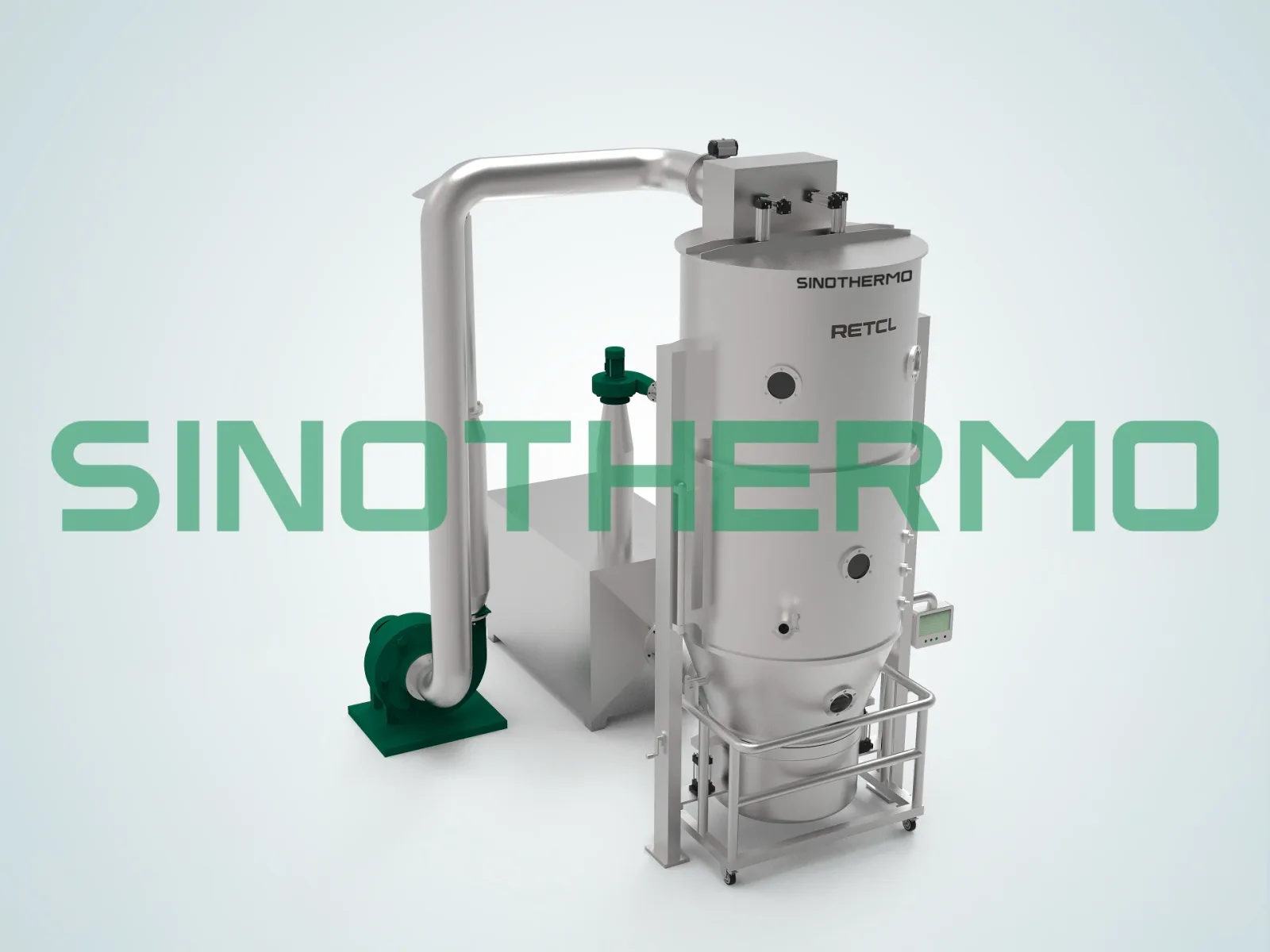
SINOTHERMO fabrique l'ensemble complet de la gamme — étuves de séchage sous vide, sécheurs rotatifs sous vide à double cône, sécheurs sous vide à râteau, ainsi que sécheurs à pales et à disques horizontaux sous vide — chacun étant fourni avec un chauffage par double enveloppe et un condenseur adapté à votre solvant spécifique. Parcourez l'ensemble de la catégorie des sécheurs par conduction et sous vide pour découvrir la gamme complète, et consultez nos guides complémentaires sur le fonctionnement du séchage sous vide et les équipements de séchage industriel pour un contexte plus large.
Les paramètres de procédé clés qui déterminent la performance
Quatre paramètres déterminent si un sécheur sous vide protège votre produit et atteint votre objectif d'humidité. Les comprendre est essentiel pour rédiger un bon cahier des charges.
- Niveau de vide. Plus le vide est poussé, plus la température d'évaporation est basse. Pour les matières les plus sensibles à la chaleur, on approfondit le vide afin que le produit soit exposé à une température plus faible ; la contrepartie est un système de vide plus important et plus performant.
- Température de la double enveloppe / des plateaux. C'est la force motrice de l'évaporation. Elle doit être suffisamment élevée pour évacuer l'humidité à un rythme utile, mais suffisamment basse pour que la surface du produit ne dépasse jamais son seuil de dégradation. Le niveau de vide et la température de la double enveloppe se règlent toujours conjointement.
- Agitation (râteau ou rotation). Le mouvement améliore le transfert de chaleur de la double enveloppe vers la masse du produit et, surtout, empêche le croûtage — la formation d'une croûte sèche emprisonnant la matière humide à l'intérieur. Les étuves statiques n'admettent aucune agitation, ce qui explique qu'elles conviennent uniquement aux charges délicates ou de petite taille.
- Capacité du condenseur. Le condenseur doit être adapté à la charge de vapeur et de solvant au pic. S'il est sous-dimensionné, la vapeur passe jusqu'à la pompe, le vide se dégrade et la récupération de solvant chute. C'est en dimensionnant le condenseur en fonction du solvant — et non de manière générique — que se joue le rendement de récupération.
Comme ces quatre paramètres interagissent, une même matière peut sécher parfaitement ou médiocrement dans la même machine selon la façon dont ils sont réglés. C'est précisément pourquoi des essais en laboratoire sur votre propre produit comptent bien plus qu'une fiche technique générique.
Applications dans différents secteurs
Le sécheur sous vide trouve sa place partout où la valeur ou la sensibilité du produit est élevée :
- Produits pharmaceutiques — principes actifs, intermédiaires, substances actives sensibles à la chaleur et gâteaux de filtration imprégnés de solvant, où la basse température et l'absence d'oxygène protègent la puissance du principe actif, tandis que le condenseur récupère les solvants de procédé.
- Chimie fine — colorants, pigments, catalyseurs et produits chimiques de spécialité qui ne doivent ni se décolorer ni s'oxyder.
- Ingrédients alimentaires — vitamines, extraits botaniques, enzymes et autres poudres à haute valeur ajoutée qui perdent leur activité à l'air chaud.
- Nouvelles énergies — matériaux et précurseurs pour batteries exigeant un contrôle strict de l'humidité et de l'oxygène pour garantir la performance en aval.
Dans ces quatre cas, le fil conducteur est le même : le produit est trop précieux ou trop fragile pour être risqué dans un sécheur à air chaud. Pour des options de séchage par conduction complémentaires, consultez notre guide sur les sécheurs à pales et à disques et notre guide sur les sécheurs rotatifs à tambour.
Avantages et limites
Être honnête sur les deux aspects fait partie d'une bonne spécification.
Avantages. Un fonctionnement à basse température et sans oxygène protège les matières sensibles ; la condensation en circuit fermé récupère des solvants précieux ou dangereux ; et le séchage sous vide atteint des niveaux d'humidité résiduelle très bas, difficiles à obtenir autrement.
Limites. La plupart des sécheurs sous vide fonctionnent en discontinu, ce qui réduit le débit par rapport aux systèmes continus à air chaud ; le coût d'investissement est plus élevé ; et une performance fiable dépend d'un système de vide bien entretenu et d'un condenseur correctement dimensionné. Pour un produit courant, produit en grand volume et thermiquement robuste, un sécheur continu à air chaud peut rester le choix économique le plus judicieux — le sécheur sous vide l'emporte en valeur par lot, pas en tonnes par heure.
Faites vos preuves avant de spécifier : le laboratoire pilote SINOTHERMO
Voici une vérité inconfortable sur les équipements de séchage : la courbe de séchage obtenue sur la matière de référence d'un fournisseur en dit très peu sur le comportement de votre propre matière. La liaison de l'humidité, la morphologie des particules, la chimie du solvant et la tendance à l'agglomération sont toutes spécifiques au produit, et ce sont elles qui déterminent si une machine qui semble adaptée sur le papier tiendra réellement ses promesses sur votre ligne de production.
C'est pourquoi la démarche intelligente consiste à essayer d'abord, spécifier ensuite. SINOTHERMO — Infrastructure d'ingénierie des procédés. Nous résolvons le problème de procédé, nous ne vendons pas seulement une machine. Dans notre laboratoire pilote interne, vous apportez votre propre matière, nous la testons avant que vous ne vous engagiez sur une spécification, et vous observez la courbe de séchage réelle, le résultat réel d'humidité résiduelle et le comportement réel de récupération de solvant sur votre produit. Cela réduit le risque de l'achat et nous permet d'ajuster le niveau de vide, le fluide caloporteur de la double enveloppe, l'agitation et le condenseur à votre matière plutôt qu'à un modèle générique.
Cette capacité s'appuie sur des fondations solides : plus de 20 ans d'expérience. Associée à une personnalisation poussée, cela signifie que la machine que vous recevez est conçue autour de votre procédé — et non adaptée après coup à partir d'un catalogue.
Erreurs courantes à éviter
Même des acheteurs expérimentés tombent dans certains pièges récurrents lors de la spécification d'un sécheur sous vide :
- Adapter le sécheur au débit plutôt qu'à la matière. La forme physique de votre produit — pâte, gâteau, poudre fluide, cristal fragile — doit d'abord guider le choix du type d'équipement. Un four statique fera croûter une pâte ; un cône tournant peut endommager des cristaux fragiles.
- Sous-dimensionner le condenseur. Un condenseur dimensionné sur la charge vapeur moyenne plutôt que sur la charge de pointe laisse échapper du solvant vers la pompe à vide, dégradant le vide et le rendement de récupération. Dimensionnez-le en fonction du solvant et du pic.
- Rechercher un vide inutilement poussé. Un vide plus profond abaisse la température mais ajoute du coût et de la complexité. Spécifiez le vide le plus modéré qui protège le produit, pas le plus profond disponible.
- Ignorer le croûtage superficiel (case-hardening). Chauffer fortement sans agitation forme une croûte sèche sur la matière humide, emprisonnant l'humidité et faussant la lecture du point final. Adaptez l'agitation à la matière.
- Spécifier à partir d'une fiche technique générique. Sauter un essai pilote sur votre propre matière est l'erreur la plus coûteuse de toutes — elle n'est découverte qu'après la mise en service. Essayez d'abord.
Conclusion
Quel sécheur sous vide vous convient ? Celui qui a fait ses preuves sur votre propre matière — une armoire statique pour les solides délicats, un sécheur à râteau pour les pâtes et gâteaux, un rotatif à double cône pour les poudres fluides, et un sécheur rotatif ou à disque pour les lots plus importants et plus collants — avec un niveau de vide, un chauffage et un condenseur adaptés à votre solvant et confirmés par un essai pilote avant la spécification.
✉️ mark.gu@sinothermo.com · 📱 WhatsApp : +86 180 2197 2660 · 🌐 www.sinothermo.com
SINOTHERMO — Infrastructure d'ingénierie des procédés.
FAQ
À quoi sert un sécheur sous vide ?
Un sécheur sous vide élimine l'humidité ou le solvant des matières à basse température. Il est utilisé principalement pour les produits sensibles à la chaleur, sujets à l'oxydation ou humides de solvant, tels que les principes actifs et intermédiaires pharmaceutiques, les produits de chimie fine, les ingrédients alimentaires à haute valeur ajoutée et les matériaux de batteries pour nouvelles énergies, qui se dégraderaient dans un sécheur à air chaud.
Comment fonctionne le séchage sous vide ?
Abaisser la pression autour d'une matière réduit le point d'ébullition de son humidité ou de son solvant, qui s'évapore alors à 30–50°C au lieu de 100°C. Le cycle consiste à charger, faire le vide à l'aide d'une pompe à vide, appliquer une chaleur douce par double enveloppe ou plateaux, puis extraire et condenser la vapeur pour récupérer le solvant ou l'eau.
Étuve de séchage sous vide vs sécheur rotatif à double cône sous vide — quelle est la différence ?
Une étuve de séchage sous vide utilise des plateaux chauffants statiques et ne déplace pas le produit, ce qui la rend idéale pour les solides délicats et les petits lots ou lots à l'échelle laboratoire. Un sécheur rotatif à double cône sous vide fait doucement tourner la charge, offrant un séchage plus uniforme et une décharge facile pour les poudres et granulés fluides.
Un sécheur sous vide peut-il récupérer les solvants ?
Oui. La vapeur extraite du produit passe par un condenseur qui la retransforme en liquide, ce qui permet de récupérer le solvant et de le réutiliser plutôt que de le rejeter. Adapter la capacité du condenseur au solvant spécifique et à la charge de vapeur maximale est essentiel pour obtenir un taux de récupération élevé.
Quel sécheur sous vide utiliser pour les pâtes par rapport aux poudres fluides ?
Pour les pâtes, les gâteaux de filtration et les matières sujettes à la formation d'agglomérats, utilisez un sécheur sous vide à râteau / herse dont le râteau agitateur renouvelle en permanence la surface. Pour les poudres et granulés fluides, un sécheur sous vide rotatif à double cône assure un séchage uniforme et une décharge propre.
Pourquoi le séchage sous vide est-il plus doux que le séchage à air chaud ?
Parce que la pression réduite permet à l'humidité de s'évaporer à 30–50°C, le produit n'est jamais exposé à une température élevée, et la chambre sous vide exclut l'oxygène — ainsi, les principes actifs sensibles à la chaleur conservent leur efficacité et les matières réactives ne s'oxydent ni ne se décolorent.
Comment choisir le bon sécheur sous vide pour mon procédé ?
Partez de la forme physique de votre matière, puis ajustez le niveau de vide, la température de la double enveloppe, l'agitation et la capacité du condenseur. La méthode la plus fiable consiste à effectuer d'abord un essai pilote sur votre propre matière — comme le propose le laboratoire pilote de SINOTHERMO — avant de finaliser le cahier des charges.

Mark Gu
Passionate about enhancing customer experiences and streamlining operations, Mark focuses on building strong relationships, fostering innovation, and leading teams to achieve exceptional service and efficiency.
E-mail: mark.gu@sinothermo.com
Téléphone: +86 18021972660