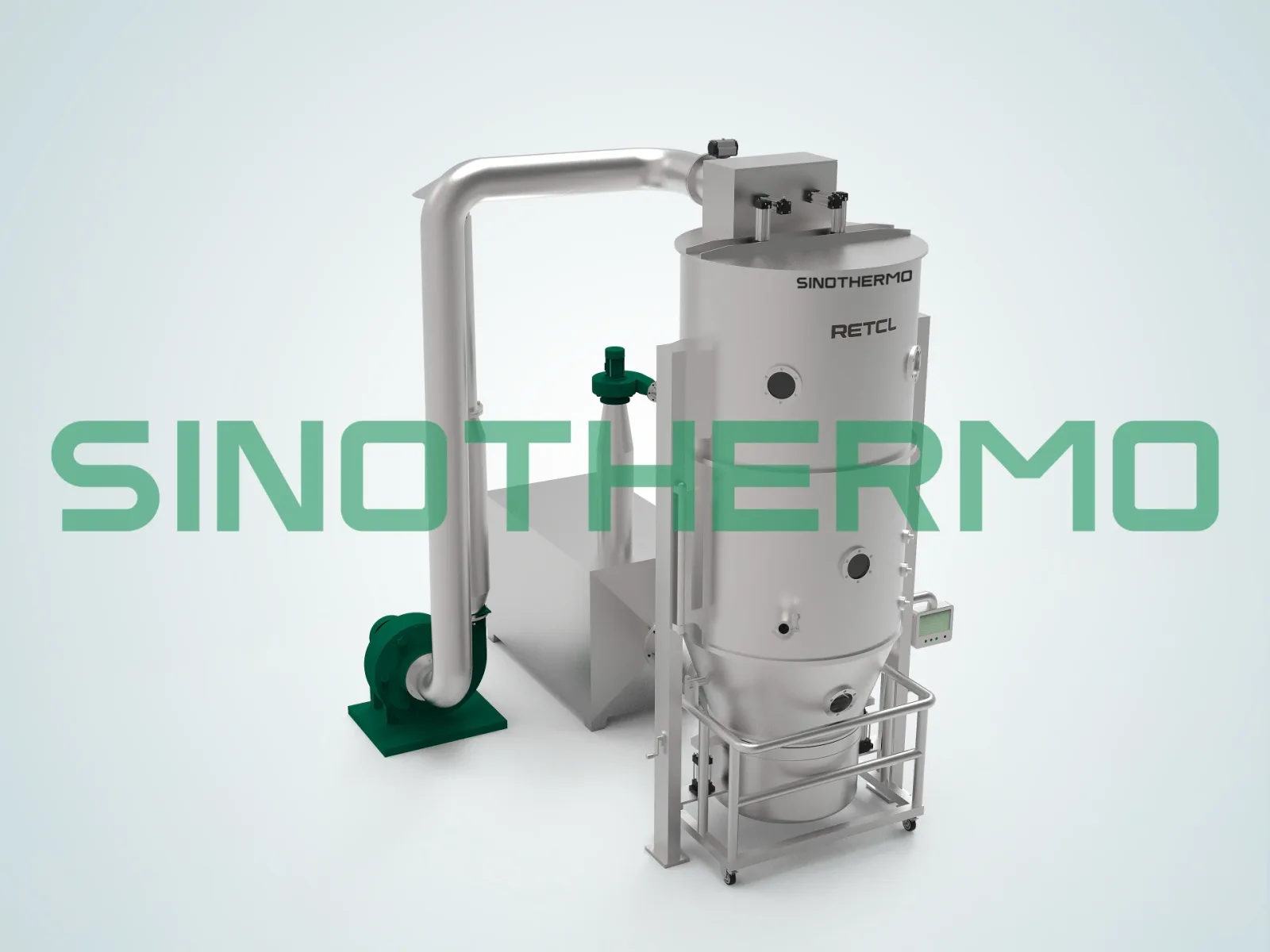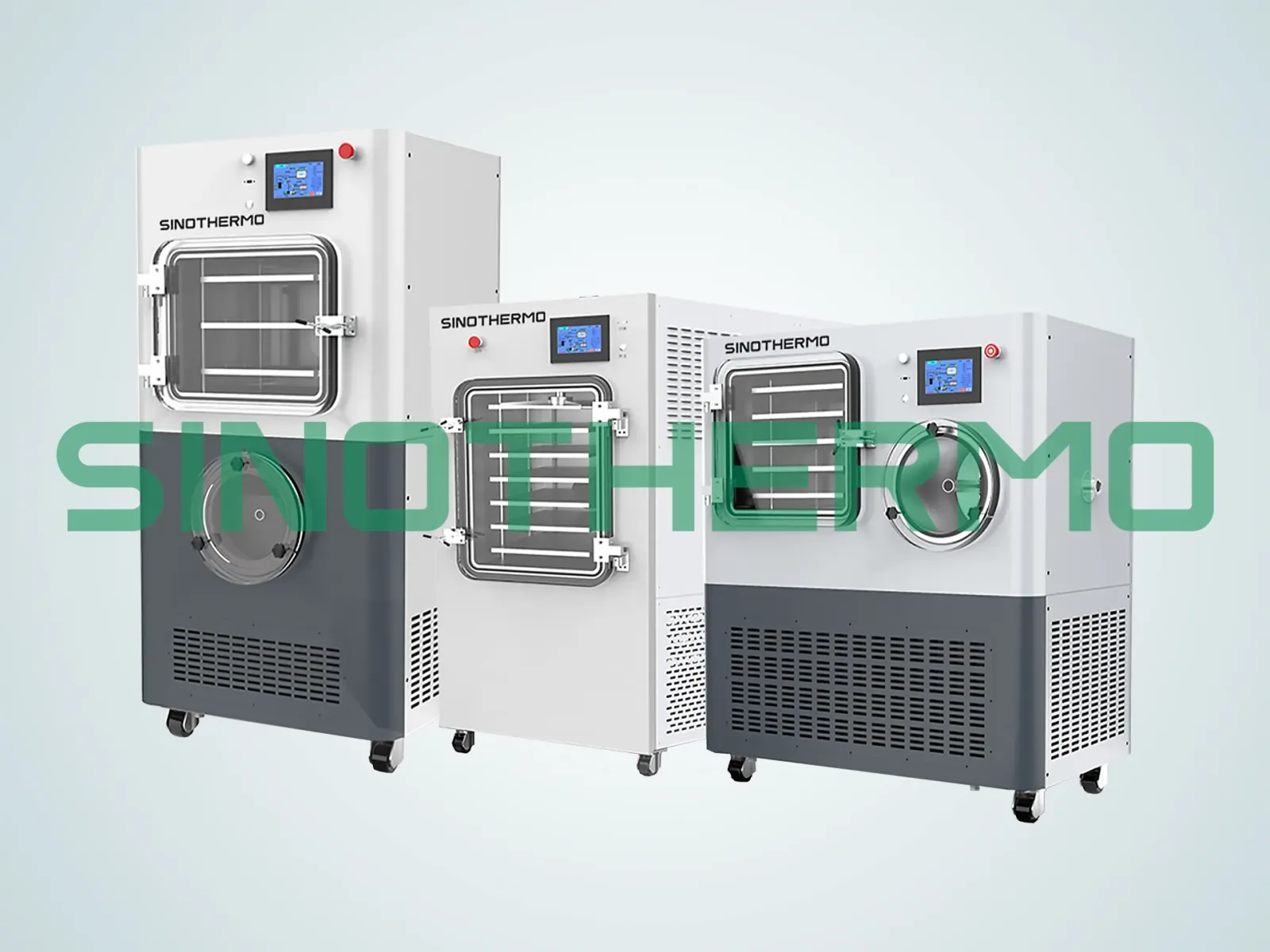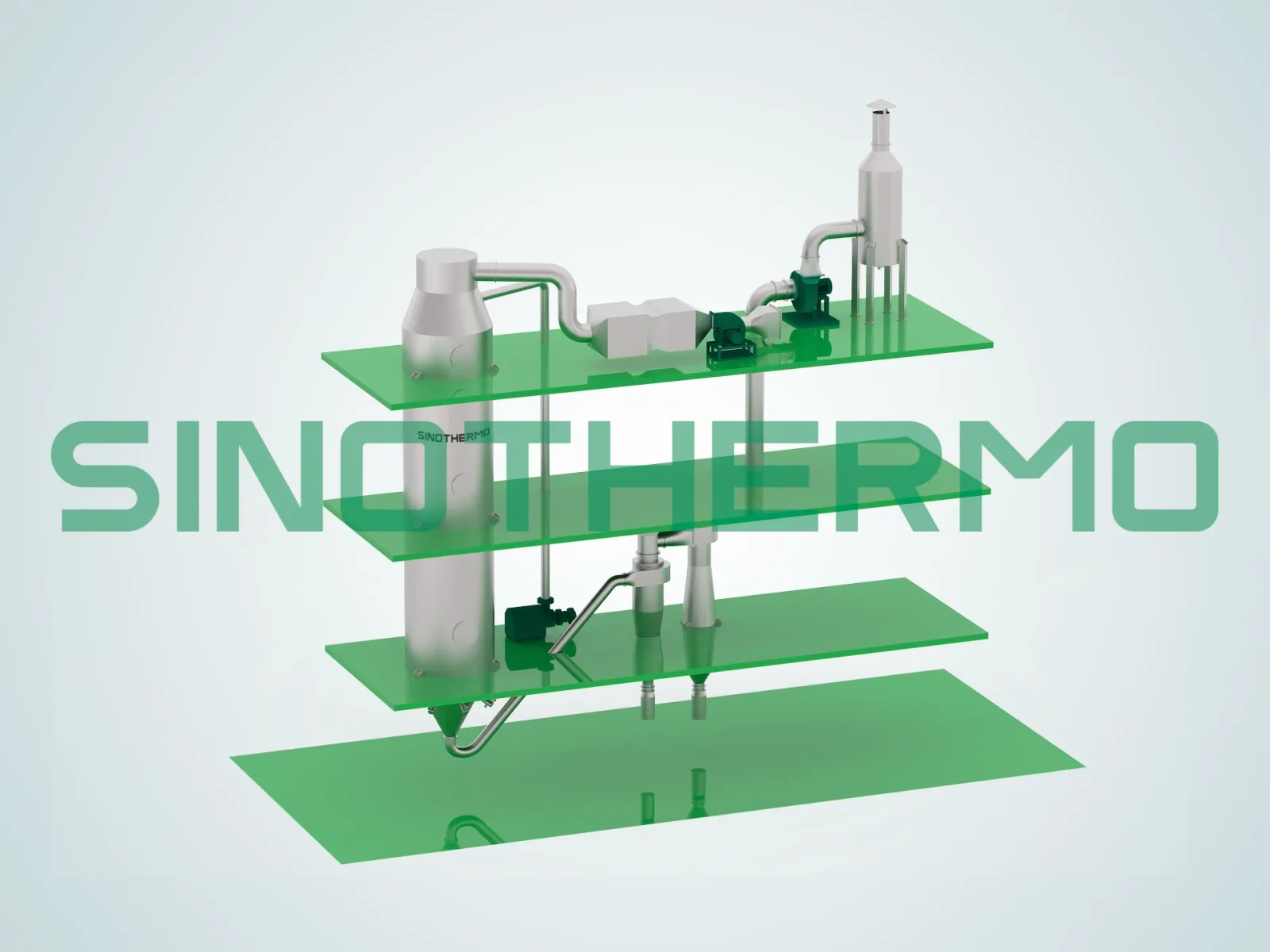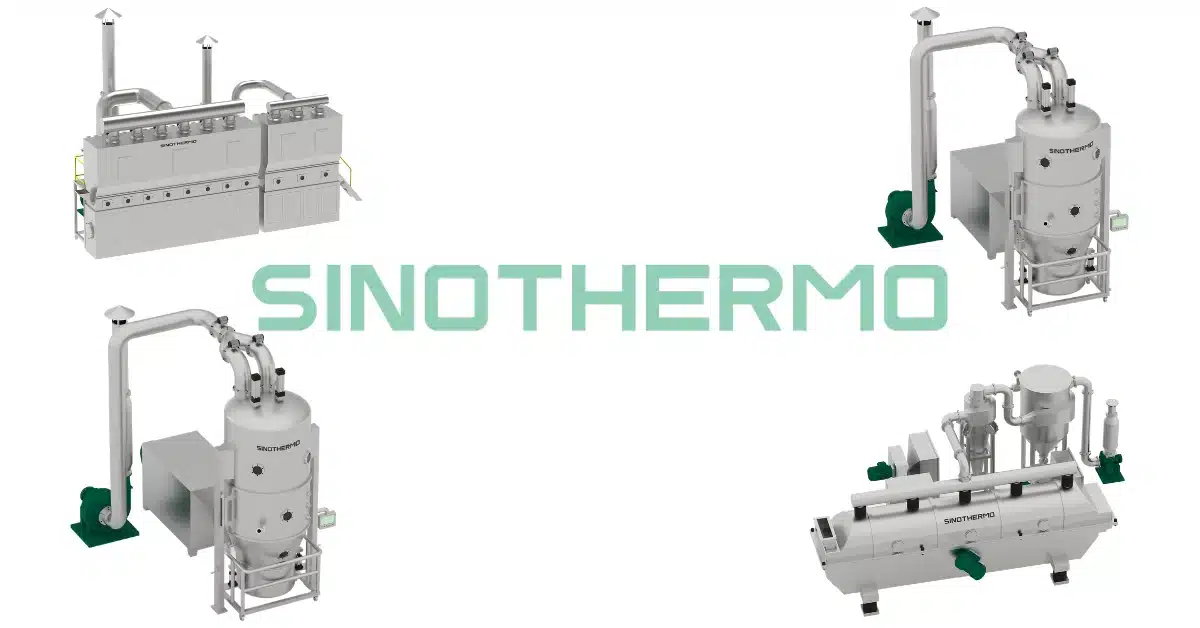
Fluid bed dryer (pengering unggun terfluidisasi) mengeringkan granul basah dan serbuk dengan meniupkan udara panas ke atas melalui pelat distributor berlubang, sehingga mengangkat partikel ke kondisi tersuspensi seperti fluida. Karena setiap partikel diselimuti udara panas secara individu, proses pengeringan berlangsung cepat, sangat merata, dan lembut — itulah sebabnya fluid bed dryer menjadi teknologi andalan standar untuk granul farmasi, serbuk makanan, dan bahan kimia halus. Jika Anda perlu menentukan pengering untuk padatan yang mengalir bebas dan keseragaman menjadi prioritas, teknologi ini biasanya menjadi pilihan pertama yang perlu dievaluasi.
Panduan ini membahas prinsip pengeringan unggun terfluidisasi, tiga jenis mesin (batch, kontinu, getar), parameter proses yang menentukan apakah material Anda dapat terfluidisasi dengan baik, tujuh aplikasi yang telah terbukti, serta perbandingan fluid bed dryer dengan rotary dryer dan spray dryer. Panduan ini ditulis untuk insinyur proses, pengadaan, dan R&D yang perlu menentukan spesifikasi secara tepat sejak awal.
Cara kerja fluid bed dryer
Prinsip pengeringan unggun terfluidisasi terlihat sederhana namun sangat krusial untuk diterapkan dengan benar. Sebuah kipas mendorong udara panas yang telah disaring ke atas melalui pelat distributor di dasar wadah produk. Saat aliran udara meningkat, gaya seret pada setiap partikel juga meningkat hingga menyeimbangkan berat partikel — pada titik itulah unggun “terfluidisasi” dan padatan berperilaku seperti cairan yang mendidih perlahan, bergulir dan bercampur secara kontinu. Kondisi tersuspensi inilah yang memberikan teknologi ini area kontak gas-ke-solid yang sangat besar.
- 1.Distribusi udara — Kipas suplai menarik udara ambien melalui filter dan sumber panas (koil uap, elektrik, atau penukar panas gas/minyak termal), kemudian mendorongnya ke atas melalui pelat distributor. Luas bukaan dan pola lubang pada pelat dirancang untuk menyebarkan udara secara merata dan mencegah zona mati.
- 2.Fluidisasi — Ketika kecepatan udara ke atas mencapai kecepatan fluidisasi minimum, unggun terangkat dan bercampur. Di bawah titik ini, material tetap berada sebagai unggun padat statis; di atas kecepatan entrainment, material justru terhembus keluar sebagai debu. Rentang operasi di antara kedua batas ini adalah inti dari keseluruhan proses.
- 3.Pengeringan — Karena setiap partikel terendam udara panas dengan area kontak yang sangat luas, kelembapan menguap dengan cepat dan merata. Pendinginan evaporatif menjaga suhu permukaan partikel tetap jauh di bawah suhu udara masuk hingga material hampir kering — inilah alasan produk yang sensitif terhadap panas dapat tetap aman.
- 4.Pembuangan gas dan filtrasi — Udara lembap keluar melalui bag filter atau kartrid di bagian atas ruang, yang menahan partikel halus dan secara berkala dikocok atau dihembus balik untuk mengembalikannya ke unggun agar produk tidak hilang.
Hasilnya adalah kurva pengeringan yang didominasi oleh periode laju konstan yang panjang dan lembut, diikuti oleh periode laju menurun yang singkat saat kelembapan terikat dilepaskan — presisi, dapat diulang, dan mudah diinstrumentasi.
Jenis-jenis fluid bed dryer
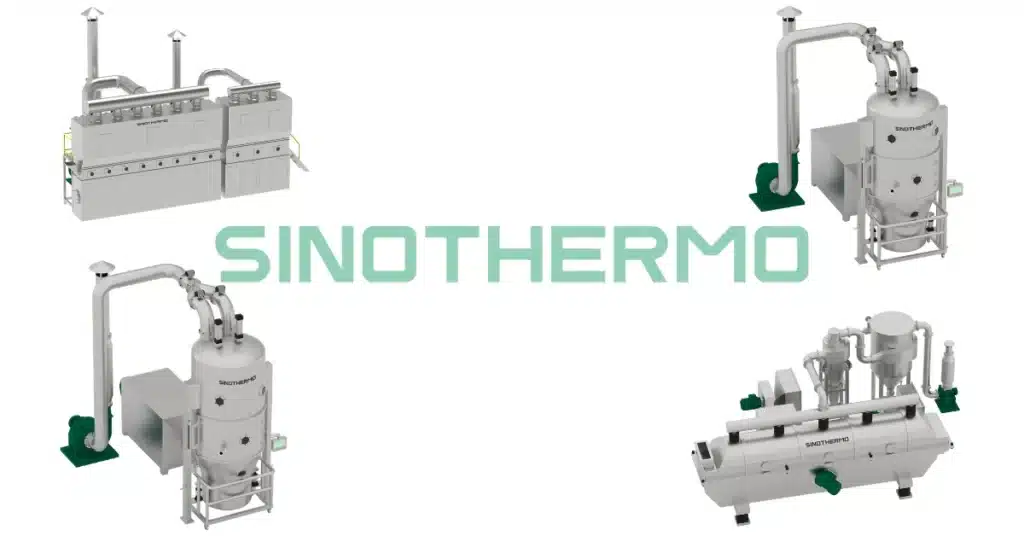
Memilih konfigurasi yang tepat sebagian besar bergantung pada ukuran batch, kapasitas produksi, dan seberapa baik material Anda dapat terfluidisasi. Terdapat tiga jenis utama.
| Jenis | Cara kerja | Cocok untuk |
|---|---|---|
| Batch fluid bed dryer | Muatan tetap dikeringkan per siklus, kemudian dikeluarkan | Granul farmasi, batch kecil hingga menengah, penggantian produk yang sering, keterlacakan penuh |
| Continuous fluid bed dryer | Material mengalir secara stabil melintasi pelat dari saluran masuk ke saluran keluar | Serbuk makanan, kimia, dan mineral dengan kapasitas tinggi pada laju umpan yang stabil |
| Vibrating fluid bed dryer | Gerakan unggun dibantu oleh getaran mekanis | Rentang ukuran partikel yang lebih luas; material yang lengket, rapuh, atau sulit terfluidisasi |
Unit batch adalah standar industri farmasi: unit ini mengeringkan satu muatan tertentu, mengeluarkannya, lalu dibersihkan, sehingga menghasilkan pemisahan lot yang jelas dan catatan yang mendukung validasi. Unit kontinu mengorbankan fleksibilitas changeover demi throughput — ideal ketika satu produk berjalan dalam kampanye produksi yang panjang. Vibrating fluid bed dryer menambahkan getaran konveyor yang lembut, membantu material terfluidisasi pada kecepatan udara yang lebih rendah, melindungi kristal yang rapuh, dan mengatasi distribusi ukuran partikel yang luas yang jika tidak ditangani akan menyebabkan channeling atau segregasi.vibrating fluid bed dryer guide for the full working principle and a specification checklist.
SINOTHERMO menyediakan pengering unggun terfluidisasi batch, kontinu, dan bergetar, serta mengombinasikan pengeringan unggun terfluidisasi dengan granulasi atau pelapisan sesuai kebutuhan proses. Jelajahi Horizontal Vibrating Fluidized Bed Dryer, Vertical Fluidized Bed Dryer, Horizontal Fluidized Bed Dryer, dan Vertical Blending Fluidized Bed Dryer untuk menyesuaikan tipe unit dengan karakteristik material Anda.
Parameter proses utama
Apakah serbuk terfluidisasi dengan bersih — atau justru mengalami channeling, slugging, atau terhembus keluar — ditentukan oleh empat parameter yang saling berkaitan. Menetapkan parameter ini dengan tepat adalah pembeda antara pengering yang bekerja sesuai spesifikasi dan yang tidak pernah mencapai target kadar air.
- Kecepatan udara — Harus melebihi kecepatan fluidisasi minimum agar unggun dapat terangkat, namun tetap di bawah kecepatan entrainment (elutriasi) yang dapat membawa partikel masuk ke filter. Serbuk halus membutuhkan rentang yang sempit dan terkontrol dengan cermat; granul kasar membutuhkan kecepatan lebih tinggi agar dapat terangkat sama sekali.
- Suhu dan kelembapan udara masuk — Menentukan laju pengeringan dan batas atas suhu produk. Untuk API dan protein yang sensitif terhadap panas, suhu masuk dijaga moderat dan mengandalkan pendinginan evaporatif; kelembapan lingkungan memengaruhi berapa banyak kelembapan yang dapat dibawa keluar oleh udara, yang penting di wilayah beriklim tropis.
- Tinggi dan muatan unggun — Menentukan waktu tinggal dan penurunan tekanan. Terlalu tipis menyebabkan pengeringan tidak merata; terlalu tebal membuat kipas tidak dapat memfluidisasi massa secara merata, menimbulkan slugging dan channeling.
- Ukuran dan distribusi partikel (klasifikasi Geldart) — Serbuk Geldart Grup A/B yang mengalir bebas terfluidisasi dengan baik; serbuk Grup C yang sangat halus dan kohesif cenderung resisten terhadap fluidisasi dan mengalami channeling; padatan Grup D yang besar dan padat membutuhkan kecepatan tinggi. Distribusi yang luas berisiko menyebabkan fraksi halus terentrainment sementara fraksi kasar tetap statis — sering terjadi pada unit bergetar.
Parameter-parameter ini saling terkait: menaikkan suhu dapat memperpendek waktu tinggal; menambah muatan mengharuskan peningkatan aliran udara. Inilah sebabnya perkiraan di meja kerja tidak dapat diandalkan dan uji coba fisik menjadi penting — lihat bagian laboratorium pilot di bawah.
7 penggunaan pengering unggun terfluidisasi yang telah terbukti
Di berbagai industri, pengering unggun terfluidisasi membuktikan nilainya di mana pun padatan yang mengalir bebas perlu dikeringkan secara cepat, merata, dan lembut. Tujuh aplikasi yang telah terbukti:
- 1.Granul farmasi — Mengeringkan campuran tablet hasil granulasi basah hingga mencapai kadar air sisa yang presisi dan seragam untuk kompresi tablet yang konsisten.
- 2.Bahan aktif farmasi (API) dan eksipien — Pengeringan lembut untuk bahan aktif yang sensitif terhadap panas dan eksipien fungsional dalam kondisi yang telah divalidasi dan dapat dilacak.
- 3.Bubuk susu dan protein — Menyempurnakan bubuk susu, whey, dan protein nabati, termasuk sebagai tahap kedua setelah pengeringan semprot untuk mencapai kadar air akhir tanpa kerusakan akibat panas.
- 4.Bubuk minuman dan makanan instan — Minuman instan, bumbu, dan campuran larut yang keseragaman kadar airnya menentukan sifat alir dan pelarutan.
- 5.Katalis dan bahan kimia halus — Mengeringkan katalis, pigmen, deterjen, serta PVC dan resin lain yang harus tetap free-flowing.
- 6.Garam food-grade dan padatan kristal — Mengeringkan dan mendinginkan produk kristal sambil menjaga keutuhan kristalnya.
- 7.Granul agrokimia — Granul yang dapat terdispersi dalam air (WDG) dan pupuk yang memerlukan kontrol kadar air untuk stabilitas penyimpanan dan dispersi.
Karena teknologi ini secara alami dapat dipadukan dengan tahapan hulu dan hilir, teknologi ini juga digunakan untuk menyempurnakan bubuk hasil pengeringan semprot dan melengkapi pengeringan kontinu yang lebih kasar yang ditangani oleh rotary drum dryer.
Kelebihan dan keterbatasan
Kelebihan. Pengeringan cepat dan sangat seragam berkat area kontak yang sangat luas; lembut terhadap material yang sensitif terhadap panas karena pendinginan evaporatif membatasi suhu produk; footprint yang lebih ringkas dibandingkan lini rotary dengan kapasitas setara; kontrol proses dan instrumentasi yang unggul; serta kemudahan integrasi dengan granulasi, pelapisan, dan pendinginan dalam satu unit.
Keterbatasan. Fluid bed dryer dirancang untuk granul dan bubuk yang free-flowing — bukan untuk pasta, filter cake, atau slurry, yang tidak dapat terfluidisasi. Bubuk yang sangat halus atau sangat kohesif (Geldart C) cenderung membentuk saluran (channeling); vibrating fluid bed atau flash dryer sering menjadi solusi yang lebih baik. Penanganan debu memerlukan sistem filtrasi dengan ukuran yang tepat, dan material abrasif dapat mengikis komponen internal. Mengetahui batas kemampuan untuk material spesifik Anda adalah hal yang dapat dipastikan melalui uji coba.
Fluid bed dryer vs pengering lainnya
Memilih pengering adalah proses perbandingan, bukan keputusan berdasarkan satu produk saja. Dua teknologi yang paling sering dibandingkan:
| Dibandingkan dengan | Perbedaannya | Kapan lebih memilih fluid bed |
|---|---|---|
| Rotary drum dryer | Rotary memutar padatan curah melalui silinder yang dipanaskan; mampu menangani umpan yang lebih basah, lebih lengket, lebih abrasif, dan bertonase lebih tinggi | Saat Anda memerlukan pengeringan yang seragam dan lembut untuk padatan granular yang sudah free-flowing |
| Spray dryer | Spray dryer mengubah umpan cair menjadi bubuk dalam satu tahap | Saat umpan sudah berupa granul basah padat, atau untuk menyempurnakan/mendinginkan bubuk hasil pengeringan semprot hingga kadar air akhir |
Singkatnya: spray dryer mengubah cairan menjadi bubuk; rotary dryer menangani padatan curah yang sulit; fluid bed dryer menyempurnakan pengeringan padatan yang free-flowing. Banyak lini proses menggunakan dua di antaranya secara berurutan. Untuk peta teknologi lengkap, lihat panduan peralatan pengeringan industri.
Kesalahan umum yang perlu dihindari
- Menentukan spesifikasi hanya dari lembar data, bukan dari materialnya. Dua serbuk dengan ukuran partikel nominal yang sama bisa berperilaku sangat berbeda saat difluidisasi. Kohesi, kadar air, dan bentuk partikel yang menentukan perilakunya — selalu lakukan uji coba dengan material yang sebenarnya.
- Mengabaikan jendela fluidisasi. Menentukan ukuran kipas hanya berdasarkan kondisi rata-rata tidak menyisakan margin; jika kecepatan turun di bawah fluidisasi minimum, unggun akan menjadi statis, dan jika di atas titik entrainment, material akan terbawa ke filter. Rancanglah untuk seluruh rentang operasi.
- Merancang sistem filtrasi terlalu kecil. Fines carryover bukan sekadar gangguan kecil — ini berarti kehilangan hasil produksi dan masalah keamanan debu. Luas area filter, pembersihan pulsa, dan (jika debunya mudah terbakar) perlindungan terhadap ledakan harus dirancang sejak awal, bukan ditambahkan belakangan.
- Menganggap material yang sensitif terhadap panas sebagai material yang tahan panas. Mengandalkan suhu masuk saja mengabaikan fakta bahwa pendinginan evaporatif berhenti begitu permukaan material kering; bagian akhir dari periode falling-rate adalah saat produk berisiko terlalu panas. Kendalikan suhu keluar, bukan hanya suhu masuk.
- Melupakan proses changeover dan pembersihan. Untuk pabrik farmasi atau makanan multi-produk, unit kontinu yang dipilih hanya berdasarkan throughput bisa menimbulkan biaya besar dalam validasi pembersihan. Sesuaikan jenis mesin dengan cara Anda benar-benar mengoperasikannya.
- Melewatkan uji coba pilot. Kesalahan paling mahal adalah langsung melakukan scale-up ke produksi dan baru menyadari bahwa material mengalami channeling. Uji coba singkat dapat menghilangkan risiko tersebut.
Pastikan Benar Sejak di Laboratorium Pilot
Alasan proyek fluid bed gagal hampir tidak pernah karena mesinnya — melainkan karena material yang berperilaku berbeda pada skala produksi dibandingkan yang diasumsikan di atas kertas. Itu adalah masalah rekayasa proses, dan inilah yang menjadi keahlian SINOTHERMO. SINOTHERMO — Infrastruktur Rekayasa Proses. Kami tidak sekadar menjual pengering; kami memastikan material Anda dapat terfluidisasi, mengering hingga kadar air target, dan tetap dalam batas suhu yang aman sebelum satu pun komponen produksi ditentukan.
Bawa material Anda dan uji coba sebelum menentukan spesifikasi. Di LABORATORIUM PILOT internal kami, kami menjalankan serbuk atau granul Anda yang sebenarnya, mengukur jendela fluidisasi, mencatat kurva pengeringan, serta menyesuaikan kecepatan udara, suhu masuk, dan waktu tinggal. Data-data tersebut digunakan untuk menentukan ukuran pengering produksi secara tepat sejak awal. Kemampuan ini didukung oleh pengalaman lebih dari 20 tahun — dengan kustomisasi mendalam agar mesin disesuaikan dengan proses Anda, bukan sebaliknya.
Kesimpulan
Jadi, apakah serbuk Anda akan terfluidisasi dengan bersih dan mengering sesuai spesifikasi? Jawaban yang jujur adalah hanya uji coba dengan material Anda sendiri yang dapat memastikannya — dan uji coba itulah yang mengubah pembelian berisiko menjadi keputusan yang penuh keyakinan.
✉️ mark.gu@sinothermo.com · 📱 WhatsApp: +86 180 2197 2660 · 🌐 www.sinothermo.com
SINOTHERMO — Infrastruktur Rekayasa Proses.
FAQ
Apa fungsi fluid bed dryer?
Untuk pengeringan yang cepat, seragam, dan lembut pada granul dan serbuk basah — paling umum digunakan untuk granul farmasi, serbuk makanan dan produk susu, katalis, serta bahan kimia halus — di mana padatan yang mudah mengalir harus mencapai kadar air yang presisi dan merata.
Bagaimana cara kerja fluidized bed dryer?
Udara panas dihembuskan ke atas melalui pelat distributor dengan kecepatan yang membuat partikel tersuspensi seperti fluida, sehingga setiap partikel dikelilingi udara panas dan mengering dengan cepat serta merata, sementara pendinginan evaporatif membatasi kenaikan suhunya.
Apa perbedaan antara fluid bed dryer batch dan kontinu?
Pengering batch mengeringkan sejumlah muatan tetap per siklus — ideal untuk industri farmasi dan proses changeover produk yang sering dengan pemisahan lot yang bersih. Pengering kontinu mengalirkan material secara terus-menerus untuk kampanye produksi satu produk dengan throughput tinggi.
Dapatkah fluid bed dryer menangani material yang sensitif terhadap panas?
Ya. Pendinginan evaporatif menjaga partikel tetap berada di bawah suhu udara masuk hingga hampir kering, dan suhu masuk dapat diatur rendah — sehingga fluid bed dryer sangat cocok untuk farmasi, protein, dan makanan. Kendalikan suhu keluaran untuk melindungi tahap akhir dari kurva pengeringan.
Dapatkah fluid bed dryer mengeringkan pasta atau slurry?
Tidak. Pasta, filter cake, dan slurry tidak dapat terfluidisasi. Untuk cairan, gunakan spray dryer; untuk umpan yang lengket atau kohesif, pertimbangkan flash dryer atau unggun terfluidisasi getar, yang dikonfirmasi melalui uji coba skala pilot.
Bagaimana cara menentukan ukuran fluid bed dryer untuk material saya?
Penentuan ukuran bergantung pada laju umpan, jumlah kelembapan yang dihilangkan, sensitivitas terhadap panas, dan bagaimana bubuk spesifik Anda terfluidisasi. Uji coba di laboratorium skala pilot menggunakan material aktual Anda akan memberikan rentang fluidisasi, kurva pengeringan, dan suhu gas yang diperlukan untuk menentukan ukuran unit produksi secara akurat.

Mark Gu
Passionate about enhancing customer experiences and streamlining operations, Mark focuses on building strong relationships, fostering innovation, and leading teams to achieve exceptional service and efficiency.
Email: mark.gu@sinothermo.com
Telepon: +86 18021972660