Milchpulver ist eine der ältesten – und nach wie vor eine der bedeutendsten – Anwendungen der Sprühtrocknung. Die Umwandlung von flüssiger Milch in ein stabiles, frei fließendes sprühgetrocknetes Milchpulver verlängert die Haltbarkeit von Tagen auf viele Monate, senkt Transportgewicht und -kosten und liefert Lebensmittelherstellern einen Rohstoff, den sie zuverlässig lagern und dosieren können. Die eigentliche Herausforderung liegt nicht im Trocknen der Milch selbst, sondern darin, dies zu tun, ohne die Proteine zu schädigen oder ein Pulver zu erhalten, das sich nicht mehr rückstandsfrei auflösen lässt.
Dieser Leitfaden erklärt, wie sprühgetrocknetes Milchpulver tatsächlich hergestellt wird, welche wenigen Prozessparameter darüber entscheiden, ob das Pulver gut oder außerhalb der Spezifikation ist, auf welche Fehlerbilder man achten sollte und worauf es bei der eingesetzten Sprühtrocknungsanlage ankommt. Wir haben ihn für diejenigen geschrieben, die die Entscheidung treffen müssen – Verfahrenstechniker, Anlagenleiter und Einkaufsteams, die eine neue Linie spezifizieren oder eine bestehende Anlage optimieren.
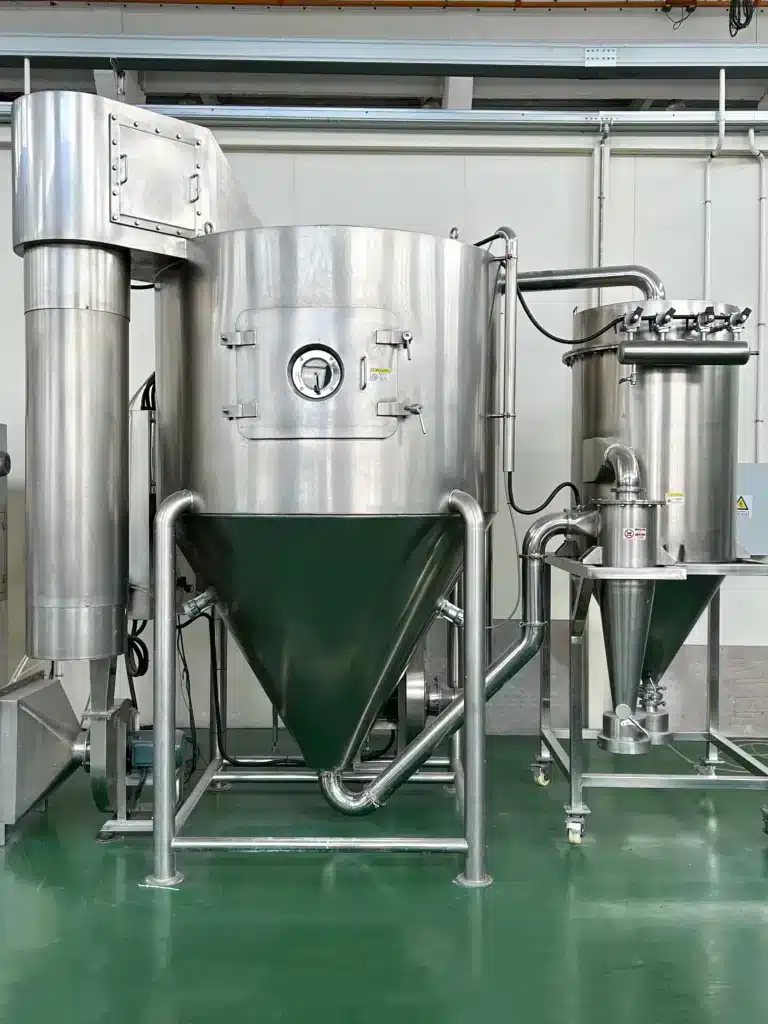
Was ist sprühgetrocknetes Milchpulver?
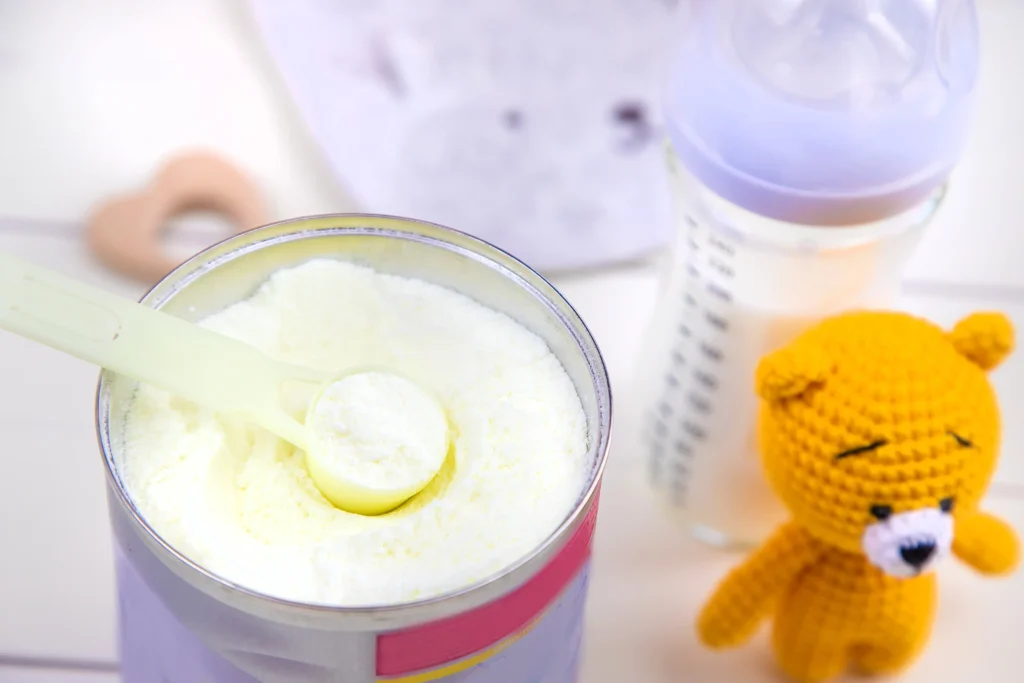
Sprühgetrocknetes Milchpulver ist getrocknete Milch, die durch Zerstäuben konzentrierter flüssiger Milch in einen heißen Luftstrom hergestellt wird, wobei die winzigen Tröpfchen innerhalb von Sekunden ihr Wasser verlieren und als feines Pulver ausfallen. Die beiden gängigsten Produkte sind Magermilchpulver (SMP), hergestellt aus entrahmter Milch, und Vollmilchpulver (WMP), das den Fettanteil beibehält. Beide beruhen auf demselben Grundprinzip: Eine sehr große Oberfläche (Millionen von Mikrotröpfchen) trifft kurzzeitig auf heiße Luft – lang genug, um Wasser zu entziehen, aber kurz genug, um das Produkt nicht zu erhitzen.
Diese kurze Verweilzeit ist der eigentliche Grund, warum die Sprühtrocknung in der Milchindustrie dominiert. Walzentrocknung oder Ofentrocknung setzen die Milch deutlich länger der Hitze aus und beeinträchtigen dabei häufig Geschmack und Löslichkeit. Die Sprühtrocknung senkt die Restfeuchte auf etwa 2–4%, wobei das Pulver löslich bleibt und dem Geschmack der ursprünglichen Milch nahekommt.
Von flüssiger Milch zu Pulver: Der Prozess Schritt für Schritt
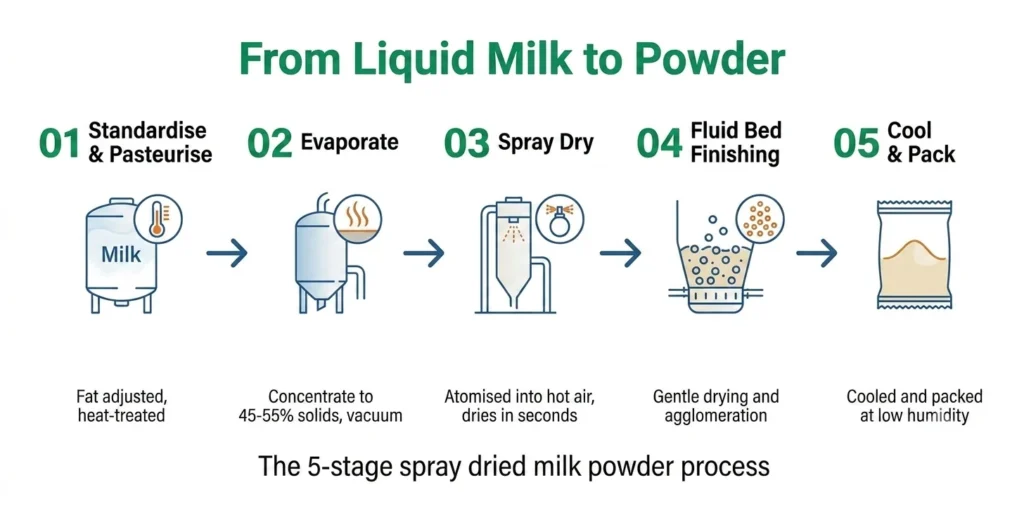
Eine Milchpulver-Linie trocknet die Milch nicht einfach – sie konzentriert sie zunächst, trocknet sie dann und schließt den Prozess mit einer Nachbehandlung ab. Jede Stufe hat ihren eigenen Zweck.
- 1.Standardisieren und Pasteurisieren. Der Fettgehalt wird auf das Zielprodukt (Magermilch, Vollmilch oder ein definiertes Fettniveau) eingestellt, und die Milch wird zur Gewährleistung von Lebensmittelsicherheit und Haltbarkeit wärmebehandelt. Das Vorwärmregime hier ist nicht nur eine Hygienemaßnahme – es legt bereits das Löslichkeits- und Hitzestabilitätsprofil des Pulvers fest (Low-Heat- oder High-Heat-Pulver werden in dieser Phase festgelegt).
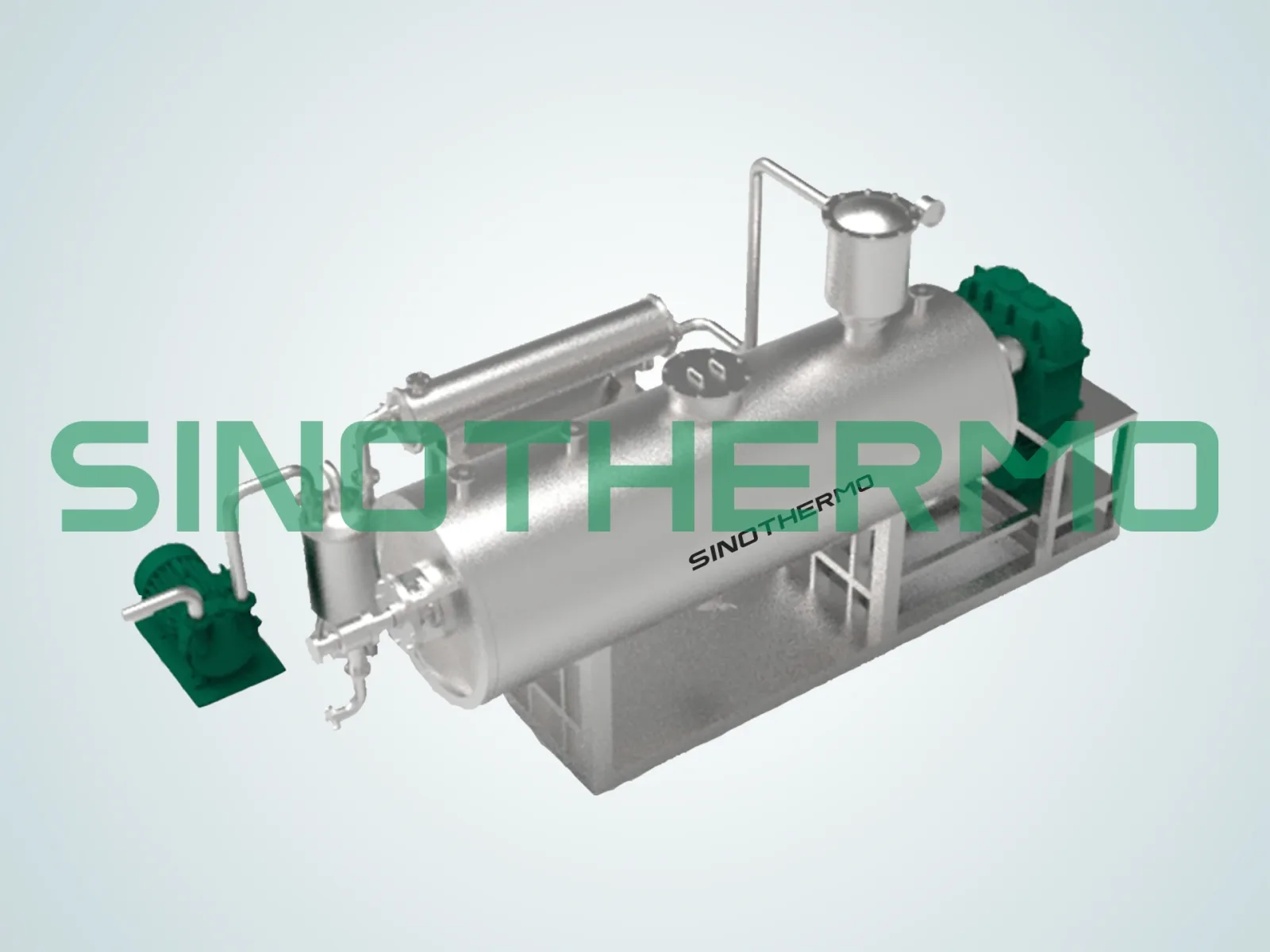
- 2.Eindampfung. Die Milch wird unter Vakuum konzentriert, typischerweise auf etwa 45–55% Gesamttrockenmasse. Das ist wirtschaftlich bedeutsam: Wasserentzug in einem Mehrstufen-Verdampfer kostet nur einen Bruchteil dessen, was der Wasserentzug in derselben Menge im Trockner kosten würde. Je weiter die Konzentration hier sinnvoll vorangetrieben wird, desto weniger Arbeit muss der Trockner leisten und desto weniger Energie wird verbraucht.
- 3.Sprühtrocknung. Das Konzentrat wird zu einem Zerstäuber gepumpt – einem Rotationszerstäuber oder einem Satz von Hochdruckdüsen – und in die Heißluftkammer eingesprüht. Der Großteil des verbleibenden Wassers verdunstet innerhalb von Sekunden in der Haupttrocknungskammer.
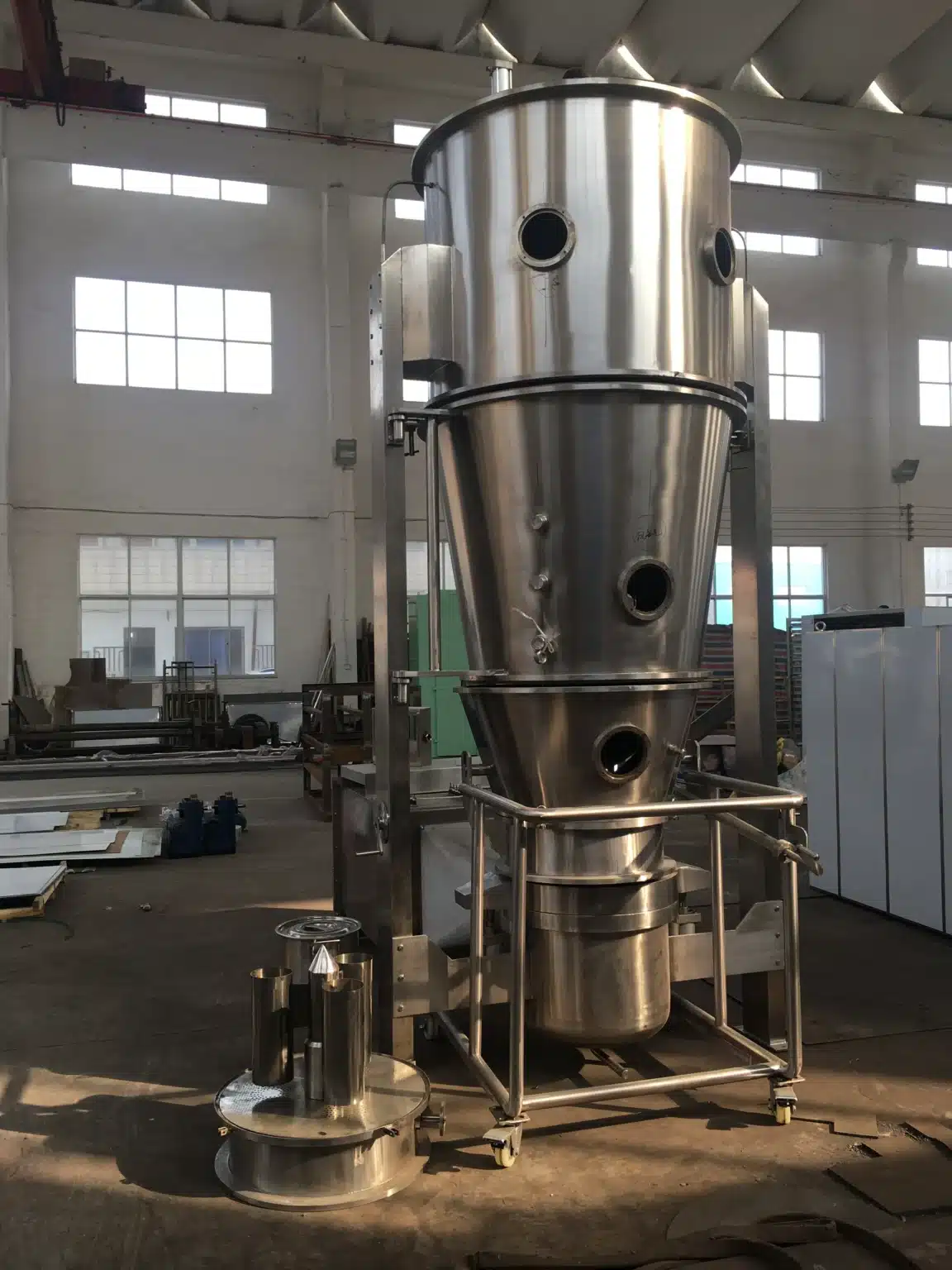
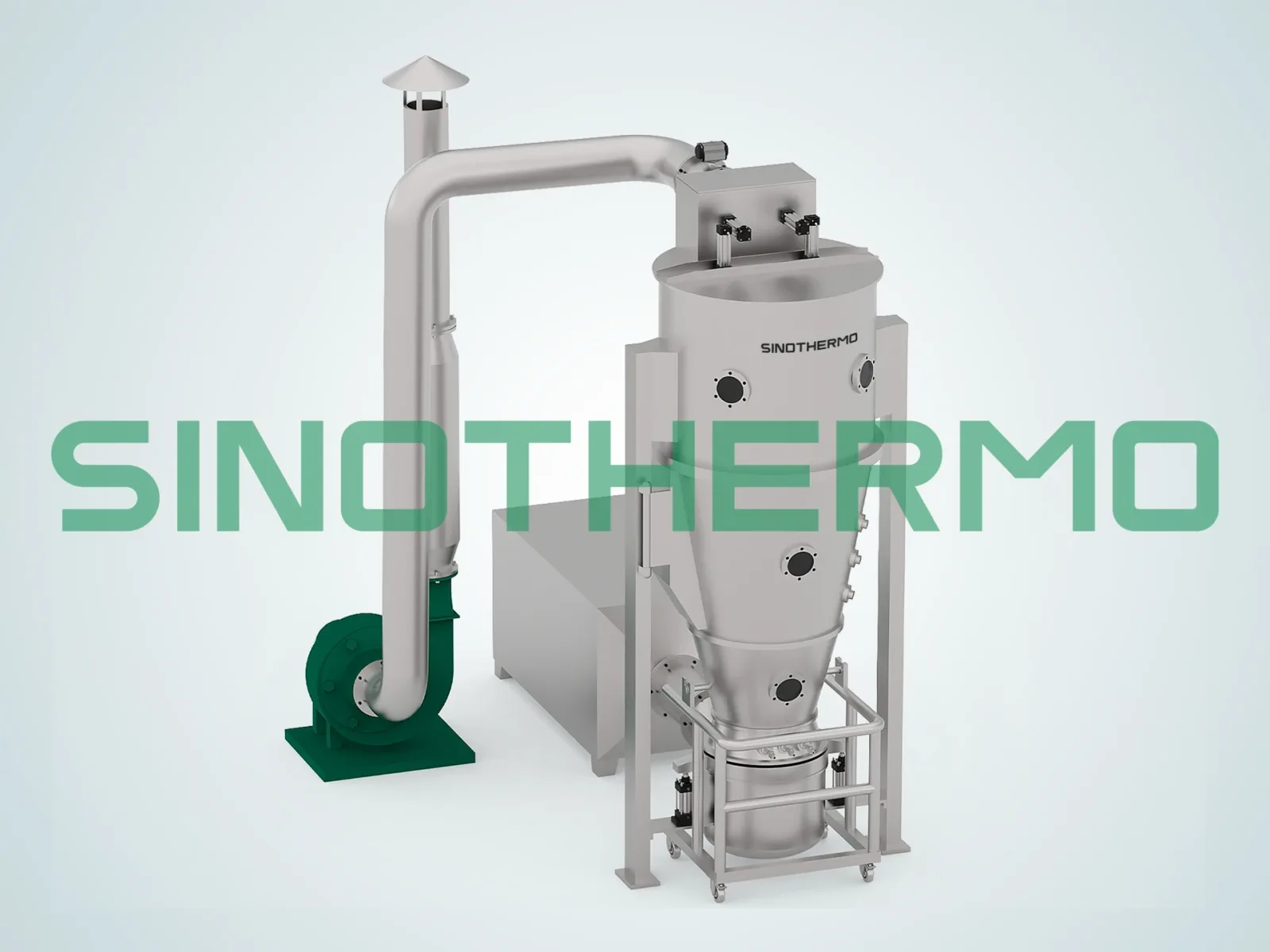
- 4.Wirbelschicht-Nachtrocknung und Agglomeration. Die meisten modernen Anlagen trocknen nicht vollständig in der Hauptkammer. Sie geben ein teilgetrocknetes Pulver auf eine externe (oder integrierte) Wirbelschicht ab, die den Trocknungsprozess bei niedrigerer Temperatur schonend abschließt, das Pulver kühlt und – bei Instant-Produkten – die feinen Partikel zu größeren, porösen Agglomeraten zusammenfügt, die sich deutlich leichter benetzen und auflösen lassen.
- 5.Kühlung und Verpackung. Das fertige Pulver wird unter seinen Klebepunkt abgekühlt und idealerweise bei niedriger Luftfeuchtigkeit verpackt, um Verklumpung und Lipidoxidation während der Lagerung zu verhindern.
Einstufige vs. zweistufige Trocknung
Ein Punkt, den man verstehen sollte, bevor man eine Anlage spezifiziert, da er sowohl die Qualität als auch die Energiekosten maßgeblich beeinflusst.
- Bei der einstufigen Trocknung wird das gesamte Wasser in der Hauptkammer entfernt. Das Verfahren ist einfacher, aber um die Endfeuchte zu erreichen, muss die Austrittsluft heißer gefahren werden – das bedeutet mehr thermische Belastung für das Produkt und einen höheren spezifischen Energieverbrauch.
- Bei der zwei- (und dreistufigen) Trocknung erfolgt die Hauptarbeit in der Kammer, der Feinschliff auf einer Wirbelschicht. Da die Kammer mit einer moderateren Austrittstemperatur arbeiten kann, erhält man bessere Löslichkeit, weniger Anbrennen und einen geringeren Energieverbrauch pro Kilogramm Pulver. Das ist der Standard für hochwertiges Milchpulver und praktisch Pflicht für „instant“, agglomerierte Pulver.
Wenn ein Anbieter für ein lösliches oder Instant-Milchprodukt eine einstufige Anlage vorschlägt, sollten Sie nachfragen, warum.
Prozessparameter, die die Qualität bestimmen
Bei der Milchpulverqualität geht es im Kern darum, Wärme und Feuchte zu kontrollieren. Das sind die entscheidenden Stellhebel:
| Parameter | Was er steuert | Praktischer Hinweis |
|---|---|---|
| Eintrittslufttemperatur | Trocknungsgeschwindigkeit / verfügbare Wärme | Höhere Temperaturen trocknen schneller, erhöhen aber das Risiko von Hitzeschäden (Bräunung, geringere Löslichkeit). |
| Austrittslufttemperatur | Endfeuchte des Pulvers | Der praktische Hebel für die Feuchte – kleine Änderungen verschieben den Endwert deutlich; je niedriger sie bei Einhaltung der Spezifikation gehalten werden kann, desto schonender für das Produkt. |
| Feststoffgehalt des Feeds (aus dem Verdampfer) | Trocknerlast, Partikelstruktur | Höherer Feststoffgehalt bedeutet weniger Arbeit für den Trockner, aber bei zu hohem Gehalt wird das Konzentrat zu viskos für eine saubere Zerstäubung. |
| Zerstäubung (Raddrehzahl / Düsendruck) | Tröpfchengröße → Partikelgröße & Schüttdichte | Bestimmt die Partikelgrößenverteilung und damit Fließfähigkeit und Packungsdichte. |
| Wirbelschichtbedingungen | Endfeuchte, Agglomeratgröße | Steuert die Instant-Eigenschaften – Benetzbarkeit und Dispergierbarkeit. |
Keiner dieser Parameter funktioniert isoliert – es ist ein Balanceakt. Genau deshalb werden Milchpulveranlagen auf das Produkt zugeschnitten und nicht anhand eines allgemeinen Datenblatts ausgewählt.
Häufige Qualitätsprobleme – und ihre Ursachen
Wenn eine Milchpulvercharge die Spezifikation verfehlt, liegt die Ursache meist in einem dieser Bereiche:
| Fehler | Wahrscheinlichste Ursache | Wo man suchen sollte |
|---|---|---|
| Schlechte Löslichkeit / hoher Unlöslichkeitsindex | Übermäßige Hitze schädigt die Proteine | Austrittstemperatur zu hoch; Wärmebehandlung und Trocknungskurve überprüfen |
| Verbrannte Partikel | Überhitzung oder verbrannte Ablagerungen an der Kammerwand | Wandablagerungen, Hotspots, schlechte Luftverteilung |
| Verklumpung bei der Lagerung | Restfeuchte zu hoch oder feuchte Verpackung | Austrittstemperatur, Wirbelschicht-Nachbehandlung, Luftfeuchtigkeit im Abfüllraum |
| Geringe Schüttdichte | Zerstäubung und Konzentration nicht auf den Zielwert abgestimmt | Zerstäubereinstellungen, Feststoffgehalt des Feeds |
| Fehlgeschmack / Oxidation (Vollmilchpulver) | Fettoxidation während der Lagerung | Abfüllung unter Schutzgas, Sauerstoffbarriere-Verpackung |
Das Muster ist eindeutig: Die meisten Fehler lassen sich auf die thermische Kontrolle und das Feuchtemanagement zurückführen, nicht auf eine einzelne Einstellung. Eine gut konzipierte Anlage gibt dem Bediener über beides eine saubere Kontrolle.
Ausrüstung: Was eine lebensmitteltaugliche Milchpulveranlage benötigt
Milchpulveranlagen kombinieren typischerweise einen Lebensmittel-Sprühtrockner mit einer externen Wirbelschicht für die Nachbehandlung und Agglomeration, gespeist von einem vorgeschalteten Verdampfer. Bei Milchprodukten ist hygienisches Design keine Option – es ist der entscheidende Faktor überhaupt:
- Durchgängig hygienische, lebensmitteltaugliche Bauweise — produktberührende Flächen aus Edelstahl (üblicherweise SS304 / SS316L), spaltfrei und selbstentleerend.
- CIP-Systeme (Clean-in-Place), damit die Anlage zwischen den Chargen zuverlässig gereinigt und desinfiziert werden kann, ohne sie zu demontieren.
- Sachgerechte Luftführung und Filtration der Trocknungsluft, da diese direkt mit dem Lebensmittel in Kontakt kommt.
- Kontrollierte Luftströmung und Kammergeometrie zur Vermeidung von Wandablagerungen — der Hauptursache für angebrannte Partikel und Reinigungsprobleme.
- Zweistufige Konfiguration (Kammer + Wirbelschicht) für Löslichkeit, Energieeffizienz und Instant-Eigenschaften.
Zwei Zerstäubungsverfahren: Rotationszerstäuber vs. Hochdruckdüse
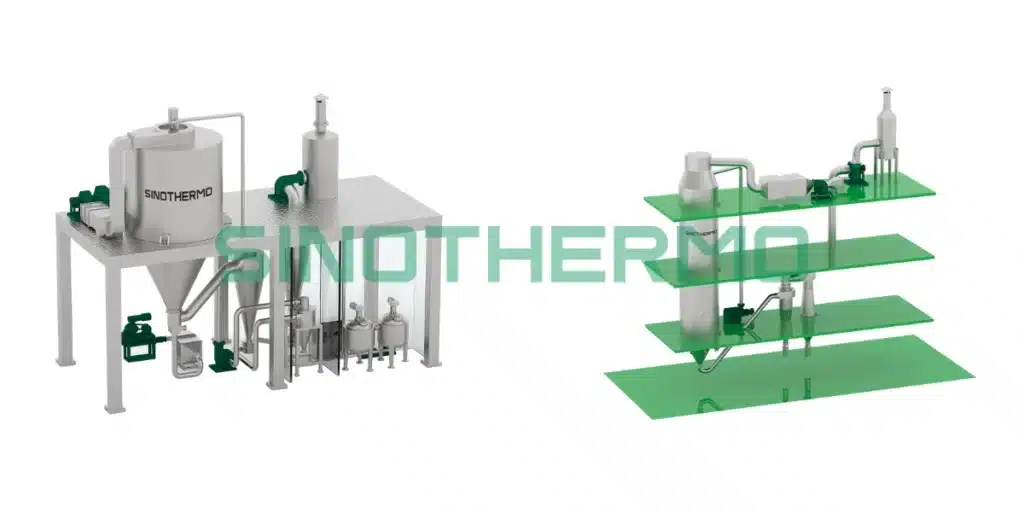
Wie das Konzentrat zerstäubt wird, ist die erste Entscheidung — und SINOTHERMO bietet beide Verfahren:
- Hochgeschwindigkeits-Zentrifugalzerstäuber (Rotationszerstäuber) — LPG-Serie. Ein Rotationsrad mit bis zu ~35.000 U/min schleudert das Konzentrat zu feinen Tröpfchen. Dies ist das etablierte Verfahren für die Milchwirtschaft: Es bewältigt die Viskosität des Milchkonzentrats gut, ist tolerant gegenüber dem Feststoffgehalt der Zulaufmasse und einfach zu bedienen. Unsere LPG-Zentrifugalsprühtrockner umfassen die Baugrößen LPG-5 bis LPG-6500, mit einer Wasserverdampfungsleistung von 5 bis 6.500 kg/h, einer geregelten Eintrittslufttemperatur von 140–350 °C, einer Austrittstemperatur von etwa 80–90 °C und einer Trockenpulver-Ausbeute von ≥95%.
- Hochdruck-Düsenzerstäuber — YPG-Serie. Das Konzentrat wird unter hohem Druck durch eine Düse gepresst, wodurch gröbere, oft hohle Partikel und ein höherer, frei fallender Sprühkegel entstehen. Unsere YPG-Drucksprühtrockner umfassen die Baugrößen YPG-50 bis YPG-1000 (Wasserverdampfung 50 bis 1.000 kg/h), mit einem Hochdruckpumpendruck von 2–10 MPa, einer Eintrittslufttemperatur von 140–350 °C und einer Materialausbeute von >97% — mit einer nachgeschalteten Entstaubungsstufe steigend auf über 98%.
Für die meisten Milchpulver ist der Rotationszerstäuber der naheliegende Ausgangspunkt; die richtige Wahl hängt jedoch von der gewünschten Partikelgröße, der Schüttdichte und dem Durchsatz ab. Beide Plattformen sind für die kontinuierliche Lebensmittelproduktion ausgelegt und können mit produktberührenden Edelstahlflächen und CIP-System ausgestattet werden, gefolgt von einer nachgeschalteten Wirbelschicht für die zweistufige Endbehandlung und Agglomeration.
| Spezifikation | LPG (Zentrifugal) | YPG (Druckdüse) |
|---|---|---|
| Zerstäuber | Rotationsrad, bis zu ~35.000 U/min | Hochdruckdüse, 2–10 MPa |
| Wasserverdampfung | 5 – 6.500 kg/h | 50 – 1.000 kg/h |
| Eintrittslufttemperatur | 140 – 350 °C (automatisch geregelt) | 140 – 350 °C |
| Austrittslufttemperatur | ~80 – 90 °C | — |
| Ausbeute | ≥ 95% | > 97% (98%+ mit 2. Entstaubungsstufe) |
| Typisches Partikel | Feinpulver | Gröbere / hohle Granulate |
(Die angegebenen Spezifikationsbereiche entsprechen der Standard-LPG/YPG-Serie; die tatsächliche Konfiguration — Wärmequelle, lebensmitteltaugliche Detailausführung, Wirbelschicht, Verdampfer — wird projektspezifisch festgelegt. Die endgültigen Werte hängen vom Material und den Ein-/Austrittsbedingungen ab, da die Serie laufend weiterentwickelt wird.)
Ob Sie eine neue Linie planen oder Löslichkeits- bzw. Verklumpungsprobleme an einer bestehenden Anlage beheben möchten — die oben genannten Anlagenoptionen sind der richtige Ausgangspunkt für das Gespräch. SINOTHERMO baut lebensmitteltaugliche Zentrifugal- und Drucksprühtrockner, sowie Wirbelschichttrockner zur Endbehandlung — mit hauseigenem Prozessengineering und über 20 Jahren Erfahrung in der industriellen Trocknung. Die Anlage wird auf Ihre Milch, Ihr Zielpulver und Ihren Durchsatz abgestimmt — nicht umgekehrt.
Sprechen Sie mit einem Prozessingenieur über Ihre Milchpulver-Linie — nennen Sie uns Ihren Produkttyp (Magermilchpulver/Vollmilchpulver/Instant), den gewünschten Durchsatz und die Feuchtigkeitsspezifikation, und wir helfen Ihnen, die passende Konfiguration auszulegen. Kontaktdaten finden Sie am Ende dieses Artikels.
FAQ
Wie wird sprühgetrocknetes Milchpulver hergestellt?
Flüssige Milch wird standardisiert und pasteurisiert, unter Vakuum auf etwa 45–55 % Feststoffgehalt eingedickt und anschließend in einem Sprühtrockner in heiße Luft zerstäubt, wo sie innerhalb von Sekunden zu Pulver trocknet. In den meisten Anlagen wird das Pulver danach auf einer Wirbelschicht nachbehandelt und agglomeriert, um die Löslichkeit zu verbessern.
Was ist der Unterschied zwischen Magermilch- und Vollmilchpulver?
Magermilchpulver (SMP) wird aus entrahmter Milch hergestellt und ist länger lagerfähig, da es kaum Fett enthält, das oxidieren kann. Vollmilchpulver (WMP) enthält den Milchfettanteil, was für volleren Geschmack sorgt, aber eine kürzere Haltbarkeit und einen größeren Bedarf an schützender Verpackung mit sich bringt.
Warum wird Milch vor der Sprühtrocknung konzentriert?
Wasser durch Eindampfen zu entfernen ist deutlich kostengünstiger und schonender, als es im Trockner zu entfernen. Eine Vorkonzentrierung auf ca. 45–55 % Feststoffgehalt macht den Prozess wirtschaftlicher, senkt den Energieverbrauch und reduziert die gesamte Hitzebelastung des Pulvers.
Was verursacht eine schlechte Löslichkeit von Milchpulver?
Meist übermäßige Hitze während der Trocknung, die Proteine denaturiert und den Unlöslichkeitsindex erhöht. Die Kontrolle der Austrittstemperatur, der Einsatz einer zweistufigen Trocknung und die Vermeidung von Wandablagerungen sind die wichtigsten Gegenmaßnahmen.
Was ist die zweistufige Trocknung und warum ist sie wichtig?
Bei der zweistufigen Trocknung erfolgt der Großteil der Trocknung in der Hauptkammer, während das Pulver anschließend schonend auf einer Wirbelschicht fertiggetrocknet wird. Dies ermöglicht eine niedrigere Austrittstemperatur der Kammer, was die Löslichkeit verbessert, Anbrennen reduziert und den Energieverbrauch senkt – der Standard für hochwertiges und instant-lösliches Milchpulver.
Welche Ausrüstung wird zur Herstellung von Milchpulver benötigt?
Ein lebensmitteltauglicher Sprühtrockner, in der Regel mit vorgeschaltetem Eindampfer und nachgeschalteter Wirbelschicht zur Nachbehandlung und Agglomeration, alles nach hygienischen Standards mit CIP-Reinigung gefertigt.
Rotationszerstäuber oder Druckdüse für Milchpulver?
Beides funktioniert. Ein Hochgeschwindigkeits-Zentrifugalzerstäuber (Rotationszerstäuber) – wie die LPG-Serie von SINOTHERMO – ist die klassische Wahl in der Milchwirtschaft: Er kommt gut mit der Viskosität des Milchkonzentrats zurecht und erzeugt feines Pulver. Eine Hochdruckdüse (YPG-Serie) erzeugt gröbere, oft hohle Partikel. Die richtige Wahl hängt von der gewünschten Partikelgröße, der Schüttdichte und der Kapazität ab.
Welche Kapazität benötigt mein Sprühtrockner für Milchpulver?
Die Dimensionierung erfolgt anhand der pro Stunde zu verdampfenden Wassermenge, nicht allein anhand der Pulverausbeute. Die LPG-Baureihe von SINOTHERMO deckt eine Wasserverdampfungsleistung von etwa 5 bis 6.500 kg/h ab, sodass die Anlage exakt auf Ihre Konzentrat-Zulaufrate und den Feststoffgehalt abgestimmt werden kann. Teilen Sie uns Ihren Durchsatz mit, und wir dimensionieren die Anlage entsprechend.
Wie lange ist sprühgetrocknetes Milchpulver haltbar?
Bei korrekter Trocknung (etwa 2–4 % Restfeuchte) und Verpackung unter geringer Luftfeuchtigkeit bleibt Magermilchpulver in der Regel 1–2 Jahre haltbar; Vollmilchpulver hat aufgrund der Fettoxidation eine kürzere Haltbarkeit und profitiert von einer Verpackung unter Schutzgas oder mit Barriereeigenschaften.

Mark Gu
Passionate about enhancing customer experiences and streamlining operations, Mark focuses on building strong relationships, fostering innovation, and leading teams to achieve exceptional service and efficiency.
E-Mail: mark.gu@sinothermo.com
Telefon: +86 18021972660