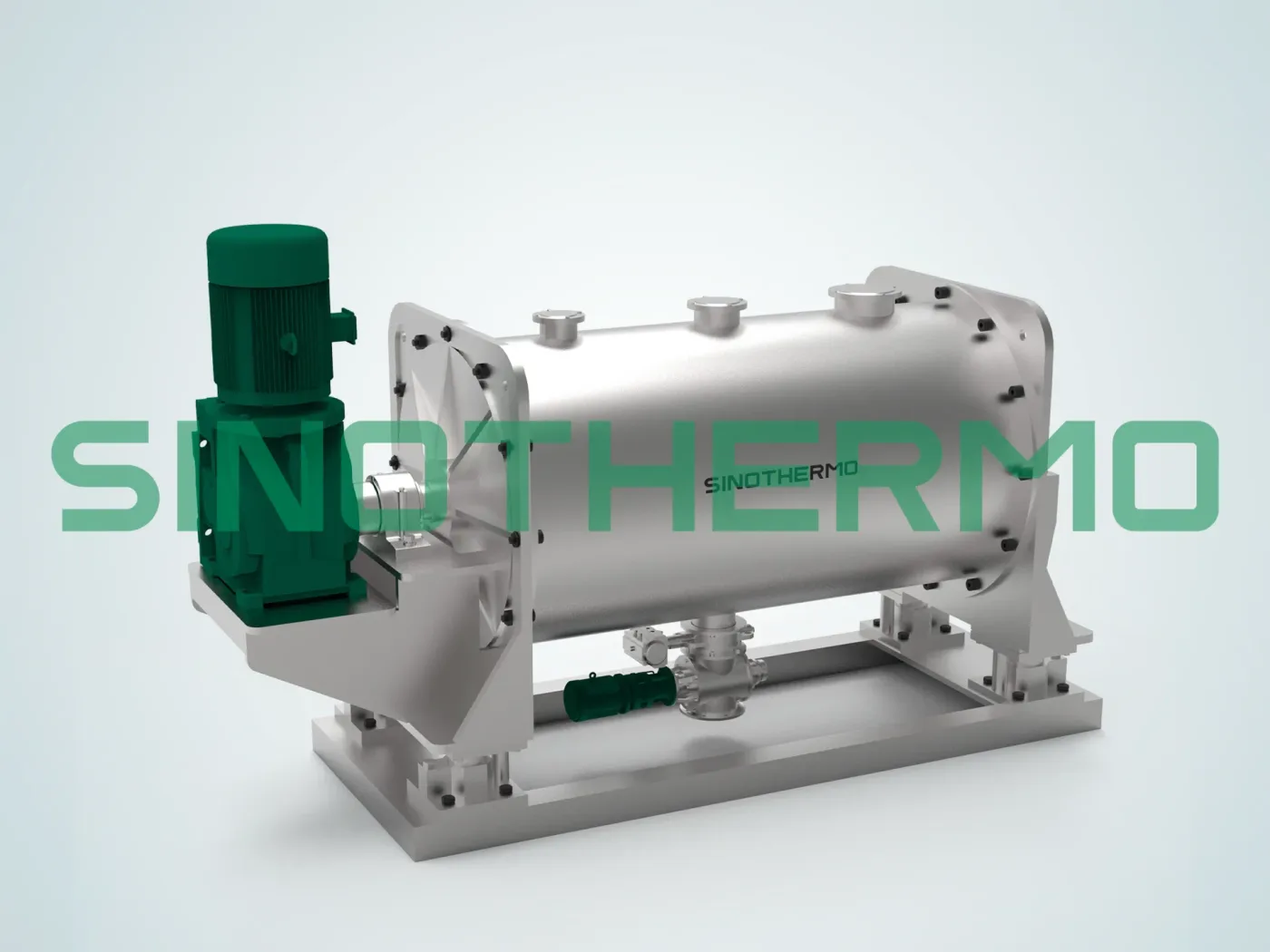
Ein Doppelwellen-Mischer ist eine horizontale Mischmaschine, die trockene Pulver, Granulate und halbfeste Stoffe mithilfe eines doppelhelikalen „Bandschaufel“-Rührwerks mischt, das sich in einem U-förmigen Trog dreht. Das äußere Band bewegt das Material zu einem Ende, während das innere Band es zum anderen Ende zurückschiebt – das ergibt eine schnelle, gleichmäßige Vermischung: Die meisten frei fließenden Trockenmischungen erreichen innerhalb von 10 bis 20 Minuten Homogenität. Er ist einer der am häufigsten eingesetzten Industriemischer in der Produktion von Chemikalien, Lebensmitteln, Pharmazeutika und Batteriematerialien.
Wenn Ihr Prozess trockene Ausgangsstoffe zu einer gleichmäßigen Mischung verarbeitet – eine Lebensmittel-Vormischung, eine chemische Formulierung, ein Düngemittel, ein Kathodenvorläufer – ist der Doppelwellen-Mischer meist die erste Maschine, an die ein Ingenieur denkt. Dieser Leitfaden erklärt die Funktionsweise, die wichtigsten Bauarten, die Einsatzgebiete und die korrekte Auslegung, damit Sie die richtige Maschine gleich beim ersten Mal spezifizieren.
Warum die Wahl des Mischers die Mischgüte bestimmt
Eine Mischung ist immer nur so gut wie die Maschine, die sie erzeugt hat. Zu geringe Mischzeit hinterlässt ungleichmäßige Zonen und inkonsistente Dosierung; zu lange Mischzeit kann die Mischung entmischen oder empfindliche Partikel beschädigen; ein falsch gewähltes Rührwerk kann Totzonen entstehen lassen, in denen sich Material nie bewegt. Für jedes Team, das eine Trockenformulierung im industriellen Maßstab produziert, ist der Mischer keine beliebige Handelsware – er bestimmt die Gleichförmigkeit des Inhalts, die Charge-zu-Charge-Konsistenz und die Zykluszeit. Der Doppelwellen-Mischer verdankt seine Beliebtheit der Tatsache, dass er für frei fließende Pulver eine schnelle, gründliche und reproduzierbare Mischung zu vernünftigen Kosten liefert.
Wie funktioniert ein Doppelwellen-Mischer?
Im Zentrum eines Doppelwellen-Mischers steht eine horizontale Rührwerkswelle, die mit zwei Sätzen wendelförmiger Bänder ausgestattet ist, die in entgegengesetzte Richtungen gewickelt und auf unterschiedlichen Radien angeordnet sind. Während sich die Welle im U-förmigen Trog dreht:
- Das äußere Band bewegt den Großteil des Materials langsam in eine Richtung.
- Das innere Band bewegt einen kleineren Anteil schnell in die entgegengesetzte Richtung.
Diese Gegenstrombewegung erzeugt sowohl eine radiale Bewegung (Material wälzt zur Welle hin und von ihr weg) als auch eine axiale Bewegung (Material wandert entlang der Trogachse). Diese Kombination verteilt die Partikel in kurzer Zeit gründlich. Da die Vermischung auf dieser konvektiven Bewegung beruht und nicht auf der Schwerkraft, erreicht ein Doppelwellen-Mischer bei den meisten frei fließenden Pulvern eine homogene Mischung deutlich schneller als ein Taumelmischer.
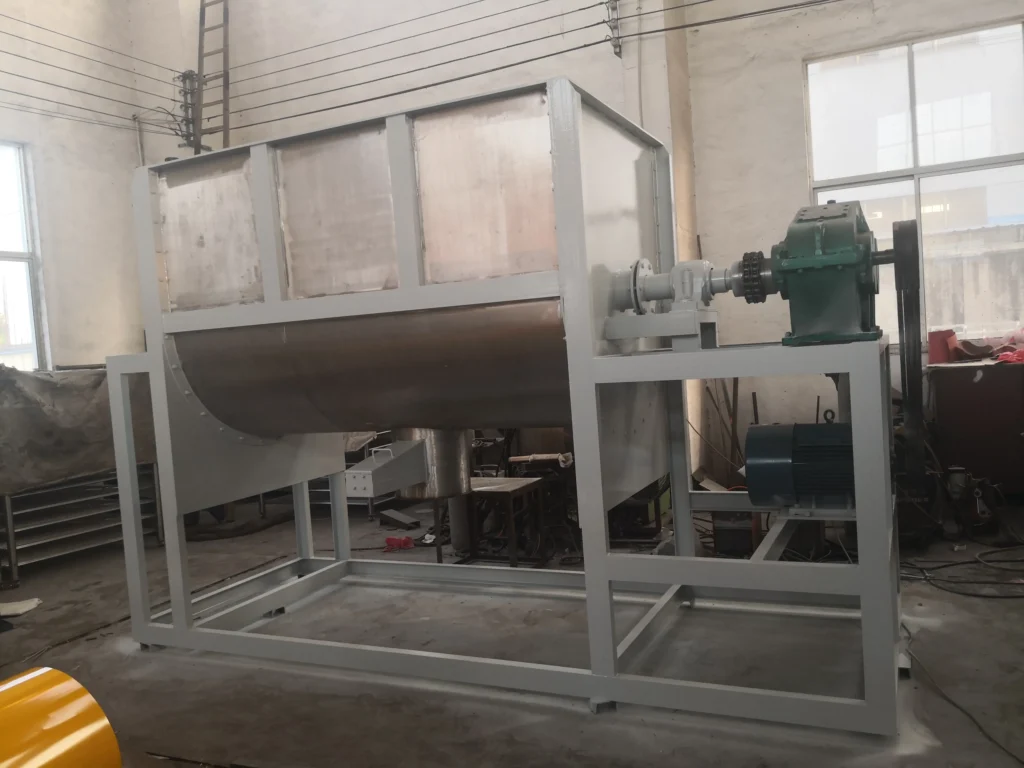
Hauptkomponenten eines Doppelwellen-Mischers
- U-förmiger Trog — nimmt die Chargen auf; sein gewölbter Boden folgt der Bandbahn, sodass kein Material ungemischt bleibt.
- Bandschaufel-Rührwerk — die doppelhelikale Schaufelbaugruppe, die den Mischvorgang ausführt.
- Antriebssystem — Motor, Getriebe und Welle, die das Rührwerk antreiben; ausgelegt nach Schüttdichte und Füllgrad.
- Auslassventil — meist ein Schieber, Klappen- oder Flachventil am Boden für eine saubere, vollständige Entleerung.
- Wellendichtungen — Packungen oder Gleitringdichtungen, die das Pulver im Inneren halten und Verunreinigungen abhalten.
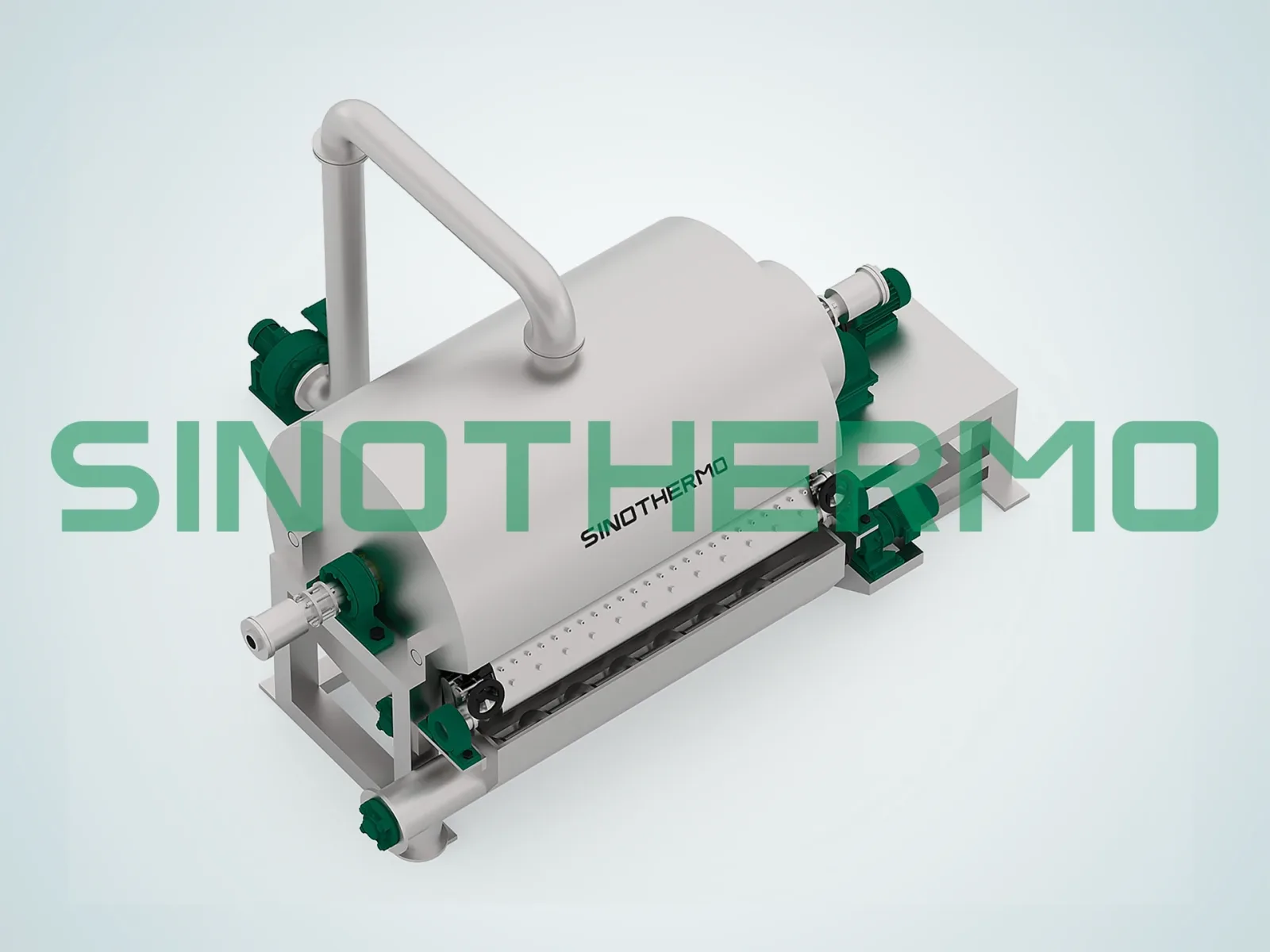
Die produktberührten Teile bestehen üblicherweise aus Edelstahl — SS304 für allgemeine Anwendungen, SS316L mit polierten Oberflächen für Lebensmittel-, Pharma- oder korrosive Anwendungen. SINOTHERMO fertigt den Horizontalen Doppelwellen-Mischer so, dass das äußere Band das Material von beiden Enden zur Mitte hin sammelt und das innere Band es wieder nach außen zurückführt — das klassische konvektive Muster, das eine zuverlässige Trockenmischung ergibt.
Bauarten von Doppelwellen-Mischern
| Typ | Hauptmerkmal | Am besten geeignet für |
|---|---|---|
| Standard-Doppelwellenmischer | Trockenmischung mit Doppelschnecke | Allgemeine trockene Pulver und Granulate |
| Doppelwellenmischer mit Sprührohr | Zugabe von Flüssigkeit während des Mischens | Leichtes Benetzen, Beschichten, Binderzugabe |
| Hygienischer / GMP-Doppelwellenmischer | Polierte Kontaktteile, CIP-fähig | Lebensmittel- und Pharmaproduktion |
| Doppelwellenmischer mit Doppelmantel | Heiz- oder Kühlfunktion | Temperaturempfindliche oder feuchtigkeitskontrollierte Mischungen |
Im Doppelwellenmischer-Sortiment von SINOTHERMO gibt es zwei unterschiedliche Maschinen, die auf dem Doppelwellenprinzip basieren. Es lohnt sich zu wissen, welche für Ihren Prozess geeignet ist:
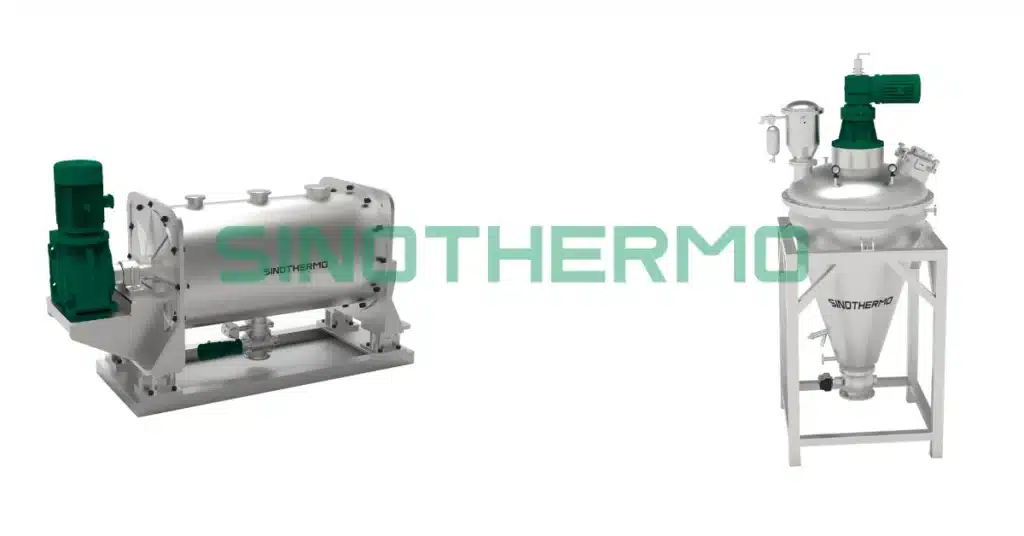
- Horizontaler Doppelwellenmischer — der klassische horizontale U-Trog mit einer doppelspiraligen Mischschnecke. Das versteht man meist unter „Doppelwellenmischer“: schnelles, hochkonvektives Mischen von frei fließenden trockenen Pulvern und Granulaten in großen Chargen.
- Konischer Schnecken-Doppelwellenmischer — ein vertikales, konisches Gefäß, in dem eine Schnecke und eine äußere Wendel gemeinsam rotieren, das Material spiralförmig entlang der Konuswand nach oben fördern, während die Schwerkraft es wieder nach unten zieht. Er verarbeitet Feststoffe, Pulver, Granulate und Flüssigkeiten, eignet sich für schonenderes Mischen größerer oder scherempfindlicher Mengen und kann mit Sprühzerstäubung oder Doppelmantel für Heizen/Kühlen ausgestattet werden.
Wenn eine Formulierung mehr als sanftes Benetzen erfordert — etwa schnelles Mischen kohäsiver Materialien oder das Aufbrechen von Klumpen — ist ein Pflugschaufelmischer oder Hochgeschwindigkeitsmischer oft das bessere Werkzeug; siehe die Entscheidungshilfe unten.
Anwendungen
Doppelwellenmischer werden in vielen Branchen eingesetzt:
- Chemikalien — trockene Chemieformulierungen, Katalysatoren, Pigmente, Waschmittel.
- Lebensmittel — Gewürzmischungen, Würzmittel, Getränke-Vormischungen, Backmischungen, Nährstoffpulver.
- Pharmazeutika — Mischen von Hilfsstoffen und Wirkstoffen vor der Granulierung oder Tablettierung.
- Batteriematerialien — Mischen von Kathoden- und Anoden-Vorläuferpulvern.
- Landwirtschaft — Düngemittel und Futtermittel-Vormischungen.
Wie man einen Doppelwellenmischer richtig dimensioniert
Die Wahl der richtigen Größe hängt von einigen Variablen ab:
- 1.Chargen- (Arbeits-)volumen — das benötigte Volumen pro Charge, nicht das Gesamtvolumen des Trogs.
- 2.Schüttdichte — schwerere Materialien erfordern mehr Leistung und eventuell einen stärkeren Antrieb.
- 3.Füllstand — Doppelwellenmischer mischen am besten bei einer Befüllung von etwa 40–100% der Nennkapazität; die Mischschnecke muss dabei stets Kontakt zum Material haben. Eine Unterfüllung verschwendet die Charge; eine Überfüllung blockiert das konvektive Mischmuster.
- 4.Mischzeit — die meisten Mischungen sind nach 10–20 Minuten fertig; abrasive oder kohäsive Materialien können länger benötigen.
Eine verfahrenstechnische Sichtweise: Die Mischung testen, bevor Sie spezifizieren
Ein Datenblatt kann nicht vorhersagen, wie sich Ihr Pulver tatsächlich verhält. Zwei Mischungen mit demselben nominalen Rezept können in zwölf Minuten fertig sein oder vierzig Minuten mit der Mischschnecke „kämpfen“ — abhängig von Partikelgröße, Kohäsion und Dichteunterschied zwischen den Bestandteilen. Der zuverlässige Weg zur Spezifikation besteht darin, das tatsächliche Material zu testen und Mischgleichmäßigkeit, Mischzeit und Entladung zu messen, bevor man sich auf eine Produktionsmaschine festlegt.
Dieser Schritt wird von den meisten Käufern übersprungen — und später bereut. Als verfahrenstechnisch orientierter Hersteller mit über 20 Jahren Erfahrung liefert SINOTHERMO nicht nur den Mischer — wir helfen Ihnen, die Mischung zu validieren. Bringen Sie Ihr Material in unser hauseigenes Pilotlabor, testen Sie es in der geeigneten Mischermaschine, und spezifizieren Sie auf Basis von Nachweisen statt Annahmen. Jede von uns gebaute Maschine wird anschließend um Ihren validierten Prozess herum konstruiert — nicht von einem Standardmodell abgeleitet.
Häufige Fehler, die vermieden werden sollten
- Auslegung auf das Gesamtvolumen statt auf das Arbeitsvolumen. Bestellen Sie nach der Chargengröße, die Sie tatsächlich fahren, beim korrekten Füllstand – nicht nach der Nennkapazität der Wanne.
- Einsatz eines Doppelwellenmischers bei empfindlichem oder kohäsivem Material erzwingen. Doppelwellen erzeugen echte Scherkräfte; empfindliche Granulate brechen und klebrige Pulver leisten Widerstand. Ziehen Sie stattdessen eine Schaufel- oder Pflugschaufel-Ausführung in Betracht.
- Die Entleerung ignorieren. Ein Gemisch, das gut mischt, sich aber nicht sauber entleeren lässt, hinterlässt Rückstände zwischen den Chargen – legen Sie das passende Ventil für Ihr Material fest.
- Den Pilotversuch überspringen. Ein Datenblatt kann Mischzeit oder Homogenität für Ihre spezifische Mischung nicht vorhersagen. Testen Sie vorab.
- Übermischen. Mehr Zeit bedeutet nicht mehr Homogenität – nach dem Endpunkt entmischen sich manche Gemische wieder. Bestimmen Sie den Endpunkt, raten Sie ihn nicht.
Fazit
Ein Doppelwellenmischer ist das Arbeitstier beim Mischen von Trockenpulvern: Ein doppelhelixförmiges Rührwerk sorgt für schnelles, gleichmäßiges konvektives Mischen von frei fließenden Pulvern und Granulaten in der chemischen, Lebensmittel-, Pharma- und Batterieproduktion. Legen Sie ihn nach Arbeitsvolumen und Füllstand aus, wählen Sie das Kontaktmaterial passend zu Ihren Hygieneanforderungen, und entscheiden Sie sich für eine schonendere Mischwirkung, wenn Ihr Material empfindlich oder kohäsiv ist. Doch das Datenblatt grenzt die Auswahl nur ein – ein Pilotversuch mit Ihrem eigenen Material bestätigt die Wahl.
Nicht sicher, ob ein Doppelwellenmischer für Ihr Pulver geeignet ist? Sprechen Sie mit unseren Verfahrenstechnikernund vereinbaren Sie einen Test in unserem Pilotlabor – wir helfen Ihnen, die Entscheidung anhand von Daten zu treffen, nicht anhand von Annahmen.
FAQ
Wofür wird ein Doppelwellenmischer eingesetzt?
Ein Doppelwellenmischer mischt trockene Pulver und Granulate zu einem homogenen Gemisch. Er ist in der chemischen, Lebensmittel-, Pharma-, Batteriematerial- und Agrarproduktion verbreitet – überall dort, wo frei fließende trockene Ausgangsstoffe im großen Maßstab gleichmäßig kombiniert werden müssen.
Wie lange dauert das Mischen mit einem Doppelwellenmischer?
Die meisten frei fließenden Trockenmischungen erreichen in 10 bis 20 Minuten Homogenität. Kohäsive, abrasive oder in der Partikelgröße stark unterschiedliche Materialien benötigen möglicherweise länger; die verlässliche Methode zur Festlegung der Zykluszeit ist ein Pilotversuch mit Ihrem eigenen Material.
Welcher Füllstand ist bei einem Doppelwellenmischer erforderlich?
Doppelwellenmischer arbeiten am besten bei einer Füllung von etwa 40–100 % der Nennkapazität, damit die Mischwelle während der gesamten Chargendauer in Kontakt mit dem Material bleibt. Bei Unterfüllung bleibt Material unvermischt; bei Überfüllung stockt die Gegenstromführung.
Kann ein Doppelwellenmischer feuchte Materialien verarbeiten?
Ja, mit einer Sprühleiste für die dosierte Zugabe von Flüssigkeit, Beschichtungen oder Bindemitteln. Für die Zugabe größerer Flüssigkeitsmengen oder für die Feuchtgranulierung ist meist ein Pflugschaufelmischer oder ein spezieller Nassmischgranulator besser geeignet.
Welches Konstruktionsmaterial sollte ich wählen?
SS304 eignet sich für allgemeine chemische und industrielle Pulver; SS316L mit polierten Kontaktflächen ist der Standard für Lebensmittel- und Pharmaanwendungen, bei denen Reinigungsfähigkeit und Korrosionsbeständigkeit wichtig sind.

Mark Gu
Passionate about enhancing customer experiences and streamlining operations, Mark focuses on building strong relationships, fostering innovation, and leading teams to achieve exceptional service and efficiency.
E-Mail: mark.gu@sinothermo.com
Telefon: +86 18021972660