Grain & Starch Processing Lines
Complete production lines for rice, glutinous rice and starch materials — from soaking and milling through to finished powder or ready-to-use slurry. Whether you are building a line from scratch, retrofitting an existing one, or replacing only the drying stage, our process engineers can size the route around your material and your finished-product spec.
Three process routes — which one fits your product?
Grain and starch milling splits into three routes. They are not competing technologies: the right one depends on the texture your finished product needs and the total cost you can carry. The decisive difference for plant design is how much water enters the process, because that is what sets the drying duty downstream.
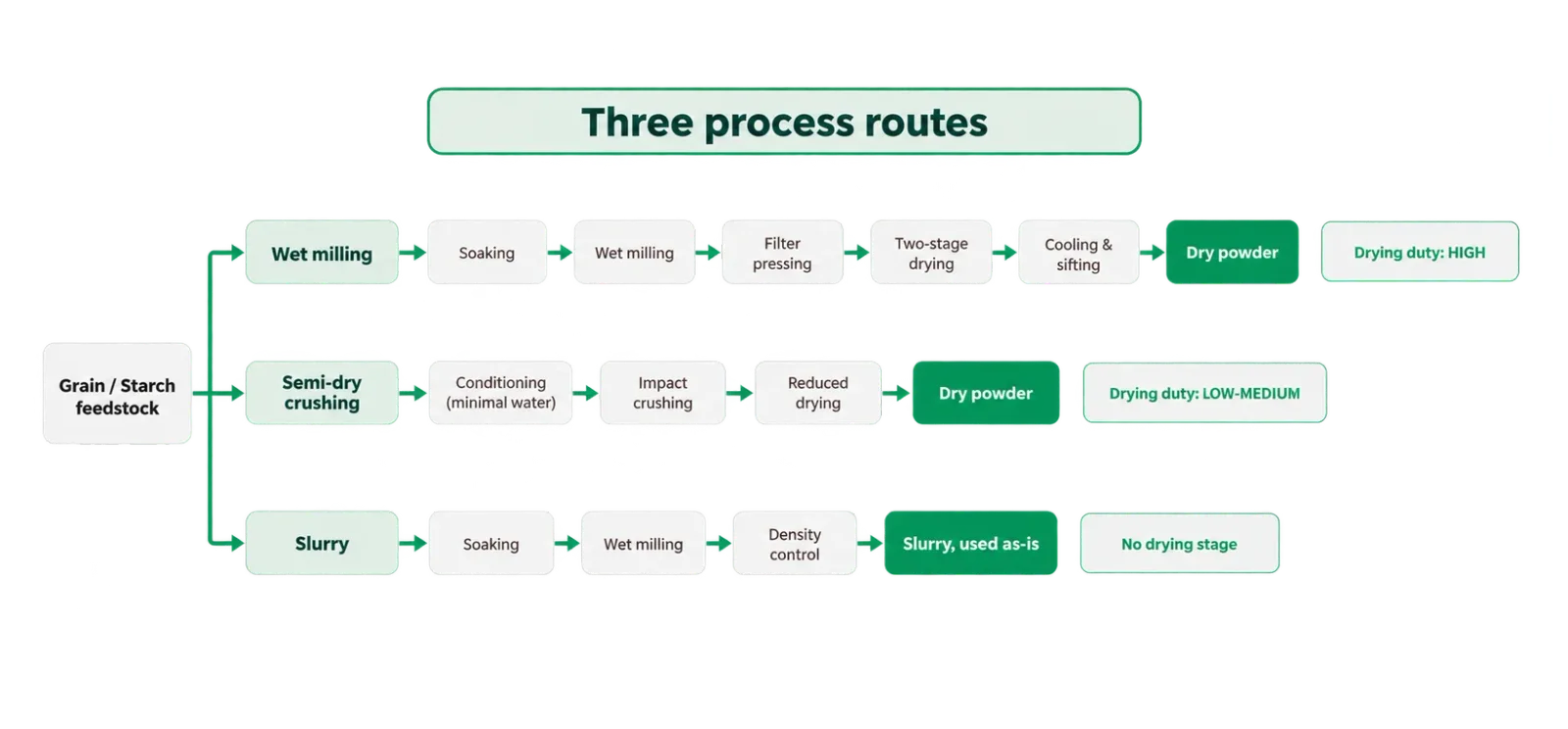
| Process route | Water added | Output form | Product positioning | Drying duty |
|---|---|---|---|---|
| Wet milling | Yes — soaked, then ground with water | Dry powder | Finest texture and lowest starch damage; the reference route for premium rice and glutinous rice flour | Highest — drying is the hardest stage in the line |
| Semi-dry (flexible) crushing | Minimal — a fraction of wet milling | Dry to semi-moist powder | Approaches wet-milled texture while cutting water and effluent sharply | Low to medium — a reduced drying stage remains |
| Slurry | Yes — ground with water, never dried | Slurry, used as-is downstream | Freshest flavour and aroma; shortest process, lowest conversion cost | None — this route has no drying stage |
Wheat starch and vital gluten follow a related wet route but add a gluten-separation step we would need to review against your specification — talk to us before assuming the same line applies.
Wet milling line
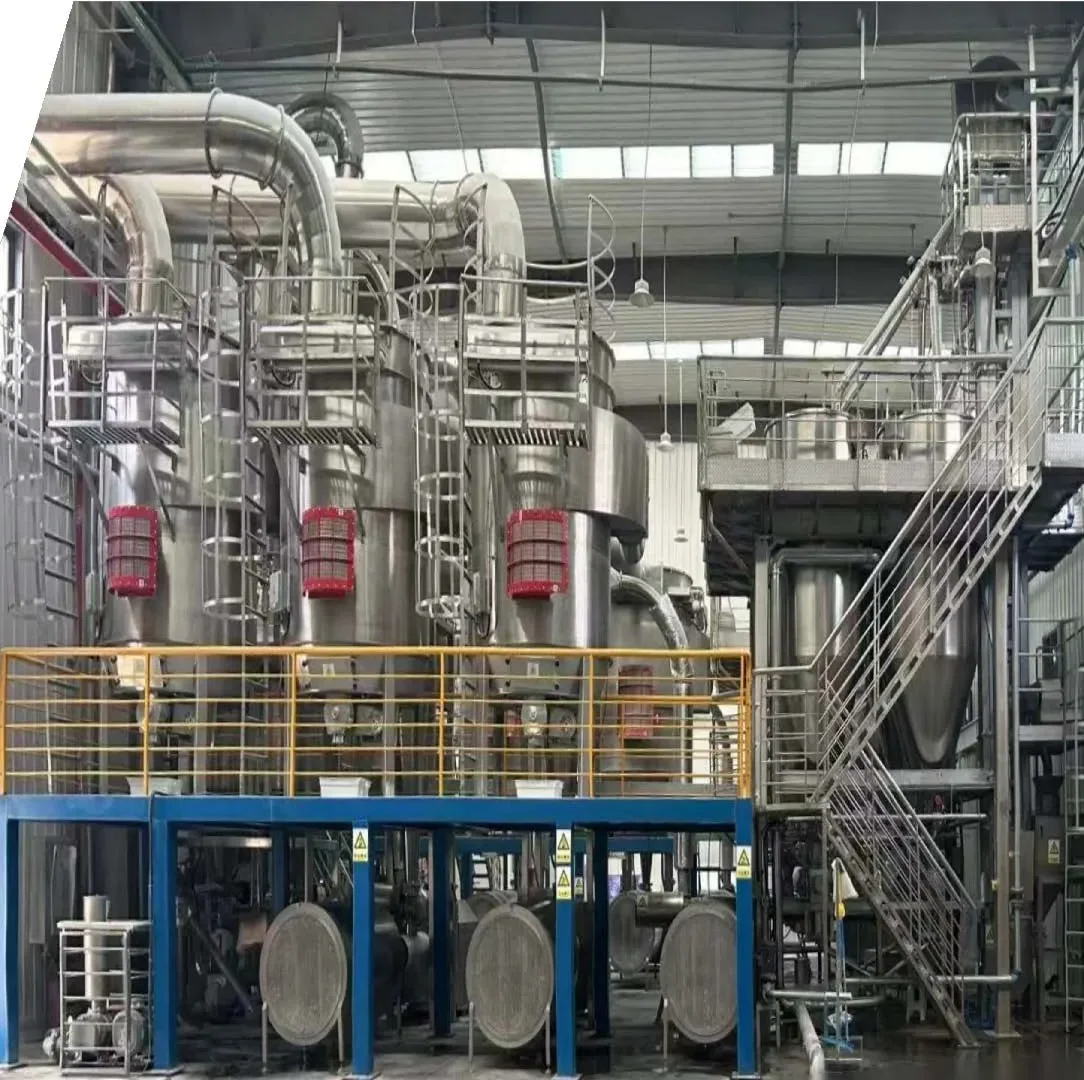
The wet route soaks the grain, grinds it into a fine slurry, presses the water out and dries the cake back into powder. It produces the finest, least damaged particle and is the route behind premium glutinous rice flour, rice noodle and rice vermicelli raw material. It is also the route where the drying stage decides whether the whole line makes money.
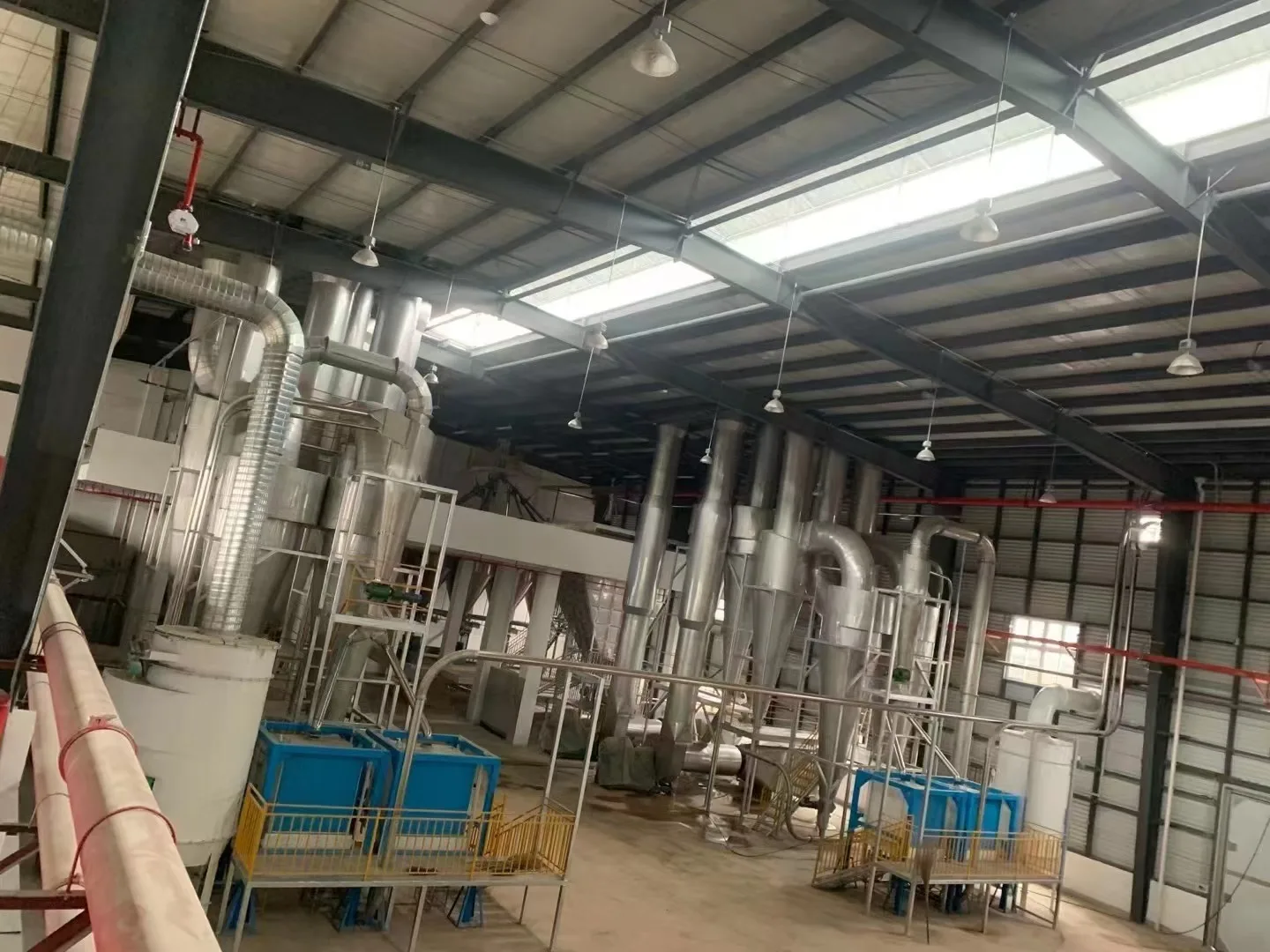
Process stages
- 1
Cleaning and blending
Sieving, destoning and colour sorting, then blending bins and a flow scale so each batch is mixed to a defined recipe before it ever reaches the mill.
- 2
Washing and soaking
Counter-current washing inside the tank saves water; wide-channel overflow carries floating debris out far better than orifice overflow. Bottom fill and bottom drain allow repeated water changes during production, which controls finished-product acidity, improves whiteness and cuts speck counts. Typical soak is 6-8 hours across 6-8 tanks rotating in pairs.
- 3
Primary milling
Soaked grain and water are fed together into a stainless hammer mill, where hammer sets and chamber jaw teeth break the material through a screen of defined mesh. Stainless construction removes the grit shedding of traditional carborundum mills — the source of ash and grittiness in the finished powder.
- 4
Secondary (fine) milling
A rotor-stator stainless starch mill takes the slurry to final fineness through the shear gap between rotor and stator. The smaller disc diameter and tighter gap give a finer, more consistent slurry and raise first-pass yield.
- 5
Filter pressing
A ceramic reciprocating plunger pump raises slurry pressure to 13-15 bar — roughly double the 7-8 bar of a conventional arrangement — so the cake leaves the press drier. Two automatic chamber presses alternate, which extends machine life and keeps the cycle continuous. Drier cake directly reduces the fuel the dryer has to burn.
- 6
Cake breaking and feeding
The cake collects in a bin and is broken and metered forward by a rake-breaker screw under variable-frequency control. Inline moisture measurement and closed-loop moisture control hold the feed steady — an unstable feed is the most common cause of off-spec finished powder.
- 7
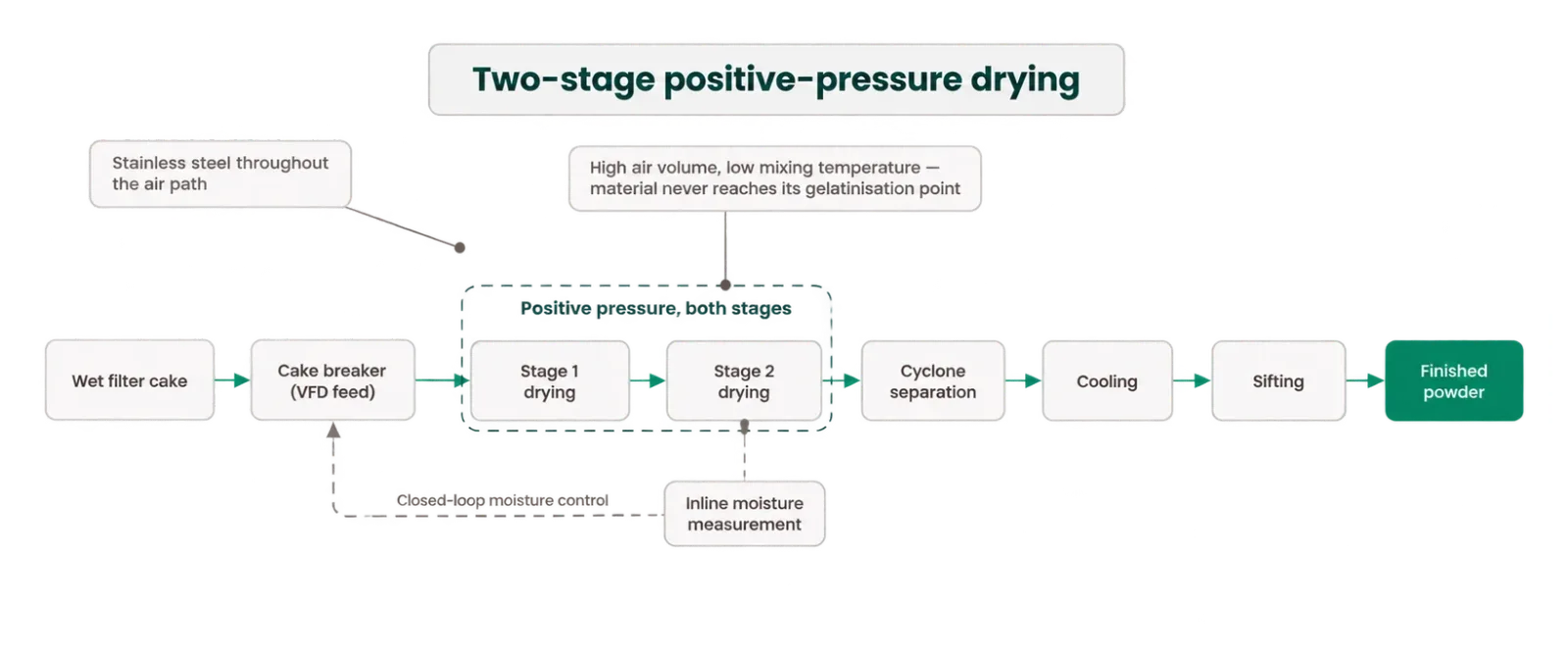
Two-stage positive-pressure drying
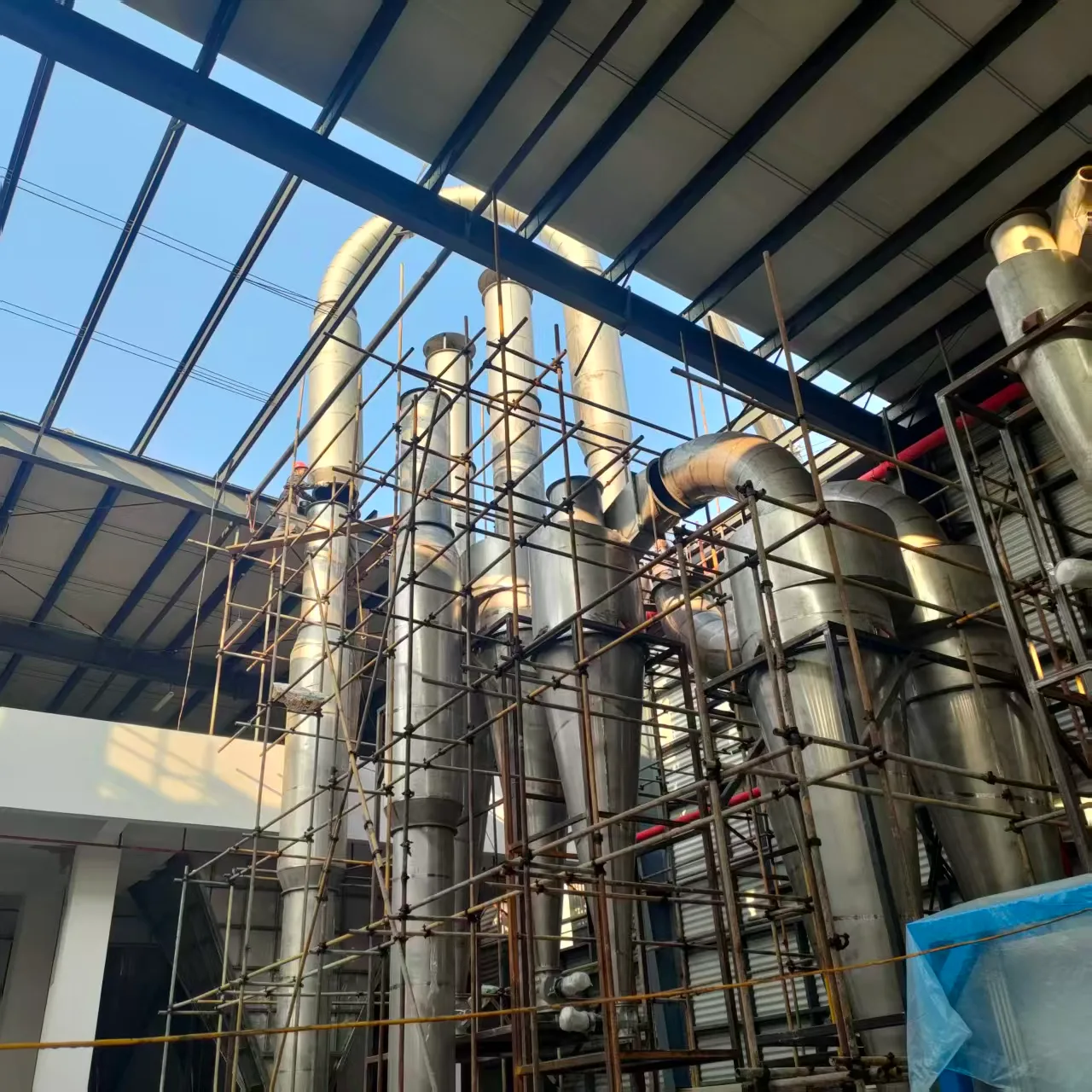
High air volume at low mixing temperature, in two stages. Fans, rotary valves, heat exchangers and ducting are stainless throughout for food contact. This is the stage that separates a line that holds its spec from one that does not — see the drying section below.
- 8
Cooling, sifting and packing
Material is cooled before sifting, which lowers water activity, extends screen life and stops warm vapour condensing back onto the powder. A plansifter splits three ways: coarse rejects, fine rejects returned for recovery, and finished powder, which is air-conveyed to the packing bin and passed through metal detection before release.
Workshop layout: four-way separation
Line performance is not only about machines. The layout is designed as an in-line arrangement with four separated flows, which is what modern food-grade production requires:
- ✓A dedicated staff route with wash-down, separate from the material route
- ✓Raw material, production and finished goods zones that never cross
- ✓A separate route for packaging and spare parts so consumables never enter through the production floor
- ✓A visitor route that allows the plant to be shown end to end without anyone entering the production area
- ✓A dedicated filter-cloth washing and drying area — a direct control on microbial counts
Semi-dry (flexible) crushing
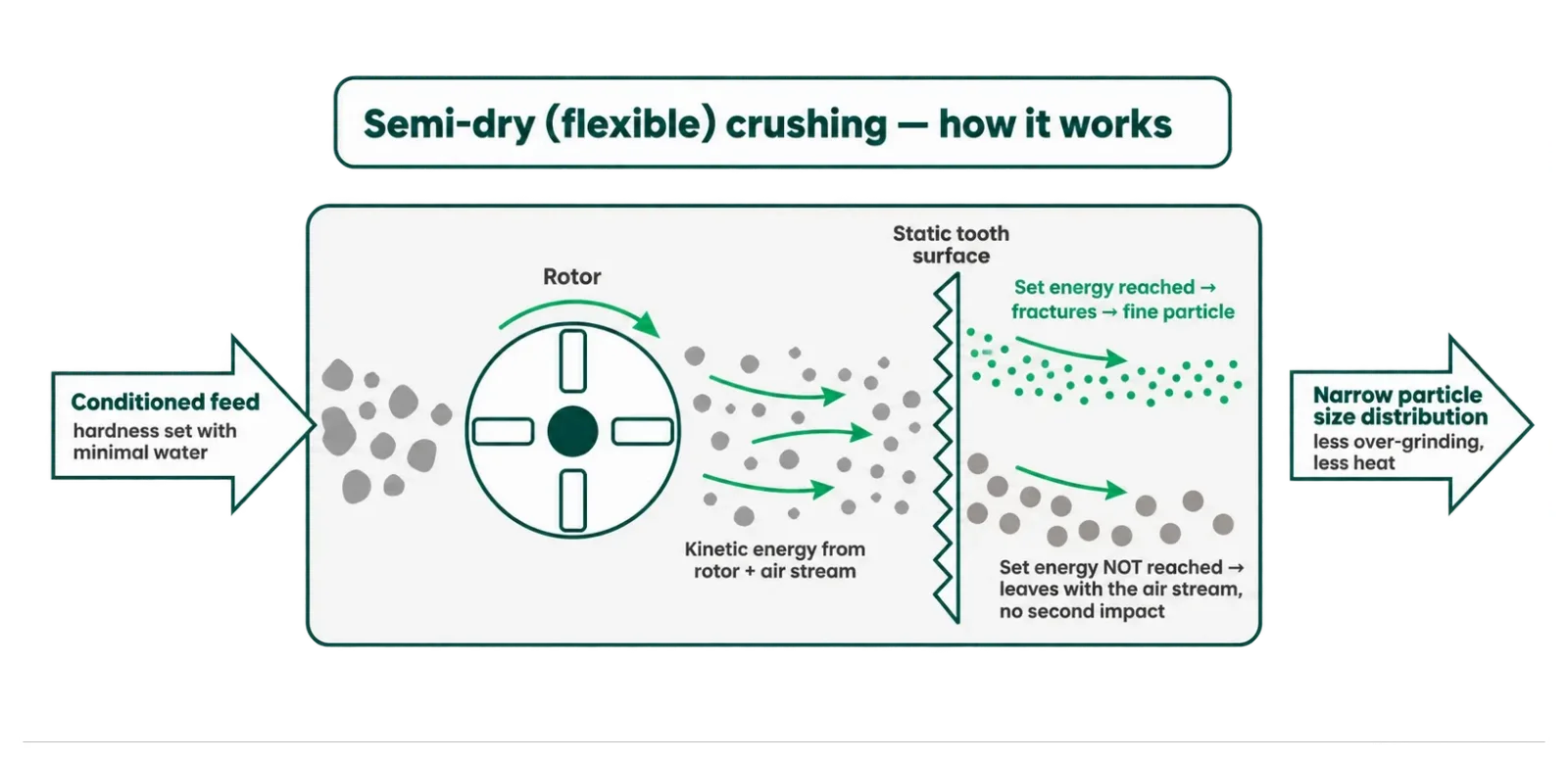
Flexible crushing sits between full wet milling and pure dry milling. The material's hardness is first conditioned — often with a small amount of water, a fraction of what wet milling uses — and then driven by kinetic energy against a static tooth surface, where it fractures on impact.
The distinctive part is what happens to particles that have not reached the set energy: they leave with the carrier medium instead of being struck again. That single behaviour is what keeps the particle distribution tight and avoids the heat build-up and over-grinding of conventional hammer milling.
For a plant, the trade is straightforward. Texture comes close to wet-milled product, water consumption and effluent drop sharply, and the drying stage shrinks to a fraction of the wet-route duty — but it does not disappear, because the conditioning water still has to come back out.
Note on terminology: this route is often described as "waterless" grinding. It is not — a small amount of water is still added to condition the material. The gain is a large reduction in water use, not its elimination.
Slurry line
The slurry route is the wet route stopped halfway. Grain is washed, soaked for about four hours, separated from the soak water and metered into a stainless hammer mill with a controlled water-to-grain ratio; a rotor-stator mill then sets final fineness. The slurry is checked for density and trimmed to target concentration, and goes straight to the downstream process.
What this route changes
- ✓Pressing, drying, cooling, sifting, packing and stacking all disappear — along with the water, power, gas, labour and packaging they consume
- ✓Freshly milled grain carries more flavour and aroma into the finished food than reconstituted dry powder
- ✓Incoming grain is far easier to test and control than bought-in dry flour, so quality is governed at the source
- ✓Separated water is stored and metered back into the mill, so the route is also the lowest water consumer of the three
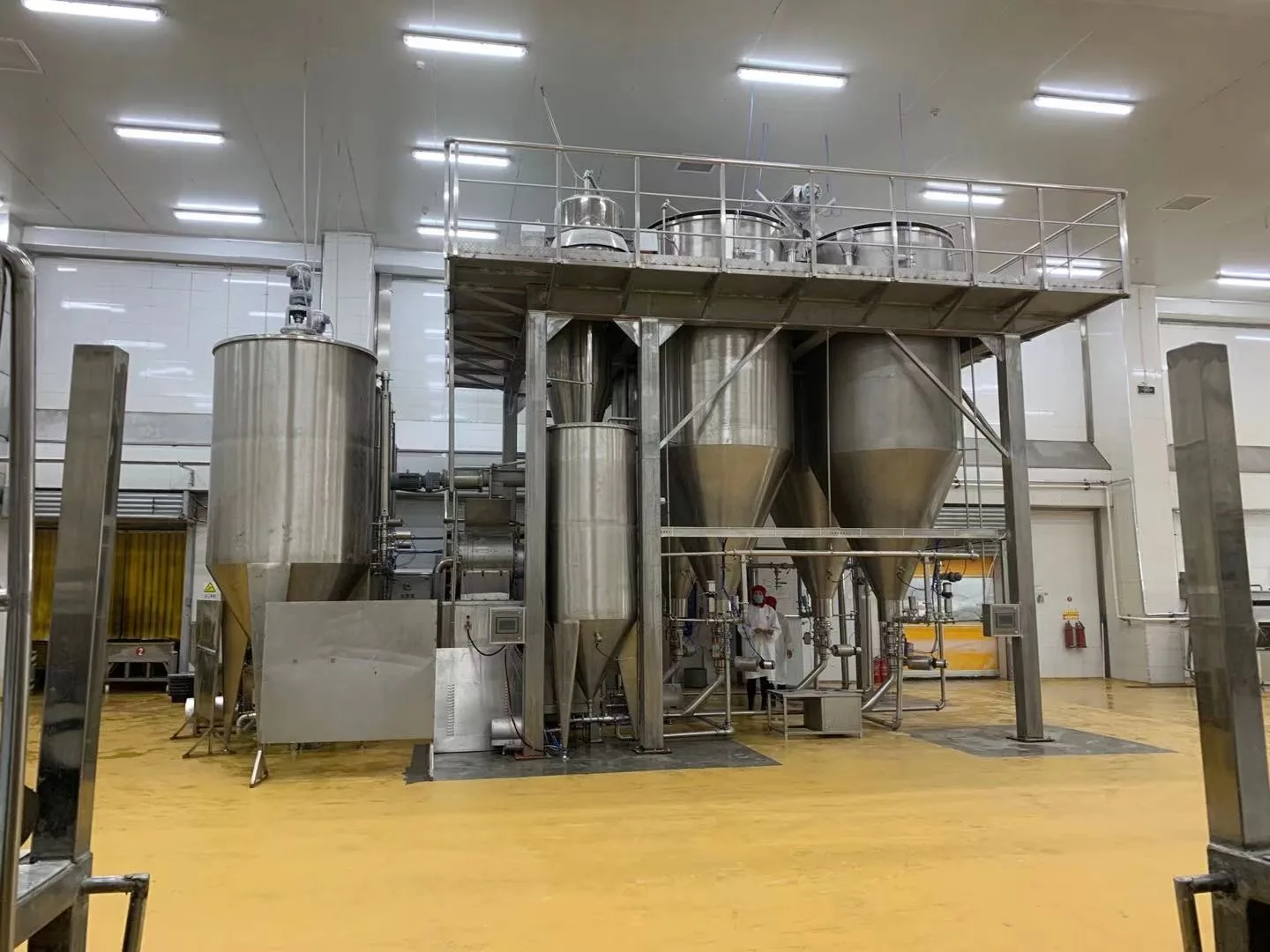
This route has no drying stage at all. If your plant runs slurry only, drying equipment is not part of the conversation — we would rather say so than sell you something the process does not need. Plants that run both powder and slurry keep the drying duty for the powder side.
The drying stage — where the line is won or lost
Glutinous rice flour and starch powders are difficult materials to dry. They are sticky, they gelatinise at a low temperature, and they release moisture slowly. Push the mixing temperature up to speed the line and the product gelatinises, cakes and sticks; the resulting granules end up in the reject fraction, so yield and product quality fall together.
What a correctly designed drying stage does
High air volume, low mixing temperature
Moisture is carried away by air volume rather than by temperature, so the powder meets hot air across a large surface without ever approaching its gelatinisation point.
Two stages under positive pressure
Single-stage positive, single-stage negative and mixed arrangements all tend to leave normal product bound into granules that report to the reject fraction. Splitting the duty across two positive-pressure stages avoids that loss.
Stainless throughout the air path
Fans, rotary valves, heat exchangers and ducting are all stainless — the air path is in contact with food material and has to be treated as a food-contact surface.
Closed-loop moisture control
Inline moisture measurement, stabilised inlet temperature and simulation-based moisture control keep finished moisture on target instead of chasing it after the fact.
Cool before sifting
Cooling ahead of the plansifter lowers water activity, protects screen life and prevents vapour condensing onto warm powder, where it would feed bacterial and mould growth.
Two ways to work with us
Not every project needs a whole line. These are two genuinely different scopes, and it is worth being clear which one you are asking about.
A new line, or an existing one rebuilt
Process design, workshop layout and zoning, purpose-built equipment, installation, commissioning, product-standard setting and start-up support. Brownfield work is as common as greenfield — milling-system retrofits and drying-system upgrades on existing lines are a large share of the projects in this field.
- ✓New lines at 1.5, 2.5 and 3.5 t/h finished powder
- ✓Capacity expansion and retrofit of existing lines
- ✓Multi-line layout planning for industrial-park sites
Only the drying stage
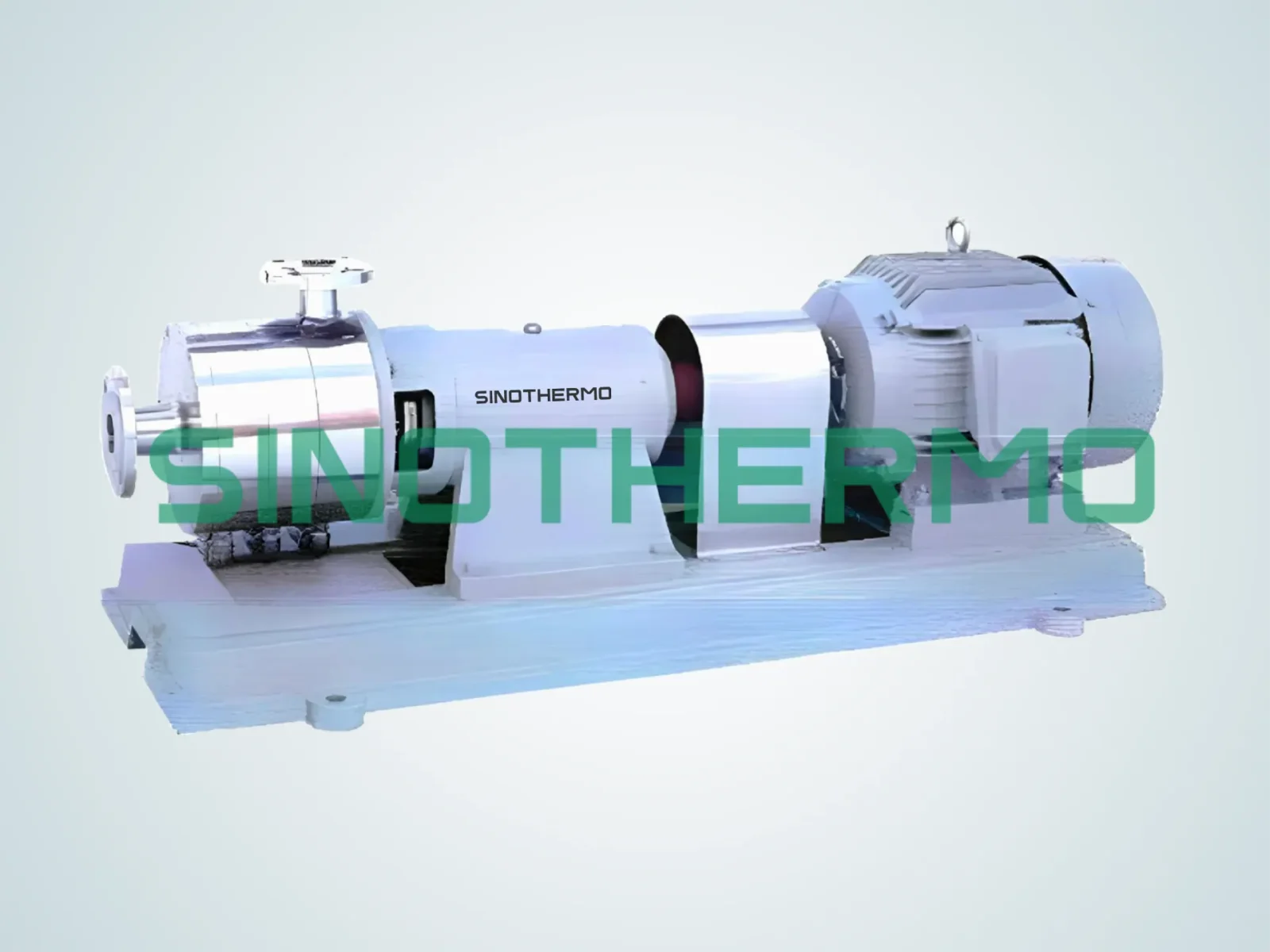
If you already have a line, or you are running starch and grain powders through drying equipment that cannot hold the spec, this is where SINOTHERMO's own manufactured equipment comes in. We design and build the dryers ourselves, and material trials can be run in our in-house pilot laboratory before anything is committed.
- ✓Wet filter cake dried and de-lumped in a single pass
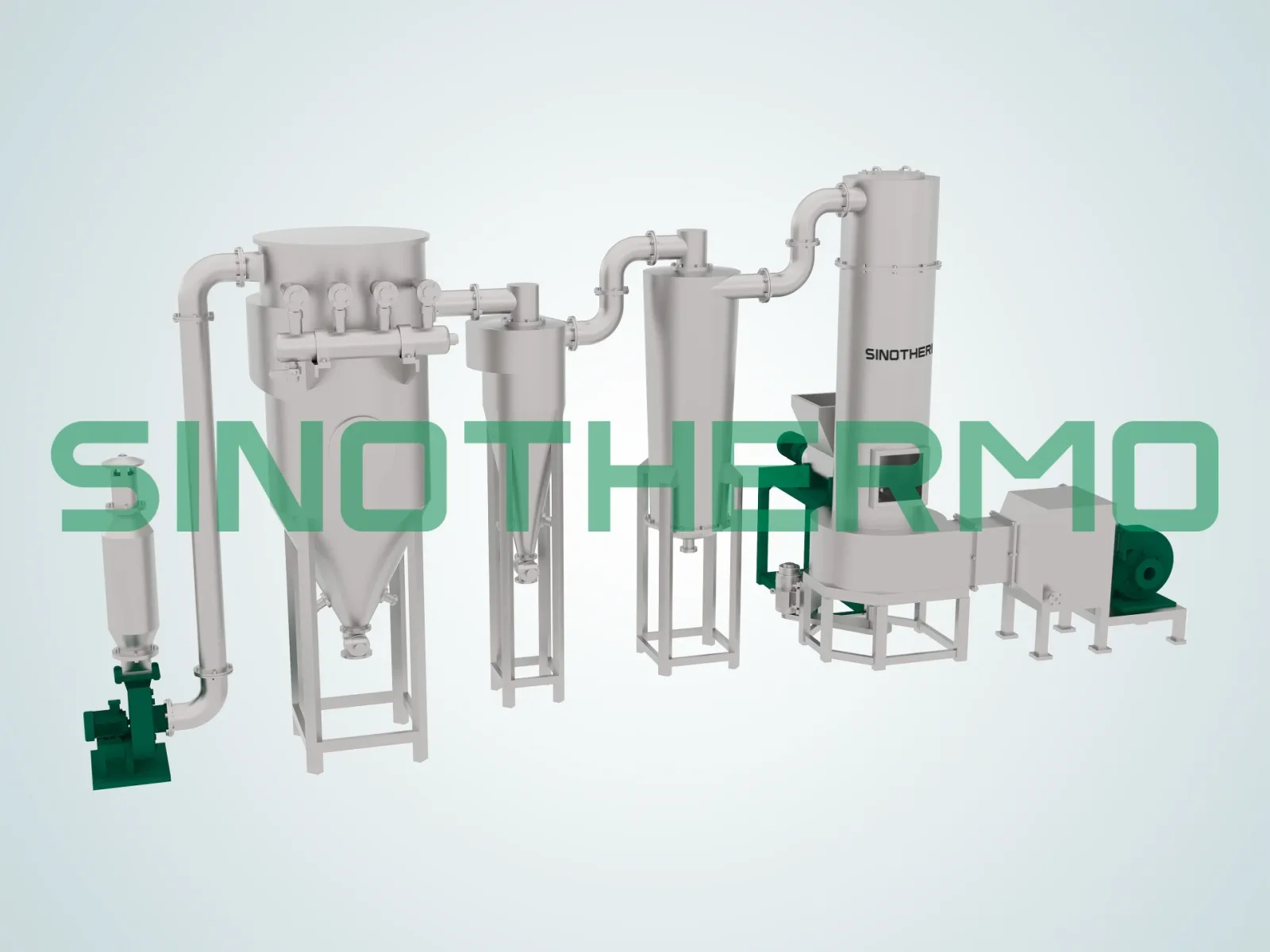
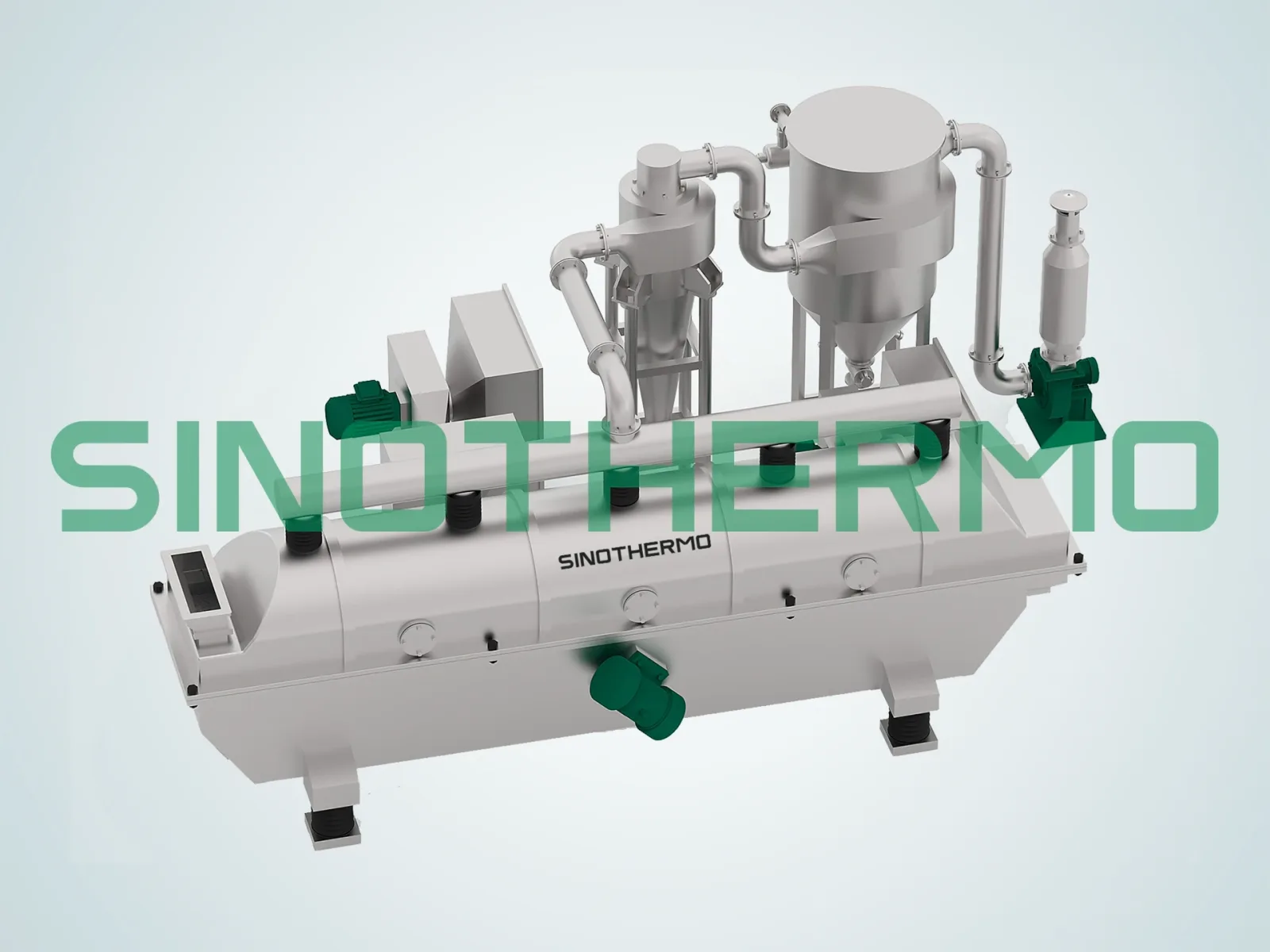
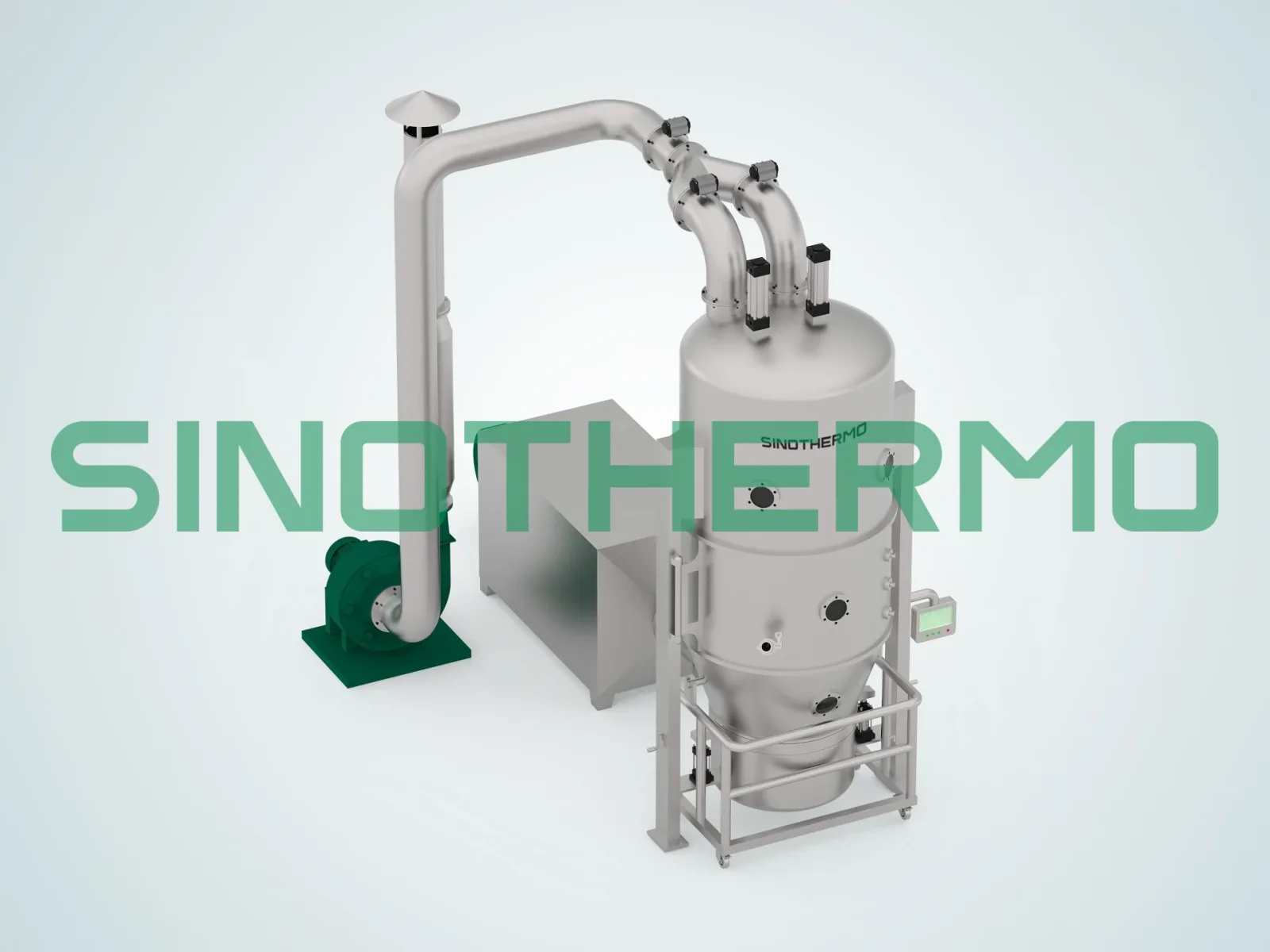
- ✓Fluid bed and vibrating fluid bed for free-flowing powders
- ✓Belt drying for materials that must not be agitated
Drying equipment we manufacture
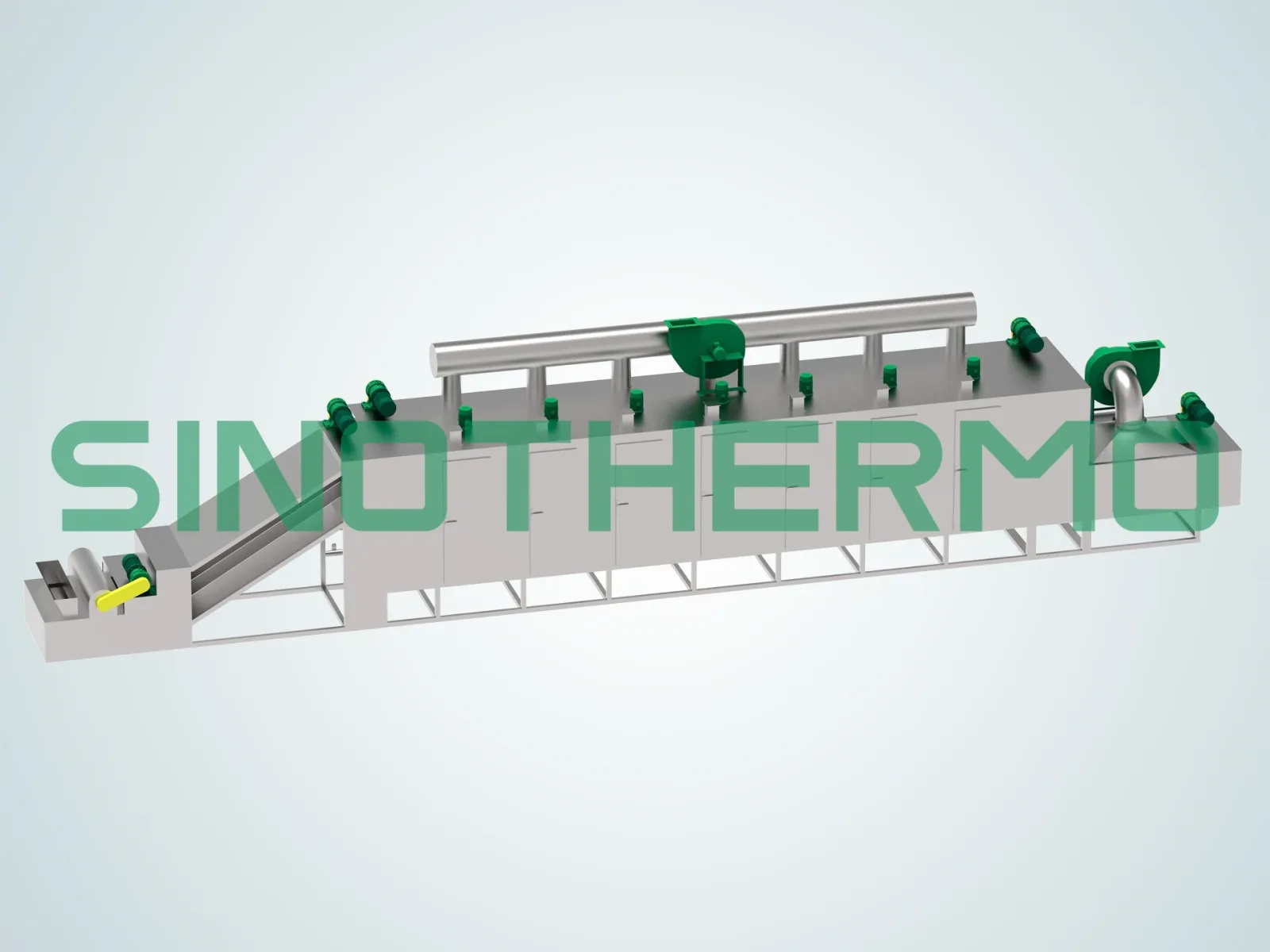
These are SINOTHERMO-built machines, used where the drying stage is supplied on its own. Each links through to full specifications.
Capacity and model reference
Indicative figures for sizing. Final selection depends on your material, target moisture and required fineness — higher fineness always costs throughput.
Line capacity
| Configuration | Finished output |
|---|---|
| Wet milling line — Type A | 1.5 t/h finished powder |
| Wet milling line — Type B | 2.5 t/h finished powder |
| Wet milling line — Type C | 3.5 t/h finished powder |
| Typical project scale | 80-180 t/day |
| Slurry line | 500-3,000 kg/h on a dry-grain basis |
| Slurry output at 33% concentration | 1,500-9,000 kg/h |
Milling equipment
| Model | Throughput | Equivalent finished output | Duty |
|---|---|---|---|
| Rotor-stator starch mill, large | 15 m³/h slurry (18 m³/h uprated) | 3-4 t/h | Secondary / fine milling |
| Rotor-stator starch mill, small | 10 m³/h slurry (12 m³/h uprated) | 1.5-2.2 t/h | Secondary / fine milling |
| Stainless hammer mill, large | 3,000 kg/h (3,500 kg/h uprated) | 3-3.2 t/h | Primary milling, larger lines |
| Stainless hammer mill, medium | 1,500 kg/h (1,800 kg/h uprated) | 1.5-1.7 t/h | Primary milling, mid-size lines |
| Stainless hammer mill, small | 300-500 kg/h | — | Small lines, pilot work, reject recovery |
Figures are for standard fineness. Raising the fineness requirement reduces throughput accordingly.