Kühlung
Kühlung umfasst die Wirbelschicht- und Vibrationsanlagen von SINOTHERMO, mit denen getrocknetes oder granuliertes Produkt auf eine sichere Handhabungs- oder Lagertemperatur gebracht wird. Eine kontrollierte Kühlung unmittelbar nach der Trocknung oder Granulierung stabilisiert die Struktur und das Feuchtigkeitsgleichgewicht vor der Verpackung, unter Nutzung desselben Luftkontaktprinzips wie bei der Trocknung.
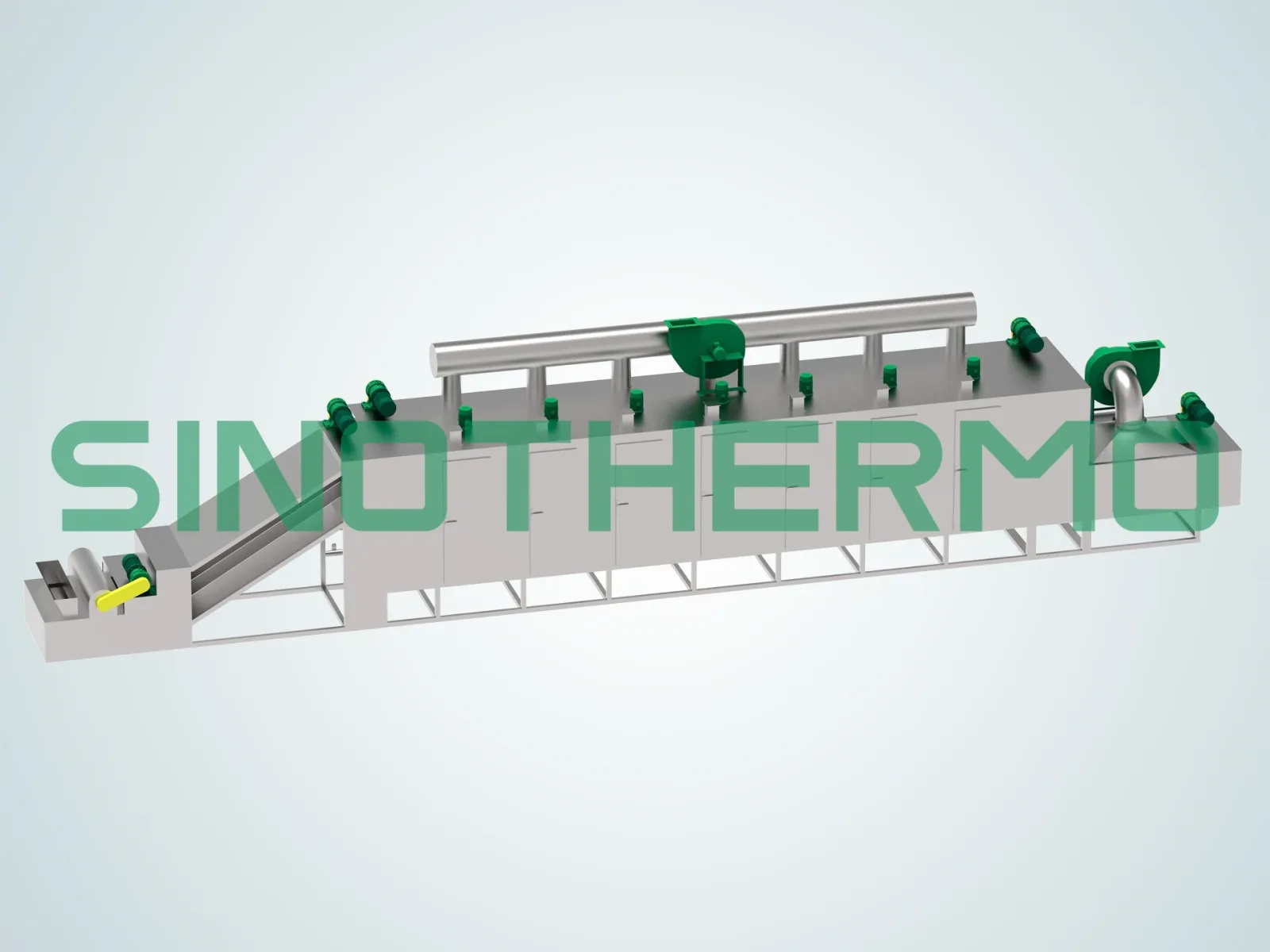
DW-Belt Dryer
Kategorien: Konvektionstrockner
Continuous Convection Dryer with Mesh Belt:
The Belt Dryer can be configured with single or multiple mesh-belt layers, spreading material evenly for directional hot-air drying. Belt speed adjusts to each material's temperature and moisture content, so it runs at comparatively low temperatures while continuously processing large batches.
- Input:
- Permeable solids in sheets, strips, granules or blocks
- Output:
- Sheet, strip, granule or block solids with 3%–8% moisture content
- Temperature:
- Inlet air temperature < 200°C
- Additional Feature:
- Cooling
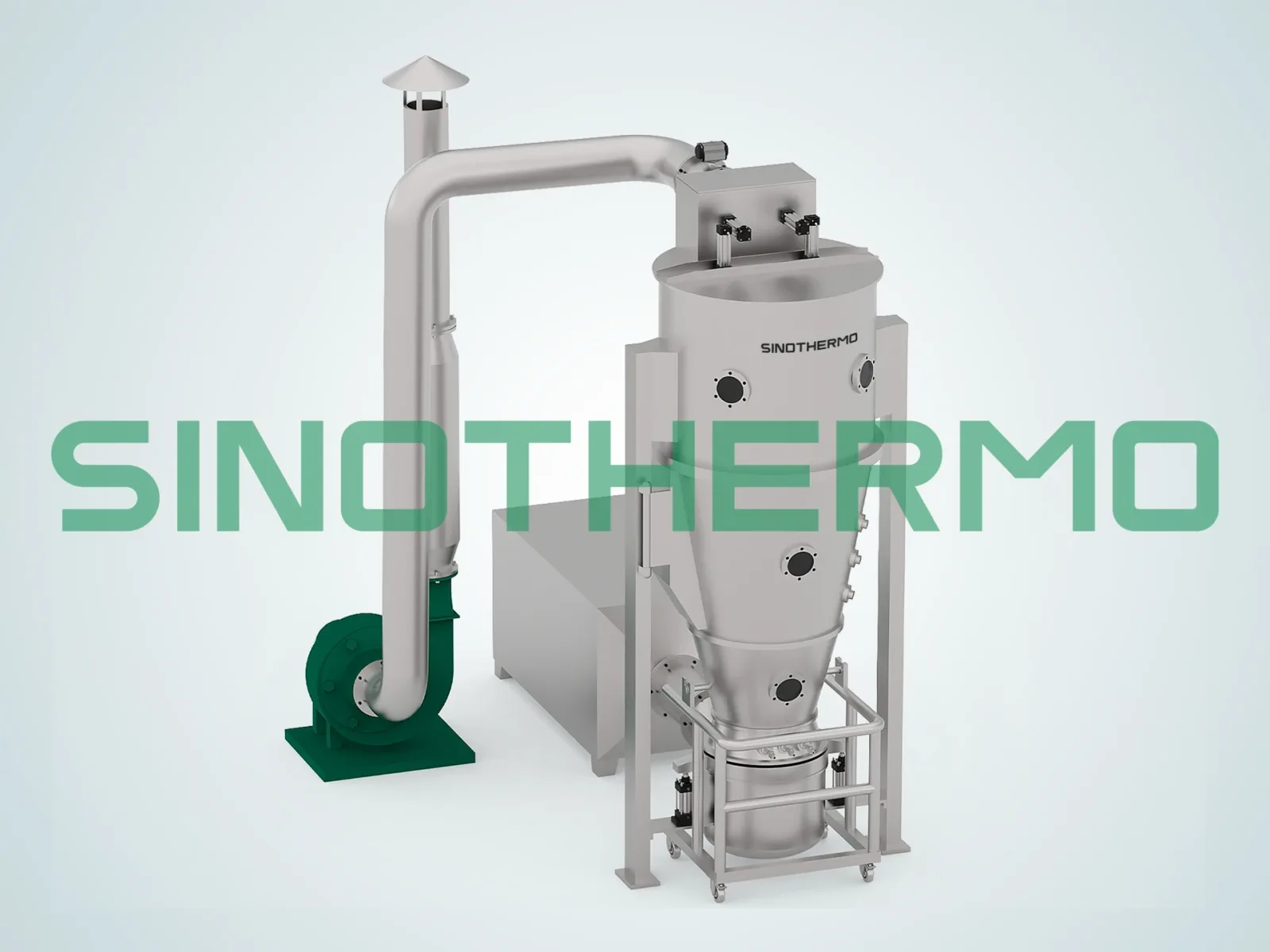
FLP-Wurster Fluidized Bed Granulation Coater
Kategorien: Granulator und Extruder, Wirbelschichtgranulator
All-in-One Mixing, Granulating, Coating, and Drying:
After the main material forms a fluidized bed at the bottom, granules are created with the aid of adhesive sprayed from the top nozzles in the granulating chamber. Subsequently, coating material is sprayed onto the granules from bottom or side nozzles within the chamber for effective coating.
- Input:
- Main ingredient as powder (for granulation) or granules and pellets (for coating), with adhesive or coating material in liquid form
- Output:
- Solid medium-sized granules with 3%–5% moisture content
- Type:
- Spray Fluidized Bed, Wet Granulation
- Additional Features:
- Mixing, Coating, Drying, Cooling
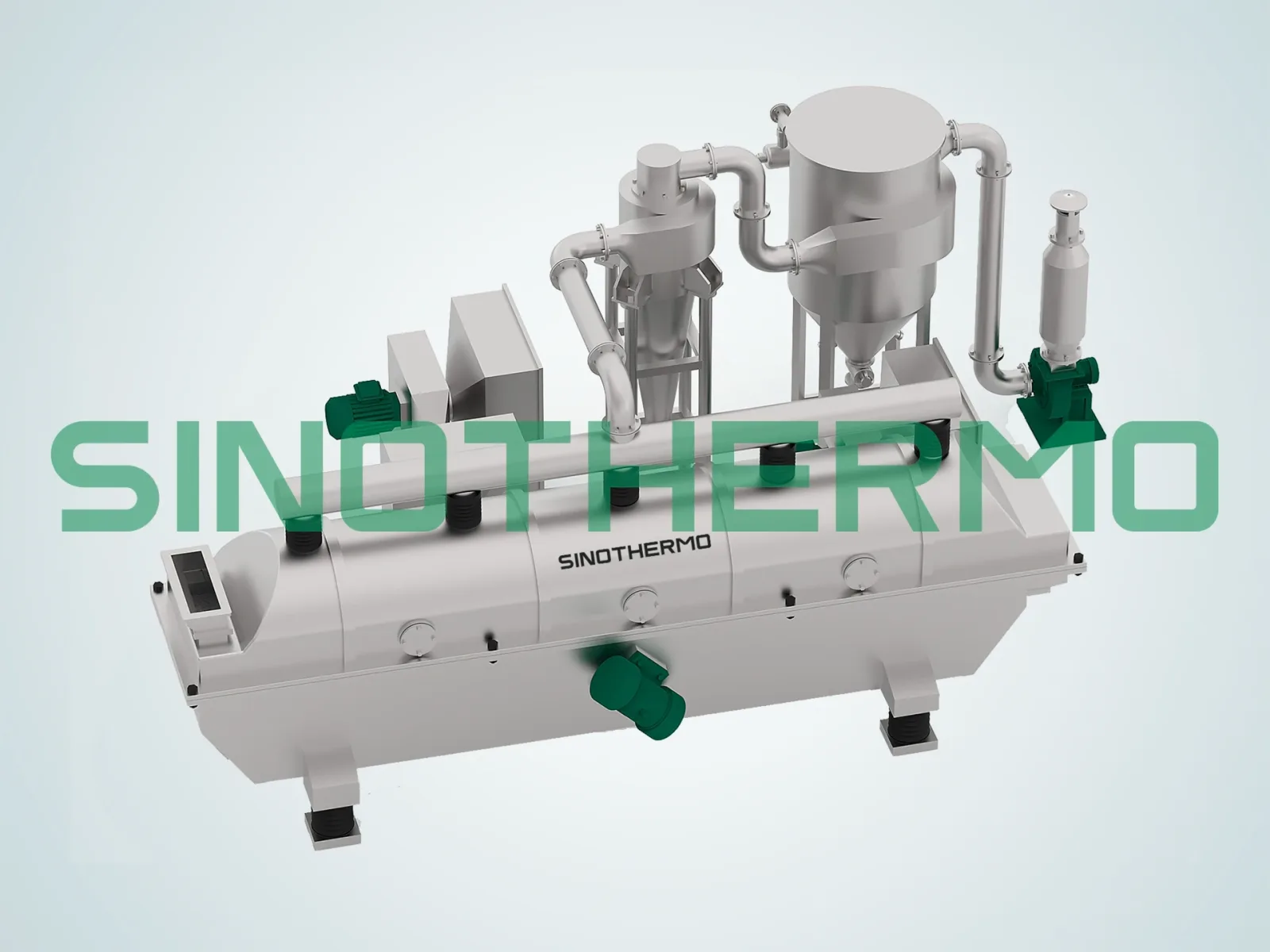
ZLG-Horizontal Vibrating Fluidized Bed Dryer
Kategorien: Konvektionstrockner, Wirbelschichttrockner, Vibrationstrockner
Continuous Drying Solution for Granular Materials:
Operating on the principle of fluidization combined with vibration, the Vibrating Fluid Bed Dryer processes granules by circulating them on heated air that dries them evenly. This approach minimizes surface damage, prevents pollution thanks to its enclosed design, and gives granules time to settle — facilitating stable, continuous production.
- Input:
- Granules with moisture content < 20%
- Output:
- Granules with 1%–5% moisture content
- Temperature:
- Inlet air temperature < 200°C
- Additional Feature:
- Cooling
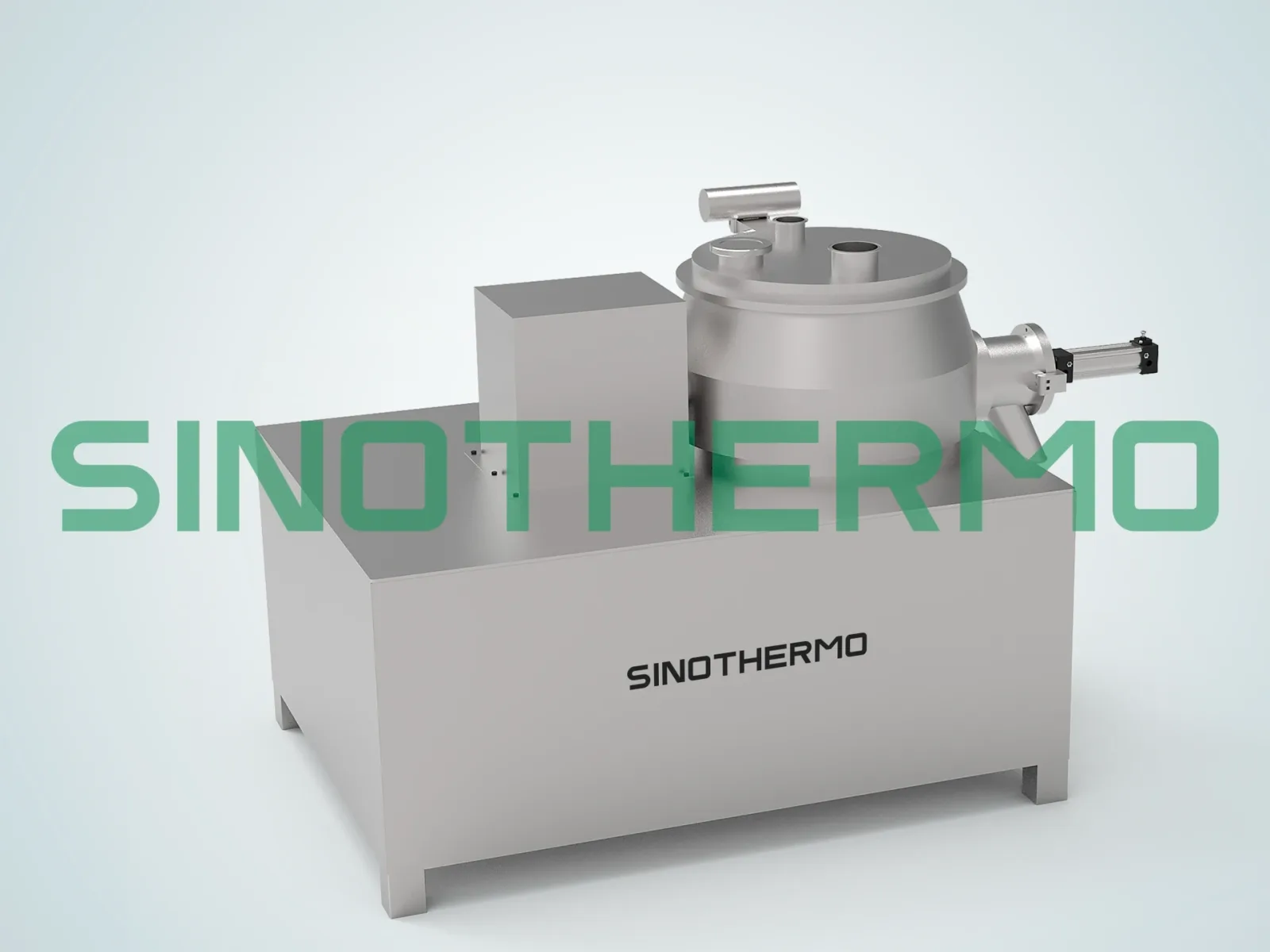
GHL-Wet Rapid Mixing Granulator
Kategorien: Granulator und Extruder
Cutting-Edge Wet Granulation Technology:
A paddle at the base swiftly mixes powders and sticky binders within a cylindrical bowl, while a rapid chopper on the side breaks the mixture into wet granules to prevent clumping. This fast process combines mixing and granule formation within minutes, and the Wet Rapid Mixing Granulator can provide heating or cooling as needed.
- Input:
- Main material in powder form, binding agent as paste
- Output:
- Solid, loose granules with approximately 15% moisture content
- Type:
- Mixing Granulation, Wet Granulation
- Additional Features:
- Mixing, Mild Crushing, Heating, Cooling
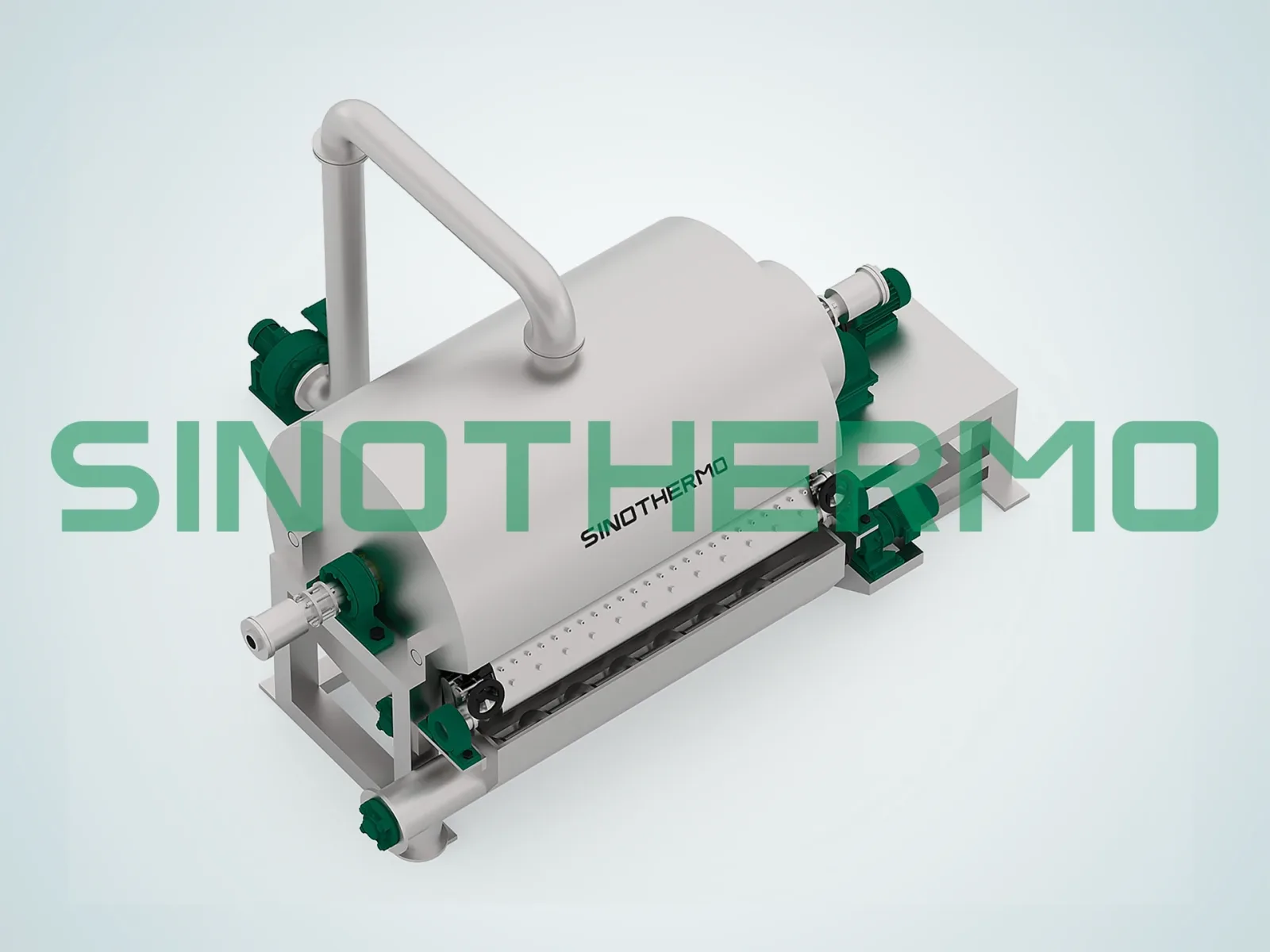
HG/GT-Vacuum Drum Scraper Dryer
Kategorien: Kontakt- und Vakuumtrockner
Continuous Drying for Paste-like Materials:
In operation, the rotating drum picks up material as a thin film. Heat transfers from the inner to the outer wall, effectively evaporating moisture, while an internal scraper continuously converts the dried film into flake-like product in a short time.
- Input:
- Pasty, Viscous and Thick Materials
- Output:
- Flake-like Solids with 5%–8% moisture content
- Temperature:
- Inlet air temperature range of 120°C to 260°C
- Additional Feature:
- Cooling
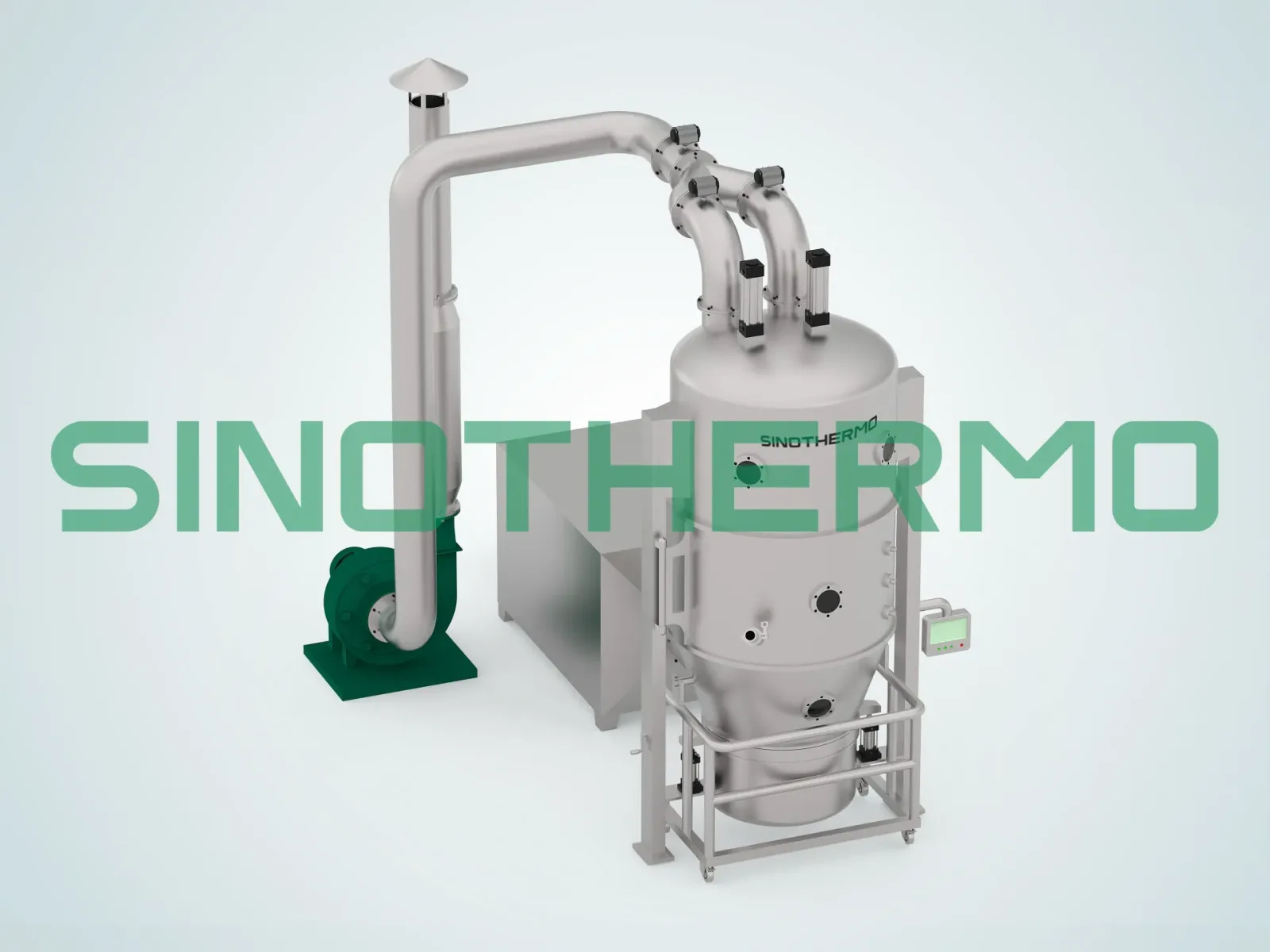
GFG-Vertical Blending Fluidized Bed Dryer
Kategorien: Konvektionstrockner, Wirbelschichttrockner
Fluidized Bed Drying with Built-In Mixing:
The Vertical Blending Fluidized Bed Dryer is equipped with a mixing mechanism that helps form a fluidized bed inside the vessel when handling heavy loads. Ideal for mass production, it can process thick materials and is typically paired with wet granulation setups.
- Input:
- Powder and Granules, moisture < 20%
- Output:
- Powder and Granules, moisture 3%–5%
- Temperature:
- Inlet air temperature < 100°C
- Additional Feature:
- Stirring, Cooling
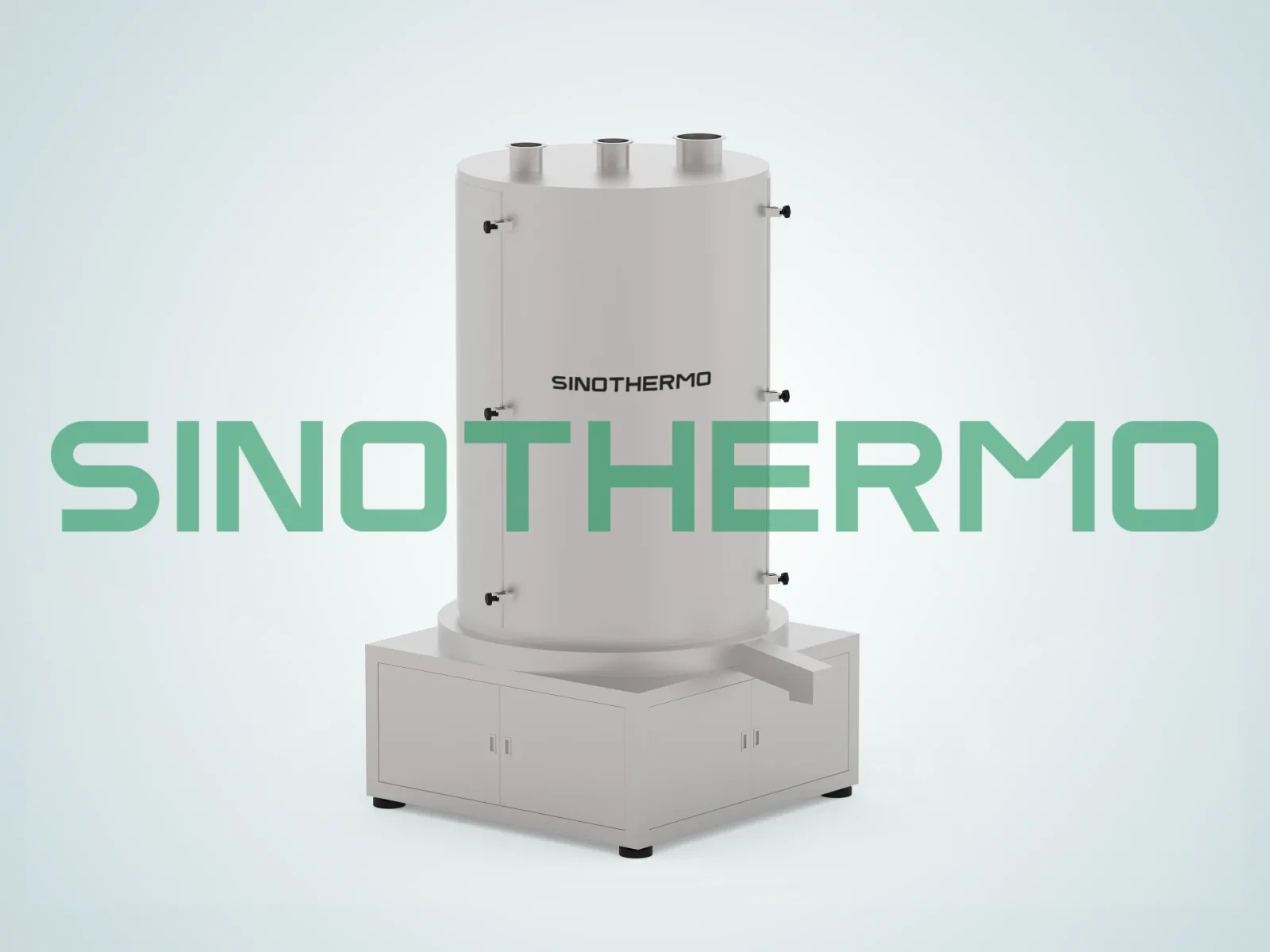
LZG-Spiral Vibrating Dryer
Kategorien: Konvektionstrockner, Vibrationstrockner
Method for Drying Pellets and Granules:
The Spiral Vibrating Dryer dries materials by using centrifugal vibration and gravity to move them in a bouncing path from top to bottom along a spiral bed. Fresh hot air enters from below, interacting thoroughly with the material for heat and mass transfer before leaving through the top — ensuring even drying.
- Input:
- Granular, short-rod and spherical solids with < 20% moisture
- Output:
- Granules, short rods and spheres with 3%–5% moisture
- Temperature:
- Inlet air temperature < 100°C
- Additional Feature:
- Cooling
Kühlung des Produkts nach Trocknung oder Granulierung
Der DW-Bandtrockner, der FLP-Wurster-Wirbelschichtgranulierungs-Coater, der ZLG-Horizontal-Vibrationswirbelschichttrockner, der GHL-Nassschnellmischgranulator, der HG/GT-Vakuumtrommel-Schaufeltrockner, der GFG-Vertikalmisch-Wirbelschichttrockner und der LZG-Spiralvibrationstrockner unterstützen alle die Kühlung des Materials auf eine sichere Handhabungs- oder Lagertemperatur nach der Verarbeitung.
Warum Kühlung nach Trocknung oder Granulierung wichtig ist
Heißes Produkt direkt aus einem Trockner oder Granulator kann sich zersetzen, verklumpen oder weiterreagieren, wenn es zu warm verpackt wird. Eine kontrollierte Kühlung stabilisiert die Granulatstruktur und das Feuchtigkeitsgleichgewicht vor der Lagerung. Wirbelschicht- und Vibrationskonstruktionen kühlen effizient nach demselben Luftkontaktprinzip wie bei der Trocknung.
Mehr entdecken
Continuous Drying →
Der Trocknungsschritt, der in einer kontinuierlichen Linie typischerweise der Kühlung vorausgeht.
Convective Drying →
Nutzt dasselbe Luftkontakt-Wärmeübertragungsprinzip wie die Kühlung.
Wet Granulation →
Ein häufiger vorgelagerter Schritt, bevor Granulate gekühlt und stabilisiert werden.