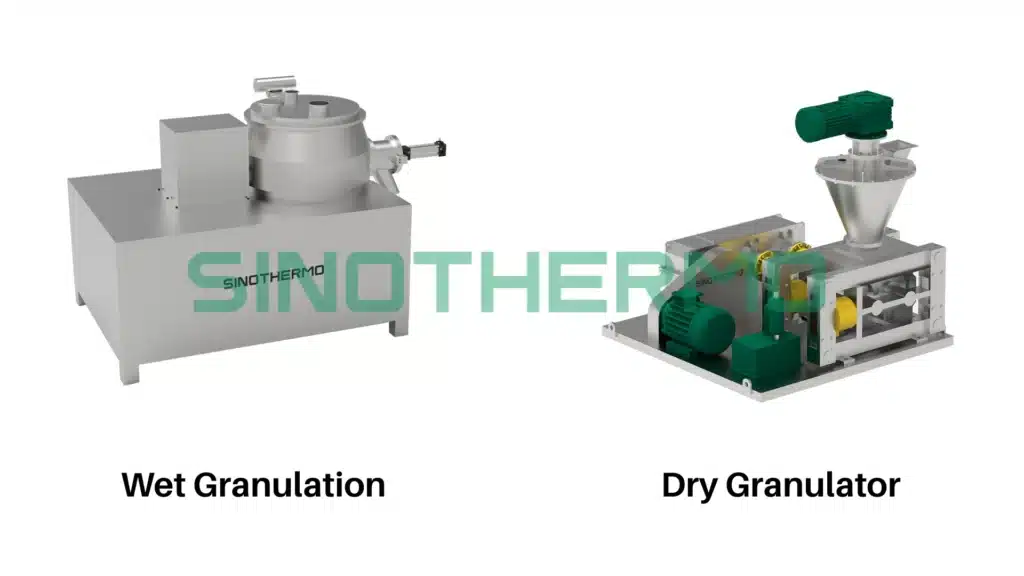
Granulation is the step that turns fine, cohesive powder into larger, free-flowing granules — improving flowability, content uniformity, compressibility and dust control before tableting or capsule filling. The route you pick shapes everything downstream: particle size and density, how the granules compress, what the process costs, and whether your active ingredient survives intact. For any team specifying a solid-dosage line, choosing between wet granulation و dry granulation is one of the most consequential early decisions you will make.
There is no universally “better” route — only the one that fits your formulation, throughput and constraints. This guide compares the two families the way a process engineer would, so you can match the method to the material rather than to a sales sheet.
Why the granulation route matters
Powders that are too fine flow poorly, segregate during handling, and produce tablets with inconsistent weight and dose. Granulation fixes this by binding particles into uniform, free-flowing granules. But the mechanism used to bind them — liquid binder versus mechanical pressure — determines the granule’s density, strength and dissolution behavior, and decides whether a moisture- or heat-sensitive active can be processed at all. Get this decision right and the rest of the line falls into place; get it wrong and the problem resurfaces later as weak tablets, capping, poor flow or failed batches.
What wet granulation does
In wet granulation, a liquid binder — water, an aqueous solution or a solvent — is added to the powder and worked until the particles bond into a wet mass, which is then sized and dried. It is the most widely used route in pharmaceutical solid dosage because it delivers dense, uniform, highly compressible granules, and because the binder distributes a low-dose active evenly through the batch.
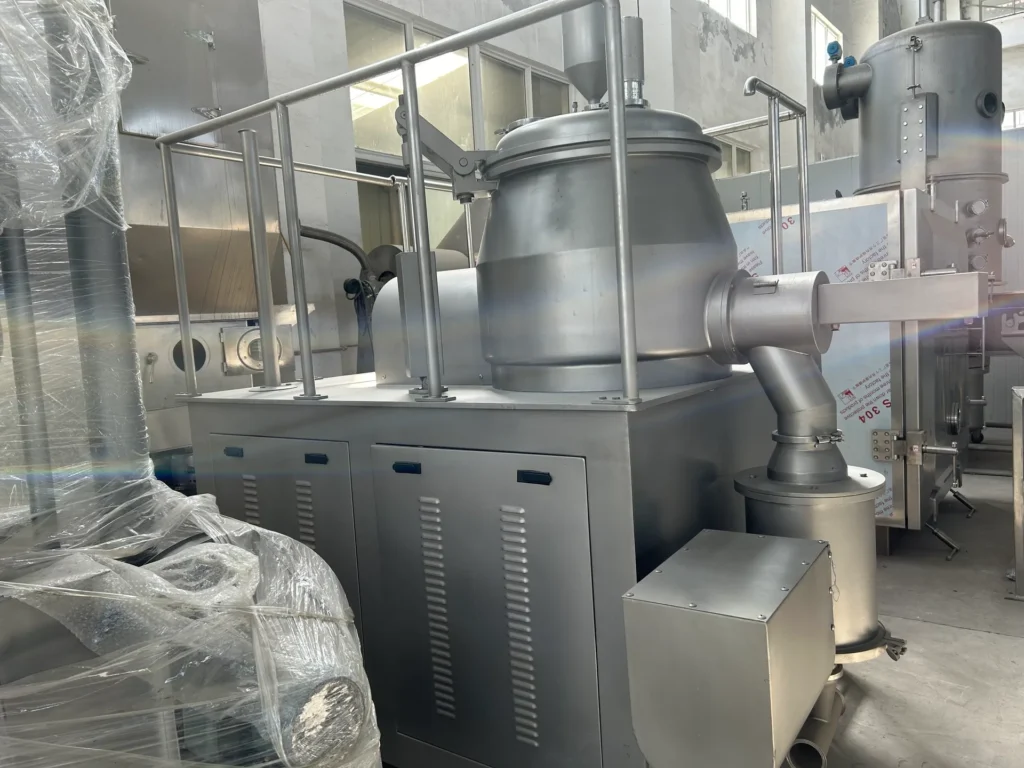
Two pieces of equipment cover most wet-granulation work:
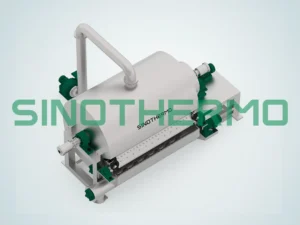
- High shear wet granulation — in a گرانول اختلاط سریع مرطوب, a bottom impeller mixes powder and binder into a wet mass while a side-mounted chopper cuts it into uniform granules and prevents clumping. Mixing and granulation finish in minutes, and a jacketed chamber can add heating or cooling. Output is solid, loose granules at roughly 15% moisture, ready for a separate drying step.
- Fluid bed granulation — a گرانول بستر سیال fluidizes the powder in an upward air stream while spray nozzles introduce the binder, so mixing, granulating and drying happen in a single chamber. The result is light, porous, highly soluble granules at 3–5% moisture. When the same platform must also apply a film coat, a روکش گرانول بستر سیال Wurster combines mixing, granulating, coating and drying in one unit.
Wet granulation suits you when the formulation is cohesive or poorly compressible, the active is low-dose and needs even distribution, you want dense granules with strong tableting behavior, or you need granulation and coating in one fluid-bed step. Be cautious when the active is moisture- or heat-sensitive, or highly viscous — wet, high-viscosity and flammable materials are poor candidates for high-shear mixing.
What dry granulation does
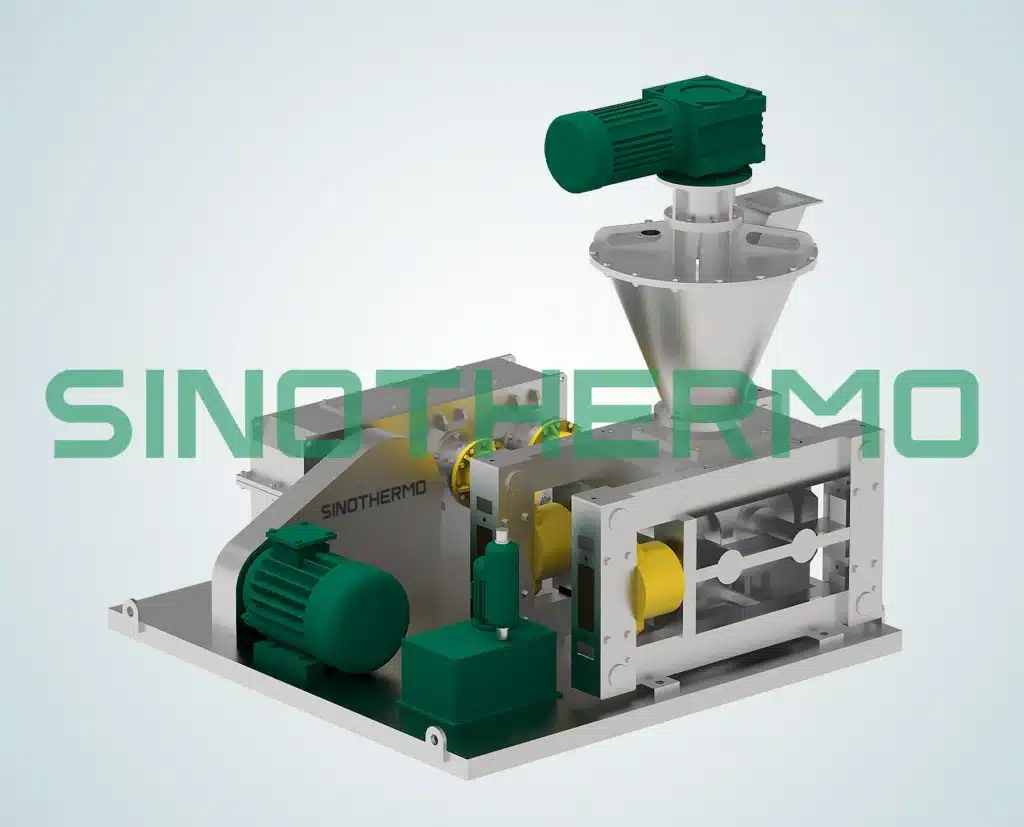
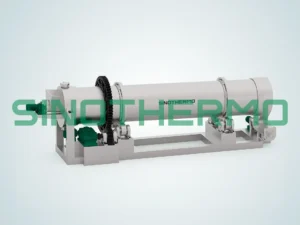
Dry granulation uses no liquid at all. In roller compaction — performed by a گرانول کننده فشرده سازی خشک — dry powder is compressed under high pressure into dense flakes or ribbons, which are then milled and sized into granules. Because there is no binder and no drying step, it is the natural choice for moisture- and heat-sensitive actives where wetting and drying would degrade the product.
Dry granulation suits you when the active cannot tolerate water, solvent or heat; when you want a shorter, lower-energy process with no drying stage; or when the powder will not stay bonded after wetting. Be cautious when the material has low intrinsic binding strength — without a binder, weak materials may not form durable granules.
Wet vs dry — side by side
| دانه بندی مرطوب | دانه بندی خشک | |
|---|---|---|
| Binding mechanism | Liquid binder bonds particles | Pressure compacts particles, no binder |
| Best for | Cohesive / low-dose / poorly compressible powders | Moisture- or heat-sensitive actives |
| Moisture & heat exposure | Yes — wetting + drying step | None |
| Process steps | More (mix → granulate → dry → size) | Fewer (compact → mill → size) |
| Typical granules | Dense, uniform, strong compressibility | Variable density; depends on material strength |
| Energy & time | Higher (drying stage) | Lower (no drying) |
| Key risk | Degrading sensitive actives | Weak granules from low-binding powders |
| Typical equipment | High shear mixer-granulator, fluid bed granulator | Roller compactor (dry compression granulator) |
For a deeper look at how the atomizer and drying environment affect powder properties once you move to liquid feeds, see our companion guide on spray dryer atomization. And for the full solid-dosage process chain — mixing, granulation, drying, sizing and coating — see our pharmaceutical equipment sourcing guide.
Where fluid bed and oscillating granulation fit
The wet/dry split is the first decision, not the last. Fluid bed granulation is technically a wet route, but it earns separate consideration: by combining granulation and drying in one chamber it shortens the process and produces light, fast-dissolving granules — valuable for effervescent products, instant powders, and any application where dissolution rate matters. After drying, an گرانولاتور نوسانی breaks down dried cake into a uniform, controlled particle size — the unglamorous step that makes the difference between granules that flow and dose reliably and ones that don’t.
A process-engineering view: prove it before you specify
A specification sheet rarely settles the question. Two formulations that look similar on paper can behave very differently once binder, shear and air flow are applied — the same solids loading can granulate cleanly in one route and fail in another. The reliable way to choose is to run your own material and measure what you get: granule size distribution, density, moisture, flow and compressibility, before committing to a production line.
This is the part of process selection most buyers skip and later regret. As a process-engineering manufacturer with 20+ years of experience, ISO 9001:2015 certification, and a track record across 300+ industries and 5,000+ delivered projects, SINOTHERMO doesn’t just supply the equipment — we help you prove the route. Bring your formulation to our in-house pilot laboratory, trial it on full-scale high shear, fluid bed and roller-compaction granulators, and select the route on evidence rather than assumption. Every system we build is then engineered around your validated process, not adapted from an off-the-shelf model.
Common mistakes to avoid
- Choosing the route before testing the active’s sensitivity. Moisture and heat tolerance should drive the decision first — not equipment availability or habit.
- Forgetting the drying stage in wet-route costing. Wet granulation adds a drying step in energy, time and equipment; compare total process cost, not just the granulator.
- Assuming dry granulation always works for sensitive actives. It avoids moisture and heat, but low-binding materials can produce weak, friable granules — verify granule strength.
- Skipping pilot trials. A spec sheet can’t predict how shear, binder and air flow interact with your specific formulation. Trial first.
- Overlooking flammability ratings. Several high-shear and fluid-bed units are not rated for flammable or explosive materials — flag this requirement at specification, not after purchase.
نتیجه گیری
The wet-versus-dry decision comes down to one question above all: can your active tolerate moisture and heat? If yes, and you need dense, uniform, highly compressible granules, wet granulation — high shear or fluid bed — is usually the route. If no, dry granulation via roller compaction protects the product by removing liquid and drying entirely. Fluid bed and oscillating granulation then fine-tune dissolution and particle size. But the spec sheet only narrows the field; pilot testing with your own material is what confirms the choice.
Not sure which granulation route fits your formulation? Talk to our process engineers and book a trial in our pilot lab — we’ll help you decide on data, not assumptions.
سوالات متداول
What is the main difference between wet and dry granulation?
Wet granulation uses a liquid binder to bond powder particles into granules, then dries them; dry granulation uses mechanical pressure (roller compaction) to compact powder into granules with no liquid and no drying step. Wet granulation generally gives denser, more compressible granules; dry granulation protects moisture- and heat-sensitive actives.
When should I use dry granulation instead of wet?
Choose dry granulation when the active ingredient cannot tolerate water, solvent or heat, when you want a shorter and lower-energy process without a drying stage, or when wetting causes degradation. Verify that the material has enough intrinsic binding strength to form durable granules.
Is fluid bed granulation wet or dry?
Fluid bed granulation is a wet route — it sprays a liquid binder onto fluidized powder — but it combines granulation and drying in one chamber, producing light, porous, fast-dissolving granules. It is often considered separately because of this all-in-one efficiency and its distinctive granule properties.
What equipment do I need for wet granulation?
The two most common options are a high shear wet mixing granulator (bottom impeller plus side chopper) and a fluid bed granulator. A high shear granulator produces dense granules at around 15% moisture that need separate drying; a fluid bed granulator granulates and dries in one step at 3–5% moisture.
Can the same machine granulate and coat?
Yes. A Wurster fluidized bed granulation coater combines mixing, granulating, coating and drying in a single platform — top nozzles build granules in the fluidized bed while bottom or side nozzles apply the coating, reducing transfers and footprint.
How do I decide which route is right for my product?
Start with the active’s moisture and heat sensitivity, then weigh granule properties (density, strength, dissolution), throughput and total process cost. Because formulations behave unpredictably, the dependable final step is a pilot trial with your own material to measure granule size, density, moisture, flow and compressibility before specifying a production line.