Conduction Drying
Conduction Drying covers SINOTHERMO's vacuum plate, disc and drum-scraper dryers that transfer heat by direct contact with a heated surface. Often combined with vacuum for gentler, lower-temperature drying, this approach suits viscous pastes and slurries that don't handle well in air-suspension dryers.
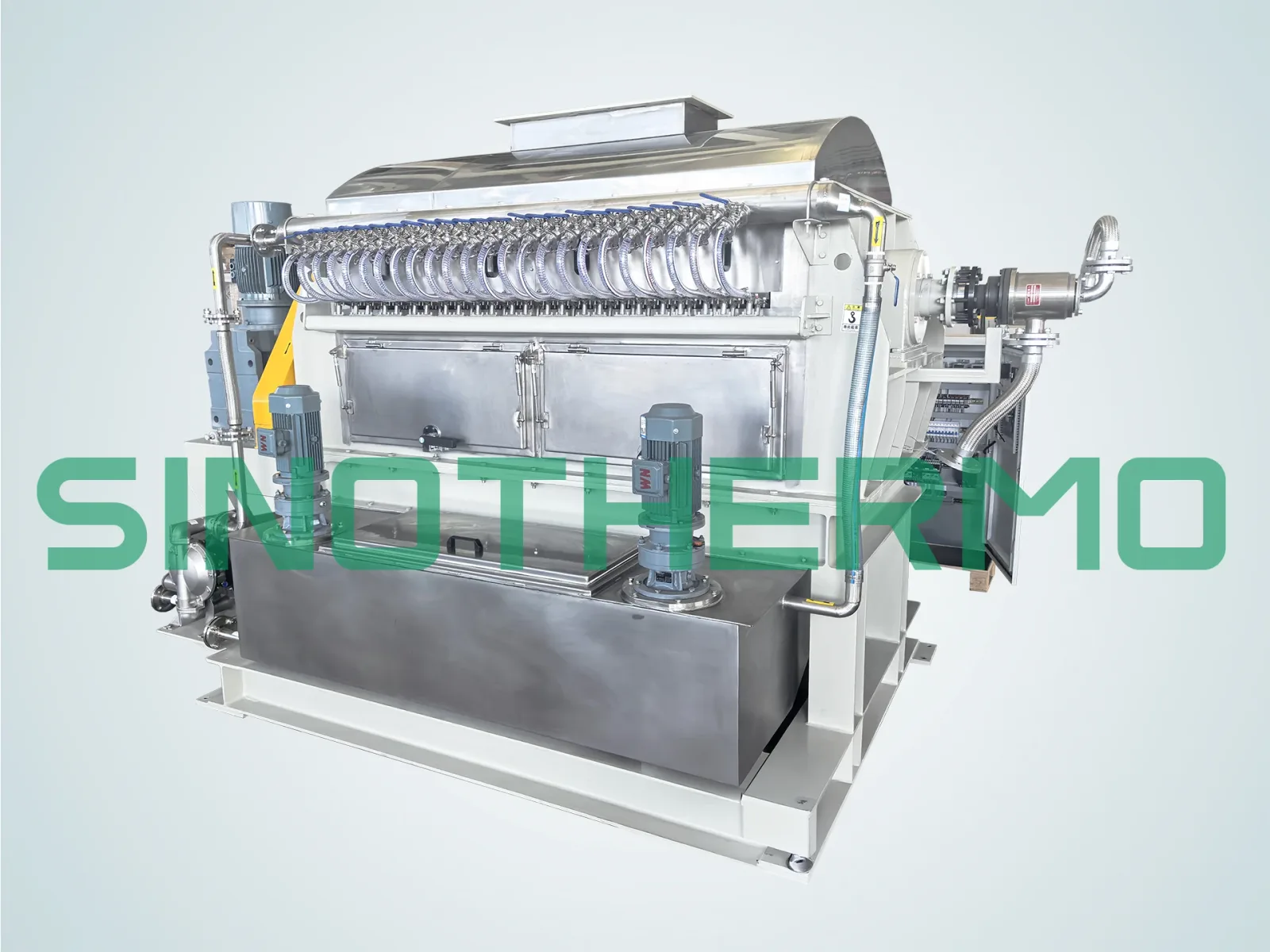
CD Dryer
Categories: Conduction and Vacuum Dryer
Continuous Drying for Liquid and Paste-like Materials:
The CD Dryer is designed for continuous drying of liquids and pastes. Utilizing indirectly heated discs, the dryer efficiently transfers heat to the material, creating a thin layer for rapid evaporation. This method ensures effective drying and consistent product quality.
- Input:
- Liquid and Pasty Materials
- Output:
- Dried Solids (flake or powder, depending on application)
- Heat Transfer Coefficient:
- Overall heat transfer coefficient: 2,300W/m²k
- Thermal Efficiency:
- 80 to 85% thermal efficiency
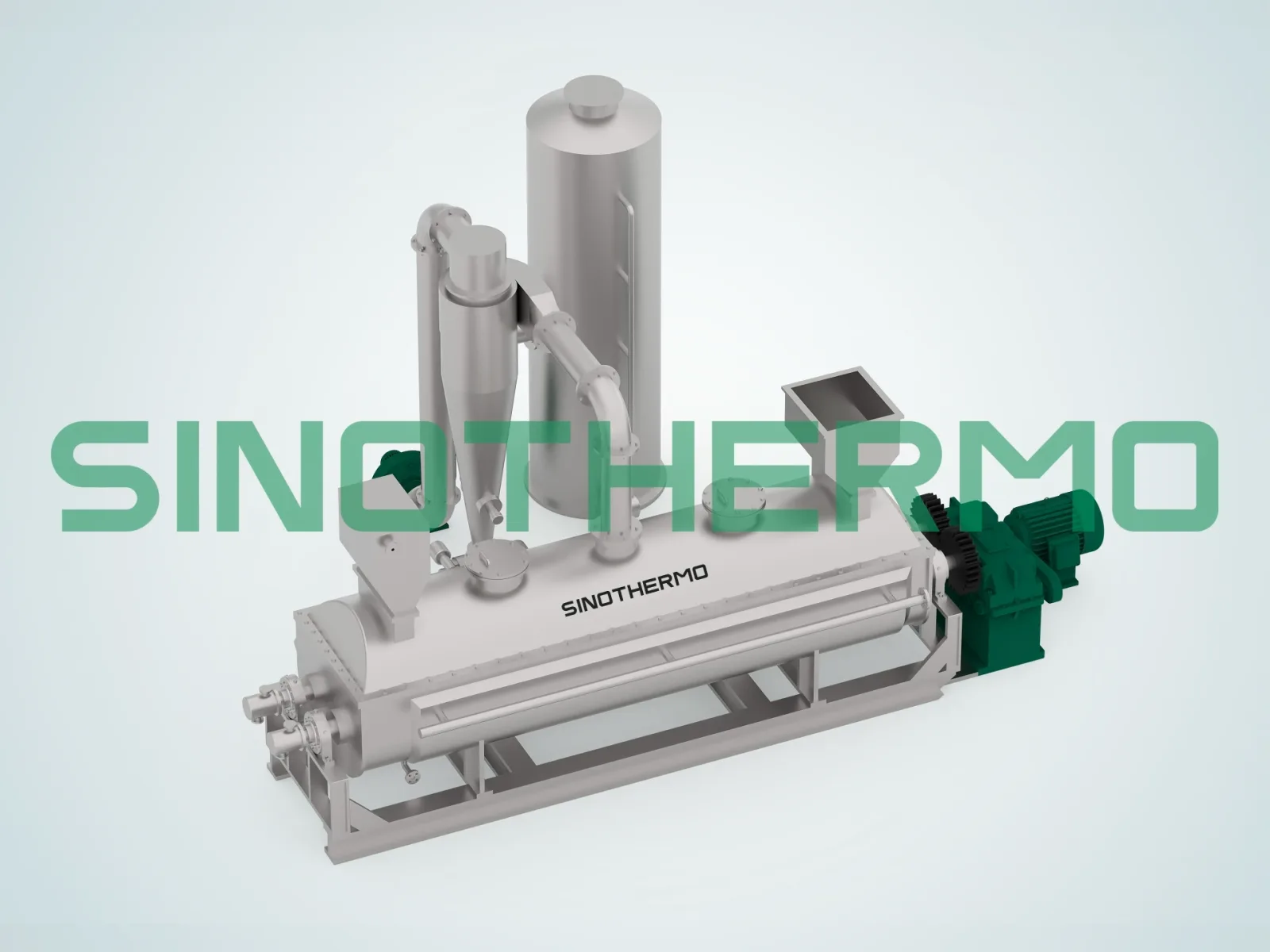
KJG-Vacuum Paddle Dryer
Categories: Conduction and Vacuum Dryer
Vacuum Conduction Dryer with Hollow Paddle Agitator:
With its heating surface and wedge-shaped hollow paddle agitators, the Vacuum Paddle Dryer outperforms conventional rake vacuum dryers in heating effectiveness. It aids in the movement and heating of materials under vacuum, suitable for flammable, explosive, organic solvent-based and heat-sensitive materials.
- Input:
- Liquids, Slurries, Pastes, Mashes
- Output:
- Powder with 3%-10% moisture content
- Temperature:
- Heat source temperature range of 50°C to 200°C
- Additional Feature:
- Mixing, Mild Crushing
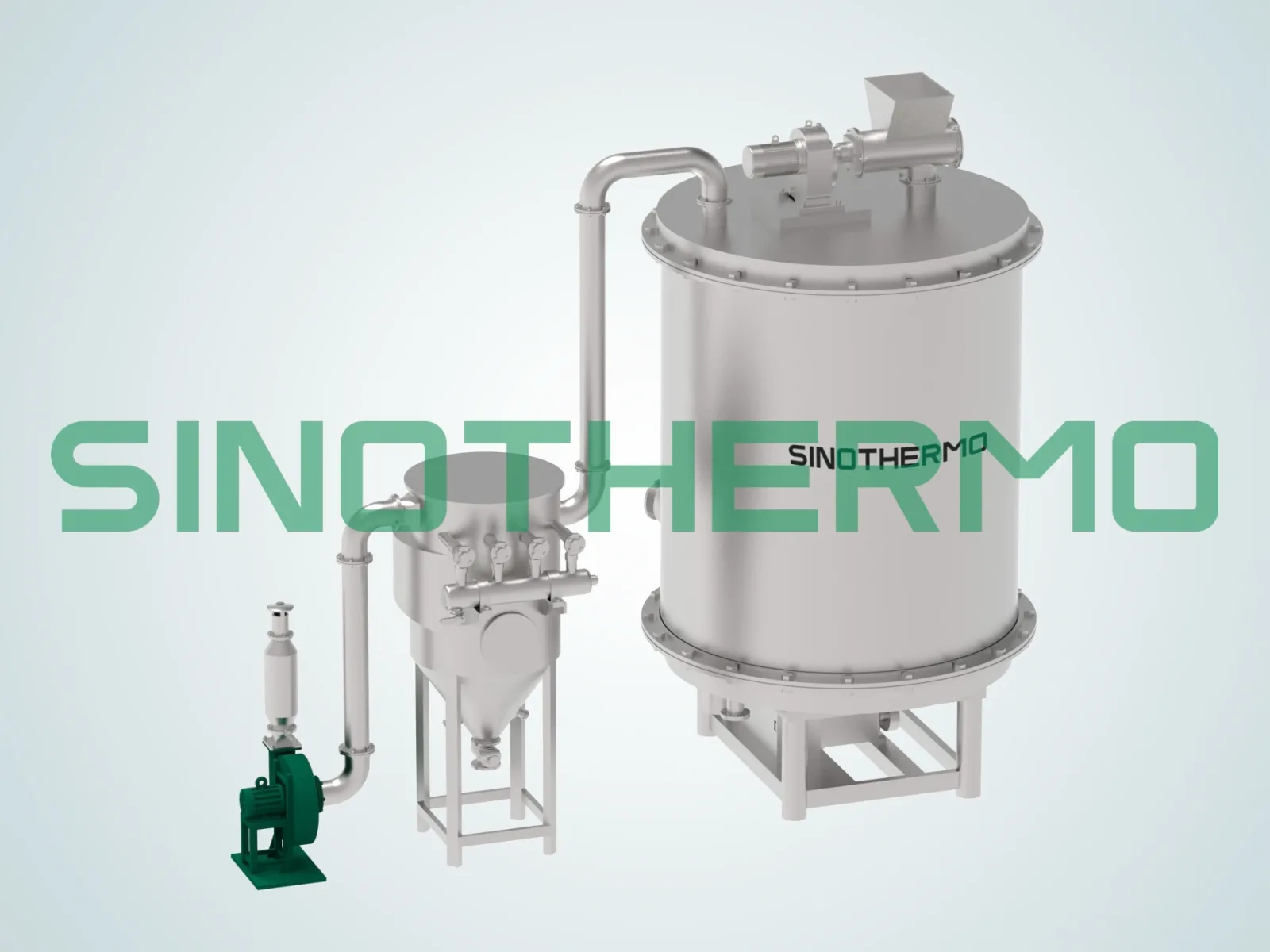
PLG-Vacuum Vertical Plate Dryer
Categories: Conduction and Vacuum Dryer
Effective Continuous Vacuum Conduction Dryer:
The Vacuum Plate Dryer incorporates discs for efficient heating, providing a generous heating surface in a compact layout. It excels in vacuum operations, ideal for managing flammable, explosive and heat-sensitive materials.
- Input:
- Loose powder, Granules
- Output:
- Powder, Granules with 3%-8% moisture content
- Temperature:
- Heat source temperature <200°C
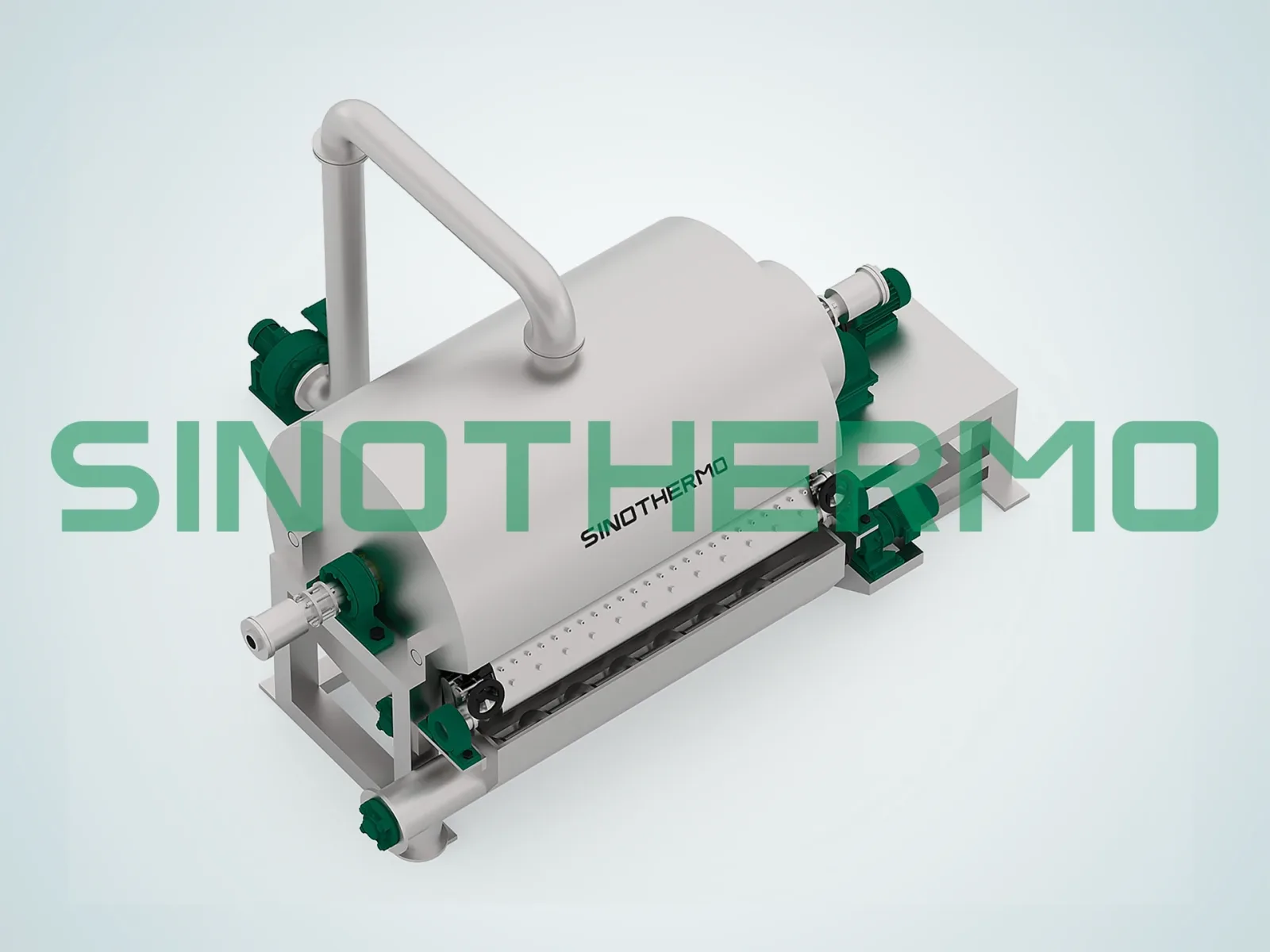
HG/GT-Vacuum Drum Scraper Dryer
Categories: Conduction and Vacuum Dryer
Continuous Drying for Paste-like Materials:
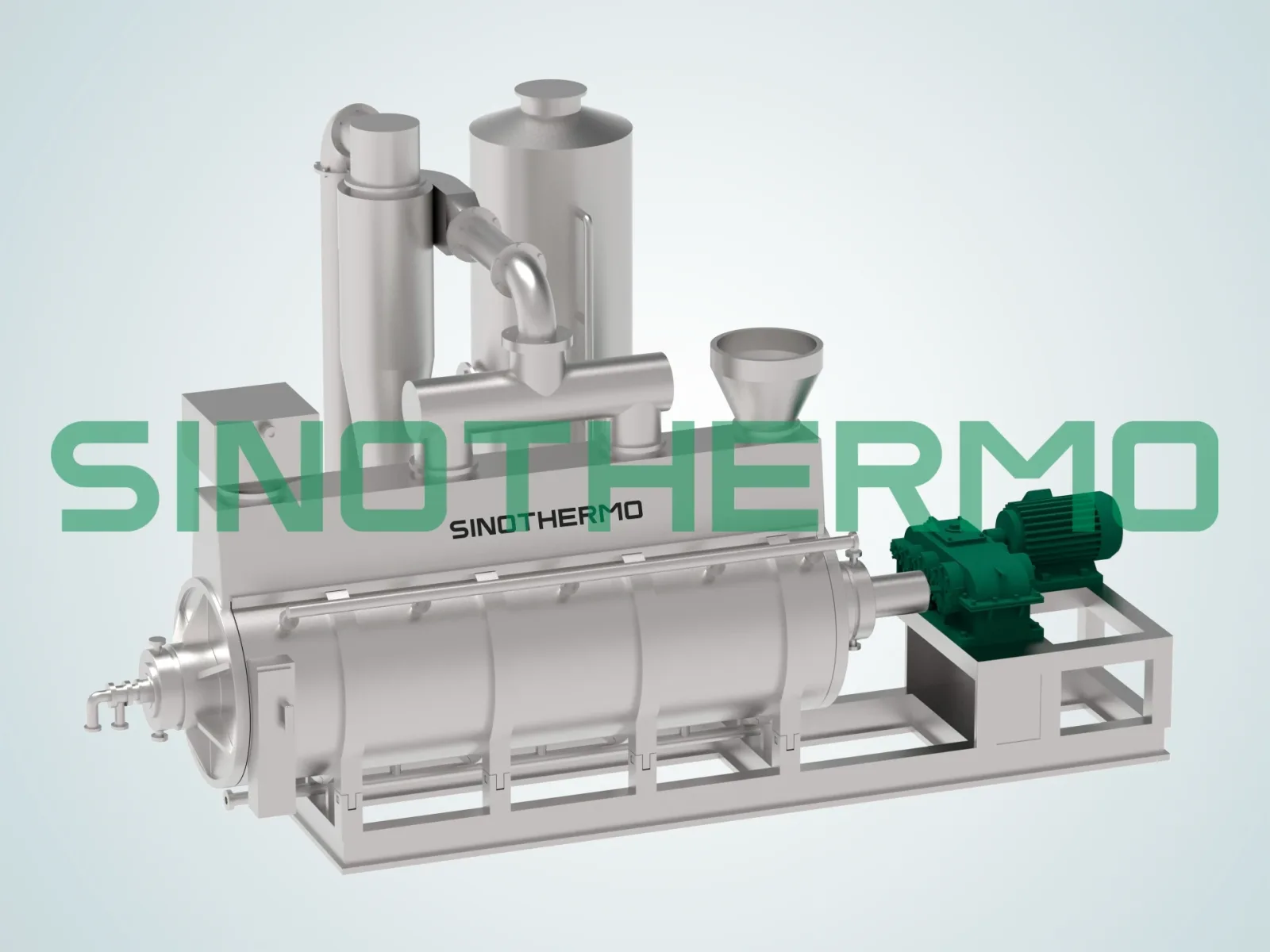
In operation, the rotating drum picks up material as a thin film. Heat transfers from the inner to the outer wall, effectively evaporating moisture, while an internal scraper continuously converts the dried film into flake-like product in a short time.
- Input:
- Pasty, Viscous and Thick Materials
- Output:
- Flake-like Solids with 5%–8% moisture content
- Temperature:
- Inlet air temperature range of 120°C to 260°C
- Additional Feature:
- Cooling
ZYG-Vacuum Horizontal Disc Dryer
Categories: Conduction and Vacuum Dryer
Vacuum Conduction Dryer with Hollow Disc Stirrers:
The Vacuum Horizontal Disc Dryer has a large-area jacket for heating and hollow disc stirrers that enhance the heating surface. It performs better than rake and paddle vacuum dryers in heating efficiency for many materials, is suited to low-temperature vacuum operation, and is ideal for handling flammable, explosive, organic-solvent-based and heat-sensitive materials.
- Input:
- Liquids, Slurries, Pastes, and Mashes
- Output:
- Powder with 3%–10% moisture content
- Temperature:
- Heat source temperature 50°C to 200°C
- Additional Feature:
- Stirring, Mild Crushing
Drying by Direct Contact with a Heated Surface
The CD dryer, KJG vacuum paddle dryer, PLG vacuum vertical plate dryer, HG/GT vacuum drum scraper dryer and ZYG vacuum horizontal disc dryer all transfer heat through direct contact between material and a heated surface, often combined with vacuum for gentler, lower-temperature drying.
When Conduction Drying Outperforms Convection
More energy-efficient than hot-air drying since heat transfers directly rather than through a moving air stream. Suited to pastes, slurries and viscous materials that don't handle well in air-suspension dryers. Often combined with vacuum to further lower drying temperature for heat-sensitive materials.