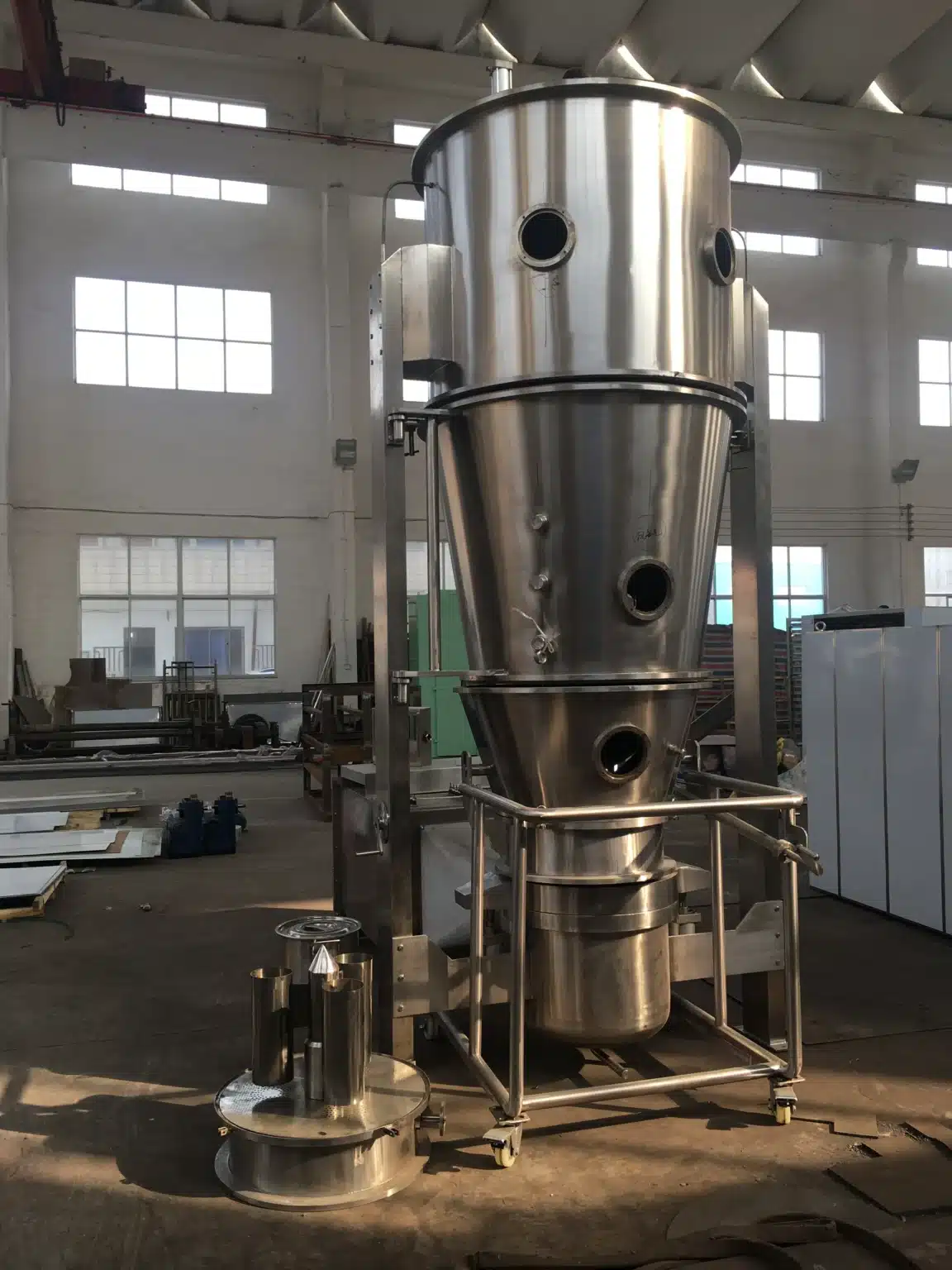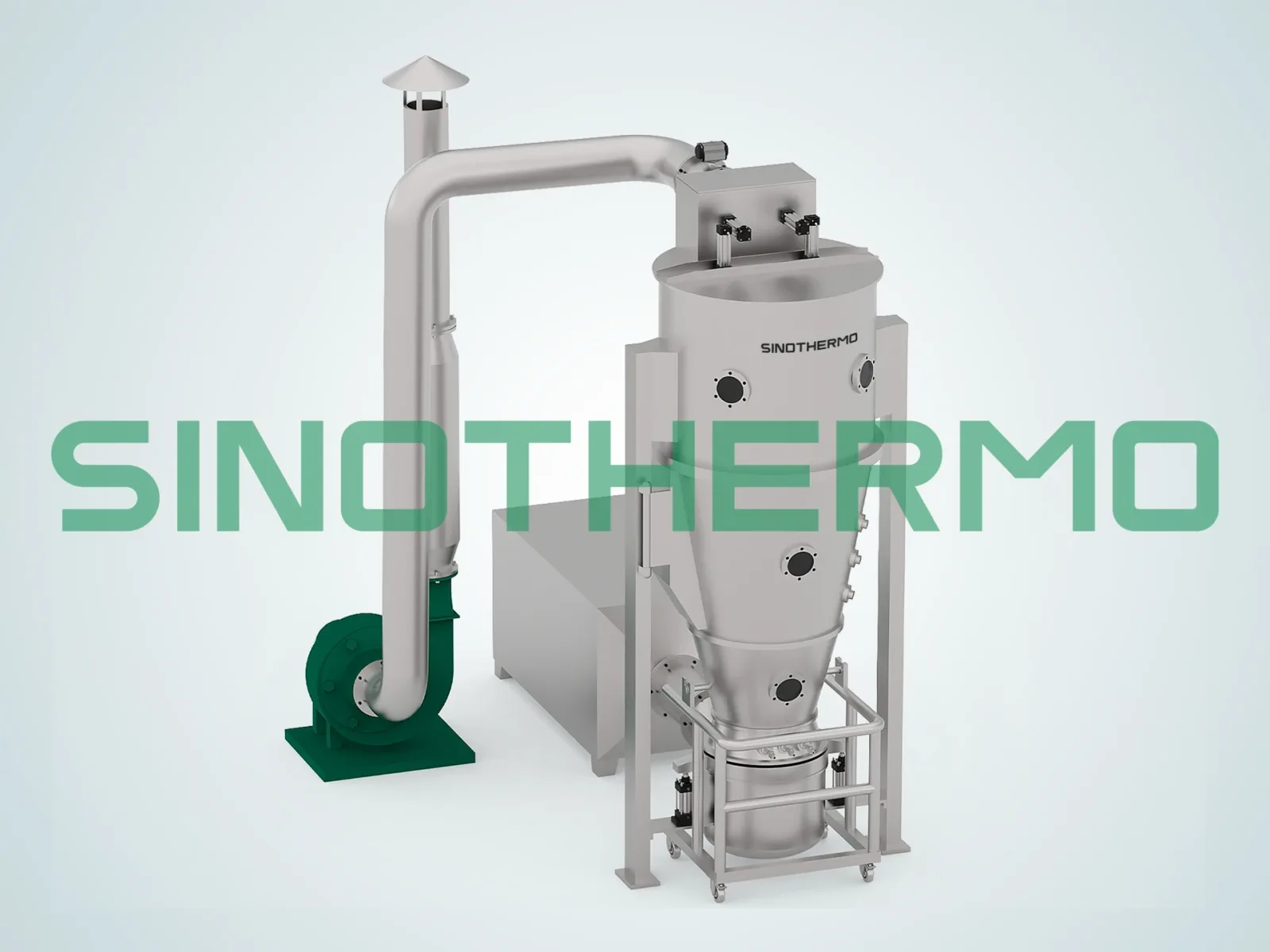
A flash dryer — also called a pneumatic or airflow dryer — dries wet powders and filter cakes almost instantly by dispersing them into a fast-moving stream of hot air. Drying happens in seconds while the particles are conveyed upward through a vertical duct, which makes the flash dryer the go-to solution for surface-moist materials that need rapid, gentle, continuous drying.
For overseas process, procurement, and R&D engineers evaluating a fast dryer for filter cakes, pigments, starches, or fine minerals, this guide covers the flash dryer working principle, where it fits, how it compares to a spin flash dryer, and how to avoid the specification mistakes that most often lead to a dryer that underperforms in the field.
How a flash dryer works
The flash dryer working principle is deceptively simple, but each stage matters when you scale it from a lab sample to a production line. The material never sits in a hot chamber; instead it is entrained and dried in transit, which is exactly why residence time is measured in seconds rather than minutes.
- 1.Feeding and dispersion — Wet cake or powder is metered into the base of the dryer. A disperser, rotating cage, or integral mill breaks lumps apart and disperses the solids into the incoming airflow, dramatically increasing surface area. Poor dispersion here is the single biggest cause of off-spec moisture downstream.
- 2.Flash evaporation — The dispersed particles are swept up a vertical drying duct by a high-velocity hot-air stream. Because each particle is tiny and fully surrounded by hot gas, surface moisture evaporates in seconds. Evaporative cooling keeps the particle core well below the gas temperature.
- 3.Pneumatic conveying — The airstream carries the drying particles upward through the duct. Residence time is typically only a few seconds, so heat exposure is minimal — the reason the flash dryer suits many heat-sensitive products with surface moisture.
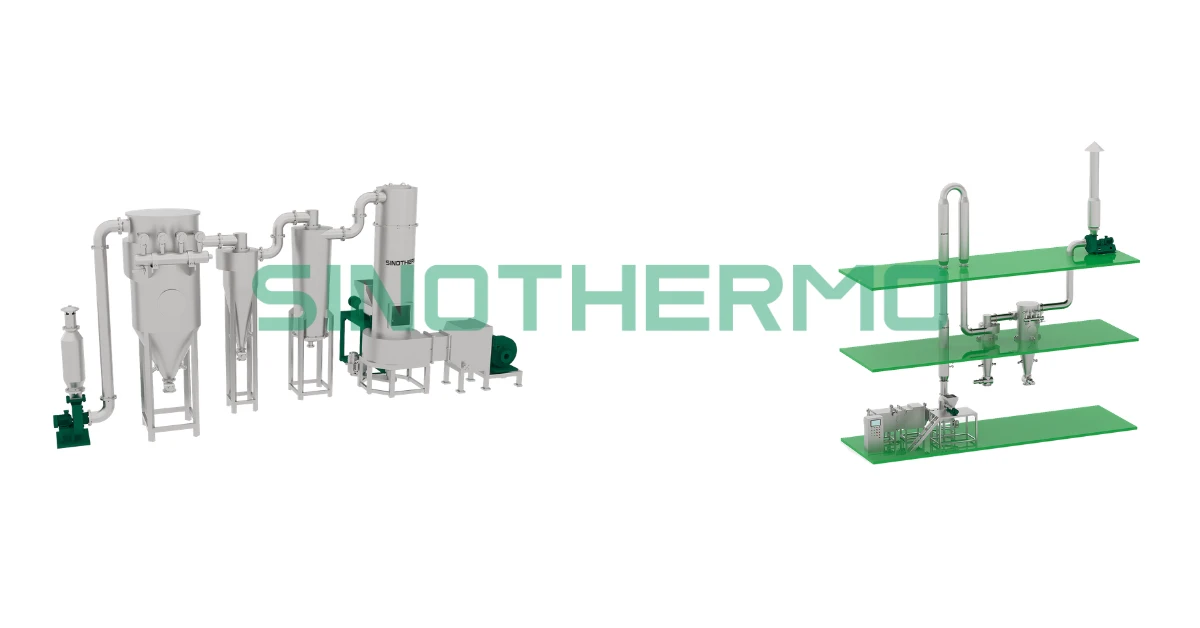
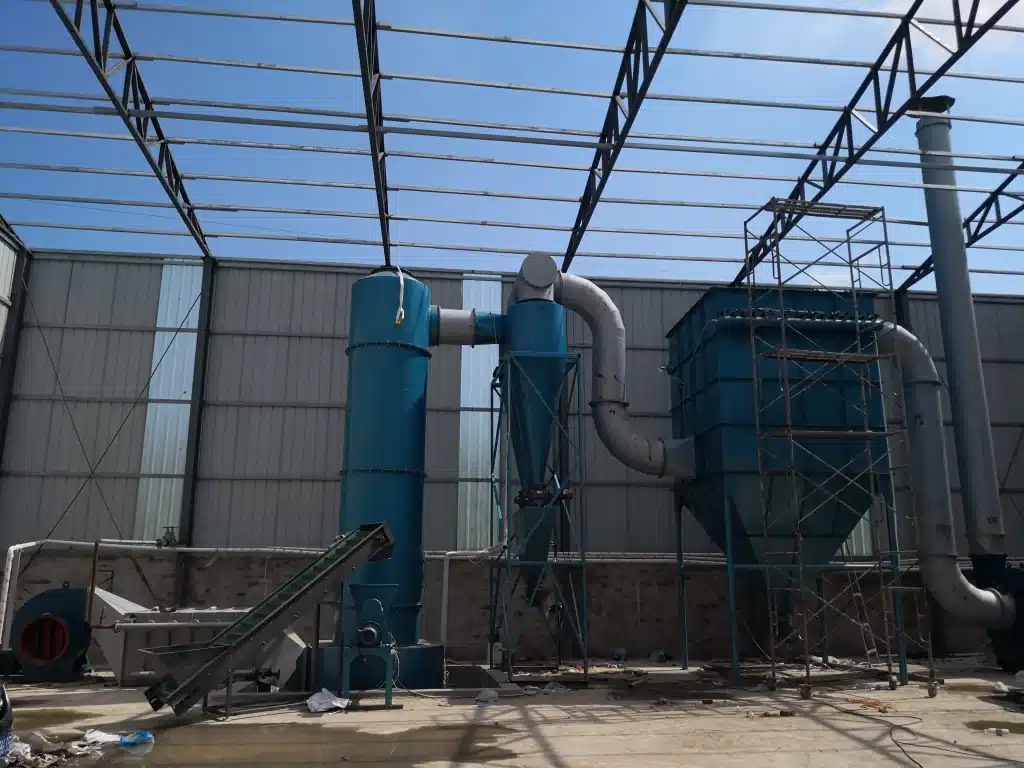
- 4.Separation and collection — The dried powder is separated from the exhaust air by a cyclone, a bag filter, or both, then collected. Fines recovery and dust control depend entirely on correctly sized filtration at this stage.
Because the whole process is continuous and the equipment footprint is compact relative to throughput, a flash dryer often replaces a much larger batch or convection dryer once the moisture is confirmed to be mostly surface-bound.
Flash dryer vs spin flash dryer
The most important selection decision is whether your feed can be pneumatically conveyed as-is, or whether it is too sticky and needs mechanical agitation first. This is the difference between a standard flash (pneumatic) dryer and a spin flash dryer.
| Feature | Standard flash / pneumatic dryer | Spin flash dryer |
|---|---|---|
| Best feed | Free-flowing wet powders, dispersible filter cakes | Pastes, sludges, viscous/sticky filter cakes |
| Dispersion method | Disperser/mill into vertical airflow duct | Rotating agitator breaks the paste in the chamber |
| Residence time | Seconds | Seconds to minutes (larger particles stay until dry) |
| Feed handling | Feed must be dispersible into the airstream | Handles high-viscosity feeds that cannot be conveyed pneumatically |
| Typical materials | Surface-moist granular chemicals, starches | Dewatered sludges, sticky pigment cakes, pastes |
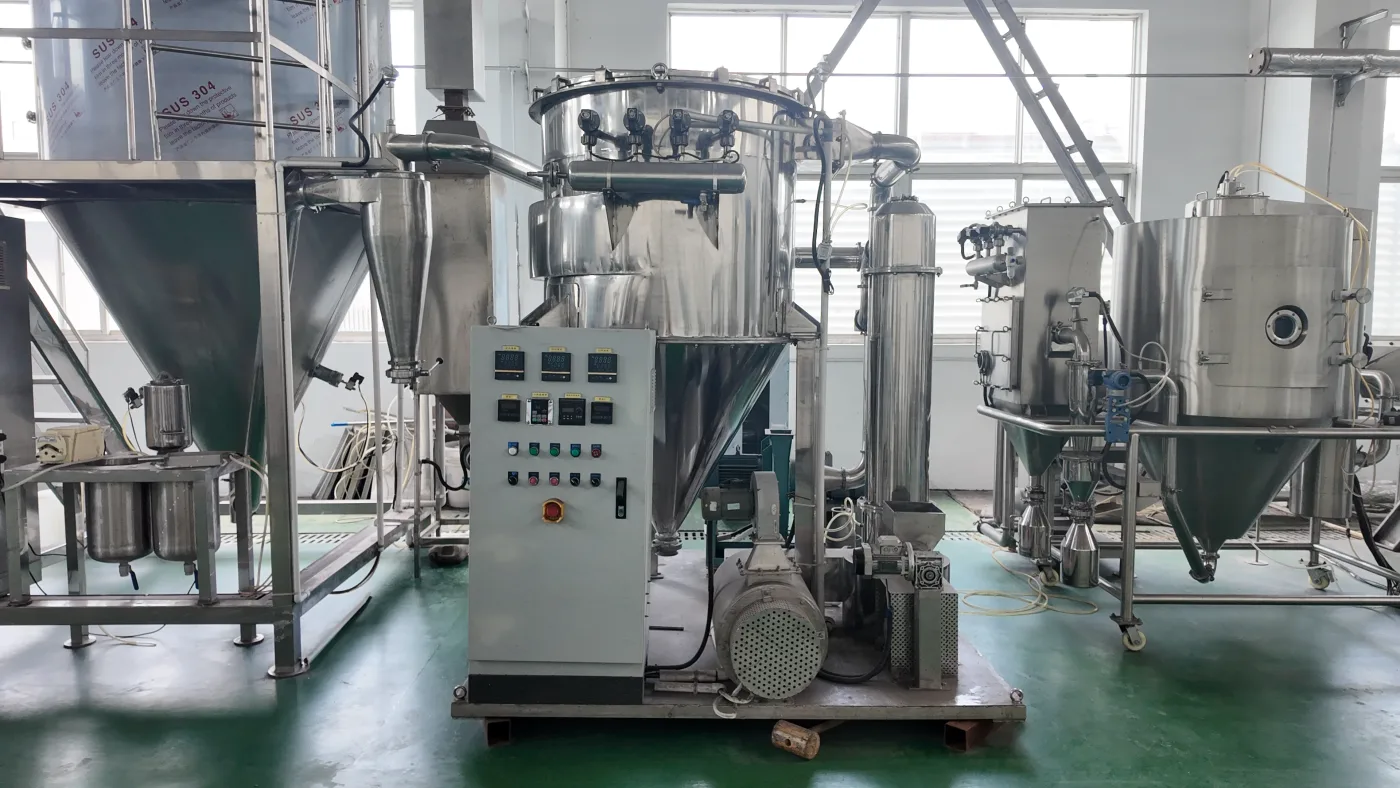
In a spin flash dryer, a rotating agitator continuously shears the paste inside a drying chamber while hot air dries and classifies the particles. Fines leave once dry; heavier wet agglomerates stay in the chamber until they are light enough to be carried out. This built-in classification is what lets a spin flash dryer handle feeds that would immediately block a standard pneumatic duct. SINOTHERMO builds both the standard Pneumatic Dryer for dispersible powders and cakes and the Spin Flash Dryer for pastes and sticky cakes, so the geometry is matched to your material rather than forcing your material to fit one machine.
7 proven applications of flash dryers
Flash dryers earn their place across process industries wherever surface moisture must come off fast without cooking the product. Seven of the most common, proven uses:
- 1.Chemical filter cakes — dewatered cakes discharged from a filter press or centrifuge, dried continuously without a batch oven.
- 2.Pigments and dyes — colour bodies that must dry quickly and uniformly to protect shade and strength.
- 3.Catalysts and inorganic salts — fine chemical intermediates needing gentle, fast, continuous drying.
- 4.PVC and polymer powders — free-flowing resin powders with surface moisture after washing.
- 5.Food starches, gluten and protein concentrates — heat-sensitive food powders where short residence time limits thermal damage.
- 6.Food additives — free-flowing additive powders dried inline before packing.
- 7.Fine mineral concentrates and clays — fine surface-moist mineral solids dried rapidly at high throughput.
Dewatered municipal and industrial sludges are also commonly dried on a spin flash rather than a standard flash, because sludge behaves as a paste until a large fraction of moisture is gone. If your feed sits between "free-flowing powder" and "paste," it is a strong candidate for a pilot trial before you commit to a configuration.
Advantages and limitations
Advantages. Flash drying is extremely fast — seconds, not minutes — which limits heat exposure and makes it gentle on materials whose moisture is mostly on the surface. The process is continuous and the equipment is compact for its capacity, giving a low capital cost relative to throughput. Because a mill or disperser sits at the inlet, you can integrate size reduction and drying in a single step, saving a downstream milling stage.
Limitations. A flash dryer excels at surface moisture, not deeply bound internal moisture — materials with tightly bound water often need the longer, controlled residence time of a fluid bed dryer. A standard flash dryer also needs a dispersible feed; very sticky pastes will bridge and block a pneumatic duct and must go to a spin flash dryer instead. Finally, because the product leaves as a dust-laden airstream, effective cyclone and bag-filter separation is not optional — it is part of the process design.
Flash dryer vs other industrial dryers
Choosing between dryer families comes down to where the moisture is (surface vs bound), how the feed behaves (free-flowing, granular, or paste), and how long the material can tolerate heat.
- vs rotary drum dryer: A flash dryer is faster and gentler for fine, surface-moist powders and has a smaller footprint. A rotary dryer is the better choice for bigger, wetter, more abrasive or granular loads that need a longer, more forgiving residence time.
- vs fluid bed dryer: A fluid bed gives a longer, controlled residence time that suits bound moisture and tight final-moisture targets. A flash dryer is near-instant and is best when the moisture is on the surface and throughput matters more than long contact time.
If you are still mapping the whole equipment landscape, our industrial drying equipment guide walks through every major dryer family and where each one wins.
Common mistakes to avoid
- Specifying a standard flash dryer for a paste. If the feed is sticky or high-viscosity, a pneumatic duct will block. Confirm dispersibility first, and move to a spin flash dryer if the material behaves as a paste.
- Assuming flash drying removes bound moisture. Flash drying is a surface-moisture process. If your material holds tightly bound internal water, a flash dryer alone may not hit the target — plan for a fluid bed or a two-stage layout.
- Under-sizing the separation train. The dried product arrives as a dust-laden airstream. An undersized cyclone or filter means product loss, emissions issues, and poor fines recovery.
- Ignoring inlet dispersion. Lumps that survive the disperser leave the duct with wet cores. Getting the disperser/mill and feed rate right is as important as the air temperature.
- Scaling from a datasheet instead of a trial. Drying curves for real filter cakes rarely match generic tables. Test the actual material before you fix the air temperature and duct geometry.
Process engineering and the SINOTHERMO pilot laboratory
A flash dryer is only as good as the process data behind it. The two variables that decide whether your dryer hits spec — dispersion behaviour and the air temperature/velocity your material can tolerate — cannot be reliably read off a table; they have to be measured on your actual feed. That is why SINOTHERMO runs an in-house pilot laboratory: bring your material, trial it before you specify, and we confirm dispersion, drying curve, and air temperature on the real cake or powder rather than a proxy. Backed by 20+ years of experience, our engineers use the trial data to select between a standard pneumatic dryer and a spin flash dryer and to size the separation train correctly the first time. SINOTHERMO — Process Engineering Infrastructure. We solve the process problem, not just sell a machine.
Conclusion
A flash dryer is the fastest, most compact way to strip surface moisture from dispersible powders and filter cakes — and, in its spin-flash form, from pastes and sticky cakes too. The right choice hinges on how your material behaves and where its moisture sits, which is exactly what a pilot trial settles.
Have a filter cake or wet powder to dry fast — and unsure whether it needs a standard flash or a spin flash dryer? Send us a sample: our pilot lab confirms dispersion and air temperature so your dryer is right the first time.
✉️ mark.gu@sinothermo.com · 📱 WhatsApp: +86 180 2197 2660 · 🌐 www.sinothermo.com
SINOTHERMO — Process Engineering Infrastructure.
FAQ
What is a flash dryer used for?
A flash dryer is used for rapid, continuous drying of surface-moist powders and filter cakes — including chemical filter cakes, pigments, dyes, catalysts, PVC, food starches, gluten and protein concentrates, and fine mineral concentrates.
How does a flash dryer work?
Wet material is dispersed into a high-velocity stream of hot air and conveyed up a vertical duct. Surface moisture evaporates in seconds, then a cyclone and/or bag filter separate the dried powder from the exhaust air.
What is the difference between a flash dryer and a spin flash dryer?
A standard flash (pneumatic) dryer disperses free-flowing powders and dispersible cakes directly into an airflow duct. A spin flash dryer adds a rotating agitator that breaks pastes and sticky cakes inside a chamber, so it handles high-viscosity feeds that cannot be pneumatically conveyed.
Can a flash dryer handle heat-sensitive materials?
Yes, for surface moisture. Residence time is only seconds and evaporative cooling keeps the particle temperature well below the air temperature, so thermal damage is limited for many heat-sensitive powders.
Can a flash dryer remove bound (internal) moisture?
Flash drying is best for surface moisture. Deeply bound internal water usually needs the longer, controlled residence time of a fluid bed dryer, or a two-stage arrangement — a trial confirms which route your material needs.
What separation equipment does a flash dryer need?
The dried product leaves as a dust-laden airstream, so a correctly sized cyclone and/or bag filter is required for product recovery, emissions control, and fines handling.
How do I know if my material suits a flash dryer?
Test it. A pilot-lab trial on your actual cake or powder confirms whether it disperses cleanly, how fast it dries, and the maximum safe air temperature — the data needed to choose between a pneumatic and a spin flash dryer and to size the system.

Mark Gu
Passionate about enhancing customer experiences and streamlining operations, Mark focuses on building strong relationships, fostering innovation, and leading teams to achieve exceptional service and efficiency.
Email: mark.gu@sinothermo.com
Phone: +86 18021972660