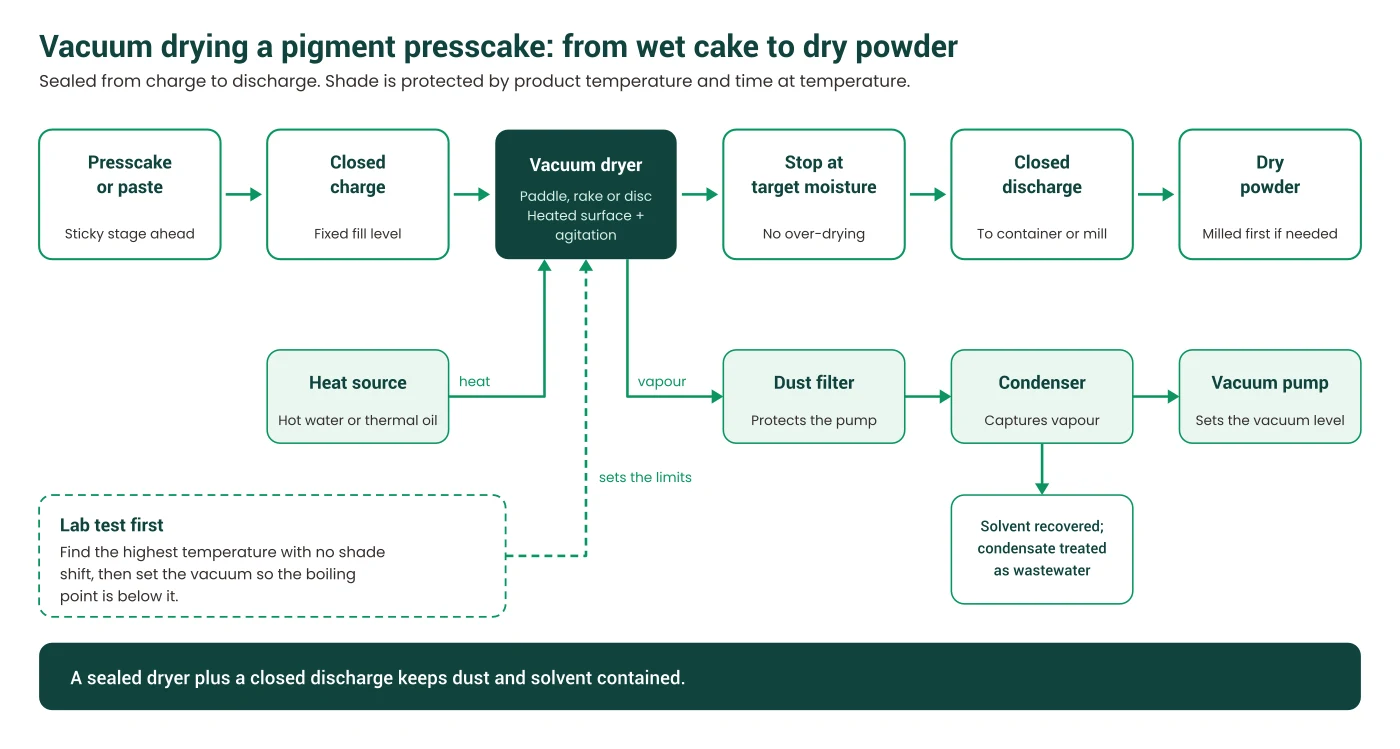
Pigment and dye presscakes are dried under vacuum to protect colour and particle size: the lower boiling point lets the batch dry at a temperature that avoids shade shift and hard agglomerates, and the sealed vessel keeps dust and solvent contained. The right machine depends on the presscake: a paddle, rake or disc dryer for wet pastes, a vertical plate dryer for loose powder, and a drum scraper dryer for thick pastes dried continuously into flakes.
Quick Context: why pigments are hard to dry
A pigment is sold for its colour, strength and dispersibility, not just for its dryness. Drying can damage all three.
- Shade shift. Many organic pigments and dyes change hue or lose strength if they are held too hot, or if crystal form changes.
- Hard agglomerates. When water leaves a presscake, particles bond at contact points. Dry too fast or too hot and the powder forms hard lumps that do not disperse in the end use.
- Dust. Dry pigment powder is fine, light and easily airborne. Handling losses and operator exposure matter.
- Sticky, plastic stage. Many presscakes pass through a gluey stage on the way from paste to powder that sticks to walls and agitators.
- Solvent. Some pigments are wet with solvent as well as water, which makes a closed, vacuum system the safer choice.
Vacuum conduction drying addresses these directly. For the physics of why vacuum lets a batch dry at low temperature, see boiling point of water under vacuum. For the overall choice of machine, see vacuum drying equipment: how to choose by material.
What the presscake looks like decides the dryer
| Feed condition | Typical dryer | Why |
|---|---|---|
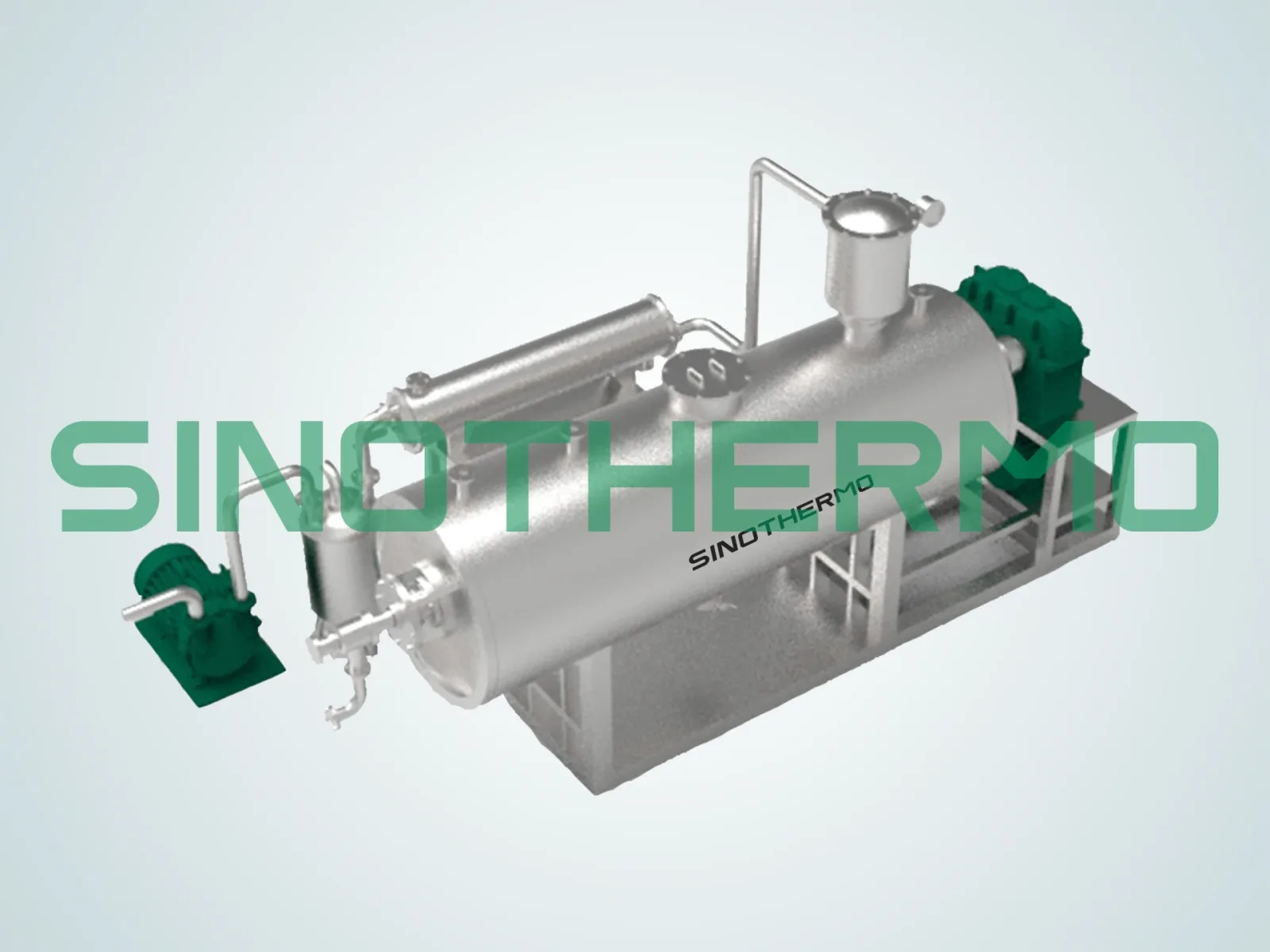
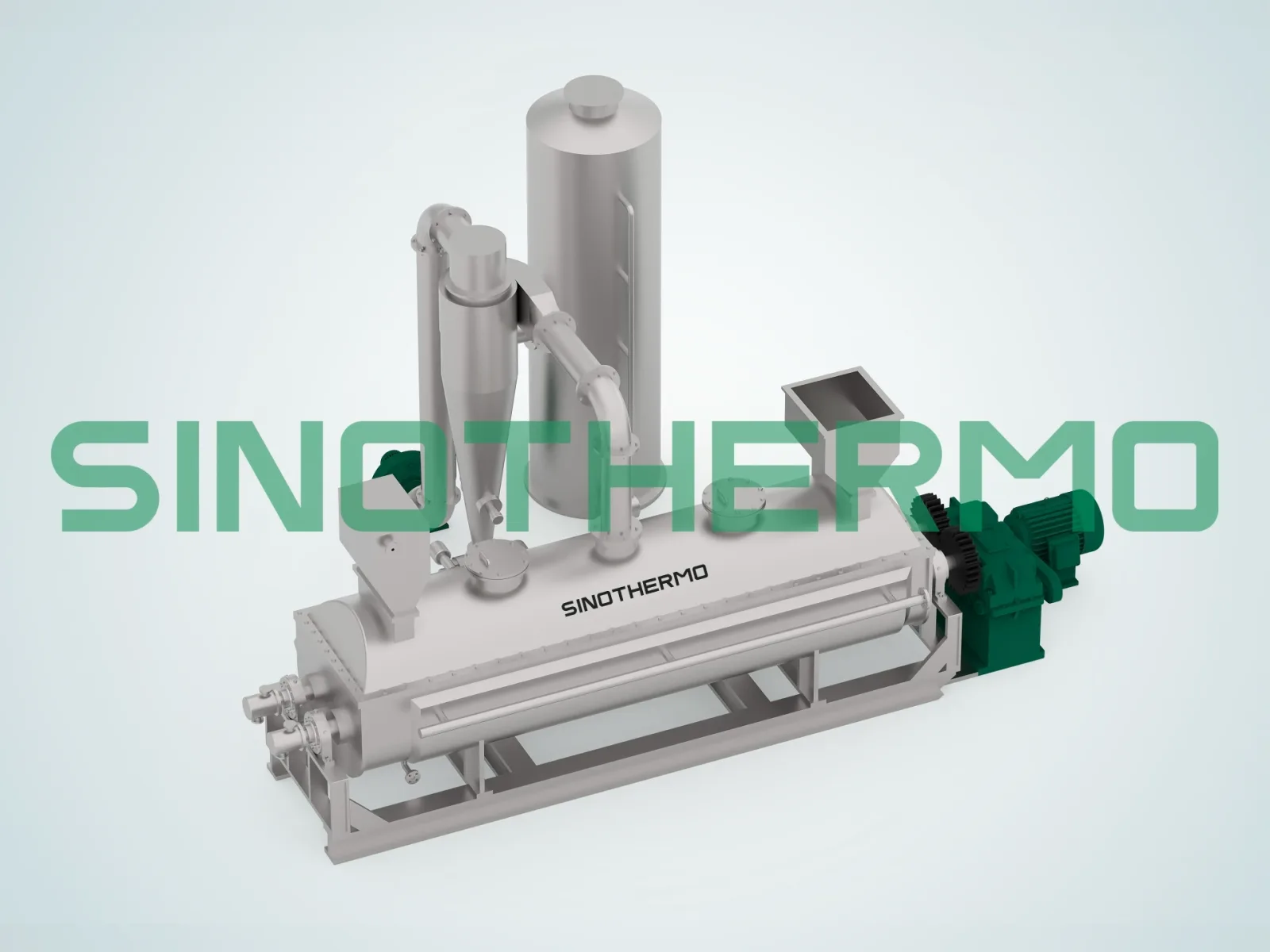
| Wet presscake or paste, sticky stage | Vacuum paddle dryer, vacuum rake dryer or vacuum horizontal disc dryer | Agitators keep turning the batch against heated surfaces, preventing crusting and hot spots |
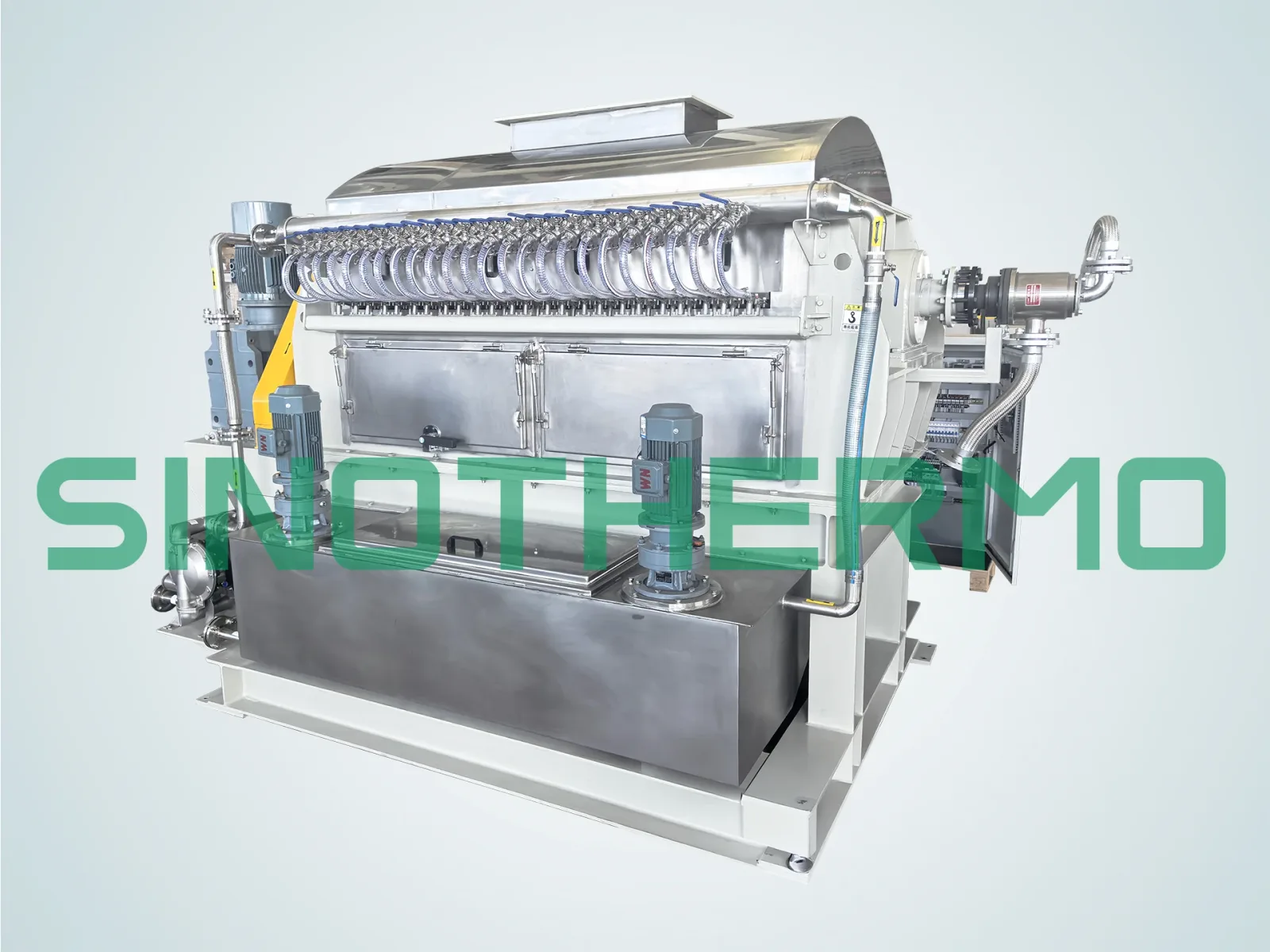
| Thick paste, high volume, continuous | Vacuum drum scraper dryer | Thin-film drying on a heated drum; scraper removes flakes at 5–8% moisture |
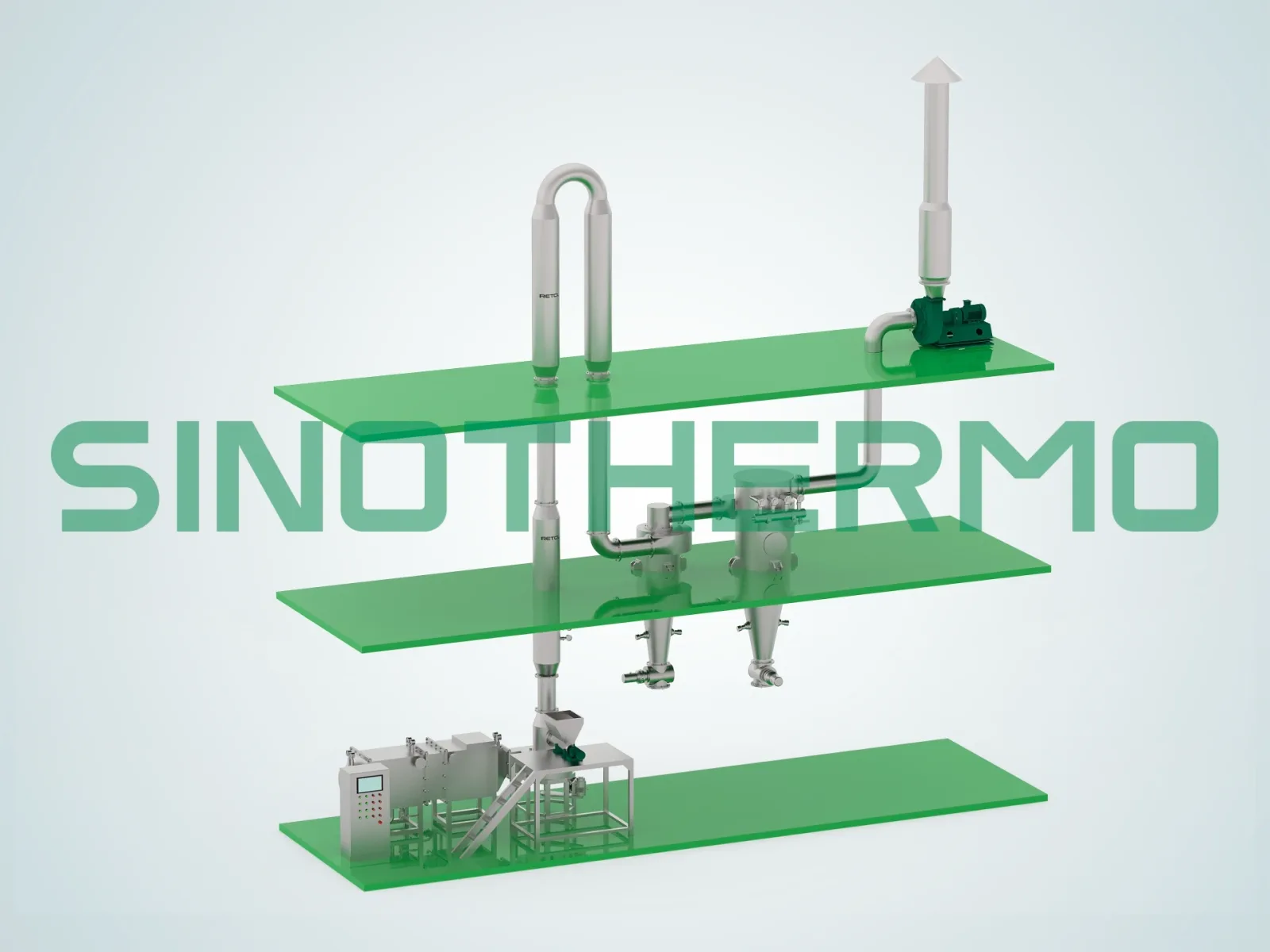
| Loose pigment powder or granules to finish | Vacuum vertical plate dryer | Continuous drying across stacked heated plates; the product page lists pigment and dye powders among its applications, with shade and particle characteristics preserved |
| Dry or nearly dry powder needing final polish | Double-cone rotary vacuum dryer | Gentle tumbling, no internal agitator in the product zone |
SINOTHERMO's rake, paddle and disc dryers list a 50–200 °C heat source range, and the plate dryer lists a heat source below 200 °C. These are heat source ranges, not product temperatures; the product stays close to the boiling point at your vacuum level while free liquid remains.
Controlling shade
Shade is protected by controlling product temperature and time at temperature, not by the machine name.
- 1.Find the colour-safe temperature. Run a small lab test: dry samples at several temperatures and compare shade and strength against the reference. The highest temperature with no measurable shift is your limit.
- 2.Set the vacuum from that limit. Use the pressure-to-boiling-point table to choose an absolute pressure whose boiling point is below the limit.
- 3.Stage the heat. Start with a moderate heat source while the batch is wet, then adjust as the product warms in the falling-rate stage, when its temperature rises towards the heat source temperature.
- 4.Watch the end point. Over-drying wastes energy and can harden agglomerates. Stop at the moisture the customer specifies.
Controlling agglomerates and particle size
- Gentle agitation. Slow, steady agitation keeps the surface renewed without crushing or smearing. A double-cone dryer tumbles without a stirrer in the product.
- Avoid shocking the surface. A very hot wall on a wet presscake forms a crust that traps moisture and later breaks into hard lumps. Start the heating medium moderate.
- Plan for de-lumping. Some pigments are milled after drying. Decide whether milling follows, because it changes how much agglomeration you can tolerate.
- Check particle size before and after. Measure particle size distribution on dried samples, not only the moisture.
Choosing Between Paddle, Rake, Disc and Drum Scraper for Pigments
The three agitated machines share a principle (heated surface plus agitation under vacuum) but differ in heating surface and handling.
- Rake dryer. The slow rake turns the batch against the heated jacket. It is the simplest machine and suits presscakes that are not too sticky and where the highest throughput is not needed.
- Paddle dryer. Hollow wedge-shaped paddles carry heating medium and add conduction surface on top of the jacket, so drying is faster than in a rake dryer. A good first choice for sticky presscakes.
- Disc dryer. Hollow discs add still more heating surface; the product page describes higher heating efficiency than rake or paddle dryers for many materials. Well suited to larger batches where cycle time matters; see vacuum disc dryer: hollow disc drying for pastes.
- Drum scraper dryer. A continuous thin-film process. It suits high-volume thick pastes where the product can leave as flakes, then be milled. The product is exposed to heat for a short time, which can help with heat-sensitive dyes, but the film must dry cleanly off the drum, so a pilot test is important.
If you are uncertain, the paddle dryer is the usual starting point for a pilot trial, and the result guides whether to move to a disc or a drum.
What to Measure in a Pigment Drying Trial
A trial is more useful when you decide in advance what to measure. For pigment and dye, the usual list is:
- 1.Moisture and volatiles at several times, to build the drying curve.
- 2.Colour (colour difference against a reference, strength and shade) after drying.
- 3.Particle size distribution before and after drying.
- 4.Dispersibility in the end-use medium, which is where agglomerates show up.
- 5.Bulk density and dust level of the dried powder.
- 6.Cycle time and the vacuum and heating profile used.
- 7.Condensate quality, if wastewater treatment is a concern.
Agree acceptance limits for each before the trial starts. That way the result decides the machine, not opinion.
Dust and containment
Vacuum drying is a sealed process. Dried powder stays in the vessel until it is discharged, and there is no large exhaust air stream carrying fine pigment out. For toxic or sensitising dyes, this is a significant operator-safety benefit. Plan the discharge route, such as a closed discharge to a container or to a mill, so the benefit is not lost at the last step.
Solvent and wastewater
If the presscake carries solvent, a condenser captures it for recovery, which is cheaper and safer than discharging it to air. For aqueous presscakes, the condensate is water that may carry fines or dissolved dye; treat the condensate as wastewater and keep it separate from clean water. The vacuum system should have a condenser and a dust filter between the vessel and the pump; see vacuum pump and condenser sizing for vacuum dryers. SINOTHERMO can supply the dryer as a complete line with the vacuum system, condenser, heating or cooling units and controls.
A worked example
The numbers are illustrative, not customer data.
An organic pigment presscake at 60 percent moisture is dried in batches. The pigment shifts shade above 90 °C in the lab test, and the end customer wants below 1.5 percent moisture. The dryer is at sea level.
- 1.Temperature limit: 90 °C gives a safe boiling-point target well below it, such as 60 to 70 °C, which corresponds to roughly 20 to 30 kPa absolute pressure.
- 2.Machine: the presscake is sticky and wet at first, so an agitated machine such as a vacuum paddle or disc dryer is a natural fit.
- 3.Heat source: a moderate hot-water or thermal-oil temperature at the start, raised later if the shade allows.
- 4.End point: dry to the specified moisture and stop; discharge through a closed route to the mill.
Real values depend on the pigment, so the next step is always a test.
Scale-Up and Batch Consistency
Pigment buyers expect every lot to match the last, so the drying recipe must be repeatable. Record the vacuum profile, heating medium temperature, agitation speed, fill level and end-point moisture for each batch, and keep them the same when moving from pilot to production. Heat transfer area per kilogram of batch changes with scale, so cycle time will not scale linearly; use the pilot data to estimate it, and confirm it in the first production batches. Hold the batch to a fixed fill level, because a different fill changes both the drying time and the thermal history of the pigment, and with it the shade.
What to Send for a Quotation
- Pigment or dye type and chemistry, and whether it is organic or inorganic
- Presscake moisture and any solvent; target moisture
- Maximum safe product temperature and how it was determined
- Batch size or throughput
- Particle size or dispersibility requirements
- Toxicity or dust-exposure limits
- Heat source and cooling water available
Common Mistakes to Avoid
- 1.Drying at a fixed temperature without a shade test.
- 2.Over-heating the wall while the cake is wet, forming a crust.
- 3.Over-drying past the target moisture.
- 4.Ignoring discharge dust. A sealed dryer followed by an open discharge loses the benefit.
- 5.Forgetting condensate treatment.
- 6.Choosing the machine from a catalogue without a pilot trial.
Test Before You Specify
Pigment behaviour is specific to each grade. SINOTHERMO runs paid pilot testing, so you can check shade, agglomerates and drying time on your own presscake. Request a pilot test and the results are yours to use with any supplier. SINOTHERMO builds and sells equipment and does not offer contract drying.
Frequently Asked Questions
How are pigment pastes dried?
Presscakes are usually dried in agitated vacuum conduction dryers, such as paddle, rake or disc dryers, or continuously on a drum scraper dryer. Loose powder can be finished in a plate or double-cone vacuum dryer.
Why dry pigments under vacuum?
Vacuum lowers the boiling point, so the batch dries at a lower temperature. This protects shade and strength, and the sealed vessel contains dust and solvent.
How do I avoid hard agglomerates in dried pigment?
Avoid a very hot wall on wet cake, use gentle agitation, stop at the target moisture and plan de-lumping or milling if needed.
Can a vacuum dryer recover solvent from a pigment presscake?
Yes. A condenser captures the solvent vapour for recovery.
What temperature should I dry a pigment at?
It depends on the pigment. Find the highest temperature with no shade shift in a lab test, then set the vacuum so the boiling point is below it.
Can SINOTHERMO supply a complete line?
Yes. We can supply the dryer with the vacuum system, condenser, heating or cooling units and controls.
Does SINOTHERMO offer contract drying?
No. SINOTHERMO builds and sells drying equipment and offers paid pilot testing.

Mark Gu
Passionate about enhancing customer experiences and streamlining operations, Mark focuses on building strong relationships, fostering innovation, and leading teams to achieve exceptional service and efficiency.
Email: mark.gu@sinothermo.com
Phone: +86 18021972660