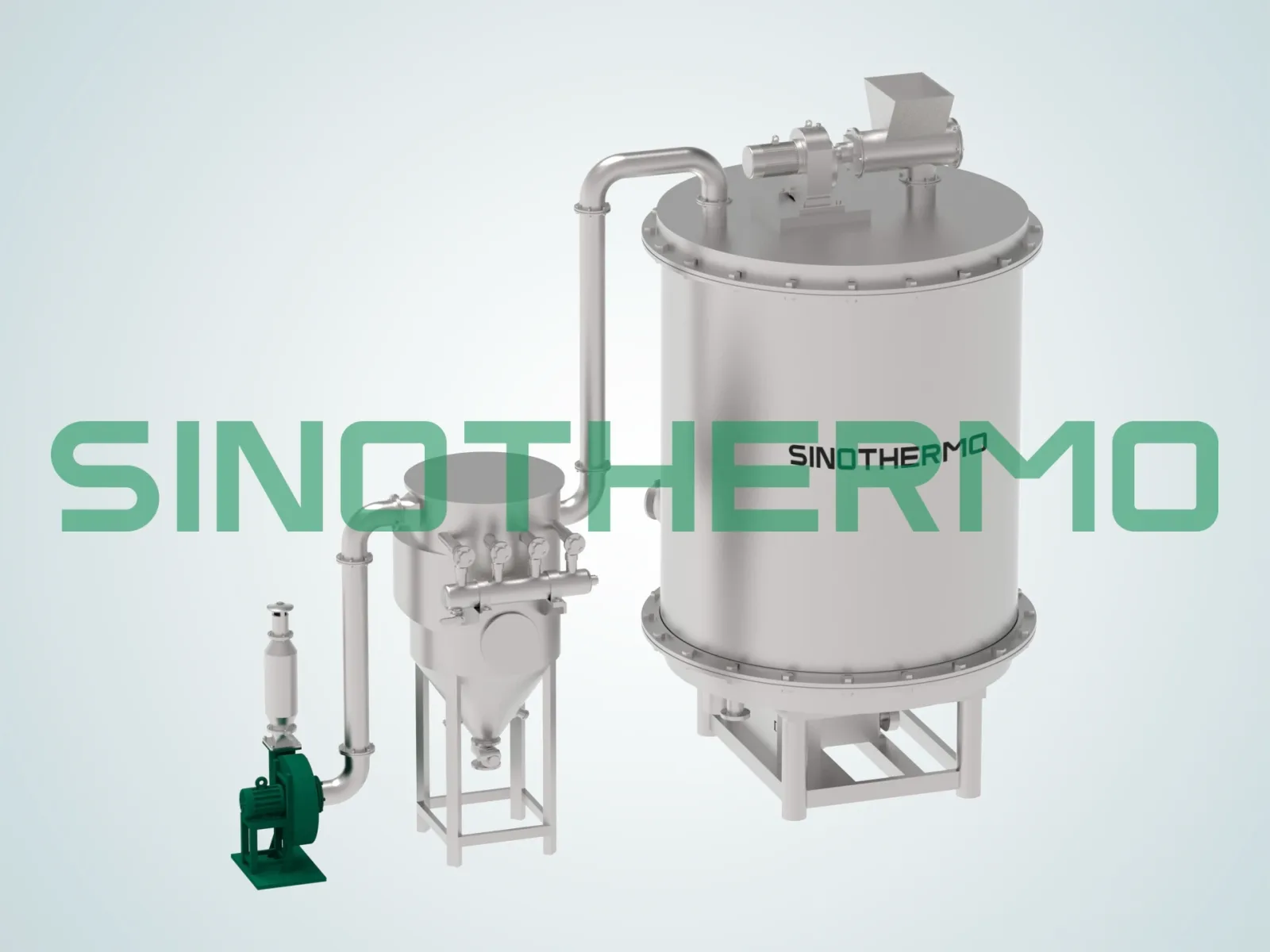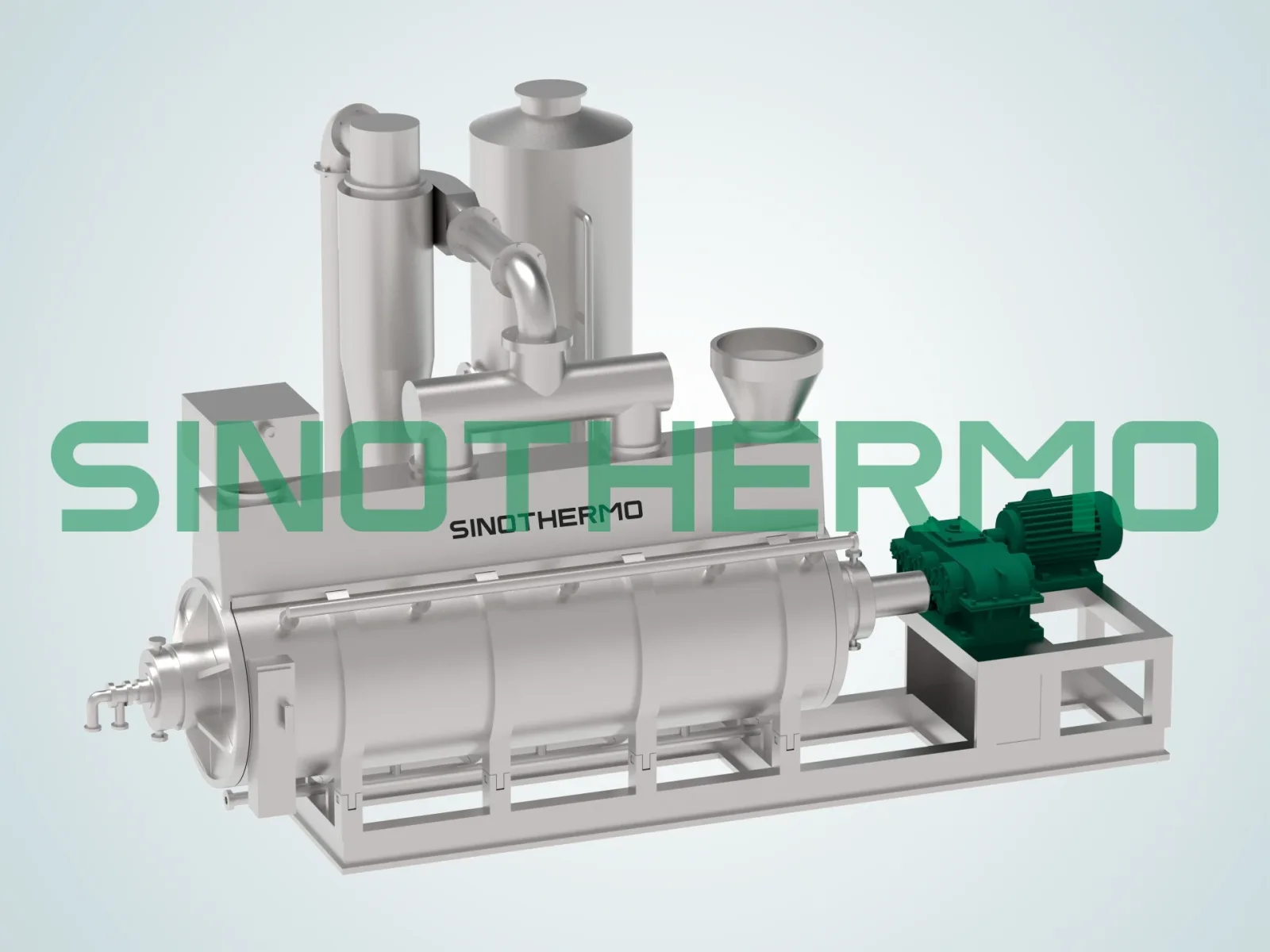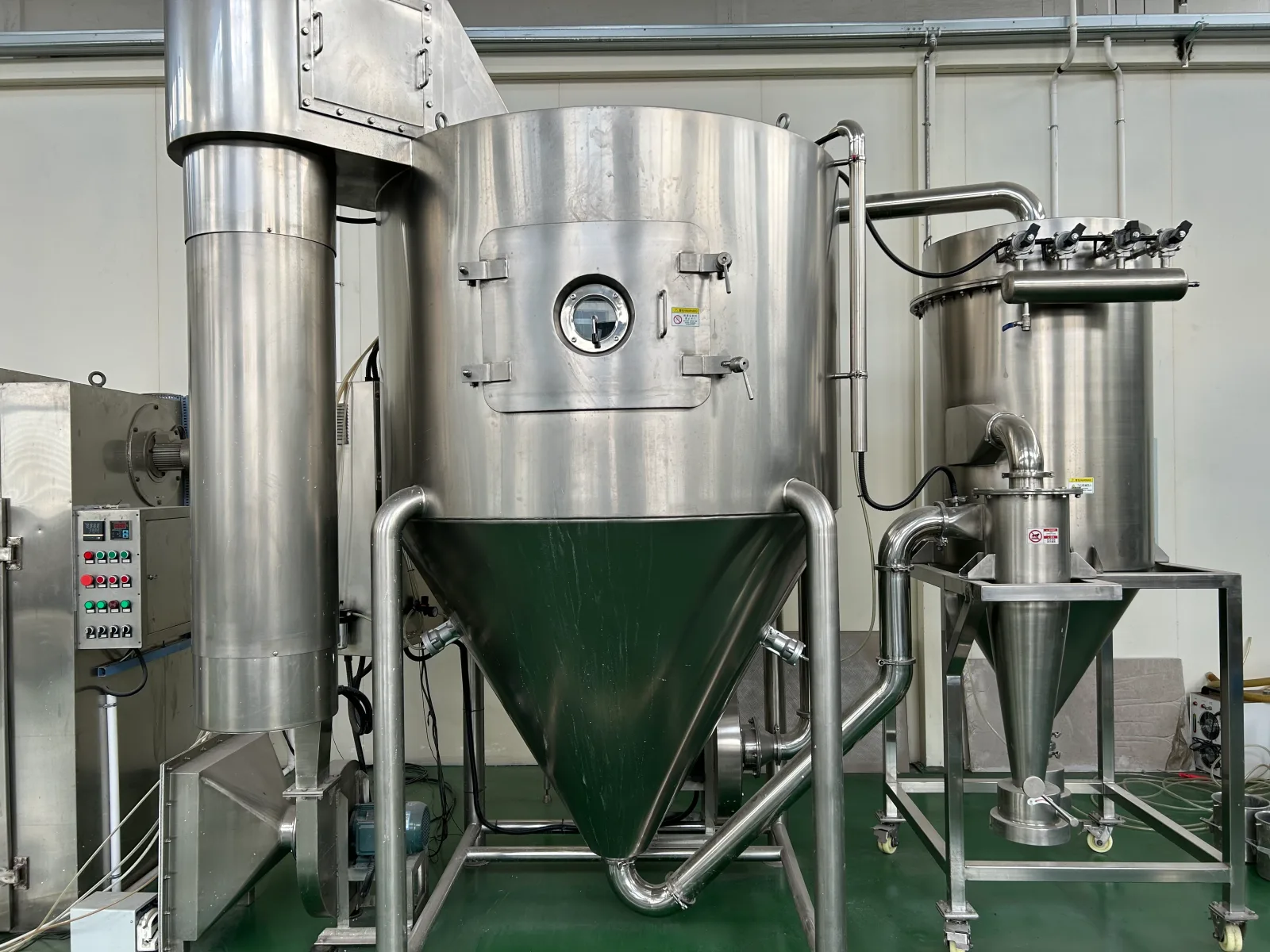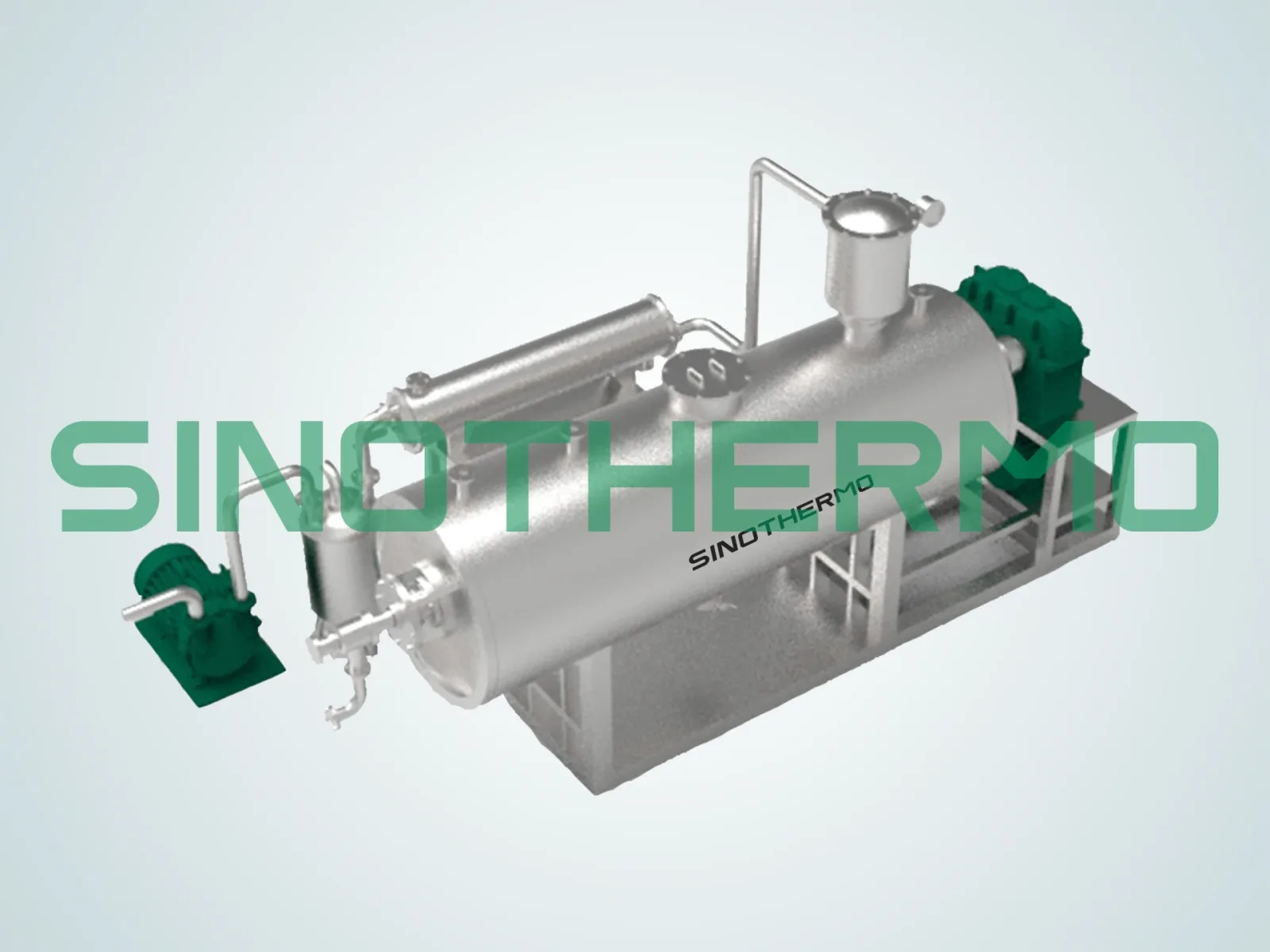
Choosing vacuum drying equipment is mostly a question of what your wet material looks like when it goes in. Liquids, slurries and pastes point to agitated or film-forming dryers such as rake, paddle, disc and drum scraper units. Loose powders and granules point to double-cone, ribbon conical or continuous plate dryers. Wet cakes that can be spread on trays point to a static vacuum cabinet. Batch size and whether you need a continuous line then narrow the shortlist to one or two machines.
Quick Context: what "vacuum drying equipment" actually covers
Vacuum drying equipment is any dryer that removes moisture or solvent from a product inside a sealed vessel held below atmospheric pressure. Lowering the pressure lowers the boiling point of the liquid, so the product can dry at a much lower temperature than in hot air. At 20 kPa absolute, for example, water boils at about 60 °C instead of 100 °C. That is why the technology is the default for heat-sensitive, easily oxidised, flammable or solvent-wet materials.
Almost all industrial vacuum dryers are also conduction dryers: heat reaches the product through a heated wall, hollow agitator or tray, not through a stream of hot air. There is no large exhaust gas stream to carry vapour away, so a condenser and vacuum pump remove it instead. This is also why solvent recovery is practical with this equipment family.
The practical consequence for buyers is that "vacuum dryer" is not one machine. SINOTHERMO lists nine configurations in its conduction and vacuum dryer range, and the right one depends on feed form, throughput and how the product behaves while drying. For a general introduction to how the technology works, read our industrial vacuum dryer guide first. This page is the next step: choosing between the machines.
Step 1: Start from the feed form
The single most useful question is whether the material arrives as a pumpable liquid, a paste or cake, or a loose solid.
| Feed form | What it looks like | Machines to consider |
|---|---|---|
| Liquid, slurry, paste, mash | Pumpable or spreadable, high moisture | Vacuum rake, vacuum paddle, vacuum horizontal disc, vacuum drum scraper, CD dryer |
| Thick paste or cake that must stay undisturbed | Spreadable on trays, high purity needed | Static vacuum cabinet (tray) dryer |
| Loose powder or granules | Already particulate, needs final drying or blending | Double-cone rotary vacuum, ribbon conical vacuum, vacuum vertical plate |
Notice that several machines appear for liquids and pastes. They are not interchangeable, and the next steps separate them.
Step 2: Batch or continuous
Most vacuum conduction dryers work in batches: load, evacuate, heat, dry, discharge. Batch operation suits pharmaceutical and fine chemical production, where each lot must be traceable and cleaned out between products.
Continuous operation is rarer in vacuum drying. Two SINOTHERMO machines are continuous: the vacuum vertical plate dryer (loose powders and granules moving through stacked heated plates) and the vacuum drum scraper dryer (a thin film of paste picked up on a rotating heated drum and scraped off as flakes). If your plant runs one product around the clock, these are worth a look. If you run many products in small lots, stay with batch machines.
Step 3: Match the machine to the material
Agitated batch dryers for liquids, slurries and pastes
Three machines in this group share the same idea: a sealed, jacket-heated vessel with an agitator that moves the product and, in two cases, adds heating surface.
- Vacuum rake dryer (ZPG series, 300 to 6,000 L working volume): a slow rake turns material against the heated jacket. It is the simplest design and suits products that are not very sticky.
- Vacuum paddle dryer (KJG series, 3 to 110 m² of heat transfer area): wedge-shaped hollow paddles carry heating medium, which adds conduction surface and gives a self-wiping action that limits build-up on the shaft.
- Vacuum horizontal disc dryer (ZYG series, 500 to 7,000 L total volume): hollow discs on a heated shaft add large heating surface in a compact vessel.
All three run on a heat source between 50 and 200 °C and produce powder at roughly 3 to 10 percent moisture. For a head-to-head view of rake and paddle machines, see vacuum rake vs paddle dryer. The paddle and disc designs give more heating area for the same vessel size, which usually means a shorter batch for hard-to-dry products. The rake is the lower-complexity option.
Film dryers for thick, sticky pastes
The vacuum drum scraper dryer (GT series) coats a heated drum with a thin film that dries in a short residence time. It handles thick, viscous materials that are difficult in other equipment and produces flakes at 5 to 8 percent moisture. Our article on the vacuum drum scraper dryer covers the operating principle.
Static tray drying for high-purity, fragile products
The static vacuum cabinet dryer (YZG and FZG series) holds trays on heated shelves. Nothing agitates the product, so it stays intact and fully enclosed. Heat source temperature is below 100 °C and final moisture is typically 3 to 5 percent. The trade-off is drying time, because heat has to conduct through a static bed. Read vacuum tray dryer for how bed depth drives batch time.
Powder and granule dryers that also blend
- Double-cone rotary vacuum dryer (SZG series, 100 to 5,000 L): the whole shell rotates and tumbles the batch gently. No internal agitator means low shear and easy cleaning. Final moisture is below 5 percent. See conical vacuum dryer and rotary cone vacuum dryer for detail.
- Ribbon conical vacuum dryer (DZLG series, 1.0 to 4.0 m³): a hollow ribbon agitator inside a jacketed cone stirs and heats at the same time, with no dead corners. Final moisture is 3 to 5 percent.
- Vacuum vertical plate dryer (PLG series): continuous drying of loose powders and granules across stacked heated plates, with a heat source below 200 °C and 3 to 8 percent final moisture. SINOTHERMO delivered a PLG 1500 x 10-layer unit to a university for bamboo pulp drying research, one example of its use in pilot and development work.
Step 4: Size by working volume and heat transfer area, not by vessel volume
Vendors quote total volume, working volume and heat transfer area, and they are not the same thing. A rake dryer listed as ZPG-1000 has about 600 L of working volume. A disc dryer listed as ZYG-1.0 has 1,000 L total and 600 L working volume. Compare machines on working volume for batch size and on heat transfer area for how fast they can evaporate.
A rough way to think about drying time: evaporation load is the mass of water you must remove per batch. Divide it by the heating area and an achievable drying intensity, and you get the hours per batch. For example, SINOTHERMO lists a drying intensity of 15 to 20 kg of water per square metre per hour as a typical range for the disc dryer. These figures depend heavily on the material, so treat them as a starting point and confirm them with a test.
Step 5: Decide what the vacuum system must do
Equipment selection does not stop at the dryer. The vacuum system is part of the specification.
- Condenser: needed when you want to recover solvent or protect the pump from vapour.
- Pump type: liquid ring, rotary vane or dry pump depends on the solvent and the vacuum level you need.
- Vacuum level: SINOTHERMO rake dryers list an internal pressure range of -0.095 MPa (gauge) and above. A deeper vacuum lowers the drying temperature further but needs a larger pump and tighter seals.
- Heat source: steam, hot water or thermal oil, depending on the temperature you need. The standard range is 50 to 200 °C.
A worked selection example
Take a pigment paste at 60 percent moisture that darkens above 90 °C, produced in lots of about 500 kg.
- 1.Feed form is a paste, so the shortlist is rake, paddle, disc, drum scraper or tray.
- 2.The product is made in lots, so batch operation fits.
- 3.Because it is heat-sensitive, the heat source should stay low, and vacuum will let it dry well below 90 °C product temperature.
- 4.A paste at this load needs a lot of heating area per batch, which favours a paddle or disc dryer over a rake.
- 5.A test run on a paddle and a disc machine would then confirm drying time, crusting behaviour and powder quality before a purchase decision.
This is a worked example with illustrative numbers, not a customer result. The principle is that the machine shortlist comes from the material, and the final choice comes from test data.
Common Mistakes to Avoid
- 1.Selecting from vessel volume instead of working volume and heat area. A bigger vessel does not dry faster. Heating area does.
- 2.Ignoring how the material behaves between wet and dry. Many pastes pass through a sticky or crusty stage. A rake or tray dryer can struggle where a paddle or disc dryer with self-cleaning action does not.
- 3.Specifying the dryer without the condenser and pump. The dryer will only perform as well as the vacuum system behind it.
- 4.Choosing a continuous machine for a multi-product plant. Continuous dryers are efficient for one product and awkward to clean between products.
- 5.Skipping the test. Two samples with the same moisture content can dry very differently. A pilot run is the cheapest way to avoid an expensive mistake.
- 6.Not stating the solvent. Flammable or toxic solvents change the pump, seal and explosion-protection requirements.
What to Send With a Quotation Request
To get a useful proposal, send:
- Material name, feed form and approximate viscosity or particle size
- Initial and target moisture or residual solvent
- Batch size, or hourly throughput if continuous
- Maximum allowable product temperature
- Solvent type, if any, and whether recovery is needed
- Heat source available (steam pressure, hot water or thermal oil)
- Any hygiene, cleaning or explosion-protection requirements
Test Before You Specify
SINOTHERMO runs paid pilot testing for vacuum and conduction drying, so you can compare machine types on your own material before committing. You can request a pilot test and the data you receive, including drying time, final moisture and powder behaviour, is yours to use when comparing proposals from any supplier. If you are still choosing between technologies altogether, how to choose an industrial dryer covers the wider decision.
Conclusion
Start with the feed form, decide between batch and continuous, then compare the two or three machines that fit using working volume and heating area. Treat the condenser and vacuum pump as part of the selection, and confirm the choice with a test run. Our vacuum drying technology page and conduction drying page give the underlying principles.
Frequently Asked Questions
What is the best vacuum drying equipment for heat-sensitive materials?
There is no single best machine. For powders, a double-cone rotary vacuum dryer is gentle because it tumbles the batch without an internal agitator. For pastes and slurries, a paddle or disc dryer gives a large heating surface at low temperature. For fragile, high-purity products, a static vacuum cabinet dryer avoids any mechanical stress. In every case, the vacuum lets the product dry well below its normal boiling point.
What is the difference between a vacuum dryer and a vacuum oven?
A vacuum oven is typically a static chamber with shelves, used for small batches and laboratory work. Industrial vacuum drying equipment includes agitated, rotating and continuous designs built for production volumes. The static vacuum cabinet dryer is the industrial counterpart of the vacuum oven.
Can vacuum drying equipment recover solvents?
Yes. Because the vapour leaves through a condenser rather than a hot exhaust stream, solvent can be condensed and collected. The condenser size and coolant temperature depend on the solvent.
How do I know whether I need a batch or continuous vacuum dryer?
If you make several products in lots and clean between them, batch machines fit. If you run one product continuously at steady throughput, the vacuum vertical plate dryer or drum scraper dryer may fit. A continuous machine is harder to switch between products.
How much does vacuum drying equipment cost?
Price depends on size, heating area, materials of construction and the vacuum system. We do not publish list prices because configurations differ widely. Send the details above and we will prepare a quotation.
How long does a vacuum drying batch take?
It depends on the evaporation load, heating area, product behaviour and vacuum level. Heating area and the drying intensity of the product determine batch time, and a pilot test is the reliable way to measure it.
Does SINOTHERMO offer contract drying?
No. SINOTHERMO builds and sells drying equipment and offers paid pilot testing so that you can validate a process before buying.

Mark Gu
Passionate about enhancing customer experiences and streamlining operations, Mark focuses on building strong relationships, fostering innovation, and leading teams to achieve exceptional service and efficiency.
Email: mark.gu@sinothermo.com
Phone: +86 18021972660