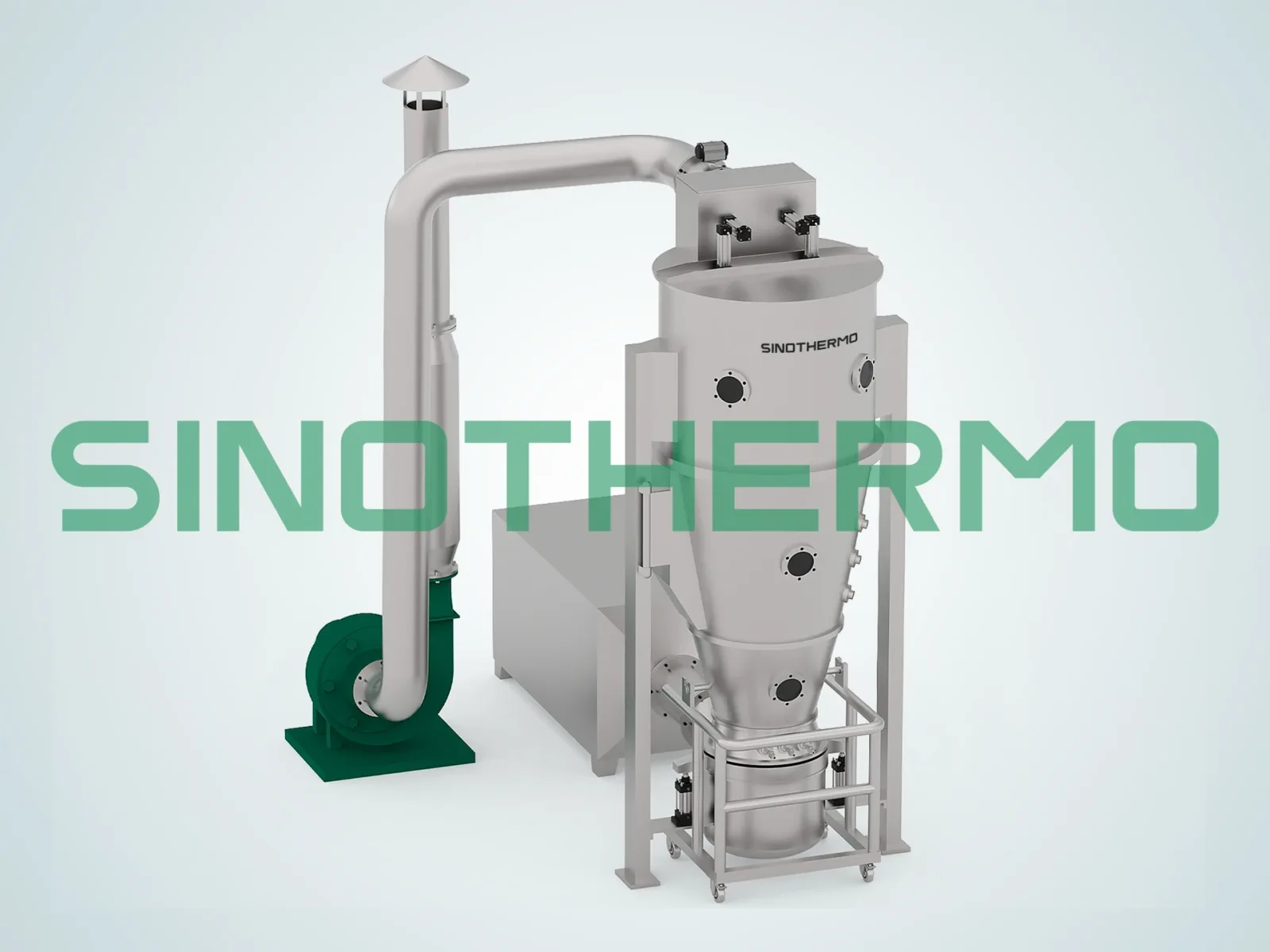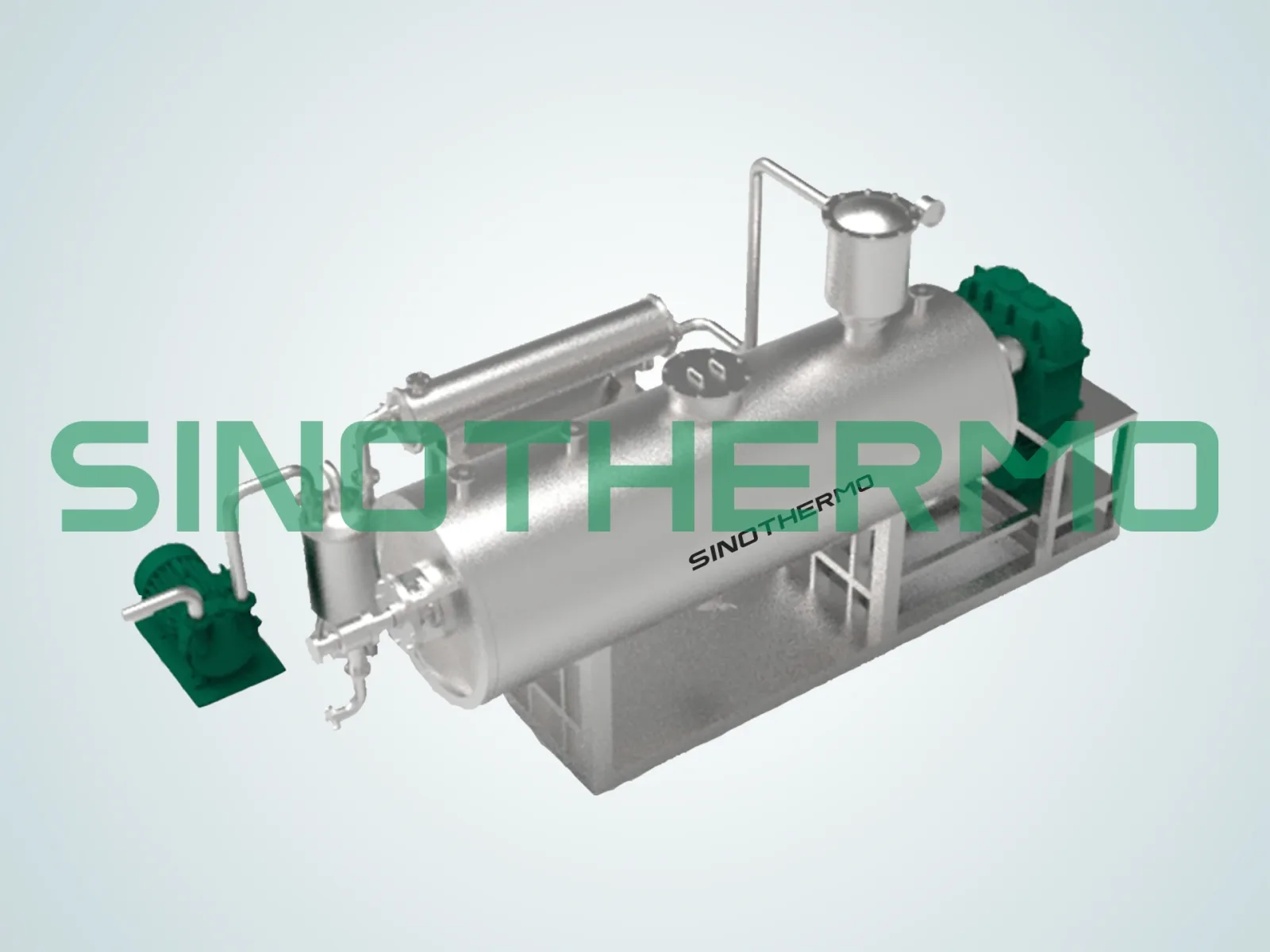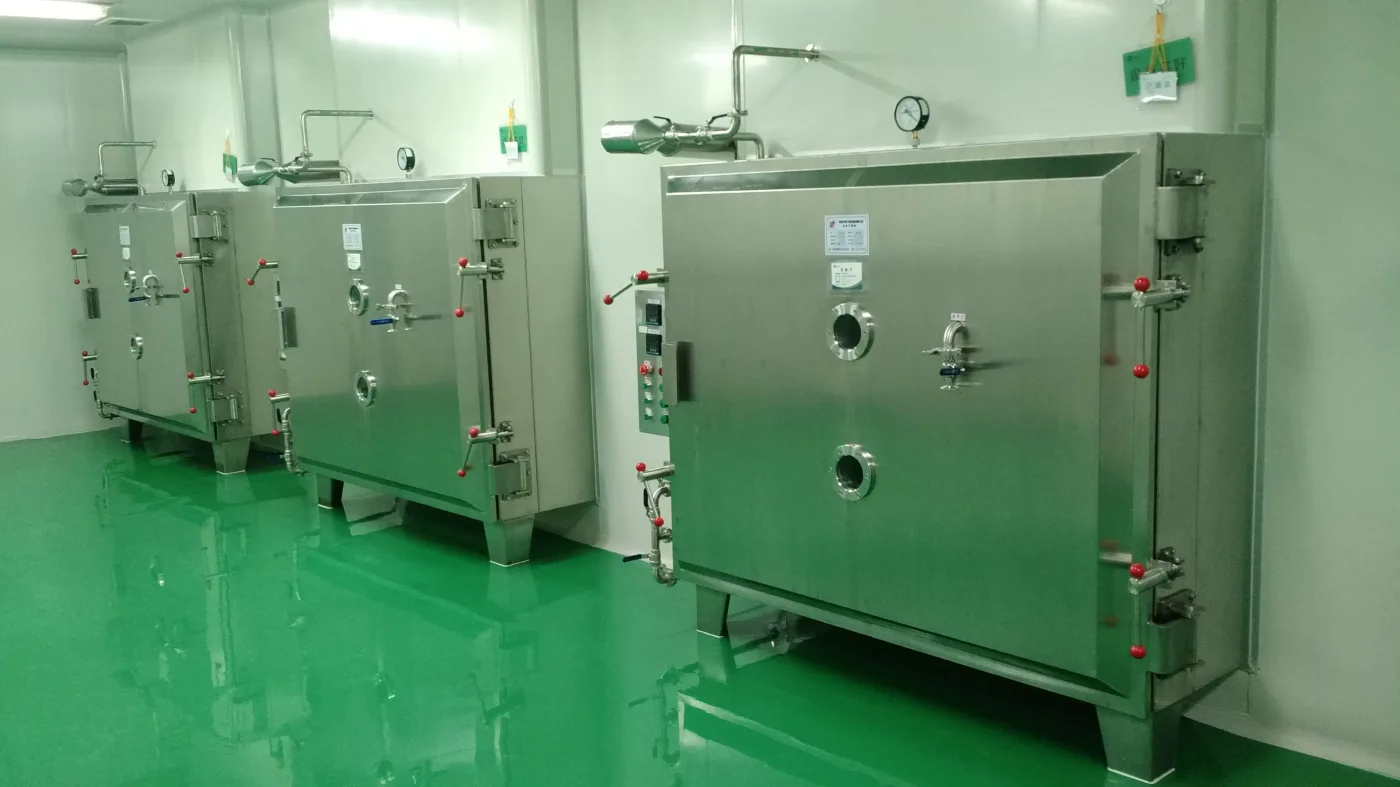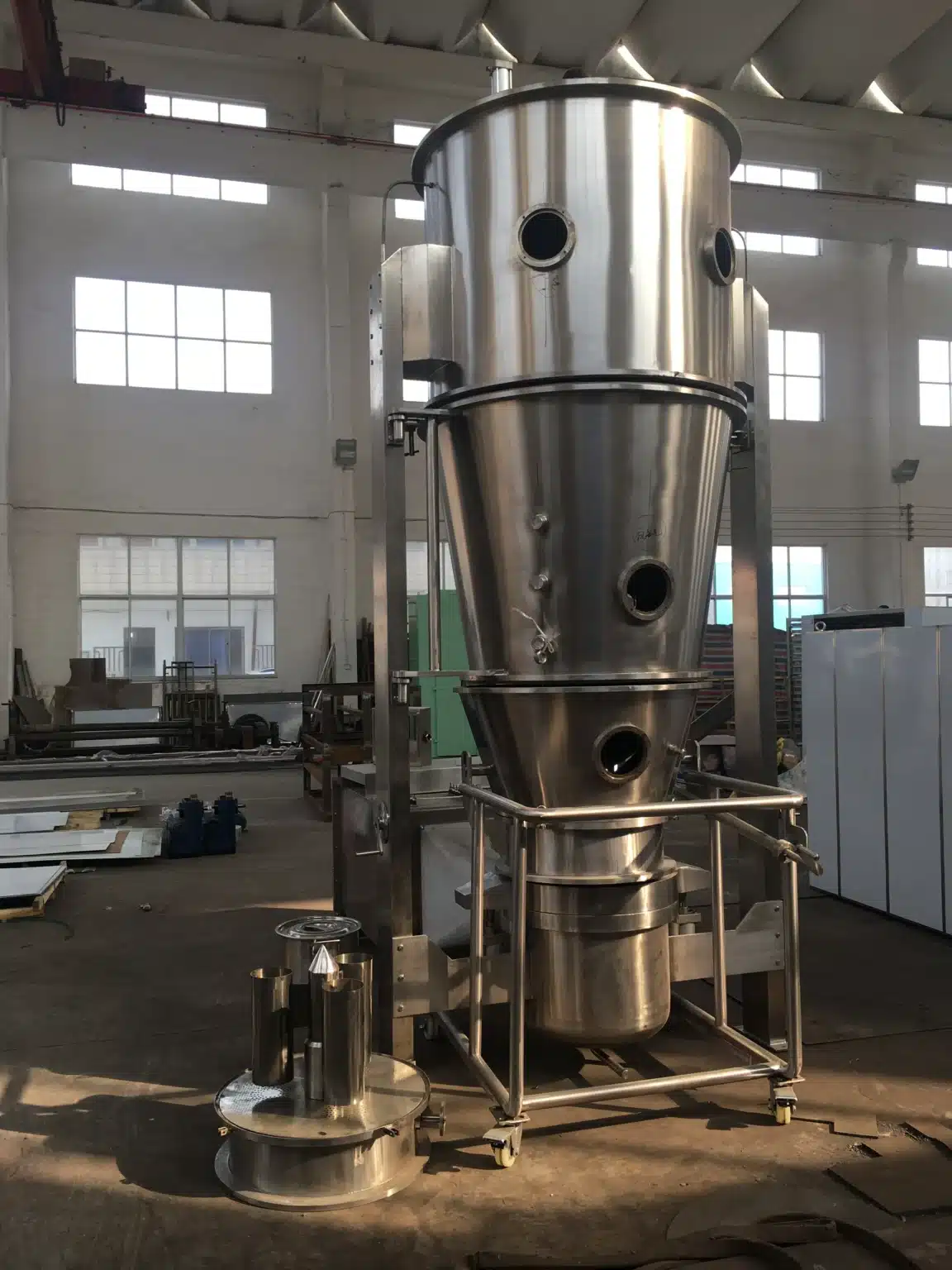
A fluid bed processor is a single fluidised-bed vessel configured to perform three distinct operations — drying, granulation, and particle coating — by changing the insert and spray arrangement rather than the machine. For plants making several products, or developing new ones, it replaces three dedicated machines with one footprint and one validation exercise.
The trade-off is real and worth stating plainly: a multi-purpose machine is rarely the fastest or cheapest way to do any single one of those jobs. It wins on flexibility and floor space, not on throughput.
Quick context: why one vessel covers three jobs
The three operations share more mechanically than their names suggest. All three start from the same physical fact — particles suspended in an upward stream of hot air are individually accessible and thermally uniform. Drying uses that state as-is. Granulation adds a spray of binder into it. Coating adds a spray plus a draft tube that organises how particles move through the spray zone. None of these additions changes the underlying fluidisation; they change what happens to the particle while it's fluidised. That's the mechanical reason a single vessel, with interchangeable inserts, can honestly cover all three — it isn't three different machines bolted together, it's one physical principle used three ways.
The three modes
Drying
Wet particles fluidise in heated air; moisture leaves with the exhaust. Fast (minutes), uniform, and gentle. This is the baseline mode — no insert, no spray.
Granulation (top spray)
A nozzle above the bed sprays binder down onto fluidised powder. Wetted particles collide and stick, bridges dry and solidify, and granules grow to the target size. Then the spray stops and the same air dries them. Used to turn fine powder into free-flowing granules for tableting, handling, or dissolution. For the full mechanics of this process and when it's worth doing at all, see our fluid bed granulator vs dryer comparison.
Coating (bottom spray / Wurster)
A Wurster insert — a cylindrical draft tube standing above the distributor plate, with nozzles spraying upward from the plate — transforms the behaviour of the bed. Particles are drawn up through the tube past the nozzle at high velocity, coated, then fall back down the outer annulus to re-enter. Each particle repeats this organised circuit hundreds of times.
That organisation is the whole point. Random circulation gives random coating thickness; the Wurster path gives every particle a similar number of passes, which is what uniform film thickness requires — and film uniformity is what controls release rate, taste masking, and moisture protection.
Configurations compared
| Top spray | Bottom spray (Wurster) | Tangential / rotary | |
|---|---|---|---|
| Nozzle | Above bed, spraying down | In distributor, spraying up | Side, with rotating disc |
| Primary use | Granulation | Coating | Dense granules, pellets, layering |
| Film uniformity | Moderate | Excellent | Good |
| Granule density | Lower, porous | — | High |
| Complexity | Lowest | Moderate | Highest |
| Typical products | Tablet granules, instant powders | Controlled release, taste masking, enteric | Pellets, layered spheres |
Most fluid bed processors are supplied with interchangeable top-spray and Wurster configurations; tangential/rotary is a specialist addition.
What each mode demands from the machine
The reason a processor costs more than a plain dryer isn't the vessel — it's that coating and granulation impose tighter requirements:
Air handling. Coating in particular needs stable inlet humidity, because ambient humidity changes shift the drying rate and therefore the film quality. Serious coating work needs dehumidification, not just heating.
Spray control. Granulation needs accurate, repeatable binder delivery. Coating needs it even more tightly, and over a much longer run — a coating batch may spray for hours, and drift in spray rate shows up directly as film thickness variation.
Filter management. Coating generates fines that blind filters. The filter system must be cleanable mid-batch (pulse-jet or alternating shaker sections) without interrupting fluidisation, or the batch degrades as airflow falls.
Instrumentation. Product temperature and exhaust humidity are how the endpoint is judged in all three modes. For coating, these also reveal whether spray and drying remain balanced.
When a processor is the right buy
Choose a fluid bed processor when:
- You make multiple products with different requirements
- You're in development and don't yet know the final process
- Floor space is constrained — one machine, one air handling system, one dust collection system
- You need coating and already need drying or granulation
- Validation cost matters — one qualified machine instead of three
Choose dedicated machines when:
- Single product, high volume — a dedicated continuous dryer will beat a batch processor on cost per kilogram, comfortably
- Throughput is the binding constraint — mode changeover time is dead time
- You genuinely only ever need drying — pay for a dryer, not for capability you won't use
- Two operations must run simultaneously — one vessel can't
The honest summary: a processor is a flexibility purchase. If your product mix is stable and volume is high, dedicated equipment is cheaper to run. If your mix changes or your pipeline is uncertain, the processor's flexibility usually pays for itself in avoided capital.
Applications
Pharmaceutical — the primary market. Granulating for tableting, coating for taste masking and controlled release, drying between steps. Wurster coating of pellets for modified-release capsules is a mainstream use.
Nutraceutical — coating vitamins and probiotics for stability and taste, granulating powders for tableting or sachets.
Food — instantising powders by agglomeration, coating flavours and acids, encapsulating oils and actives.
Fine chemicals and agro — granulating dusty actives to reduce exposure, coating for controlled release, drying intermediates.
Battery and advanced materials — coating particles for surface modification, granulating fines for handling.
What to specify
- Batch size range, and the minimum batch that still fluidises properly — often the limiting factor for development work
- Which configurations are included — top spray, Wurster, tangential — and what changeover involves in practice
- Changeover time between modes, realistically
- Air handling — heating, and dehumidification capacity if coating
- Filter type and mid-batch cleaning method
- Spray system — nozzle count and type per configuration, atomising air control, pump accuracy
- Explosion protection — required for solvent-based coatings, and worth assessing for aqueous
- Materials and surface finish — 316L, documented Ra
- CIP capability or removable bowl with demonstrated cleaning access
- Containment at charge and discharge for potent compounds
- Instrumentation and GMP data logging
- Scale-up path — whether the supplier offers a geometrically related larger unit, so development transfers cleanly
- Trial on your material in each mode you intend to use
Common mistakes to avoid
- Buying a processor for single-product, high-volume production. Dedicated equipment wins on cost per kilogram every time at stable, high volume — the processor's value is flexibility, not throughput.
- Underestimating dehumidification needs for coating. Ambient humidity swings shift drying rate and therefore film quality; treating dehumidification as optional is a common source of inconsistent coating batches.
- Assuming changeover between modes is instant. It takes real time — insert swap, cleaning, requalification — and that dead time has to be accounted for in throughput planning.
- Skipping mid-batch filter cleaning capability for coating work. Coating generates fines that blind filters faster than drying does; a filter system that can only be cleaned between batches will limit run length.
- Not confirming a scale-up path exists. If development runs on one vessel with no geometrically related production-scale equivalent, transferring the process later becomes its own project.
Where SINOTHERMO fits
We build fluid bed processors with top-spray and Wurster configurations, alongside dedicated fluidized bed dryers and granulators — so if your volume and product mix point to dedicated equipment, we can say so without losing the project.
Our pilot lab establishes what the specification needs: whether your material fluidises and at what velocity, the drying curve, granule growth against spray rate, and for coating, the achievable film uniformity and the spray/drying window. Pilot testing is a paid pre-sales engineering service and the report is yours — including scale-up data if you'll be moving from development to production.
Frequently asked questions
What is a fluid bed processor?
A fluidised-bed vessel configured to perform drying, granulation, and particle coating in one machine, by changing the insert and spray arrangement. It suits plants with multiple products or active development work, where flexibility and floor space matter more than maximum single-product throughput.
What is a Wurster coater?
A fluid bed configuration with a cylindrical draft tube above the distributor plate and nozzles spraying upward from the plate. Particles travel up through the tube past the nozzle, get coated, and fall back down the outside to repeat the circuit. This organised path gives each particle a similar number of passes, producing the uniform film thickness that controlled release and taste masking require.
Can one fluid bed machine dry, granulate and coat?
Yes — that's precisely what a fluid bed processor is for. Drying needs no insert, granulation uses a top-spray nozzle, and coating uses a Wurster insert with bottom spray. Changeover between configurations takes time, so the machine trades peak throughput for flexibility.
Is a fluid bed processor better than dedicated machines?
Not for a single high-volume product — dedicated equipment will be cheaper per kilogram and won't lose time to changeover. A processor is better when you have multiple products, uncertain development requirements, limited floor space, or want to validate one machine instead of three.
What is the difference between top spray and Wurster bottom spray?
Top spray is the standard for granulation: binder falls onto the bed and particles agglomerate. Wurster bottom spray is the standard for coating: the draft tube organises particle movement so each passes the nozzle repeatedly along a consistent path, which is what uniform film thickness depends on. Top-spray coating is possible but far less uniform.
Fluidisation behaviour and the spray window differ for every material. We'll measure yours in the mode you plan to run.
✉️ mark.gu@sinothermo.com · 📱 WhatsApp: +86 180 2197 2660 · 🌐 www.sinothermo.com · 💬 Request a pilot test
SINOTHERMO — Process Engineering Infrastructure.

Mark Gu
Passionate about enhancing customer experiences and streamlining operations, Mark focuses on building strong relationships, fostering innovation, and leading teams to achieve exceptional service and efficiency.
Email: mark.gu@sinothermo.com
Phone: +86 18021972660