Most articles about spray drying jump straight to large production towers. That is useful if you are buying a full plant. It is less useful if you are still trying to answer a simpler question: can this formulation become a stable, recoverable powder at all?
That is where lab and pilot spray dryers matter.
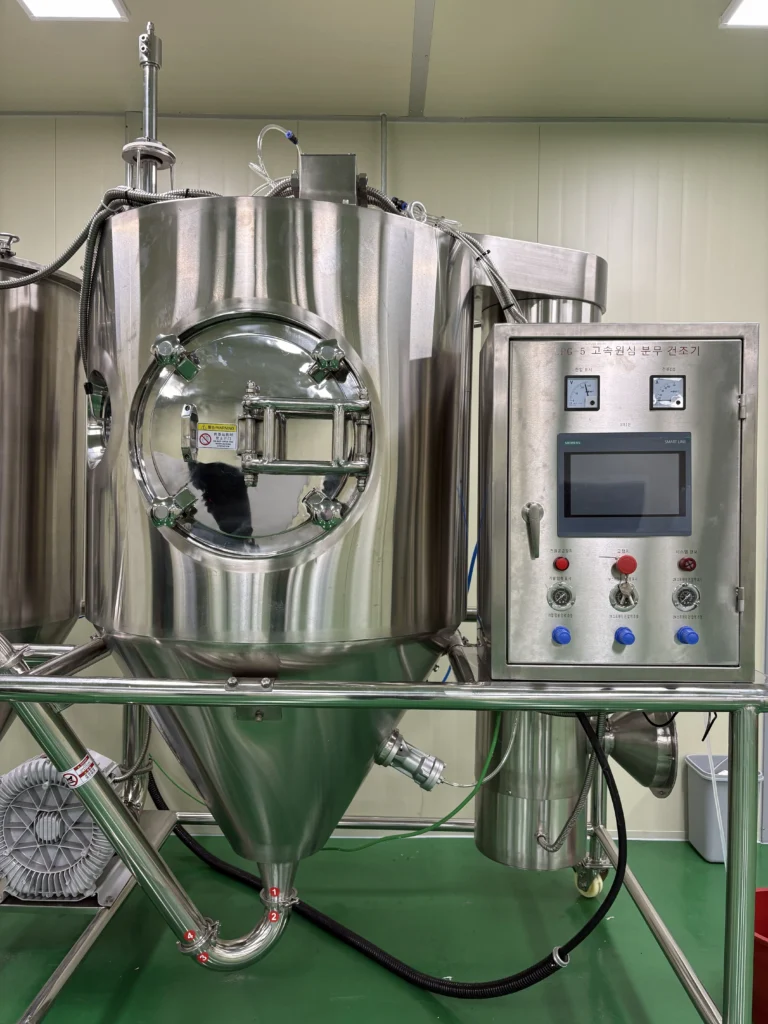
In real projects, the line between a “lab spray dryer” and a “pilot spray dryer” is often less important than suppliers make it sound. Different manufacturers use different capacity labels. In practice, both belong to the experimental end of spray drying: they are used to screen formulations, map operating windows, generate evaluation samples, and reduce scale-up risk before production equipment is specified.
This guide focuses on those lab-scale applications across pharmaceutical, food, chemical, battery, and botanical products. It is written for teams evaluating materials, not just shopping for equipment.
Lab Spray Dryer vs Pilot Spray Dryer
If your team uses the two terms interchangeably, that is not unusual.
The practical difference is usually not principle, but project stage:
| Equipment label | Typical use in practice | What teams are trying to learn |
|---|---|---|
| Lab spray dryer | Early screening, formulation ranking, proof of concept | Can this feed dry at all? Which carrier, atomization mode, and temperature window look promising? |
| Pilot spray dryer | Process confirmation, longer runs, customer samples, pre-scale-up work | Does the process stay stable over time? What recovery, powder flow, and cleaning behavior should we expect before production? |
The overlap is large. Both are experimental systems. Both are used before full production. Both can be the right choice depending on sample volume, containment requirements, solvent handling, and how much process confidence you need.
Why Pilot Spray Dryers Matter Before Scale-Up
Spray drying looks simple from the outside: pump in liquid, collect powder. In development work, it is rarely that simple.
An Pilot Spray Dryer helps a team answer the questions that decide whether scale-up is realistic:
- Can the material be atomized consistently, or does viscosity become a limit?
- How sensitive is the powder to outlet temperature, solids content, and gas flow?
- Does the product stick to the chamber wall, bridge in the cyclone, or cake after collection?
- Can you hit the particle size, residual moisture, density, and flowability needed downstream?
- Does the process remain stable when you move from a short screening run to a longer engineering run?
That is why Pilot Spray Dryers show up across so many industries. They are not only drying tools. They are risk-reduction tools.
Application 1: Pharmaceutical Development

Pharma is one of the clearest examples of why small lab & pilot spray dryers matter. Formulation teams often work with limited API, tight timelines, and high consequences for a wrong process decision.
Amorphous Solid Dispersions
Poor aqueous solubility remains a major challenge in oral drug development. Spray drying is widely used to prepare amorphous solid dispersions, where the API is dispersed in a polymer matrix to improve apparent solubility and dissolution behavior.
At the lab scale, the goal is usually not just to “make powder.” The real questions are:
- Which polymer system gives acceptable physical stability?
- Does the solvent system support safe, repeatable processing?
- How sensitive is the formulation to outlet temperature and residual solvent?
- Does the dried powder survive downstream handling, blending, and tableting?
For solvent-based ASD work, closed-loop and inert-gas designs are often required. For aqueous or excipient-focused work, the process window is usually broader, but powder recovery and morphology still matter.
Dry Powder Inhalation
Pulmonary formulations are another strong fit for Pilot Spray Drying because particle engineering is central to performance. Teams use small spray dryers to tune aerodynamic behavior, dispersibility, and excipient balance long before commercial manufacturing is locked in.
This is one reason lab and pilot spray dryers are common in inhalation development: the equipment allows rapid iteration without consuming commercial-scale quantities of expensive material.
Excipients and Co-Processed Powders
Pilot Spray Drying is also used in excipient modification and co-processing. Direct-compression lactose, mannitol-based systems, and multi-component excipient powders can all be evaluated at small scale before a team commits to routine manufacture.
What matters most in pharmaceutical trials
- Containment and solvent safety
- Reproducible atomization
- Powder recovery from small API lots
- Residual solvent and moisture control
- A clean path from formulation screening to scale-up studies
Application 2: Food and Beverage Development
Food and dairy remain among the most established spray drying application areas, but production-scale success still depends on experimental work. A powder that looks easy on paper can become sticky, dusty, oxidized, or impossible to reconstitute if the formulation window is not understood early.
Dairy, Nutrition, and Protein Systems
Milk-based powders, nutritional blends, whey systems, and specialty proteins all rely on careful control of solids, outlet temperature, and particle structure. At the lab and pilot stage, teams usually want to understand reconstitution, bulk density, hygroscopicity, and thermal sensitivity before moving toward a larger dryer.
Coffee, Tea, and Beverage Powders
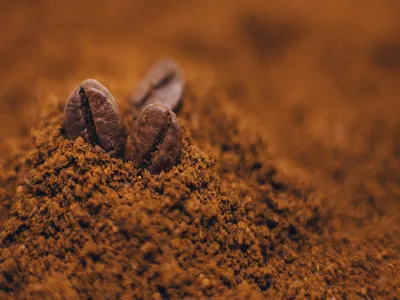
For beverage concentrates, pilot spray drying is often used to balance drying efficiency against flavor retention, color, and final moisture. Coffee and tea extracts can behave very differently depending on feed concentration and whether the product is optimized for instant solubility, aroma retention, or cost.
Flavors and Encapsulation
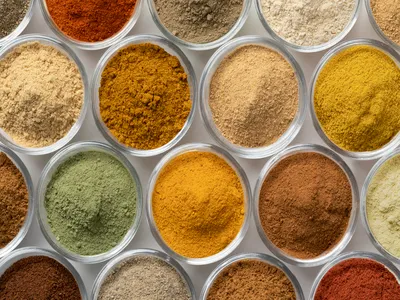
Spray drying is a standard route for encapsulating flavors, oils, and sensitive ingredients in carrier systems such as maltodextrin, modified starch, or gum-based matrices. Small experimental runs help teams compare carrier systems, powder release behavior, and storage stability before commercialization.
Functional Foods and Sensitive Ingredients
Probiotics, enzymes, botanical actives, and high-value nutritional ingredients usually require careful development work. The main challenge is rarely the inlet temperature alone. It is the full interaction between formulation, residence history, moisture, oxygen exposure, and powder collection.
What matters most in food trials
- Flavor retention
- Reconstitution behavior
- Stickiness and wall fouling
- Hygroscopicity during storage
- Cleanability and changeover between products
Application 3: Chemical and Advanced Material Processing
Chemical products are a broad category, but many of them use lab & pilot spray drying for exactly the same reason as pharma and food do: small changes in particle morphology can change downstream performance in a big way.
Catalysts and Catalyst Precursors
Catalyst development often depends on controlling particle size distribution, porosity, and morphology. Lab & Pilot spray drying gives R&D teams a way to compare precursor compositions and drying conditions before committing to larger-scale manufacturing routes.
Ceramics and Powder Processing

Ceramic feedstocks are commonly spray dried before pressing and sintering. In these cases, the quality of the granule can determine how well the powder fills dies, compacts, and densifies later. Lab and pilot trials are especially useful when the slurry rheology changes from one formulation to the next.
Pigments, Inks, and Specialty Powders
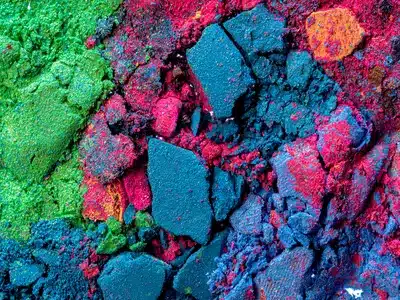
For pigments, dyes, and other fine specialty materials, powder structure affects dispersion, handling, and end-use consistency. Lab & Pilot spray drying helps teams tune these properties while using manageable quantities of material.
Surfactants and Detergent Intermediates
Some surfactant systems and detergent intermediates are easier to transport and blend in powder form than in liquid form. Pilot-scale work is often needed to confirm whether the dried product remains free-flowing and stable over longer runs.
What matters most in chemical trials
- Slurry stability
- Abrasiveness and wear risk
- Particle morphology
- Powder density and flow
- Fouling and cleaning behavior
Application 4: Battery Materials and Energy Storage
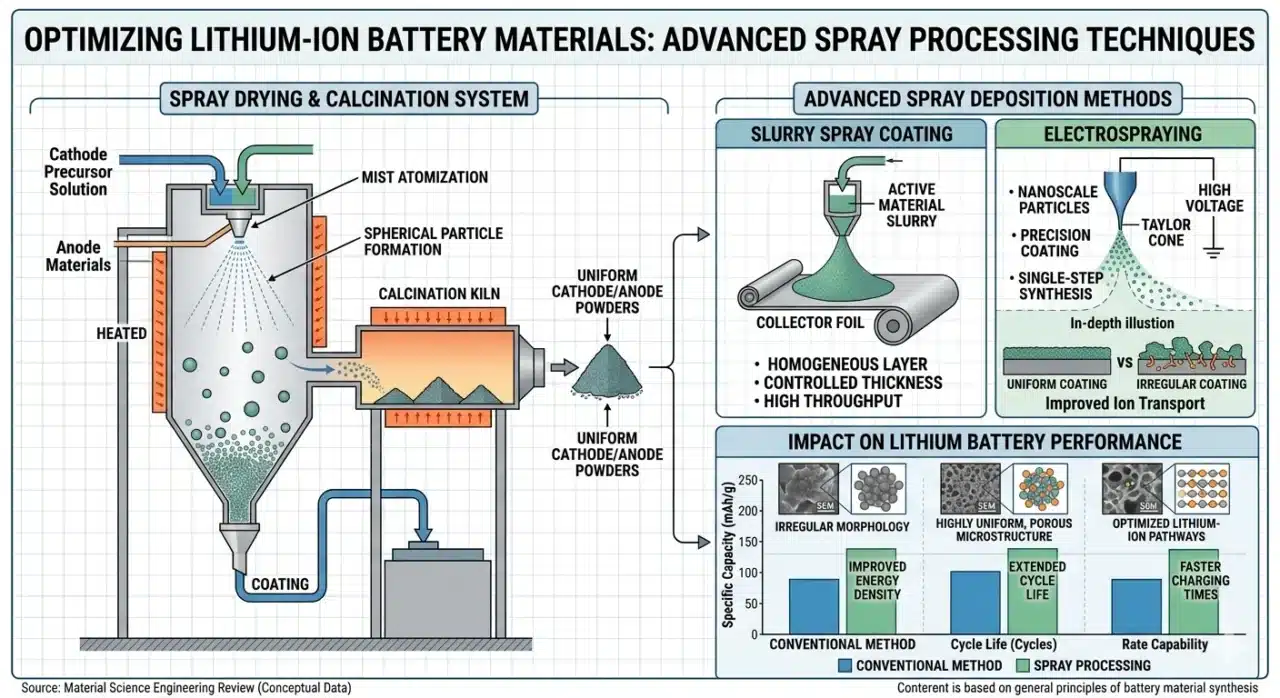
Battery materials are one of the most important growth areas for lab & pilot spray drying, especially at the precursor-development stage.
Cathode and Precursor Powders
Spray drying is used in many development workflows for cathode-related powders because it can help control precursor morphology, agglomeration behavior, and powder uniformity. This matters in lithium iron phosphate systems, ternary cathode materials, and newer sodium-ion-related work.
At the lab scale, the focus is usually on repeatability: can the team make a precursor that behaves consistently enough for calcination, coating, and electrochemical evaluation?
Recycled Battery Metal Streams
Battery recycling processes often generate metal-salt solutions that must be converted back into usable precursor powders. Spray drying can be part of that route, especially when a team is evaluating how dissolved metals translate into a controlled solid intermediate.
Solid Electrolytes and Moisture-Sensitive Materials
Some next-generation electrolyte materials are highly sensitive to moisture or oxygen. In those cases, experimental work may require an inert-gas, closed-loop configuration rather than a standard open-cycle dryer.
What matters most in battery-material trials
- Precursor morphology and uniformity
- Tap density and powder handling
- Moisture control
- Closed-loop capability when the chemistry requires it
- Stability from short runs to longer validation campaigns
Application 5: Botanical Extracts, Herbal Products, and Nutraceuticals
Botanical products are one of the hardest categories to spray dry well, which is exactly why experimental work is so important.
Why these materials are difficult
Many botanical feeds combine several difficult traits at once:
- They contain sugars or low-glass-transition components that become sticky during drying.
- They contain heat-sensitive compounds that can lose color, aroma, or activity if the process window is poorly chosen.
- They often remain hygroscopic after drying, which hurts collection and storage stability.
This is why a formulation that looks acceptable in a beaker can fail quickly in a real dryer.
What Lab & Pilot Spray Drying helps you learn
For botanical extracts, a small Lab & Pilot Spray Dryer is usually used to screen:
- Carrier strategy, such as maltodextrin or other drying aids
- Feed solids and viscosity limits
- Outlet temperature targets
- Chamber fouling tendency
- Powder recovery strategy
- Final moisture, caking tendency, and storage behavior
Typical botanical product categories
- Traditional herbal extracts
- Fruit and vegetable powders
- Tea and coffee extracts
- Polyphenol-rich nutraceutical ingredients
- Plant protein concentrates
A better way to talk about scale-up in this category
The most useful progression is not a rigid lab-versus-pilot debate. It is a staged learning process:
- Use an Lab Spray Dryer or Pilot spray dryer to find a workable formulation and drying window.
- Run longer or larger confirmation trials once the anti-stick strategy looks realistic.
- Move to production design only after recovery, cleaning, and powder stability are proven well enough for business decisions.
That framing is more honest and more useful than pretending every project follows the same named equipment boundary.
How To Evaluate Whether a Material Is a Good Fit for a Lab or Pilot Spray Dryer
If a buyer asks, “Do I need a lab spray dryer or a pilot spray dryer?” the better question is usually this:
What exactly do you need to prove next?
Use the checklist below.
| Question | Why it matters |
|---|---|
| How much feed material is actually available? | Some projects only have small R&D lots; others need enough powder for downstream validation. |
| Is the feed aqueous, solvent-based, or oxygen-sensitive? | This determines whether a standard open system is possible or a closed-loop design is needed. |
| What powder attributes matter most? | Particle size, density, moisture, morphology, and flow may each drive equipment choice. |
| Is the product sticky or thermally fragile? | Fouling behavior often decides whether a process is commercially realistic. |
| Do you need short screening runs or longer stability runs? | The answer usually matters more than the label on the machine. |
| What is the next decision after this trial? | Screening, customer samples, regulatory work, and scale-up all have different evidence requirements. |
Frequently Asked Questions
Are lab spray dryers and pilot spray dryers the same?
Not exactly, but the overlap is large. Different suppliers use different naming conventions. In practice, both belong to the experimental end of spray drying and are used for formulation work, parameter development, sample generation, and pre-scale-up validation.
What industries use lab and pilot spray dryers most often?
They are widely used in pharmaceuticals, food and beverage, specialty chemicals, battery materials, ceramics, and botanical extracts. Any industry that needs powder development before production scale is a likely user.
Can one Lab & Pilot spray dryer handle multiple products?
Yes, if the equipment design and cleaning protocol are appropriate for the materials involved. Multi-product use is common in development environments, but solvent compatibility, containment, allergen control, and cleaning validation still matter.
Is spray drying suitable for organic-solvent feeds?
Yes, but not on a standard open-cycle system. Solvent-based processing generally requires a closed-loop design with inert gas and suitable solvent-recovery and safety controls.
What is the biggest mistake teams make before scale-up?
Treating a successful short run as if it guarantees production success. The real risk often appears later: wall buildup, unstable recovery, powder caking, cleaning difficulty, or a morphology shift during longer operation.
When should a team move from experimental work to production design?
Only after the process window is clear enough that the team understands powder quality, recovery behavior, safety requirements, and the likely failure modes. Production design should be the result of good trial data, not a substitute for it.
Conclusione
Lab and pilot spray dryers are practical tools for learning how a product behaves before full-scale manufacturing decisions are made.
That is why they matter across so many industries. In pharma, they reduce formulation risk. In food, they protect product quality before scale-up. In chemicals and battery materials, they help engineers control morphology and handling. In botanical products, they often determine whether commercial drying is feasible at all.
If your team is evaluating a new formulation, the right first step is not chasing a generic capacity label. It is defining the next technical question clearly, then matching the Lab Spray Dryer or Pilot Spray Dryer configuration to that question.
Have a material you want to evaluate? Contattateci to discuss the feed system, powder target, and testing approach that make the most sense for your project.