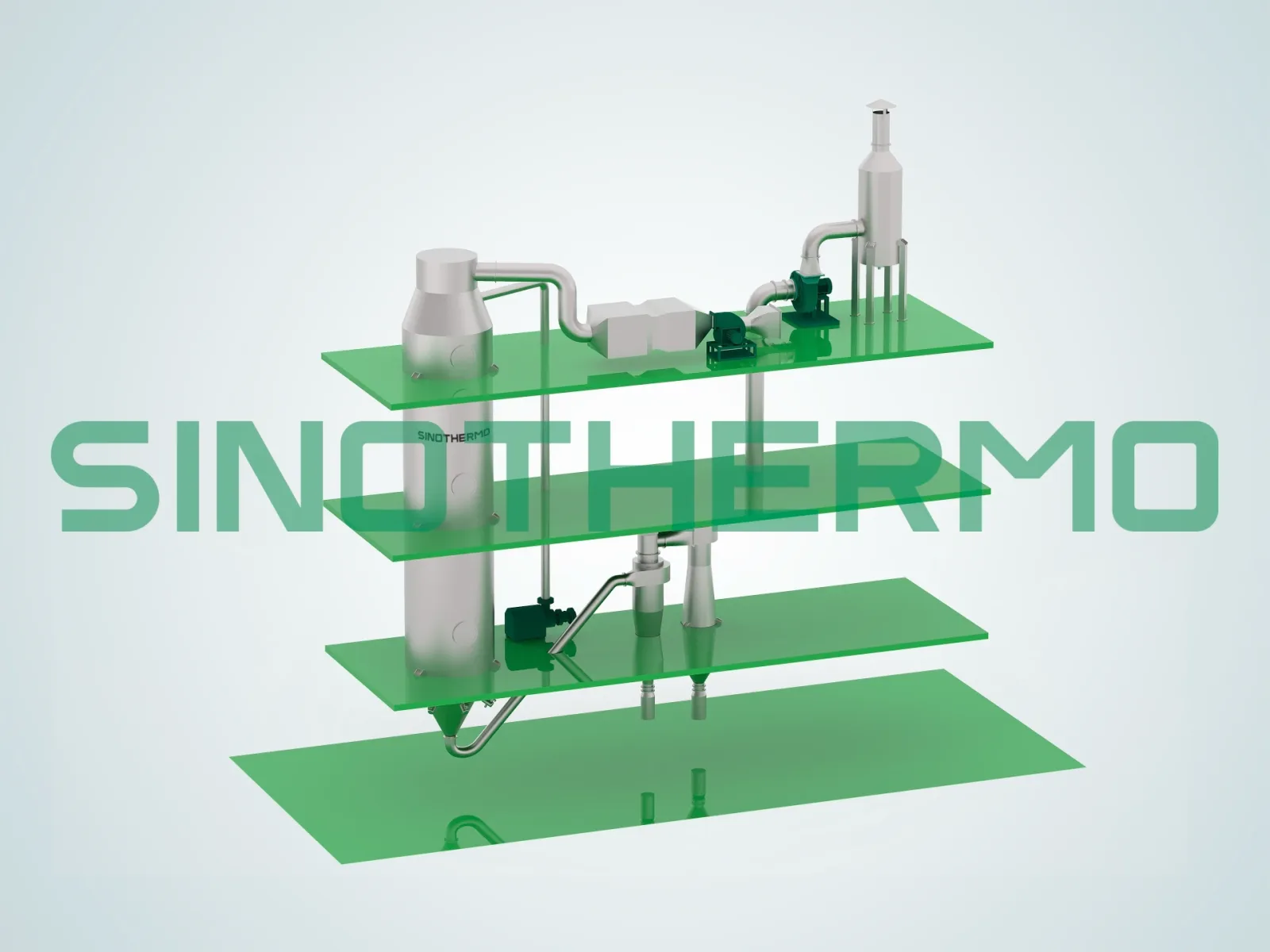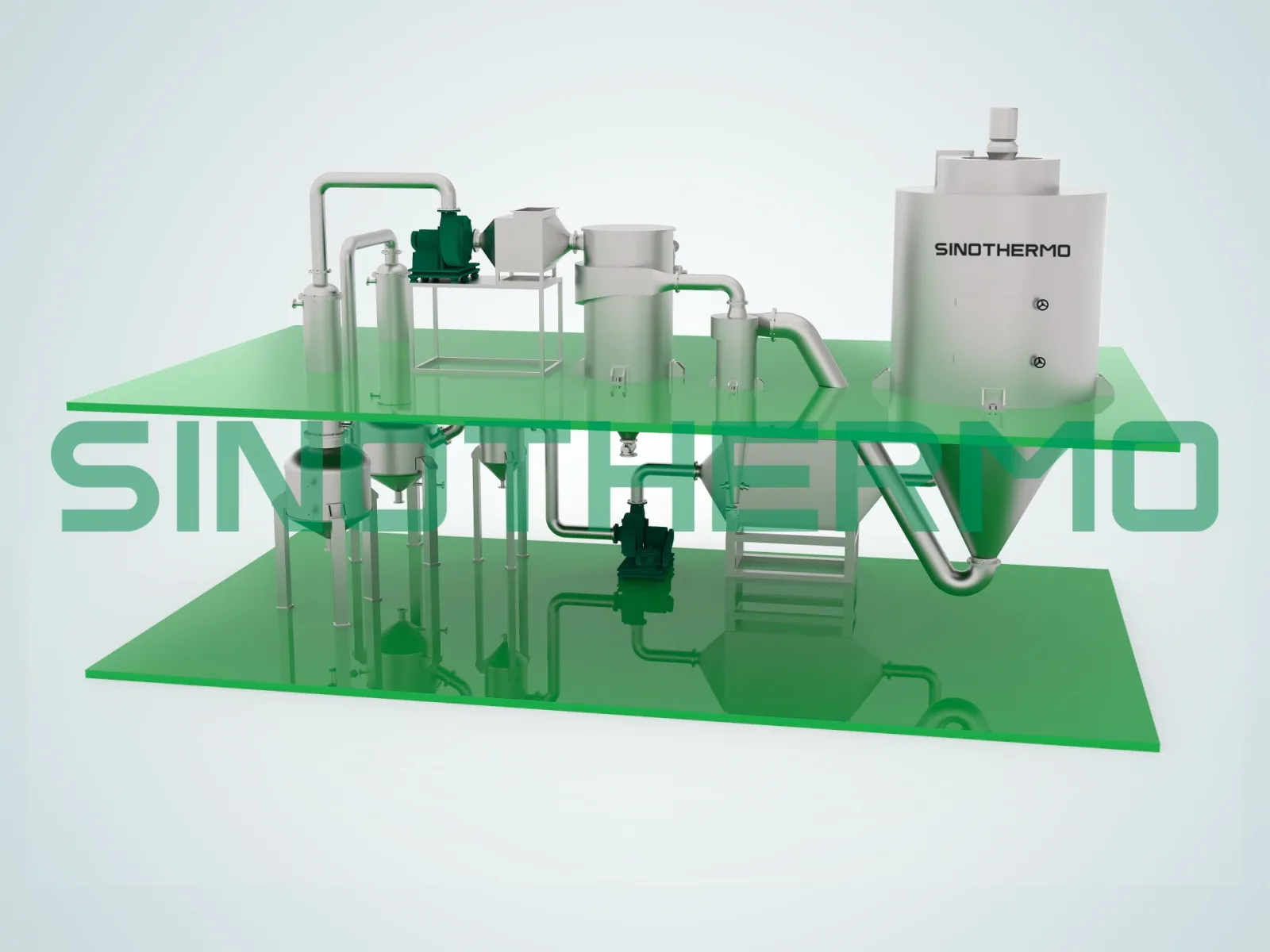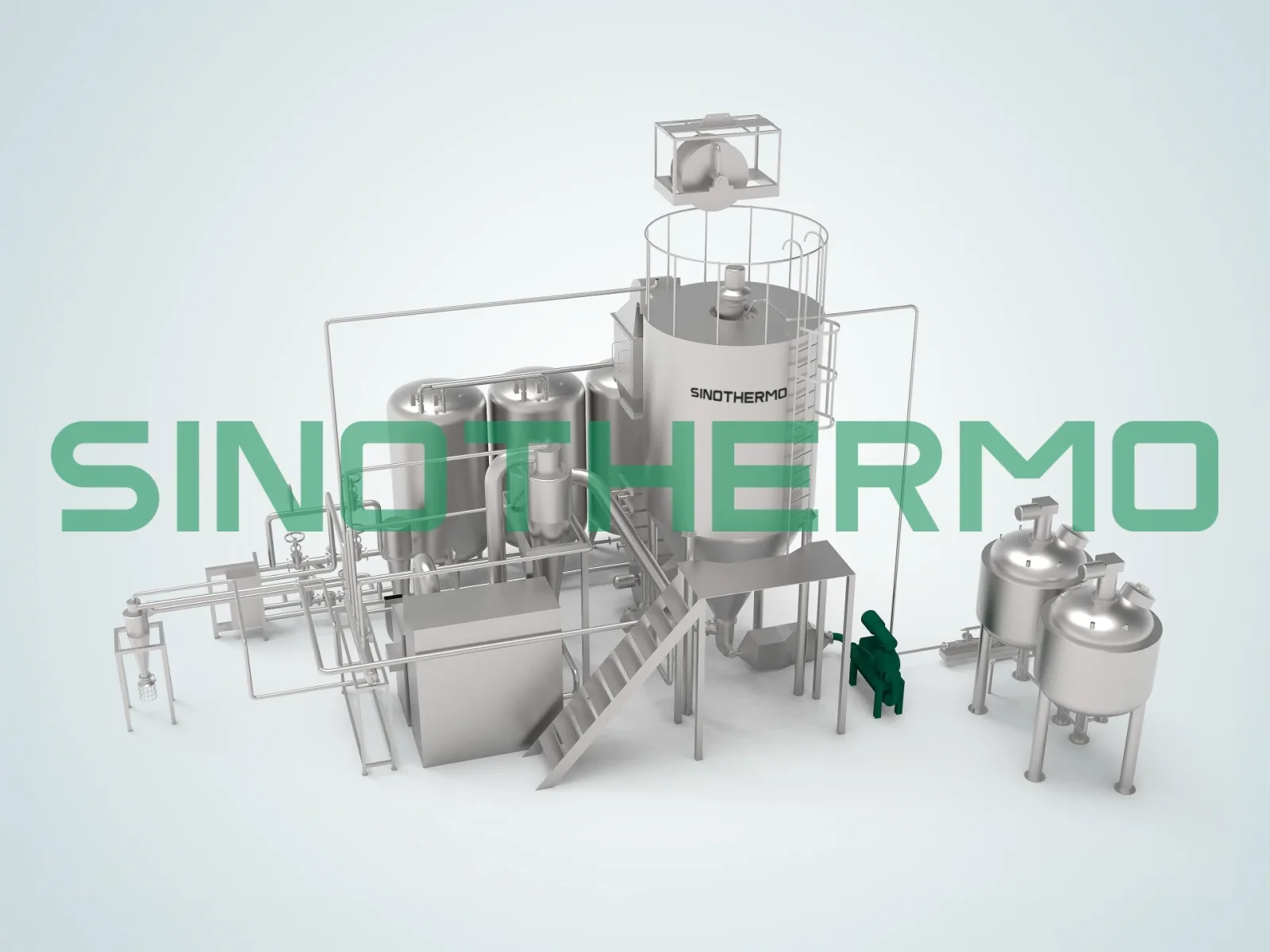
An extract spray dryer converts a liquid herbal or plant extract into powder, but extracts are among the hardest feeds to spray dry. They are rich in sugars, organic acids and other low-melting components that turn sticky at drying temperature, coat the chamber wall, and burn. The solution is a combination of process control (carrier, solids, temperature) and equipment design (cooled walls, wall cleaning, dehumidified air).
If you have tried to spray dry a concentrated herbal extract and ended up with a crust on the tower wall and a low yield, the problem is not your recipe alone. It is a mismatch between a sticky feed and a dryer designed for free-flowing materials. This guide explains why extracts stick, what you can change in the formulation, and which dryer features matter.
Quick Context: why extracts stick
Most of what makes an extract valuable is also what makes it difficult to dry.
Low glass transition temperature. Sugars, organic acids and small molecules have low glass transition temperatures. When a particle's surface temperature rises above its glass transition temperature, it softens and becomes tacky. A tacky particle sticks to the wall instead of falling to the collector.
Hygroscopicity. Many extract powders absorb moisture from the air. Even a particle that dries correctly in the tower can become sticky again in the collection vessel if the air is humid.
Heat sensitivity of active compounds. Polyphenols, flavonoids, saponins, terpenes and other actives can degrade under heat. Keeping the product temperature low protects the active content.
Variable composition. Herbal extracts change with harvest, solvent and extraction method. A recipe that works on one batch may stick on the next, so the process needs margin.
Formulation levers you control
Before changing equipment, look at the feed itself.
- 1.Add a carrier — maltodextrin, gum arabic, modified starch and similar carriers raise the glass transition temperature of the dried particle and reduce stickiness. The right ratio depends on the extract. A common approach is to start with a carrier addition as a percentage of extract solids, then adjust through trials. Specific ratios are product-dependent and should be confirmed by trial.
- 2.Adjust solids content — higher solids reduce the water to evaporate and save energy, but raise viscosity and can worsen sticking. Find the highest solids that still atomises cleanly.
- 3.Control pH and filtration — insoluble particles clog nozzles. Filter or centrifuge the extract before drying.
- 4.Deaerate and keep the feed stable — foaming and separation in the feed tank lead to uneven atomisation.
Process parameters that matter
Inlet temperature. For sensitive extracts, a moderate inlet temperature protects actives. SINOTHERMO's extract spray dryer works in a 140 to 180 °C inlet air range, which suits converting extract liquids into powder without the higher temperatures used for less sensitive feeds.
Outlet temperature. This is the number that most directly affects stickiness and moisture. A lower outlet temperature protects the product but leaves more residual moisture. A higher outlet temperature dries the particle further but raises the risk of sticking. Tune the outlet temperature through the feed rate.
Atomisation. Smaller droplets dry faster and reduce wall contact. Atomiser choice affects the particle size and the spray pattern. See our guide on spray dryer atomization for the trade-offs between nozzle and centrifugal atomisers.
Air humidity. Humid inlet air slows drying and makes hygroscopic powder stickier. In humid climates, dehumidified air makes the process stable.
Equipment features that solve sticking
Formulation helps, but a dryer built for extracts addresses the problem at the wall. These are the features to look for, and the ones SINOTHERMO builds into its extract spray dryer.
| Problem | Design response | How it works |
|---|---|---|
| Residue burning on the hot tower wall | Cooled tower walls | A cylinder cooling system holds wall temperature below 80 °C, so sticky extract does not scorch on contact |
| Sticky buildup on the chamber interior | Airbrush wall cleaning | An airbrush system cleans the tower interior during operation, so residue does not accumulate and fall as burnt flakes |
| Hygroscopic powder and humid air | Freeze dehumidification | Cooling the inlet air removes moisture, so drying is stable in humid conditions |
| Over-drying sensitive actives | Moderate inlet range (140 to 180 °C) | Keeps temperature in a range suited to extracts |
| Moisture drift in storage | Controlled 3 to 8 percent powder moisture | Gives a stable powder for storage and formulation |
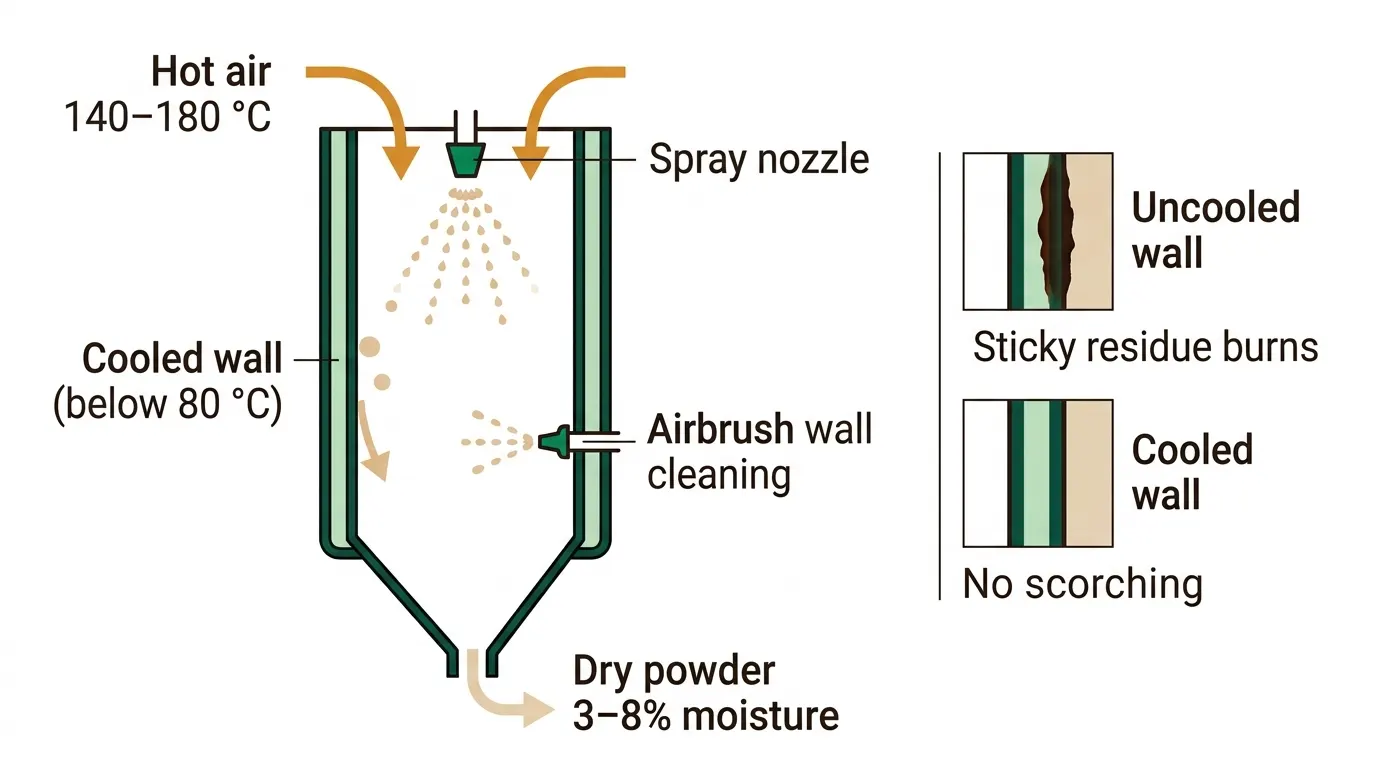
These features sit alongside the standard parts of a spray dryer: atomiser, drying chamber, cyclone, and collection system. For general principles, read our spray dryer machine guide.
Where extract spray drying is used
Herbal and botanical extracts. Powdered extracts for supplements and traditional formulations, where active content must be protected from wall-surface burning.
Food flavours and natural colours. Flavour and colour extracts convert to easy-dosing powders. For a related food application, see spray drying in the food industry.
Pharmaceutical and nutraceutical actives. Extract-based actives dried into powder under controlled, cooled-wall conditions. Related reading: pharmaceutical spray drying.
Cosmetic actives. Botanical extracts converted into powder form for formulation.
Bio-based extracts. Extract liquids that tend to stick or degrade against hot surfaces.
Our sectors page for extracts lists the full equipment range for this application.
Extraction solvent and concentration: what arrives at the dryer
The way the extract is made decides how easy it is to dry.
Water extracts are the simplest to handle in an open-cycle dryer, but they often carry a lot of sugar and mucilage, which is where most sticking comes from.
Ethanol or hydroalcoholic extracts are usually concentrated first to remove most of the ethanol. Any ethanol left in the feed changes the safety case for the dryer, so state the residual solvent level when you ask for a quotation.
Concentration before spraying. Evaporating the extract to a higher solids content saves dryer energy, but the concentrate may be viscous and heat-damaged if it was concentrated too aggressively. Vacuum concentration at low temperature protects the actives that the spray dryer is then asked to preserve.
Storage of the liquid. Some extracts ferment, oxidise or precipitate if held for hours. Dry fresh extract where you can, or hold it cold and agitated.
Troubleshooting a sticky extract run
| Symptom | Likely cause | First thing to try |
|---|---|---|
| Crust on the tower wall | Wall temperature too high, particles tacky on contact | Add or raise carrier; lower outlet temperature; use cooled-wall design |
| Powder clumps in the collector | Residual moisture or hygroscopic powder | Raise outlet temperature slightly; dehumidify inlet air; pack quickly |
| Low yield | Product on the wall and in the cyclone | Check particle size, carrier ratio and cyclone loss |
| Dark flakes in the powder | Burnt residue falling from the wall | Wall cleaning and cooling; shorter run time between cleans |
| Active content below target | Excessive temperature | Lower inlet and outlet; shorten residence time |
| Nozzle blocking | Insoluble solids | Filter the feed; select a larger orifice |
For more depth on this class of problem, read our article on solving wall sticking in spray drying and the spray dryer troubleshooting guide.
What to specify when buying an extract spray dryer
Provide these details to the supplier.
- Type of extract and extraction solvent (water, ethanol, or mixed).
- Feed solids content and viscosity.
- Target powder moisture and particle size.
- Active compounds and their temperature limits.
- Required capacity, in litres or kilograms of feed per hour.
- Whether you plan to add a carrier, and which one.
- Site humidity and available utilities.
If the feed contains ethanol or another organic solvent, a standard open-cycle dryer is not suitable. See our guide to the closed loop spray dryer for that case.
Common mistakes to avoid
Choosing a dryer by capacity alone. A general-purpose dryer that works for milk powder may fail on a sticky extract. Ask about wall temperature control and cleaning.
Raising the inlet temperature to fix stickiness. Higher inlet temperature may increase wall sticking and damage actives. Use carriers and cooled walls instead.
Ignoring the collection step. A powder that is dry in the tower can absorb moisture in an open collector. Use sealed collection and quick packaging.
Skipping the trial. Every extract behaves differently. A pilot run on your own extract shows how it sticks, what carrier ratio you need and what yield to expect. Our testing lab runs paid pilot trials and reports parameters, yield and powder properties.
Conclusion
Spray drying herbal and plant extracts works when the formulation and the dryer are matched to a sticky, heat-sensitive feed. Use carriers to raise the glass transition temperature, control outlet temperature, and choose a dryer with cooled walls, wall cleaning and dehumidified air. Validate on your own extract before you scale.
Next step: Request a pilot test with your extract. Pilot testing is a paid service, and the results give you carrier ratio, temperatures and yield data for a production design.
Frequently asked questions
Why does my herbal extract stick to the spray dryer wall?
Extracts contain sugars and organic acids with low glass transition temperatures. At drying temperature the particle surface softens and becomes tacky, so it sticks to the wall. A carrier, a lower outlet temperature and a cooled-wall dryer reduce the problem.
What carrier should I use for spray drying plant extracts?
Maltodextrin and gum arabic are common starting points, and modified starch is also used. The best choice and ratio depend on your extract, so confirm by trial.
What inlet temperature is suitable for an extract spray dryer?
SINOTHERMO's extract spray dryer operates in a 140 to 180 °C inlet air range. The temperature you actually use depends on the heat sensitivity of your active compounds and should be set through trials.
How do cooled tower walls help?
A cooling system holds the wall below 80 °C, so sticky extract that touches the wall does not scorch. This reduces burnt residue and protects powder quality.
What moisture content can I expect in the powder?
SINOTHERMO's extract spray dryer delivers powder at 3 to 8 percent moisture. The result depends on the outlet temperature and the formulation.
Can I spray dry an ethanol-based extract in this dryer?
An open-cycle dryer is not suitable for flammable solvents. Use a closed loop system with an inert gas loop and solvent recovery.
How do I find out if my extract can be spray dried?
Run a pilot trial on your sample. It shows the sticking behaviour, required carrier ratio and expected yield. Pilot testing is a paid service, and you can request one through our contact page.

Mark Gu
Passionate about enhancing customer experiences and streamlining operations, Mark focuses on building strong relationships, fostering innovation, and leading teams to achieve exceptional service and efficiency.
Email: mark.gu@sinothermo.com
Phone: +86 18021972660