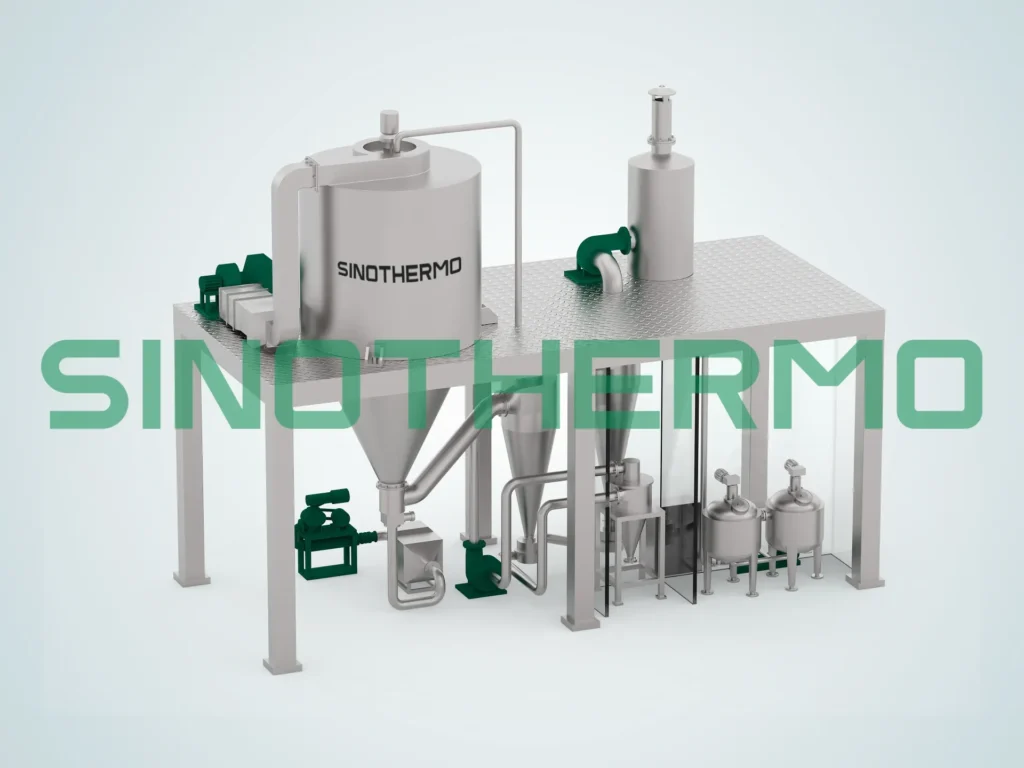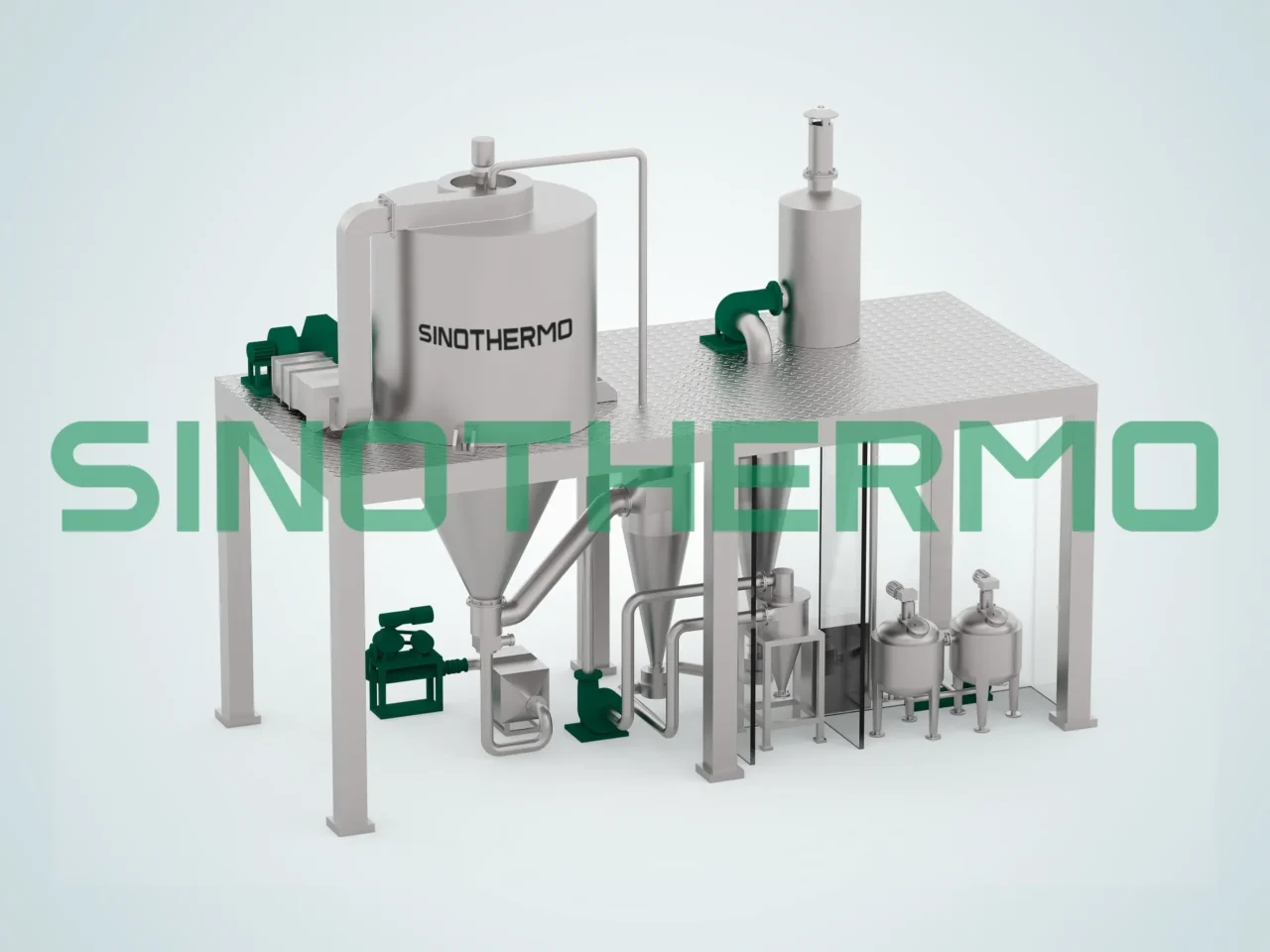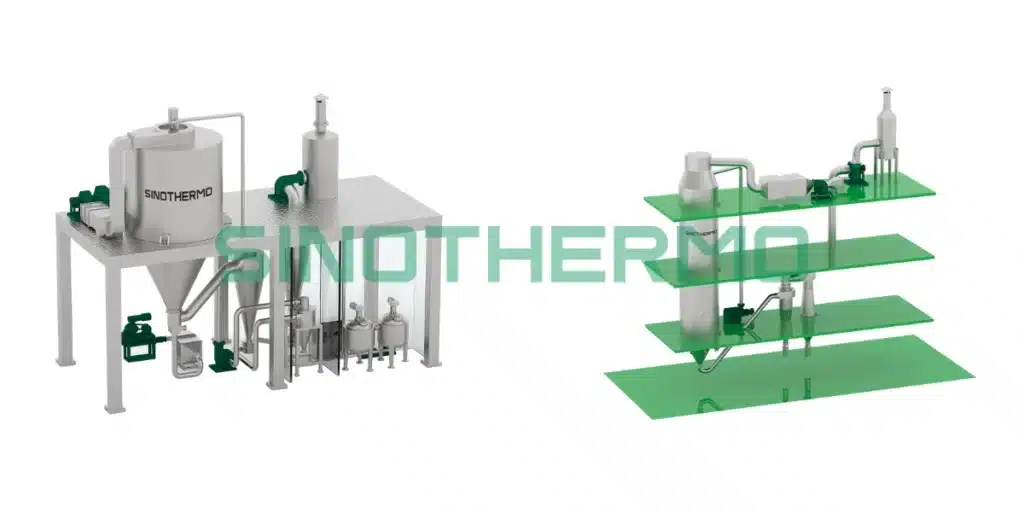
Spray drying converts a drug solution or suspension into dry particles in a single continuous step, with residence times of seconds. In pharmaceutical manufacturing its dominant use is making amorphous solid dispersions to improve the bioavailability of poorly soluble drugs — plus inhalation powders, biologics, and excipient processing.
What makes it pharmaceutically distinctive is not the drying physics, which is the same as in food or chemical spray drying, but the requirements layered on top: solvent handling, containment, GMP qualification, and the need to control solid-state form rather than just remove water.
Quick context: why this comes up so often
An estimated 40% or more of drug candidates in modern development pipelines are poorly water-soluble — a number that keeps rising as chemistry moves toward more complex molecules. A compound that will not dissolve will not absorb, no matter how pharmacologically active it is. That single fact drives a large share of formulation-development budgets, and spray drying is one of the few unit operations that can turn a "not viable" candidate into a marketable product by changing its solid-state form rather than its chemistry.
That is why pharmaceutical spray drying gets specified as often as it does: it is not a niche technique reserved for exotic products, it is a mainstream response to the single most common formulation problem in the current drug pipeline. For a general introduction to how spray drying itself works, see our how does spray drying work guide; for pharmaceutical drying methods more broadly — tray, vacuum, fluid bed and spray — see our drying in the pharmaceutical industry overview.
The four main pharmaceutical applications
1. Amorphous solid dispersions (ASD) — the biggest driver
A large share of modern drug candidates are poorly water-soluble, which limits absorption. Dissolving the drug with a polymer in a common solvent and spray drying the solution produces a solid where the drug is molecularly dispersed in the polymer matrix — amorphous rather than crystalline. Amorphous drug dissolves faster and reaches higher apparent solubility, which can convert a non-viable candidate into a viable product.
The engineering challenge is that the amorphous state is thermodynamically unstable. Process design has to produce it and keep it from recrystallising through shelf life, which makes residual solvent, glass transition temperature and moisture control critical rather than cosmetic.
2. Inhalation powders (DPI)
Dry powder inhalers need particles in a narrow aerodynamic size window — broadly 1–5 µm to reach the lower airways. Spray drying can produce these directly, including engineered particles (corrugated or hollow morphologies) that improve dispersion and flow. Here the specification is aerodynamic performance, not just particle size.
3. Biologics and vaccines
Spray drying offers an alternative to freeze drying for proteins, peptides and some vaccines, with far shorter processing time and continuous operation. It requires careful formulation with stabilising excipients and close control of outlet temperature, since the protein sees a brief thermal exposure.
4. Excipients, taste masking and intermediates
Co-processed excipients, encapsulated actives for taste masking, and granulation intermediates for downstream tableting.
Aqueous vs organic solvent — the decision that shapes the plant
Most ASD work uses organic solvents, and this single choice drives most of the capital cost.
| Aqueous | Organic solvent | |
|---|---|---|
| Drying gas | Air, once-through | Nitrogen, closed loop |
| Oxygen control | Not needed | Monitored and limited (LEL) |
| Solvent handling | — | Condenser recovery, storage, disposal |
| Explosion protection | Usually not required | ATEX / NEC rated, required |
| Capital cost | Baseline | Substantially higher |
| Typical use | Biologics, excipients, some DPI | Most ASDs (poorly soluble drugs) |
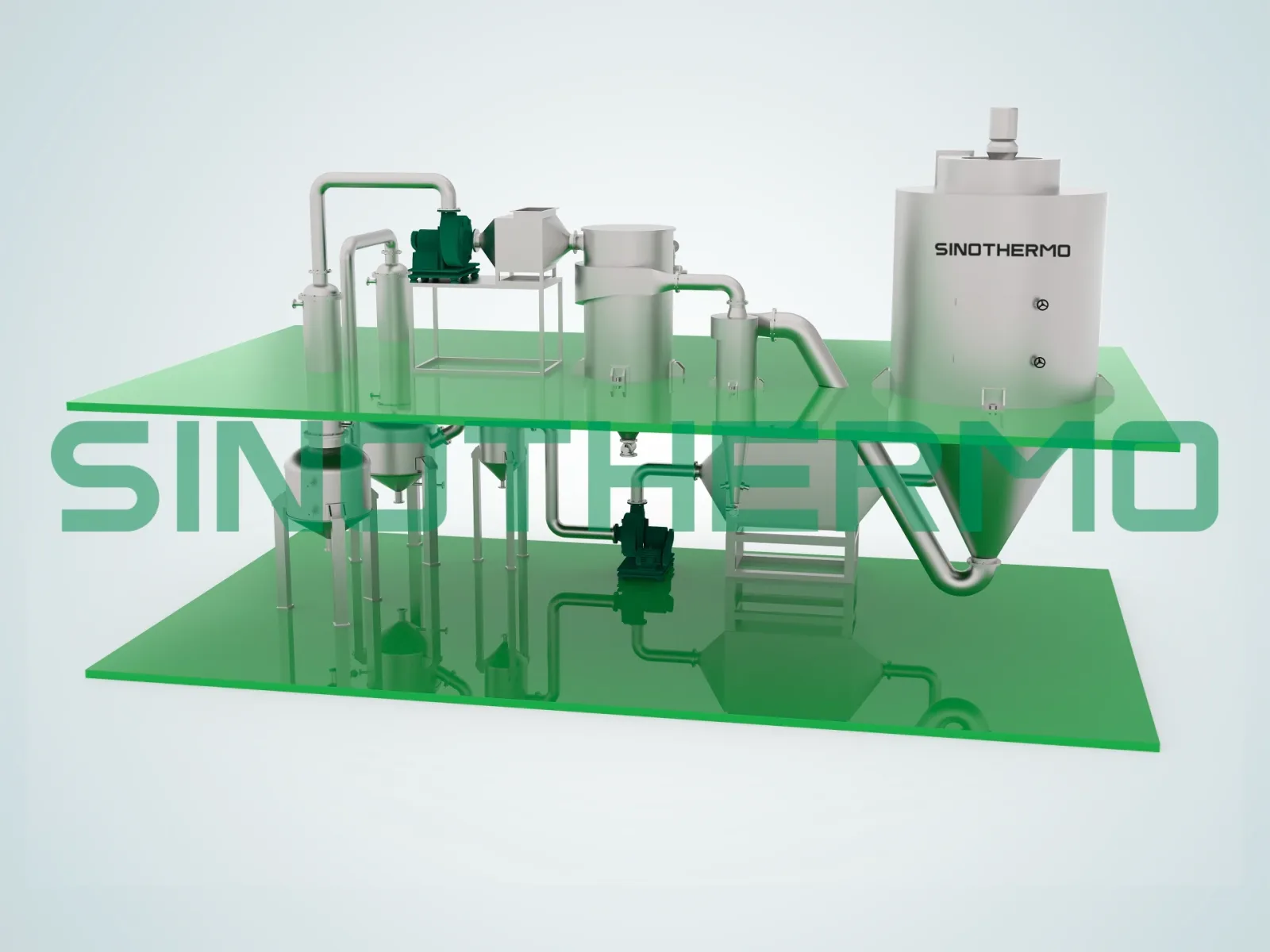
A closed-loop nitrogen system with solvent recovery is not an optional upgrade for organic-solvent spray drying — it's the baseline safety requirement. Any quotation that omits it is not comparable. Our closed circulation spray dryer is built specifically for this duty — sealed nitrogen loop, oxygen monitoring, and condenser-based solvent recovery as standard, not an add-on.
What has to be controlled
Outlet temperature is the primary control handle, and for ASDs it must stay well below the dispersion's glass transition temperature (Tg). Running too hot risks the amorphous material becoming mobile and recrystallising; running too cold leaves excess residual solvent, which itself lowers Tg and destabilises the product. The window can be narrow.
Residual solvent must meet ICH Q3C limits. Spray drying often cannot reach the limit alone, so a secondary drying step — commonly a vacuum dryer — is part of the train. Our vacuum dryer guide covers the options for this step. Plan for it rather than discovering it late.
Particle size and morphology follow from atomisation (nozzle type, pressure, feed viscosity) and solids concentration. For DPI this is a performance specification; for ASD it affects downstream handling and tableting.
Solid-state form — confirming the product is genuinely amorphous, and stays so, requires analytical work (XRPD, mDSC) alongside process development. This is where pharmaceutical spray drying differs most from other industries: the specification is a state, not merely a moisture number.
Equipment and GMP considerations
- Closed-loop inert gas system with oxygen monitoring, for organic solvents
- Explosion protection appropriate to the solvent and zone classification
- Containment to the required OEB/OEL band — spray drying generates fine, readily airborne powder; high-potency work needs isolators or contained discharge
- Product-contact materials — 316L, documented surface finish, traceable
- CIP/SIP design and cleaning validation with demonstrable sampling access
- Instrumentation and data integrity — 21 CFR Part 11 compliant recording
- Qualification package — FAT/SAT, IQ/OQ, full documentation set
- Secondary drying integrated or planned for residual solvent
- Chamber geometry matched to your product's stickiness; wall deposition is the most common practical failure
How a pilot evaluation actually runs
A formulation team typically arrives with grams to tens of grams of API — sometimes less — so the trial has to answer real engineering questions without burning through a scarce, expensive material. A representative run for an ASD candidate looks like this: the polymer-drug solution is prepared at the intended ratio, atomised through the same nozzle geometry that would be used at larger scale, and dried across a small range of inlet/outlet temperature combinations while staying under the dispersion's known or estimated Tg. Samples from each condition go to XRPD and mDSC to confirm the product is amorphous, and to Karl Fischer or GC headspace analysis for residual solvent.
What comes out is not a single number but a map: which temperature combinations keep the product amorphous, what residual solvent each one leaves, and where the chamber starts showing wall deposition — the signal that a design needs a different chamber geometry or a cooled wall section, not just a parameter tweak. That map is what a production-scale specification should be built from, rather than from a supplier's generic operating range for "a similar polymer."
Scale-up: the part most projects underestimate
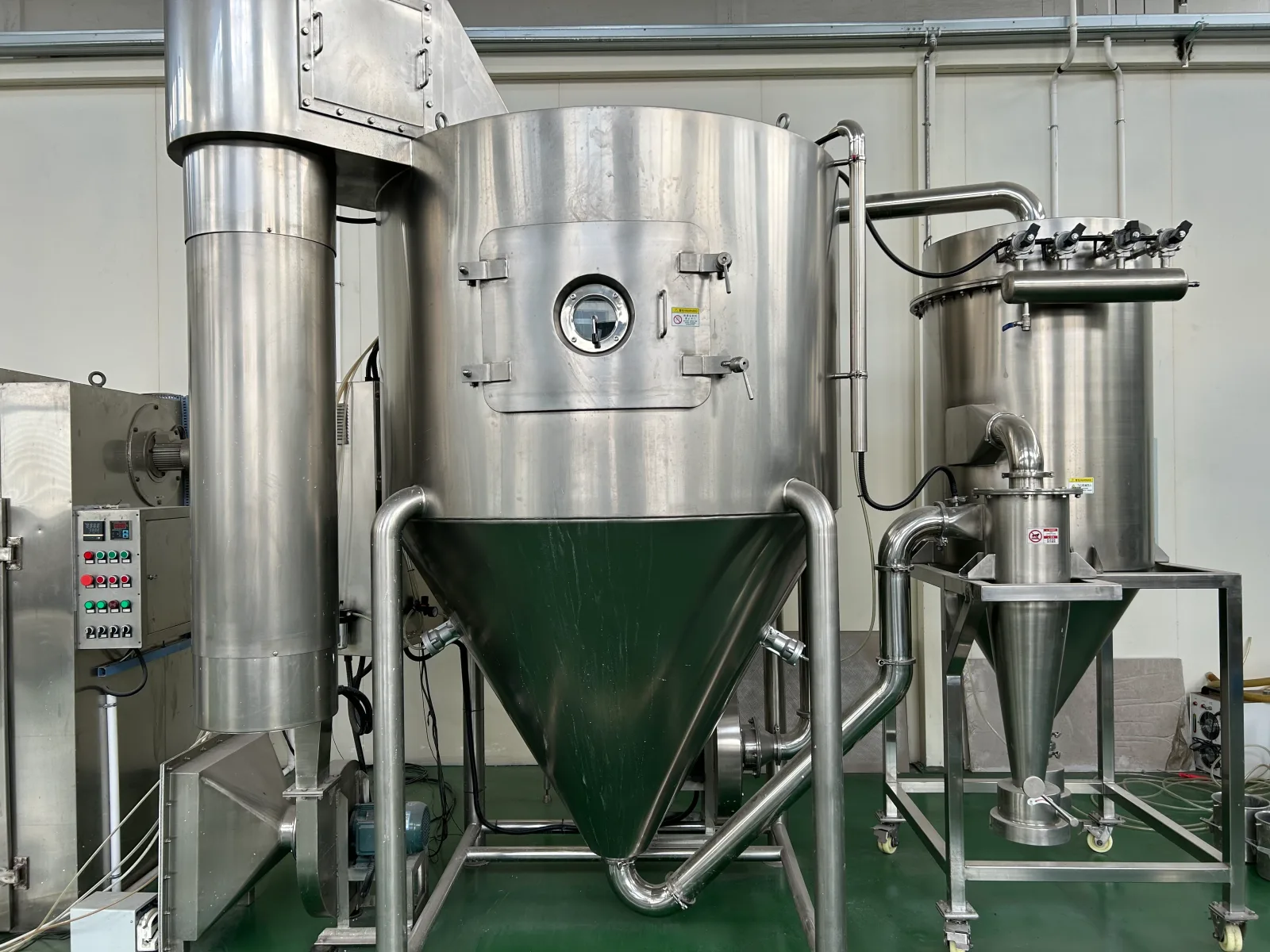
Spray drying does not scale by simply enlarging the dryer. Drying kinetics depend on droplet size and gas conditions, so the path from lab to production is a series of stages where the droplet experience is held comparable while throughput rises.
A realistic sequence is lab (grams, feasibility and formulation screening) → pilot (kilograms, clinical supply and process parameters) → production (validated commercial scale). Skipping the pilot stage is the single most common cause of late-stage surprises, because problems like wall deposition, yield loss, and residual-solvent shortfalls often only appear at intermediate scale. Our pilot spray dryer guide covers what to look for in a lab- and pilot-scale unit specifically.
Key parameters to keep comparable across scales: outlet temperature, droplet size distribution, and the ratio of drying gas to feed. Chamber residence time and wall contact behaviour change with geometry and need verification, not assumption.
Common mistakes to avoid
- Treating outlet temperature as a single fixed setpoint. It has to be validated against the specific dispersion's Tg, which shifts with residual solvent — a number that itself changes during the run.
- Assuming spray drying alone will meet the residual-solvent limit. Most organic-solvent ASD processes need a secondary drying step; budgeting and scheduling for it after the fact causes avoidable delays.
- Comparing quotations that scope the nitrogen loop differently. A closed-loop system with oxygen monitoring is a baseline safety requirement for organic solvents, not an optional line item — quotes that omit it are not lower-cost, they are incomplete.
- Skipping pilot scale to save time. Wall deposition, yield loss and residual-solvent shortfalls are scale-dependent failure modes that a lab-scale trial genuinely cannot reveal.
- Specifying containment from a generic potency band instead of the actual OEB/OEL for the compound. Under-specified containment is a rework problem; over-specified containment is an unnecessary cost — both come from skipping the actual number.
- Treating particle size as the only DPI specification. Aerodynamic performance, not geometric particle size alone, is what determines whether the powder reaches the lower airways.
Where SINOTHERMO fits
We build spray drying equipment — including pilot-scale systems used for process development and clinical supply — and closed-loop configurations for organic solvents, across our centrifugal, pressure, closed circulation, and extract spray dryer lines. We do not provide contract manufacturing: the equipment and the process knowledge to run it are what we supply.
Our pilot lab can run your formulation to establish the drying window, achievable residual solvent, particle size, and yield before you commit to a production specification. This is a paid engineering service and you keep the complete dataset, which is what you need to write a defensible URS and to evaluate any vendor's proposal.
For pharmaceutical projects we'd rather be honest early: if your product needs a containment level or qualification scope beyond what we supply, the pilot report will tell you that too.
Frequently asked questions
What is spray drying used for in the pharmaceutical industry?
Primarily making amorphous solid dispersions to improve bioavailability of poorly soluble drugs. Also dry powder inhalation products, biologics and vaccines as an alternative to freeze drying, co-processed excipients, taste masking, and granulation intermediates.
Why does spray drying improve drug bioavailability?
Spray drying a drug-polymer solution produces an amorphous solid dispersion where the drug is molecularly dispersed rather than crystalline. Amorphous material dissolves faster and reaches higher apparent solubility than the crystalline form, improving absorption of poorly water-soluble drugs.
Do pharmaceutical spray dryers need nitrogen?
When drying from organic solvent — which covers most amorphous solid dispersion work — yes. A closed-loop nitrogen system with oxygen monitoring and solvent recovery is required to stay below the lower explosive limit. Aqueous formulations can typically use once-through air.
How do you scale up a pharmaceutical spray drying process?
Through lab → pilot → production stages, holding droplet size, outlet temperature, and gas-to-feed ratio comparable rather than simply enlarging the dryer. Chamber geometry effects such as wall deposition and yield must be verified at pilot scale; skipping pilot is the main cause of late-stage problems.
What residual solvent level can spray drying achieve?
Spray drying alone often leaves residual solvent above ICH Q3C limits, so a secondary drying step — commonly a vacuum dryer — is commonly included in the process train. The achievable level depends on the solvent, polymer and particle morphology and should be established at pilot scale.
Scaling up a pharmaceutical spray-dried product? Send us your formulation. Our pilot lab runs it under conditions you specify and documents the parameters a production machine needs.
✉️ mark.gu@sinothermo.com · 📱 WhatsApp: +86 180 2197 2660 · 🌐 www.sinothermo.com · 💬 Request a pilot test
SINOTHERMO — Process Engineering Infrastructure.

Mark Gu
Passionate about enhancing customer experiences and streamlining operations, Mark focuses on building strong relationships, fostering innovation, and leading teams to achieve exceptional service and efficiency.
Email: mark.gu@sinothermo.com
Phone: +86 18021972660