"Powder dryer" covers two quite different jobs: producing a powder from a liquid, and drying a material that is already particulate. Which machine you need is decided less by your industry than by four properties of your material — its starting form, its heat sensitivity, whether the liquid phase is water or solvent, and what particle characteristics the finished product must have.
This guide maps those properties onto machine types, then links to a detailed guide for each.
Quick context: why the same word covers so many machines
"Powder dryer" is a job description, not a machine description — which is exactly why buyers new to the category end up requesting quotes for the wrong equipment. A spray dryer and a vacuum tray dryer are both "powder dryers" in the sense that a powder comes out at the end, but one atomises a liquid into hot gas and the other holds a static solid cake under vacuum. They share almost nothing mechanically. Starting from the material's actual behaviour, rather than from the word "powder," is what narrows the field correctly on the first pass.
This matters most at the earliest stage of a project, before a supplier is even in the room. A request for quote that simply says "powder dryer for our chemical intermediate" will come back with proposals for three or four fundamentally different technologies, priced very differently, because the request didn't specify the one thing that actually determines which machine applies. Characterising the material first — even roughly — turns a scattered set of quotes into a comparable shortlist.
First question: what are you starting from?
From a liquid (solution, suspension, slurry) → you need to create the powder
| Machine | Feed | Product | Notes |
|---|---|---|---|
| Spray dryer | Pumpable liquid | Free-flowing powder, controllable particle size | The dominant choice; seconds of residence time |
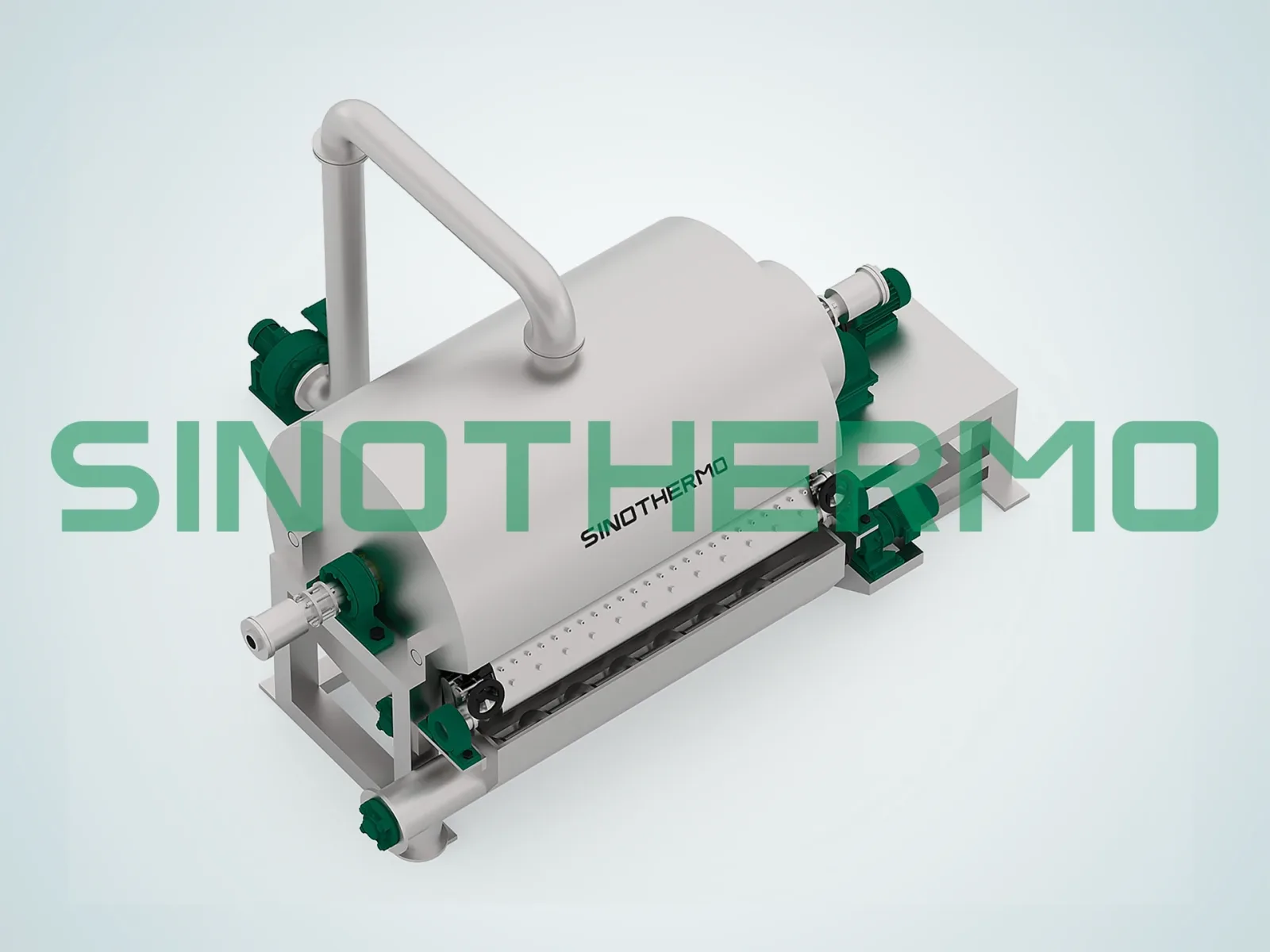
| Drum dryer | Viscous slurry, paste | Flakes, then milled | Works where liquid is too viscous to atomise |
| Freeze dryer | Liquid | Porous cake, then milled | Best structure retention, highest cost |
From a wet solid (filter cake, granules, crystals, paste) → you need to dry an existing powder
| Machine | Handles | Notes |
|---|---|---|
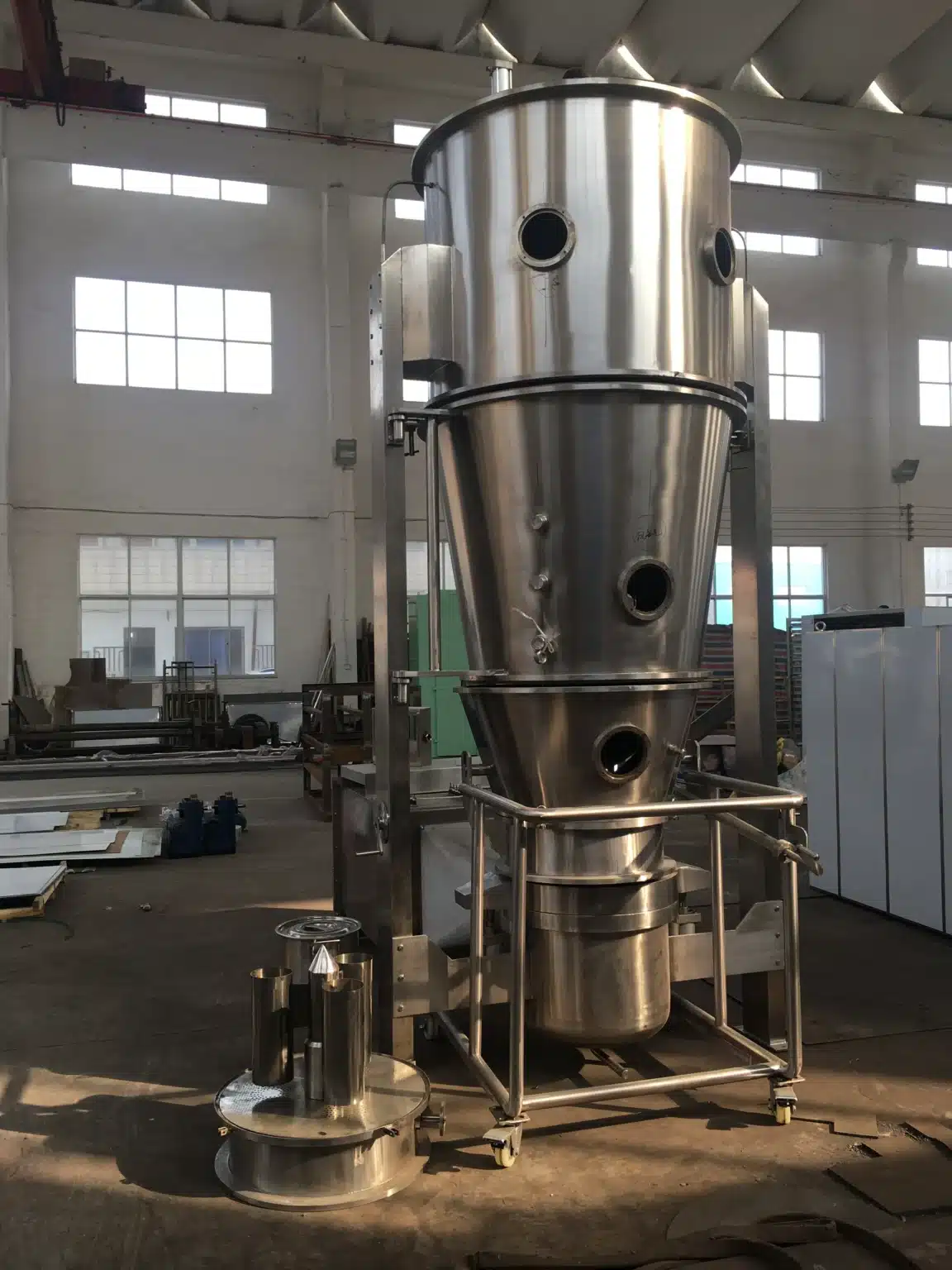
| Fluid bed dryer | Free-flowing granules | Fast, gentle, uniform; needs fluidisable particles |
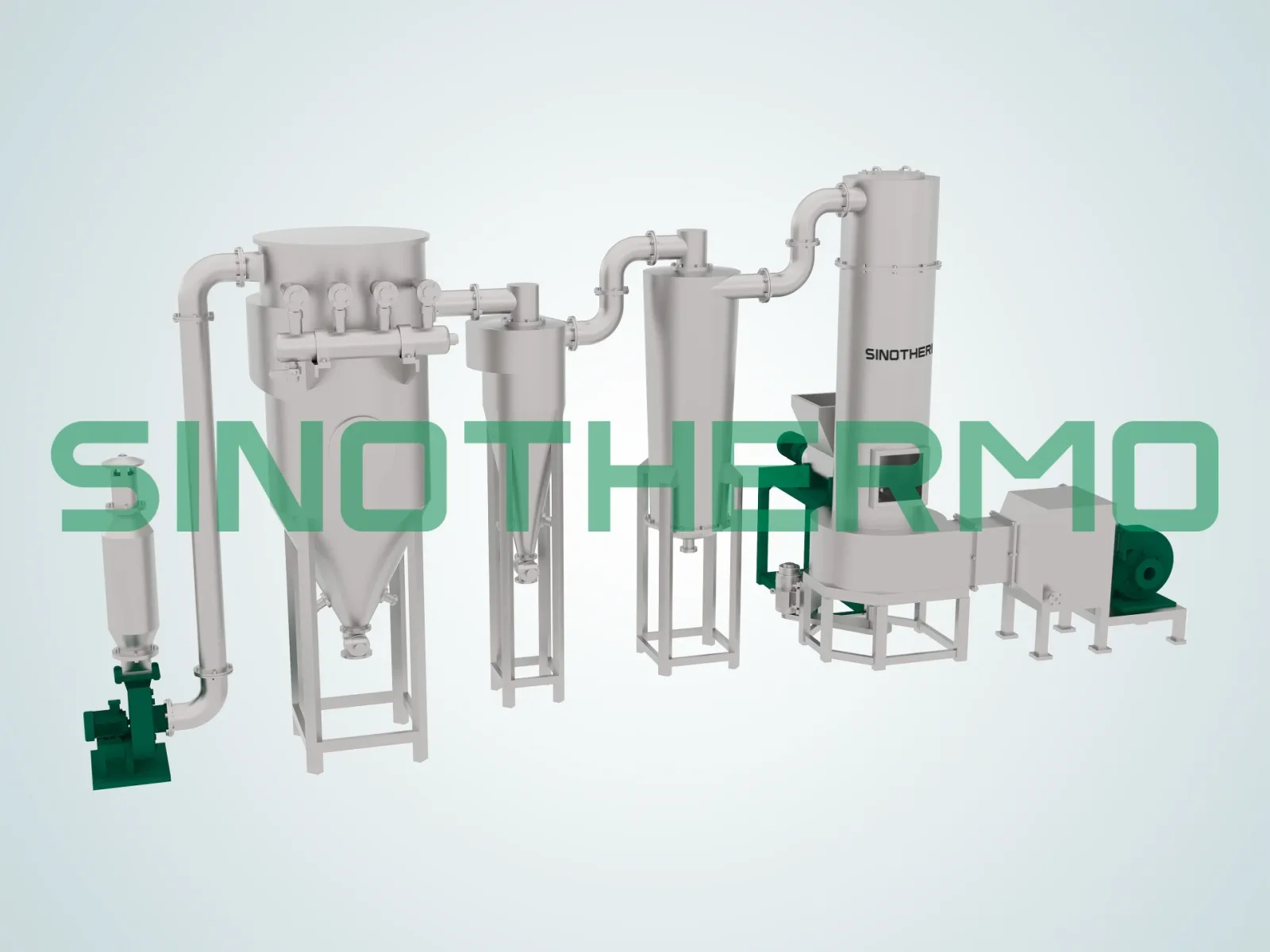
| Spin flash dryer | Pastes, filter cakes | Disintegrates and dries in one step |
| Vacuum dryers (tray, conical, rotary cone, paddle, rake) | Heat-sensitive, solvent-wet | Low temperature, solvent recovery |
| Paddle / disc dryer | Sludges, high-moisture pastes | Indirect, very high heat-transfer area |
| Rotary drum dryer | Robust, free-flowing bulk | Simple, high capacity, tolerant |
The four properties that decide it
1. Starting form and flowability. Whether the material is pumpable, fluidisable, sticky, or a stiff cake eliminates most options immediately. A paste cannot be fluidised; a free-flowing granule doesn't need a spin flash dryer's disintegrator.
2. Heat sensitivity. If the product degrades above roughly 60–80 °C, direct hot-air drying is out and vacuum drying becomes necessary. Note that spray drying is an exception worth remembering: despite hot inlet gas, evaporative cooling keeps the particle near the outlet wet-bulb temperature, so many heat-sensitive materials spray dry successfully.
3. Water or solvent. Solvent changes everything about the plant — closed-loop inert gas, condenser recovery, explosion protection. It typically pushes the choice toward vacuum dryers or a closed-cycle spray dryer, and it roughly doubles the capital conversation.
4. Required product characteristics. If particle size, bulk density, or dissolution rate is specified, the dryer becomes a particle-forming step rather than merely a water-removal step. Spray drying and fluid bed granulation give real control here; a rotary dryer gives almost none.
Continuous or batch?
| Continuous | Batch | |
|---|---|---|
| Examples | Spray, fluid bed, flash, rotary, belt | Vacuum tray, conical vacuum, rotary cone |
| Economics | Better above roughly one tonne/day | Better for small or variable volumes |
| Product changeover | Slower, cleaning between campaigns | Easy — each batch independent |
| Traceability | Requires effort | Inherent |
| Typical fit | Commodity, single-product lines | Pharma, speciality, multi-product |
Pharmaceutical and speciality-chemical plants often prefer batch even where continuous would be cheaper per kilogram, because batch traceability and changeover flexibility are worth more than throughput.
That preference is easy to underestimate from a pure cost-per-kilogram spreadsheet. A batch record that shows exactly which tray, which shift, and which operating parameters produced a given lot is not a nice-to-have in a regulated plant — it is often a condition of the product being saleable at all. Continuous processes can be made traceable, but it takes deliberate batching-by-time-window and additional instrumentation to get there, which erodes some of the throughput advantage that made continuous attractive in the first place.
Quick selection guide by material
- Liquid, need controlled particle size: spray dryer — see our pharmaceutical spray drying guide.
- Free-flowing wet granules: fluid bed dryer — see our fluid bed dryer guide.
- Wet granules + need to granulate: fluid bed granulator — see fluid bed granulator vs dryer.
- Paste or filter cake, water-wet: spin flash dryer — see our spin flash dryer guide.
- Solvent-wet cake, small batch, fragile: vacuum tray dryer — see our vacuum tray dryer guide.
- Solvent-wet cake, larger batch: conical or rotary cone vacuum — see our conical vacuum dryer comparison.
- Sludge, paste, very high moisture: vacuum paddle or rake — see vacuum rake vs paddle dryer.
- Viscous slurry → flake product: drum scraper dryer — see our vacuum drum scraper dryer guide.
- Wide particle size range, won't fluidise: vibrating fluid bed — see our vibrating fluid bed dryer guide.
The three mistakes that cost the most
Sizing from a nominal capacity figure. "500 kg/h" means nothing without the inlet and outlet moisture it assumes. Always compare quotations at your inlet moisture, your target outlet moisture, and your material. Two dryers quoted at the same tonnage can differ by a factor of two in real duty.
Ignoring what happens around the dryer. Feed preparation, exhaust handling, dust collection, product cooling, and fines recovery frequently cost more than the dryer itself. A cheap dryer with an undersized dust-collection system is not cheap.
Skipping the pilot trial. Drying behaviour is not reliably predictable from composition. Stickiness, case hardening, whether a material fluidises, and the real drying curve are empirical. A pilot trial is far cheaper than a production dryer that doesn't reach specification.
Common mistakes to avoid
- Choosing a machine type before characterising the material. The four properties above should come first; the shortlist of candidate machines comes second, not the other way round.
- Assuming one industry means one machine type. Pharmaceutical plants alone run spray dryers, fluid bed dryers, vacuum tray dryers and freeze dryers side by side — industry narrows the requirements, not the machine choice.
- Treating continuous as always cheaper. It's cheaper per kilogram at volume, but batch traceability and changeover flexibility are worth real money in multi-product or regulated plants.
- Comparing dryers on vessel size instead of the actual duty. Two machines of similar footprint can differ several-fold in real throughput depending on heat-transfer design and agitation.
- Skipping characterisation testing to save time early. The time saved up front is routinely lost several times over in a production unit that doesn't perform to spec.
Where SINOTHERMO fits
We build most of the machine types above — spray, fluid bed, spin flash, the vacuum family, paddle, rake and rotary — which means we can compare them for your material without needing the answer to be a particular product.
Our pilot lab runs your material and measures the drying curve, achievable final moisture, and product quality. Pilot testing is a paid pre-sales engineering service, and you keep the full report — data you can use to write a specification and to evaluate any supplier's proposal, ours included. For the wider selection framework across dryer types generally, see our how to choose an industrial dryer guide.
Frequently asked questions
What is a powder dryer?
Any industrial dryer that either produces a powder from a liquid feed (spray dryer, drum dryer, freeze dryer) or removes moisture from an already-particulate material (fluid bed, flash, vacuum, paddle, rotary). Which one applies depends on your starting form, heat sensitivity, whether the liquid is water or solvent, and the product characteristics you need.
How do I choose the right powder dryer?
Work through four properties in order: what form the material starts in, how heat-sensitive it is, whether the liquid phase is water or solvent, and what particle characteristics the product must have. These narrow the field to one or two candidates; a pilot trial on your actual material then confirms the choice and provides sizing data.
What is the difference between a spray dryer and a fluid bed dryer?
A spray dryer takes a pumpable liquid and creates powder by atomising it into hot gas — it forms the particle. A fluid bed dryer takes material that is already particulate and dries it by suspending it in an upward air stream. They're often used in sequence: spray dry to form the powder, then fluid bed to finish drying or to agglomerate.
Can one dryer handle several different products?
Batch dryers (vacuum tray, conical vacuum, rotary cone) handle multi-product operation well because each batch is independent and changeover is straightforward. Continuous dryers are more economical at high single-product volume but need cleaning between campaigns. Fluid bed processors are a useful middle ground, since one vessel can dry, granulate and coat.
How much does an industrial powder dryer cost?
It depends far more on the required duty than on the machine type — the drivers are evaporation rate, whether solvent handling and explosion protection are needed, materials of construction, and the ancillary equipment (dust collection, exhaust treatment, cooling). Solvent service with closed-loop inert gas typically costs substantially more than aqueous service of the same capacity.
Not sure which of these fits your material? Send us the material and we'll measure it.
✉️ mark.gu@sinothermo.com · 📱 WhatsApp: +86 180 2197 2660 · 🌐 www.sinothermo.com · 💬 Request a pilot test
SINOTHERMO — Process Engineering Infrastructure.

Mark Gu
Passionate about enhancing customer experiences and streamlining operations, Mark focuses on building strong relationships, fostering innovation, and leading teams to achieve exceptional service and efficiency.
Email: mark.gu@sinothermo.com
Phone: +86 18021972660