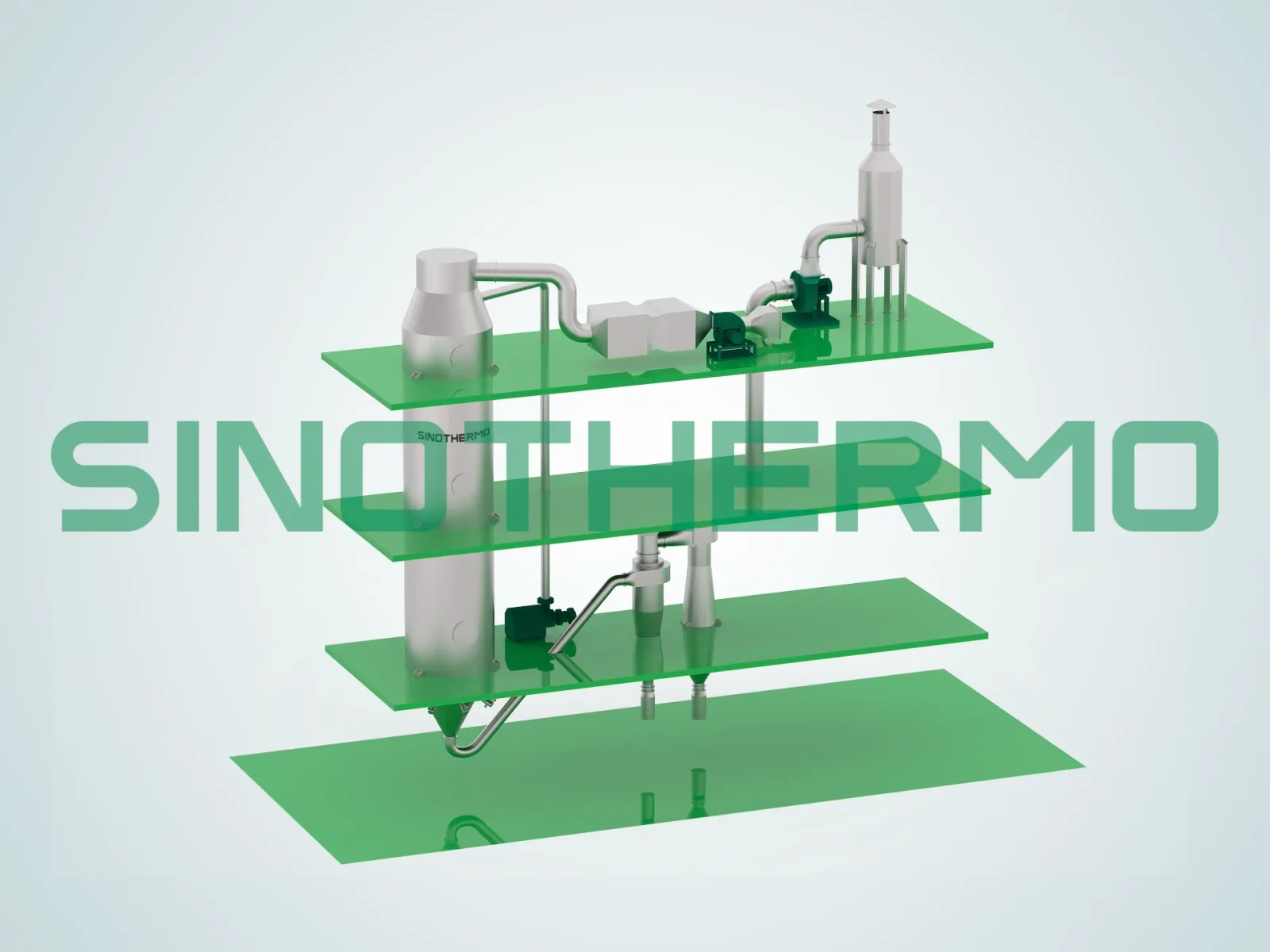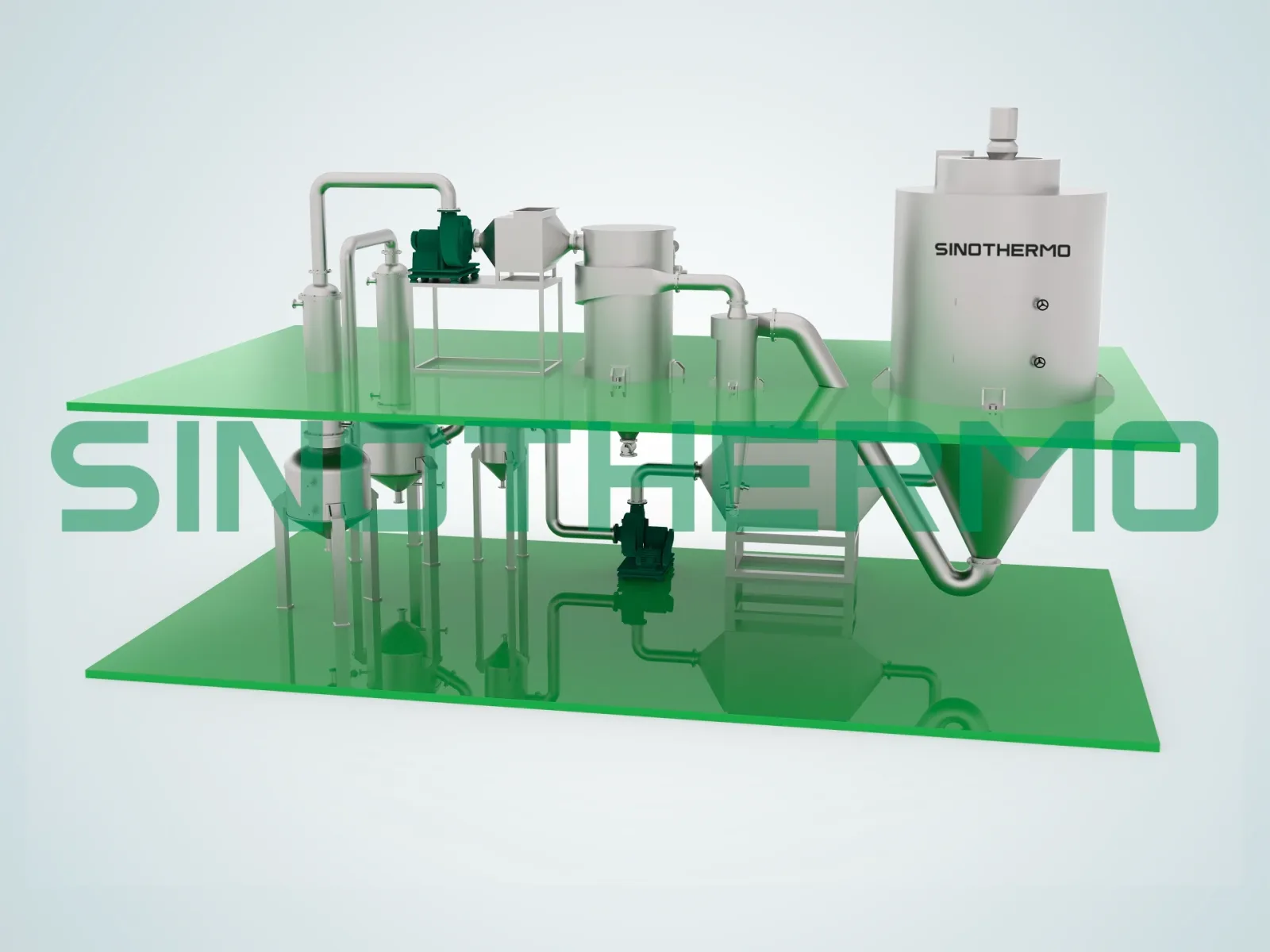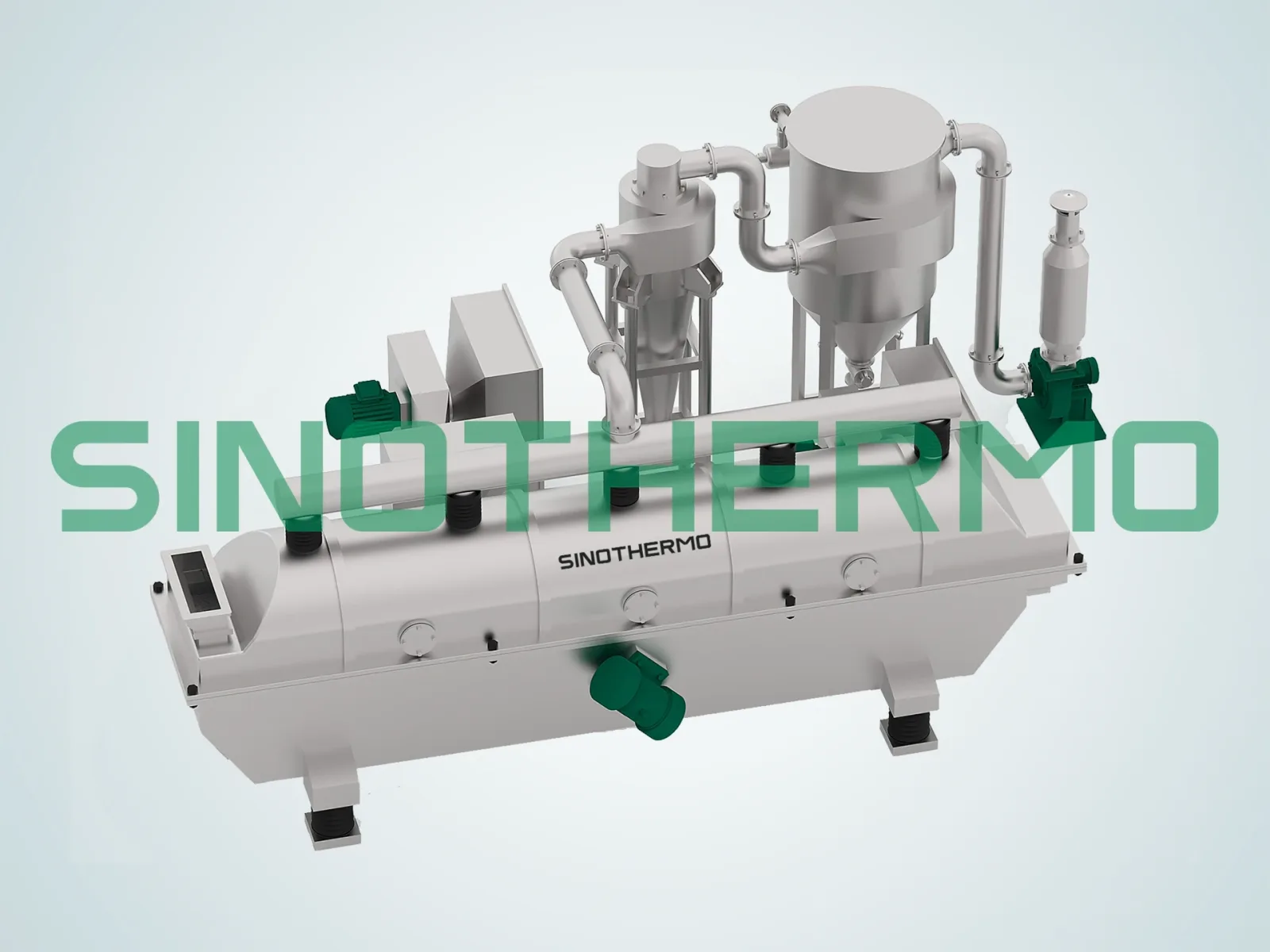
A vibrating fluid bed dryer adds mechanical vibration to conventional fluid-bed drying, so it can process materials that will not fluidize on air alone — wide particle-size distributions, cohesive or slightly sticky powders, agglomerating wet feeds, and friable particles that break under high air velocity. Vibration conveys the bed along a perforated deck in near plug-flow while the air does the drying, giving uniform residence time and letting one machine dry and cool in a single pass.
If your powder either sits dead on the distributor plate or blows straight into the cyclone, the problem is not the fan. You are asking air to do two jobs at once — suspend the bed and evaporate the moisture — on a material whose size distribution makes those mutually exclusive. A vibro fluid bed dryer separates them: the exciter handles bed mobility, the air handles heat and mass transfer.
General fluidization physics — minimum fluidization velocity, bed pressure drop, Geldart behaviour, batch vs continuous — is covered in our fluid bed dryer guide, which this page assumes and does not repeat.
Why vibration changes what a fluid bed can handle
An air-only bed works by balance: velocity must suspend the particles without carrying them away. On a narrow, free-flowing powder that window is comfortable; on a real industrial feed it often barely exists.
A wide particle-size distribution has two windows, not one. The velocity that mobilizes the coarse fraction sits above the terminal velocity of the fines, so a bed fast enough for the coarse end entrains the fines, and one slow enough for the fines leaves the coarse end dead on the plate. Vibration mobilizes both fractions mechanically instead.
Cohesive powders channel rather than fluidize. Once interparticle forces — moisture bridges, electrostatics, fine-particle attraction — exceed the drag the air can apply, the bed cracks instead of expanding, and more pressure only widens the channel. Vibration continuously breaks that structure up, and does its most useful work right at the wet inlet, where the feed is stickiest.
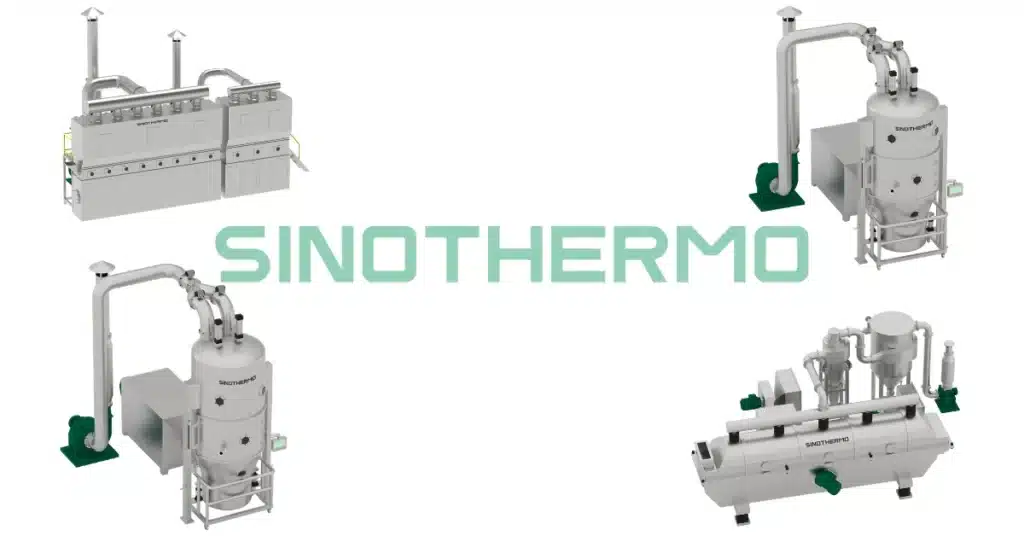
Vibrating fluid bed dryer working principle
- 1.Feed enters through a rotary valve or screw onto the perforated deck, at a controlled layer thickness.
- 2.Vibration, from unbalanced-weight exciter motors or a dedicated exciter, assists or replaces air-driven fluidization, conveys material toward discharge, and prevents dead zones and deck blinding.
- 3.Fluidizing air, heated and filtered, passes up through the deck, transferring heat and carrying evaporated moisture to the exhaust.
- 4.Zoned treatment — because the bed moves in near plug-flow, each zone can hold its own temperature: a hotter first zone, a gentler falling-rate zone, then a cooling zone.
- 5.Discharge and exhaust — product leaves at target moisture and temperature; moist exhaust goes to a cyclone, bag filter or scrubber.
On numbers. Amplitude, frequency, air velocity, zone temperatures, bed depth and residence time are interdependent and material-specific. Any figure in a brochure — ours or anyone's — is a typical design target, confirmed on your own material by trial, never a specification you can transfer.
What vibration buys beyond fluidization
The reason to specify a vibrating fluidized bed dryer is rarely "it fluidizes." It is the chain that follows from needing less air.
Less air means less dust downstream — fines carry-over scales with velocity, so a smaller cyclone and filter, a lighter fines-recycle loop and better yield follow, which on a fine, valuable powder can matter more than thermal efficiency. Attrition scales with velocity too, so coated granules, crystals and spray-dried agglomerates lose less value at the lower velocity vibration allows.
Residence time becomes uniform. A back-mixed bed lets some particles short-circuit while others linger, tolerable on a robust powder but not when over-drying part of the stream degrades the product.
Drying and cooling can share one deck. Because the bed moves in near plug-flow, the last zone can run on ambient or chilled air, so product leaves ready for packing without a separate cooler — less capital, less floor area, less handling. Hygroscopic powders also pick up less moisture this way than meeting ambient air directly. The same machine is often bought as a cooler alone, downstream of a spray dryer, kiln or extruder.
Where the boundaries are
| Conventional fluid bed dryer | Vibrating fluid bed dryer | |
|---|---|---|
| Fluidization | Air only | Air + mechanical vibration |
| Particle size / cohesive feeds | Needs a narrow, free-flowing range; channels if cohesive | Handles wide distributions; breaks agglomerates |
| Air velocity / fines carry-over | Higher velocity; larger cyclone and filter | Lower velocity; smaller air-handling train |
| Friable particles | More attrition | Gentler at lower velocity |
| Residence time | Back-mixed, wide distribution | Near plug-flow, uniform |
| Drying + cooling in one machine | Usually a separate cooler | Standard, via a zoned deck |
| Mechanical complexity | Simpler; no moving deck | Exciter, springs, flexible connections |
| Wet, pumpable or pasty feed | Not suitable | Not suitable without pre-treatment |
Belt dryers win when the material must not be agitated or needs long residence time. Flash dryers win on a genuinely wet cake or paste that cannot be conveyed as a bed of discrete particles, which no vibration regime fixes; see our flash dryer guide.
Within the vibration family, a spiral vibrating dryer stacks the conveying path as a helix in a tower — long residence time in a small footprint, at the cost of harder cleaning access, suiting continuous single-product duty over frequent changeovers. For the air-only alternative see a horizontal fluidized bed dryer; the family sits under fluidized bed dryer within convection dryer.
The vibration drive: the cost buyers under-specify
The process case is what quotations get judged on. The reliability case decides whether the machine still makes rated output in year five — because a vibrating deck is shaken deliberately for tens of thousands of hours.
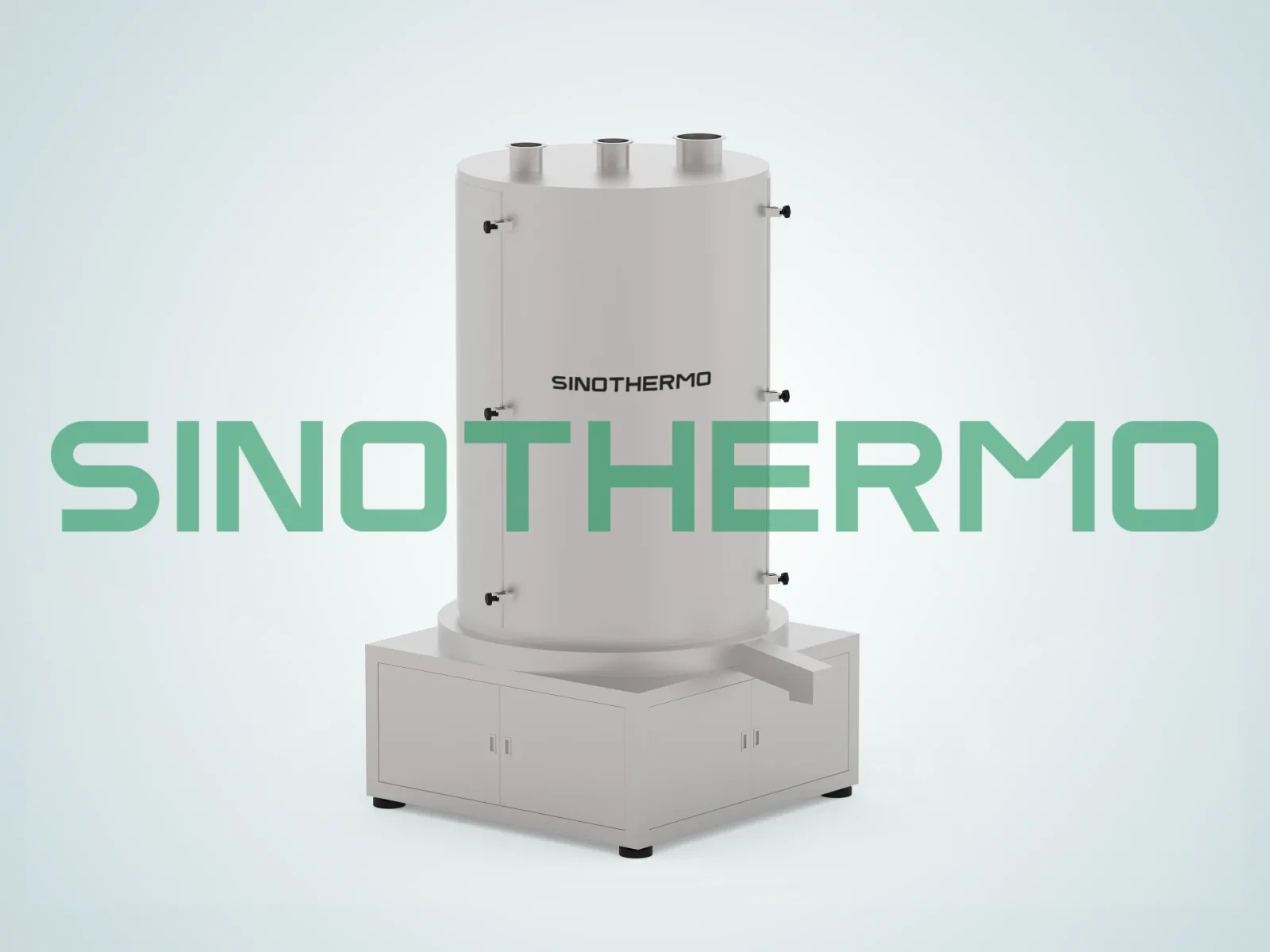
The vibration source is either paired unbalanced-weight motors on the deck body — cheaper, but living in the vibrating environment — or a separate exciter through a flexible coupling that keeps the motor still. Amplitude is usually set, not dialled, by re-setting eccentric weights with the machine stopped; pin down what "adjustable" really means in a proposal.
Isolation springs and resonance interact with the building. Springs or mounts keep dynamic force out of the structure and must be replaced as matched sets. On a mezzanine, the dynamic load and the structure's natural frequency must be checked before purchase, since changing bed mass or springs shifts the machine's designed resonance margin.
Consumables belong on the spares list from day one: flexible sleeves age and eventually leak dust, exciter bearings follow a service interval, and welded joints belong in a periodic inspection — a crack found on a walk-round is a repair, the same crack found by failure is an outage.
Specification checklist
| Item | What to provide | Why it decides the design |
|---|---|---|
| Material and form | Powder / granule / crystal, bulk density, flow behaviour | Whether vibration is needed at all |
| Particle size distribution | Full distribution including the fines tail, not an average | Strongest indicator of conventional vs vibrating |
| Moisture, in and out, and type | Stated basis, where measured; surface vs bound | Evaporative load, zone layout, deck length |
| Thermal ceiling and sticky phase | Where the product degrades; whether it agglomerates wet | Caps air temperature; sets inlet-zone design |
| Friability and cooling need | Whether breakage matters; required discharge temperature | Justifies lower velocity; whether cooling is integrated |
| Throughput and pattern | Capacity, hours/day, changeover frequency | Single-product vs frequent changeover |
| Air handling and explosion protection | Cyclone / filter / scrubber; dust explosibility data | Recovery loop, hazardous-area design |
| Hygiene and installation | Food/pharma/industrial; floor/platform and dynamic load | Access design; horizontal vs spiral |
Our how to choose an industrial dryer guide applies the same logic across the wider range.
Common mistakes to avoid
- Specifying from an average particle size instead of the full distribution and fines tail, which decide whether air alone can work.
- Treating vibration as a fix for a feed that is too wet. A pumpable slurry or plastic paste needs pre-drying or different technology, not vibration.
- Leaving the air-handling train as an afterthought, when the cyclone, filter and fines-recycle loop actually set your yield and emission compliance.
- Ignoring dynamic load on the building when signing off a mezzanine installation.
- Omitting vibration spares from the budget — springs, flexible connections and exciter bearings are consumables, not options.
- Scaling from a static tray or oven test, which has no plug-flow transport and so cannot predict deck length or residence time.
Frequently asked questions
How does a vibrating fluid bed dryer work?
It combines two actions on one bed: mechanical vibration mobilizes the particles and conveys them along a perforated deck in near plug-flow, while heated air blown up through the deck fluidizes and dries them. Vibration takes over bed mobility and transport, so the air only supplies heat and carries moisture, and can run slower than an air-only bed. The deck is usually zoned, with the final zone often on ambient or chilled air so product is dried and cooled in one pass.
What is the difference between a vibrating and a conventional fluid bed dryer?
A conventional bed relies on air alone, so it needs a narrow, free-flowing size distribution and higher velocity. A vibrating unit mobilizes wide distributions and cohesive powders that would otherwise channel, allows a lower velocity with less fines carry-over and attrition, gives uniform plug-flow residence time, and commonly combines drying and cooling in one deck — at the cost of an exciter drive and springs to maintain.
When do I need a vibrating fluid bed instead of a conventional one?
When your material has a wide particle size distribution, is cohesive or sticky, agglomerates at the wet inlet, is friable, or when you need uniform residence time or integrated cooling. A fluidization test confirms which design is appropriate.
Can a vibrating fluid bed dryer cool the product as well as dry it?
Yes. The deck is typically zoned, with hot drying zones followed by an ambient or chilled cooling zone, so product discharges ready for packing without a separate cooler; hygroscopic powders also pick up less moisture this way than meeting ambient air directly. The same machine is often bought as a cooler alone, downstream of a spray dryer, kiln or extruder.
What maintenance does the vibration system need?
Treat the drive as a wear system. Isolation springs must be replaced as matched sets, since a degraded set transmits force into connected equipment; flexible connections age and leak dust, so they belong on the spares list alongside exciter bearings.
What throughput and temperatures should I expect?
There is no transferable answer. Throughput, zone temperatures, bed depth and residence time are all material-specific — two powders with the same nominal size and moisture can need different decks. Published ranges are typical design targets, confirmed on your own material by trial.
Prove it on your own material
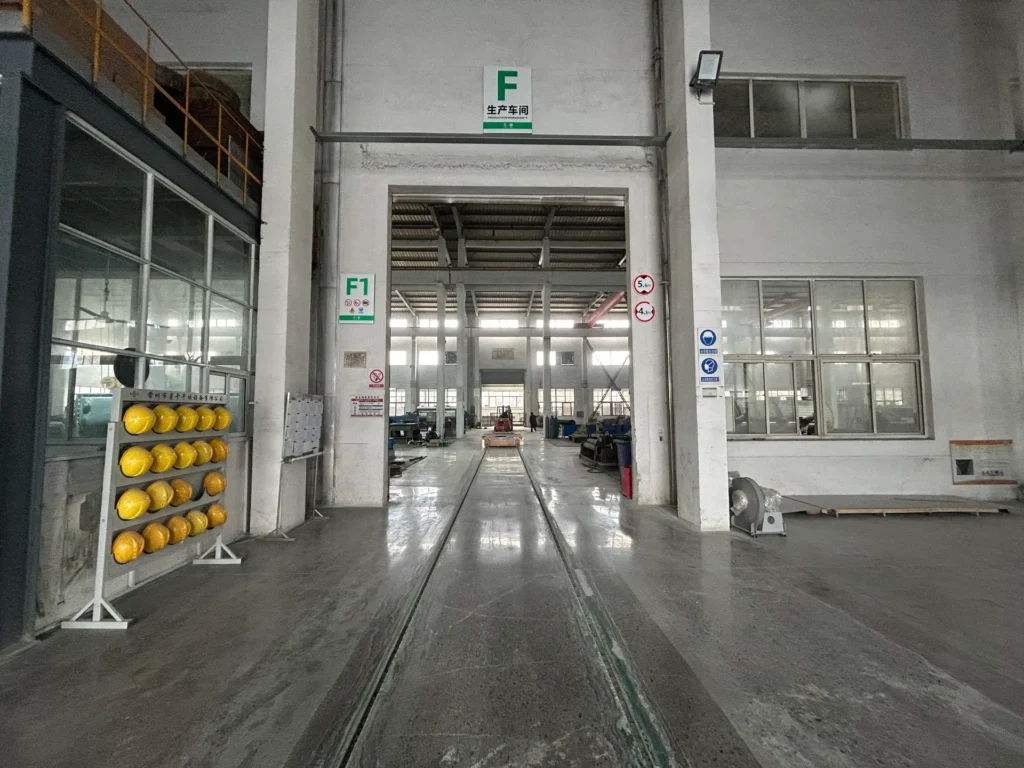
Whether your powder needs vibration at all, and what deck it needs if it does, are measurements rather than calculations. SINOTHERMO runs an in-house pilot laboratory: send a sample and we establish whether air alone can fluidize it, produce the drying curve, measure fines carry-over so the cyclone and filter are sized on real data, and confirm the discharge temperature a cooling zone can deliver. Pilot testing is a paid engineering service; our pilot test checklist sets out what to send and what you get back.
Backed by 20+ years in industrial drying, our engineers turn that data into deck geometry, zone layout, air-handling train and vibration regime as one machine. See the testing lab, or talk to an engineer. Our case article on the vibrating fluid bed dryer for coconut powder follows a high-fat, agglomeration-prone powder from trial to installed line; the machine is specified on the horizontal vibrating fluidized bed dryer page.
Conclusion
A vibrating fluid bed dryer earns its place by splitting a job an air-only bed does alone: vibration takes over bed mobility and transport, air keeps heat and mass transfer. Wide distributions and cohesive powders become fluidizable, air velocity drops so fines carry-over and attrition drop with it, residence time becomes near plug-flow, and a zoned deck dries and cools in one pass.
Specify from the full particle size distribution and moisture type rather than an average, treat the vibration drive and spares as seriously as the process side, and confirm both on your own feed.
Not sure whether your powder needs vibration to fluidize properly? Send us a representative sample. Our pilot lab establishes whether air alone will do it, and what deck, zone layout and vibration regime your material actually needs. Request a pilot test.
✉️ mark.gu@sinothermo.com · 📱 WhatsApp: +86 180 2197 2660 · 🌐 www.sinothermo.com
SINOTHERMO — Process Engineering Infrastructure.

Mark Gu
Passionate about enhancing customer experiences and streamlining operations, Mark focuses on building strong relationships, fostering innovation, and leading teams to achieve exceptional service and efficiency.
Email: mark.gu@sinothermo.com
Phone: +86 18021972660