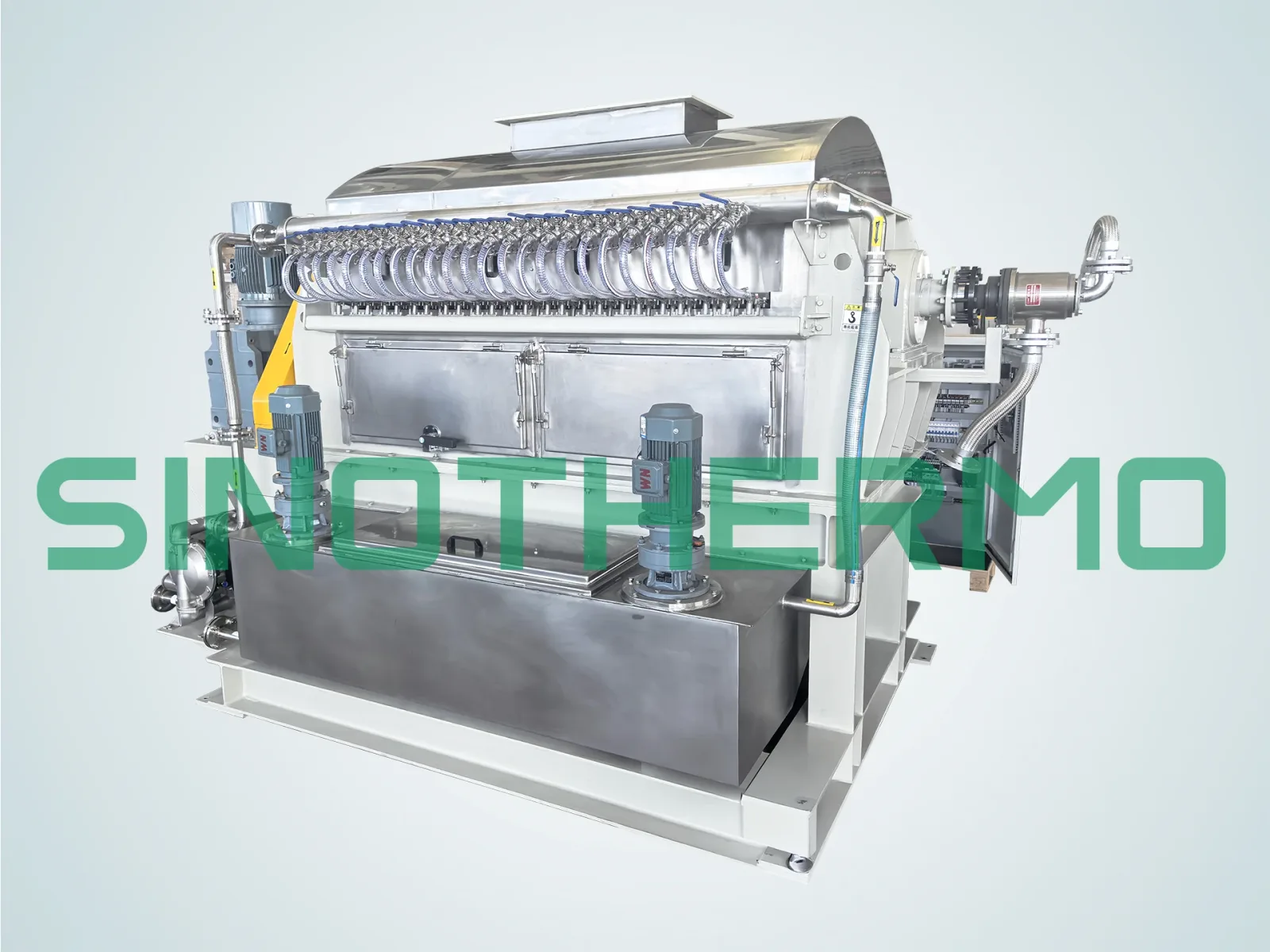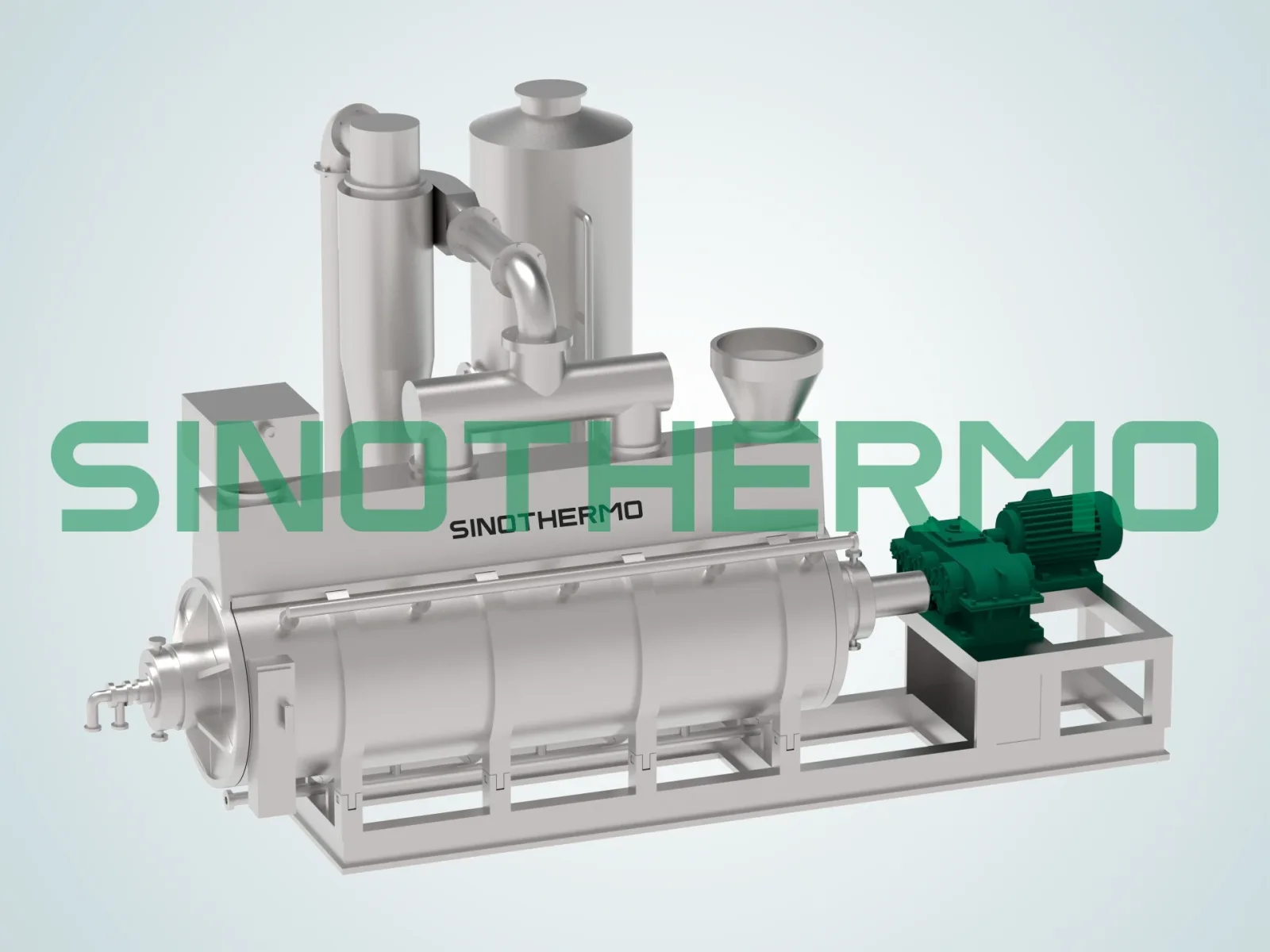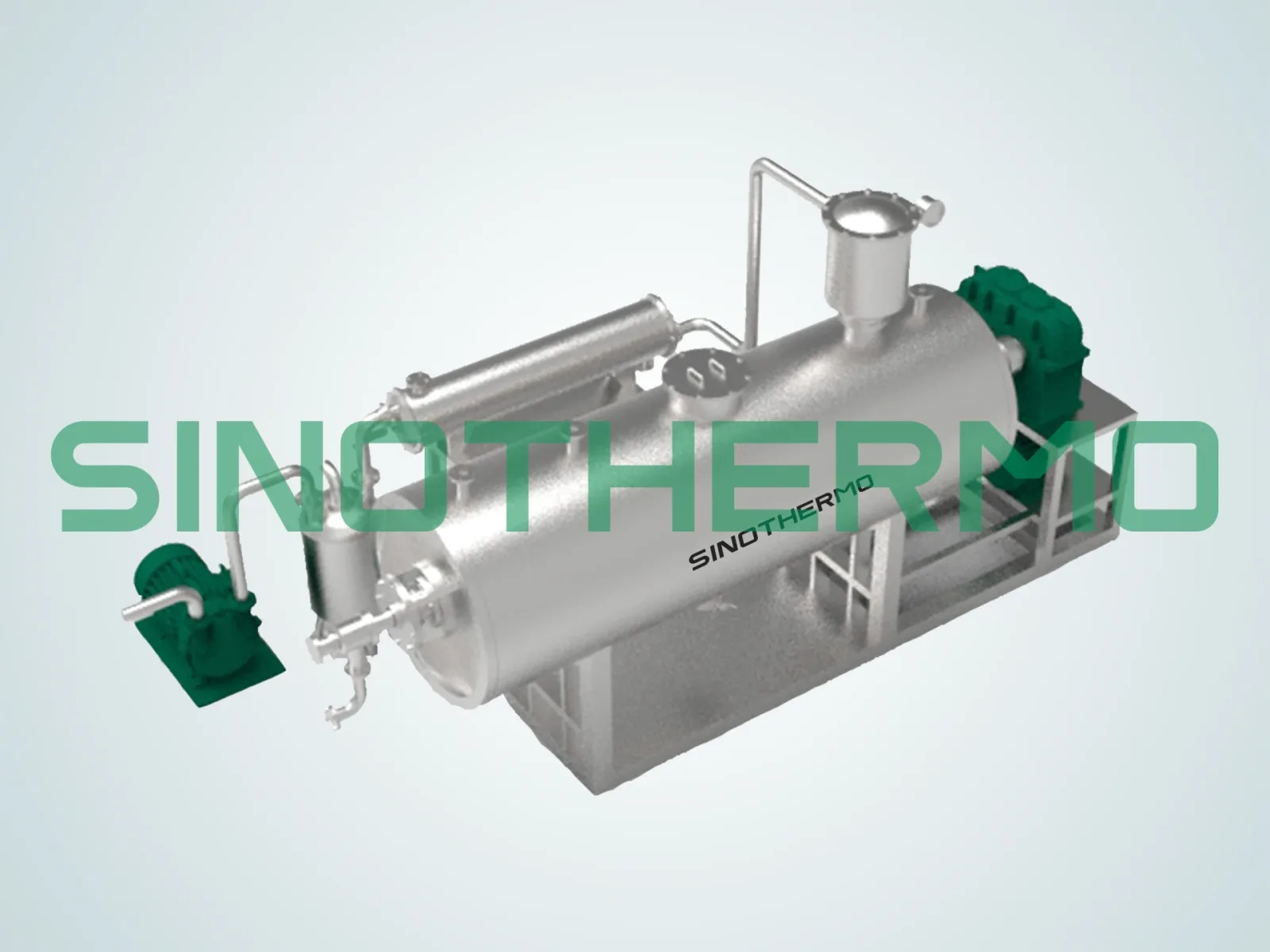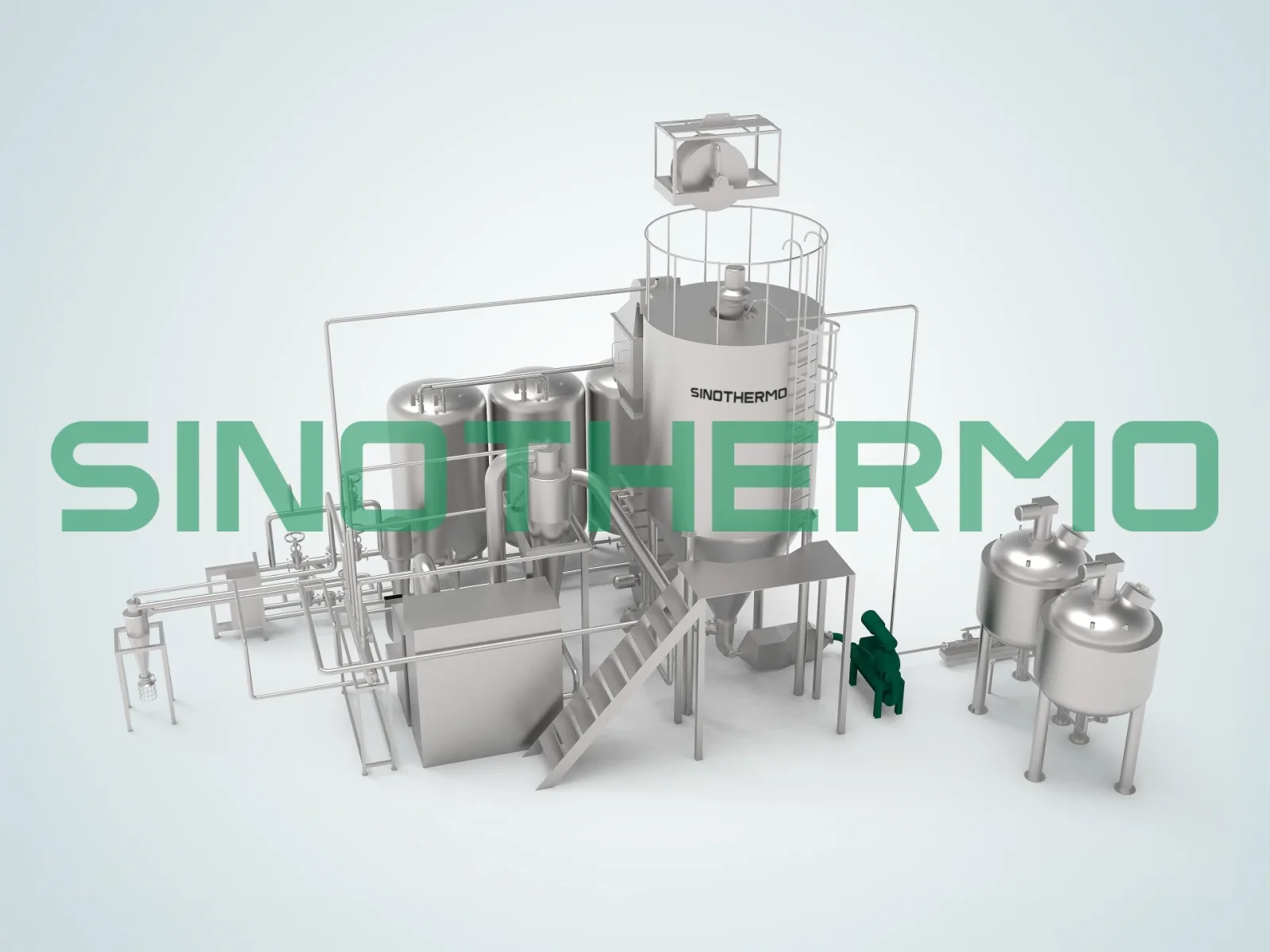
A "low temperature dryer" can mean four different things. Vacuum dryers lower the boiling point so a heat source as low as 50 °C can be enough. Freeze dryers sublimate ice at -50 to -80 °C. Fluid bed dryers run at inlet air below 100 °C. Spray dryers use very hot air, yet keep particles cool because droplets dry in seconds. Which fits depends on your feed form, how heat-sensitive the product is and what final structure you need.
Quick Context: low temperature is a result, not a machine
Products degrade through temperature and time. A dryer protects the product either by lowering the temperature (vacuum, freeze, low-inlet fluid bed) or by shortening the exposure (spray, flash). That is why a spray dryer with a 150 to 500 °C inlet can dry a heat-sensitive extract, while a vacuum dryer with a 50 °C heat source can be needed for a product that would suffer a long exposure at 60 °C.
This guide compares the four methods using SINOTHERMO's published ranges, and points to the right next step in each case.
At a glance
| Method | Typical temperature (SINOTHERMO product pages) | How product is protected | Feed form | Product form |
|---|---|---|---|---|
| Vacuum drying | Heat source 50–200 °C (rake, paddle, disc); below 100 °C (static cabinet) | Low boiling point, sealed, low oxygen | Liquids, slurries, pastes, powders | Powder, granules, lumps, flakes |
| Freeze drying | -50 to -80 °C (cabinet); cold trap to -80 °C (benchtop) | Sublimation below freezing, no liquid phase | Liquids, extracts, blocks, slices | Porous, structure-preserving solid |
| Fluid bed drying | Inlet air below 100 °C (horizontal and vertical); below 200 °C (vibrating) | Low air temperature, short-to-moderate time | Powders and granules below 20% moisture | Granules, powder |
| Spray drying | Inlet air 140–180 °C (extract), 150–500 °C (centrifugal) | Very short residence, evaporative cooling | Solutions, emulsions, suspensions | Fine powder |
Vacuum drying: low boiling point, sealed vessel
Under vacuum, water boils at a lower temperature (about 60 °C at 20 kPa absolute; see boiling point of water under vacuum). The product dries at a temperature it can tolerate. The sealed, low-oxygen vessel also protects products that oxidise, and solvent can be recovered.
Best for: pastes, slurries, solvent-wet products and powders that are heat- or oxygen-sensitive.
Trade-offs: batch operation is typical, throughput is limited by heating area and the system needs a vacuum pump and condenser.
SINOTHERMO equipment: vacuum paddle dryer, vacuum rake dryer, vacuum horizontal disc dryer, double-cone rotary vacuum dryer, static vacuum cabinet dryer. For choosing between them, read vacuum drying equipment: how to choose by material.
Freeze drying: sublimation below freezing
Freeze drying freezes the product, then removes the ice by sublimation under vacuum. Because there is no liquid phase, structure, potency and flavour are better preserved than with heat-based methods. SINOTHERMO lists the cabinet freeze dryer at -50 to -80 °C and the benchtop freeze dryer with a cold trap down to -80 °C.
Best for: pharmaceuticals, biologicals, high-value food and extracts where structure or potency must be preserved.
Trade-offs: long cycles, high energy per kilogram of water and higher cost, so it is reserved for products that justify it. See freeze drying equipment and our comparison spray drying vs freeze drying.
Fluid bed drying: gentle air, granules and powders
A fluid bed dryer floats granules on an upward air stream for even drying. SINOTHERMO's horizontal fluidized bed dryer lists inlet air below 100 °C, input moisture below 20 percent and output at 3 to 5 percent. The vertical fluid bed dryer is a batch machine with the same inlet range. The vibrating fluid bed dryer lists inlet air below 200 °C and output at 1 to 5 percent.
Best for: granules and powders already formed, such as pharmaceutical granules, food ingredients and chemical granules.
Trade-offs: needs a feed that fluidises, and does not handle pastes. See fluid bed drying technology.
Spray drying: hot air, cool product
A spray dryer turns a liquid into droplets that dry in seconds. While free water evaporates, the particle stays near the wet-bulb temperature of the air, far below the inlet temperature. That is why it can dry heat-sensitive liquids. The centrifugal spray dryer lists inlet air 150 to 500 °C, and the extract spray dryer lists 140 to 180 °C with cooled tower walls below 80 °C.
Best for: pumpable liquids that should become a fine powder.
Trade-offs: needs a pumpable, atomisable feed; the product sees hot air briefly; powder properties depend on atomisation and drying conditions. See our spray dryer machine guide and spray drying plant extracts.
Product Quality: What "Gentle" Really Means
Different products are damaged in different ways, so "low temperature" means different things.
- Thermal degradation. Many vitamins, enzymes, flavours and active ingredients break down above a threshold temperature, and the rate depends on both temperature and time. Short exposure at a higher temperature can be less damaging than long exposure at a lower one. Spray drying works because exposure is only seconds.
- Oxidation. Fats, certain pigments and many organic compounds react with oxygen faster when warm. Vacuum and freeze drying work in near-oxygen-free conditions, which protects them even if the temperature is not very low.
- Loss of volatiles. Aroma and flavour compounds evaporate with water. Freeze drying retains the most, vacuum drying less, and hot-air drying the least. Spray drying keeps a fair share if the feed is encapsulated with a carrier.
- Structure and solubility. Freeze-dried products keep a porous structure that rehydrates quickly. Spray-dried powders have a defined particle size and flow. Vacuum-dried products are usually ground or crumbled, and fluid-bed products are granules.
- Caking and stickiness. Sugary or hygroscopic products can become sticky above a glass transition temperature. A spray dryer with cooled walls, like SINOTHERMO's extract spray dryer with wall temperature below 80 °C, is designed to reduce wall build-up with these products.
When you describe your product to a supplier, say which of these matters most. It changes the recommendation.
Cost and Scale: What Each Route Typically Means
SINOTHERMO does not publish prices, and cost depends on size, materials and options, so this section is about relative position, not numbers.
| Method | Capital cost for the same evaporation | Energy per kg of water | Typical scale |
|---|---|---|---|
| Fluid bed | Lower | Moderate | Medium to large, continuous or batch |
| Spray drying | Medium to high | Moderate to high | Medium to large, continuous |
| Vacuum drying | Medium (includes vacuum system) | Moderate | Small to medium, mostly batch |
| Freeze drying | High | Highest | Small to medium, batch |
Use this table to see where the cost pressure sits, not to estimate a price. The value of the product decides how much cost the process can carry. A high-value pharmaceutical intermediate or biological product can justify freeze drying. A commodity food ingredient usually cannot.
How to choose
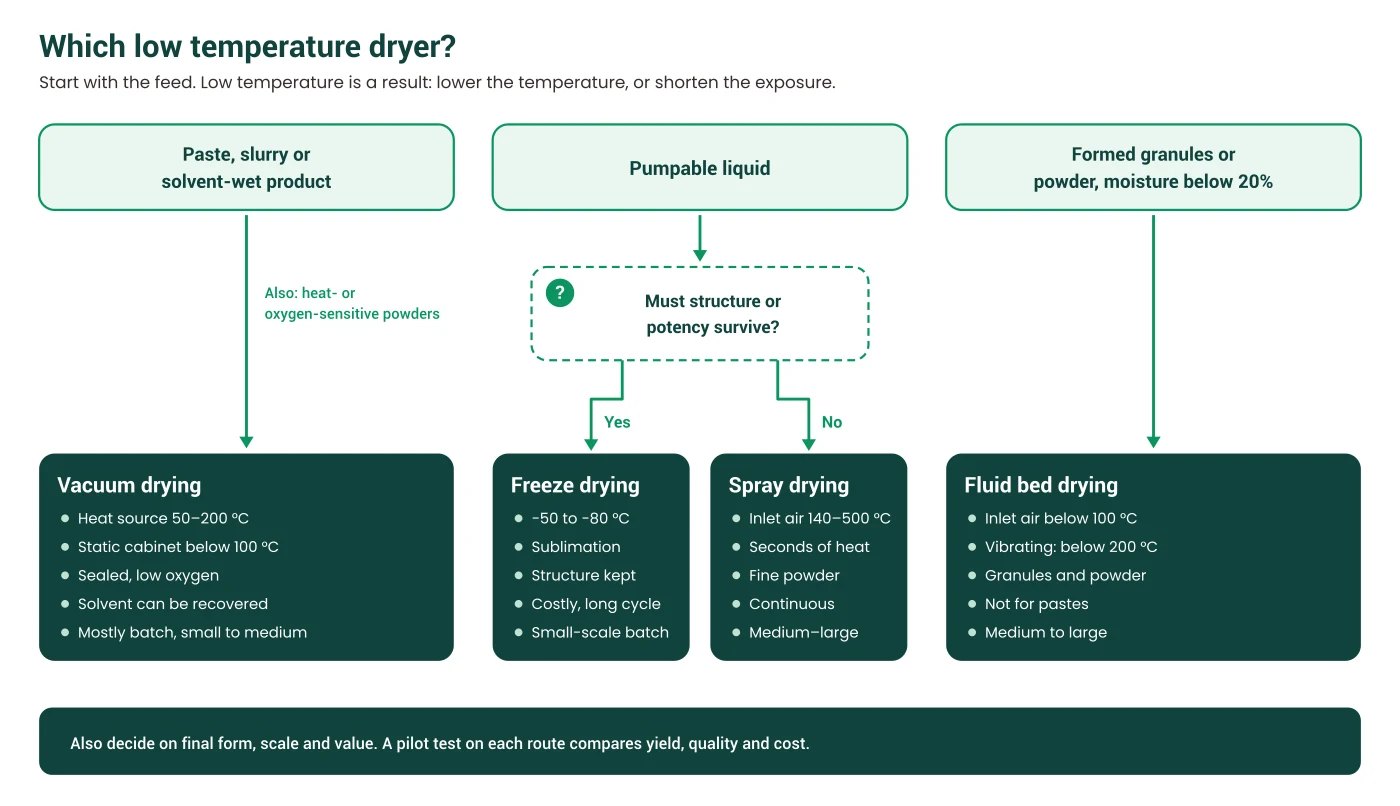
- 1.What is the feed? Liquid, paste or solid? Pastes point to vacuum conduction; liquids to spray or freeze; granules to fluid bed.
- 2.How sensitive is the product? Potency or structure that must survive points to freeze drying. Heat or oxygen sensitivity points to vacuum drying.
- 3.What final form do you need? Fine powder, porous cake, granules or flakes.
- 4.What scale and value? Freeze drying suits high-value, lower-volume products; spray and fluid bed suit higher volume.
- 5.Is a solvent involved? Vacuum conduction allows solvent recovery.
Reading a Supplier's Temperature Claims
When comparing quotations, ask each supplier four questions so the numbers can be compared fairly:
- 1.Is the temperature quoted the heat source, the inlet air or the product temperature? These can differ by tens of degrees.
- 2.What is the absolute pressure in the vessel, for vacuum dryers? Product temperature follows from it.
- 3.What is the residence time at that temperature?
- 4.Has the figure been tested on a product like yours?
A worked example
The numbers are illustrative, not customer data.
A producer has a herbal extract at 30 percent solids and wants a free-flowing powder.
- Spray drying: the extract is a pumpable solution, and a cooled-wall extract spray dryer gives a fine powder in one step.
- Vacuum drying: if the extract is a thick paste after concentration, a vacuum paddle dryer can dry it at a low temperature, though the product leaves as a ground powder, not as spherical particles.
- Freeze drying: if the extract holds volatile aroma or potency that cannot tolerate any heat, freeze drying preserves the most, at higher cost and longer cycle.
A pilot test on each route is the practical way to compare yield, quality and cost.
Common Mistakes to Avoid
- 1.Judging by inlet temperature alone. A spray dryer at 150 °C can be gentler than a slow dryer at 60 °C.
- 2.Choosing freeze drying for products that do not need it. The cost per kilogram is high.
- 3.Using a fluid bed for a paste. It will not fluidise.
- 4.Ignoring oxygen. Low temperature does not help if the product oxidises in air.
- 5.Not testing. Product sensitivity is specific and needs to be measured.
Test Before You Specify
SINOTHERMO runs paid pilot tests, so you can compare drying routes on your own material. Request a pilot test and the results are yours to use with any supplier. SINOTHERMO builds and sells equipment and does not offer contract drying. For the wider choice, see how to choose an industrial dryer.
Frequently Asked Questions
What is the best low temperature dryer?
There is no single best. Vacuum dryers suit pastes and solvent-wet products, freeze dryers suit products where structure or potency must be preserved, fluid bed dryers suit granules and spray dryers suit liquids that should become powder.
Can a spray dryer be a low temperature dryer?
The air is hot, but the particles stay much cooler while they are wet because droplets dry in seconds. This makes spray drying suitable for many heat-sensitive liquids.
What temperature does a vacuum dryer use?
SINOTHERMO's vacuum conduction dryers list heat source temperatures from 50 to 200 °C, depending on the model; the static vacuum cabinet dryer lists below 100 °C. Product temperature is lower because vacuum lowers the boiling point.
How cold does a freeze dryer get?
The cabinet freeze dryer lists -50 to -80 °C, and the benchtop freeze dryer has a cold trap down to -80 °C.
Is freeze drying better than vacuum drying?
It preserves structure and potency better but is slower and costlier. Many products dry well under vacuum without the extra cost.
Which low temperature dryer is the cheapest to run?
Fluid bed and spray dryers are usually cheaper per kilogram of water than freeze drying. The best answer depends on your feed and product value.
Does SINOTHERMO offer contract drying?
No. SINOTHERMO builds and sells drying equipment and offers paid pilot testing.

Mark Gu
Passionate about enhancing customer experiences and streamlining operations, Mark focuses on building strong relationships, fostering innovation, and leading teams to achieve exceptional service and efficiency.
Email: mark.gu@sinothermo.com
Phone: +86 18021972660