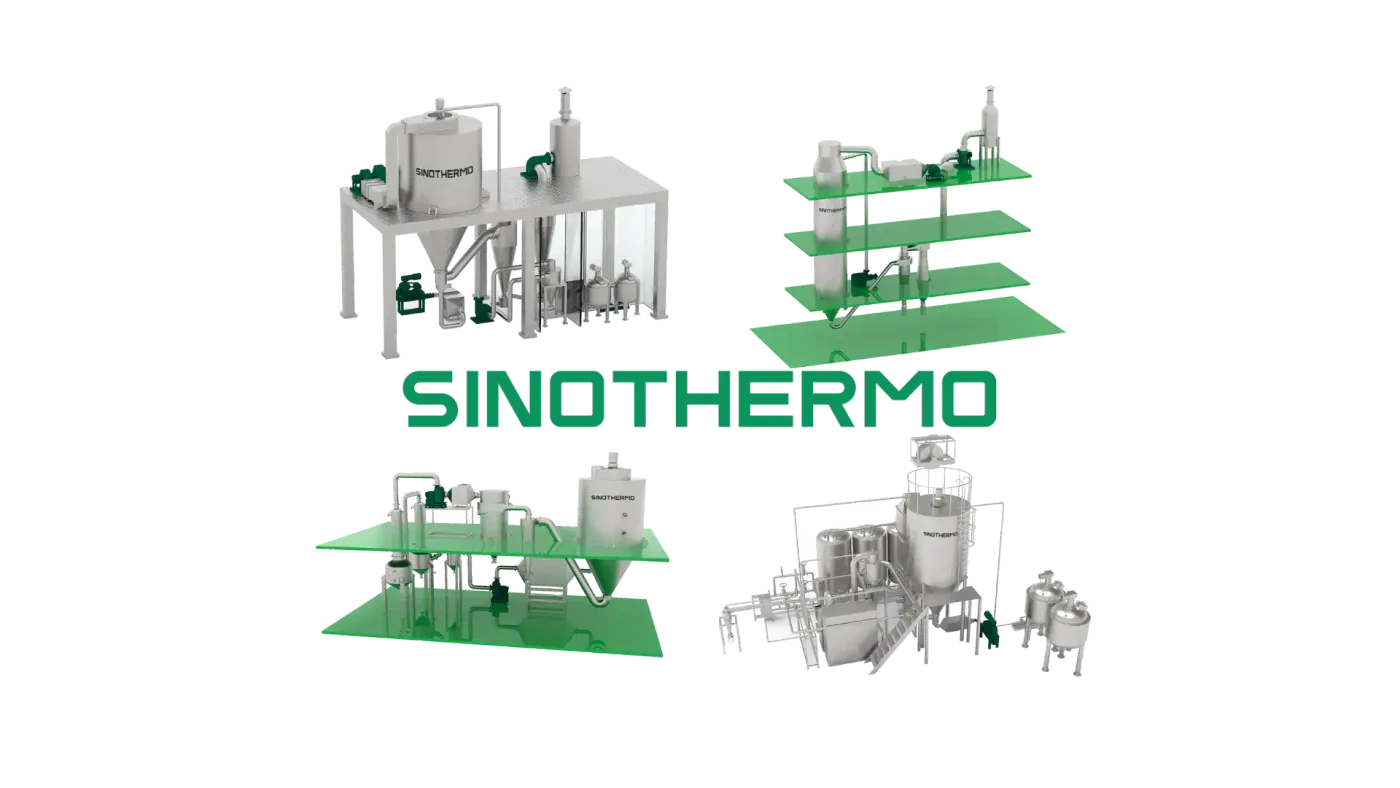
Terdapat tiga kategori pengering semburan yang berbeza, dan kekeliruan antara ketiga-tiganya merupakan salah satu kesilapan yang paling mahal dalam pembangunan proses.
Pengering semburan makmal ditujukan untuk penyaringan formulasi. Pengering semburan perintis ditujukan untuk pengesahan proses dan kerja pra-pengeluaran. Pengering semburan industri ditujukan untuk pengeluaran komersial. Setiap satu mempunyai fizik, ekonomi, dan peranannya sendiri dalam sesuatu projek.
Artikel ini membincangkan perbezaan praktikal — julat kapasiti biasa bagi setiap kategori, apa yang sebenarnya berubah semasa peningkatan skala, dan cara memilih unit yang sesuai untuk peringkat pembangunan anda.
Tiga Kategori Secara Ringkas
Label kategori sedikit bertindih antara pengeluar, tetapi maksud asasnya konsisten di seluruh industri:
| Kategori | Tujuan biasa | Kapasiti penyejatan biasa (air) | Kedudukannya |
|---|---|---|---|
| Pengering semburan makmal / mini / atas meja | Penyaringan formulasi, sampel yang sangat kecil, kebolehlaksanaan awal | Sehingga ~1–2 kg/j | Bangku kerja di makmal R&D |
| Pengering semburan perintis | Pengesahan proses, ujian yang lebih panjang, sampel pelanggan, pengesahan peningkatan skala | ~2 hingga ~30 kg/j | Loji perintis khusus atau makmal yang lebih besar |
| Pengering semburan industri | Pengeluaran komersial rutin | 50 kg/j dan ke atas, selalunya beratus hingga beribu kg/j | Kemudahan pengeluaran |
Dalam setiap kategori, nilainya berbeza mengikut pengeluar dan model, tetapi corak yang ditunjukkan adalah konsisten. Unit makmal direka untuk penyaringan dan kehilangan sampel yang minimum — banyak helaian data pengering semburan makmal yang diterbitkan menggambarkan isipadu kelompok minimum dalam puluhan mililiter dan penyejatan air maksimum sekitar 1–2 kg/j, dengan masa tinggal dalam julat beberapa saat sahaja. Unit perintis disaiz untuk ujian kejuruteraan dan biasanya berada dalam julat kira-kira 2–30 kg/j penyejatan air, bergantung pada konfigurasi. Unit industri disaiz untuk ekonomi pengeluaran, dengan kapasiti diukur dalam puluhan, ratusan, atau ribuan kg/j.
Tujuan penggunaan lebih penting berbanding label yang tepat: makmal untuk penyaringan, perintis untuk pengesahan, industri untuk pengeluaran.
Pengering Semburan Makmal: Untuk Penyaringan, Bukan Peningkatan Skala
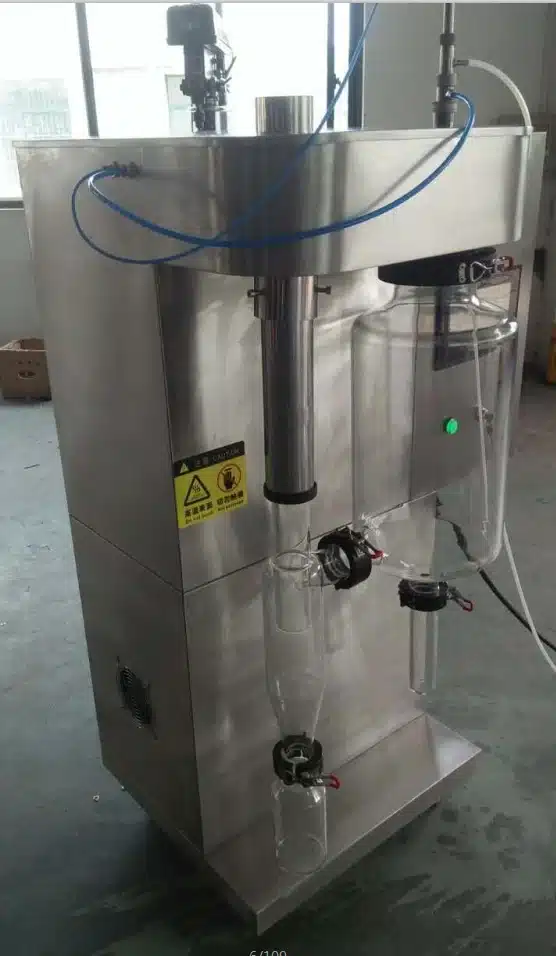
Pengering semburan makmal merupakan ahli terkecil dalam keluarga ini. Tujuannya bukan untuk menghasilkan kuantiti serbuk secara komersial — tetapi untuk menjawab soalan berkaitan kebolehlaksanaan dengan menggunakan bahan yang seminimum mungkin.
Kes penggunaan biasa:
- Menyaring pelbagai varian formulasi dalam tempoh masa yang singkat
- Bekerja dengan bahan aktif yang terhad (beberapa gram API, ekstrak bernilai tinggi, kelompok enzim yang kecil)
- Konsep permulaan sebelum sebarang pelaburan yang lebih besar
- Penyelidikan universiti dan akademik
Apa yang unit makmal lakukan dengan baik:
- Isipadu suapan yang rendah — kadangkala 30–500 mL setiap ujian
- Persediaan dan pertukaran yang pantas
- Pembersihan yang mudah antara formulasi
- Ruang yang padat untuk ruang makmal yang dikongsi
Apa yang tidak dilakukan dengan baik:
- Menghasilkan semula masa tinggal skala pengeluaran, sejarah titisan, dan tingkah laku dinding
- Menghasilkan kuantiti serbuk yang cukup besar untuk kajian kestabilan, sampel pelanggan, atau ujian pemprosesan hiliran
- Meramalkan lekatan dinding dan pengotoran yang hanya muncul selepas ujian yang lebih panjang
Kesilapan biasa adalah menganggap keputusan pengering semburan makmal secara automatik boleh dipindahkan kepada pengeluaran. Fizik pengeringan pada unit atas meja — kebuk yang kecil, masa tinggal yang singkat, kesan dinding yang dominan — tidak sama dengan menara perintis 25 kg/j atau menara pengeluaran 500 kg/j. Data makmal berguna, tetapi ia merupakan data penyaringan, bukan data peningkatan skala.
Pengering Semburan Perintis: Jambatan Antara Makmal dan Pengeluaran
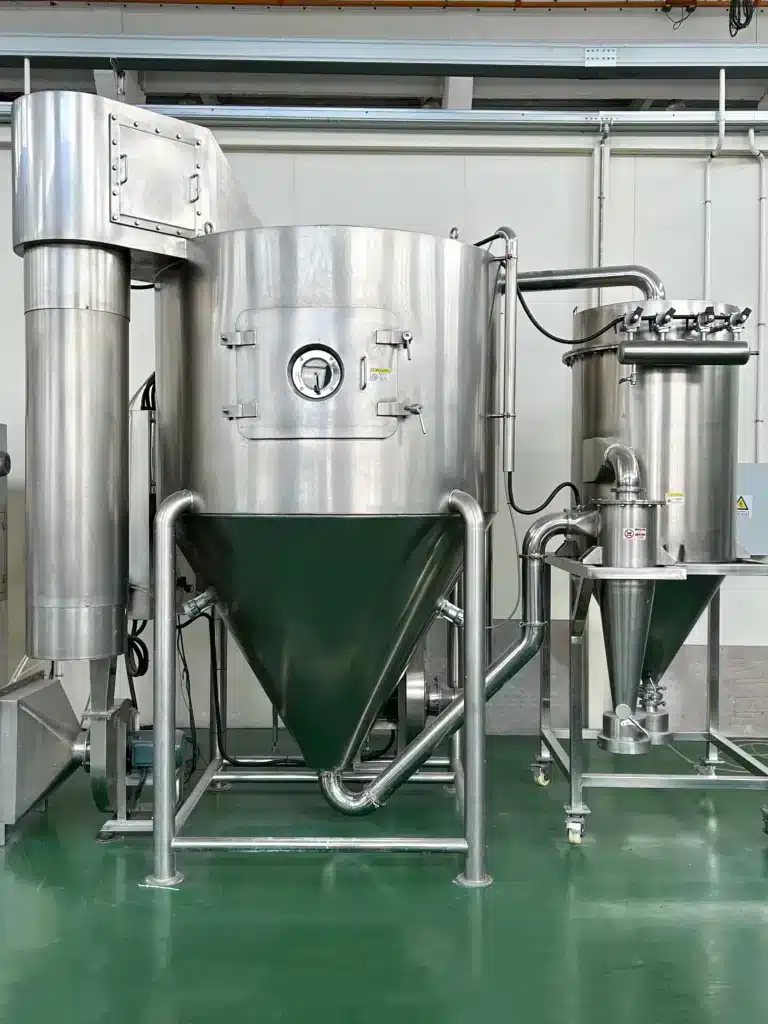
Pengering semburan perintis berada di antara makmal dan industri. Kapasitinya lebih besar daripada unit atas meja tetapi lebih kecil daripada menara pengeluaran. Intinya bukan kadar pengeluaran — tetapi keyakinan kejuruteraan.
Kes penggunaan biasa:
- Mengesahkan bahawa formulasi berskala makmal berkelakuan sama di bawah keadaan pengeringan yang lebih realistik
- Menghasilkan beberapa kilogram serbuk untuk penilaian pelanggan, kajian kestabilan, atau penyerahan pengawalseliaan
- Operasi berpanjangan (beberapa jam) untuk mengesan masalah lekatan dinding, gelinciran pemulihan, dan tingkah laku pam
- Menjana data yang membantu menentukan spesifikasi sistem berskala pengeluaran
Perkara yang dilakukan dengan baik oleh unit perintis:
- Fizik pengeringan yang lebih mewakili keadaan sebenar berbanding unit atas meja
- Operasi yang cukup panjang untuk mengenal pasti keadaan mantap (steady-state)
- Pilihan pemulihan berbilang peringkat untuk memodelkan hasil pengeluaran
- Tingkah laku pengatoman yang lebih realistik merentasi reka bentuk nozel dan emparan
Perkara yang tidak dapat digantikan olehnya:
- Ekonomi pengeluaran sepenuhnya — kos tenaga per kg, pengoperasian tenaga kerja, integrasi pembungkusan
- Corak aliran udara yang tepat bagi setiap geometri pengeluaran — data perintis masih memerlukan tafsiran yang teliti apabila skala ditingkatkan lagi
Peringkat perintis adalah tempat formulasi berubah daripada “ia kering” kepada “ia kering secara boleh dipercayai.” Melangkau peringkat ini adalah mungkin, tetapi projek yang melangkaunya cenderung menjadi projek yang akhirnya perlu mengubah suai semula (retrofit) barisan pengeluaran.
Untuk maklumat lanjut mengenai parameter yang perlu dioptimumkan semula semasa beralih daripada makmal ke perintis, sila rujuk panduan peningkatan skala dari makmal ke perintis.
Pengering Semburan Industri: Untuk Pengeluaran Komersial Rutin
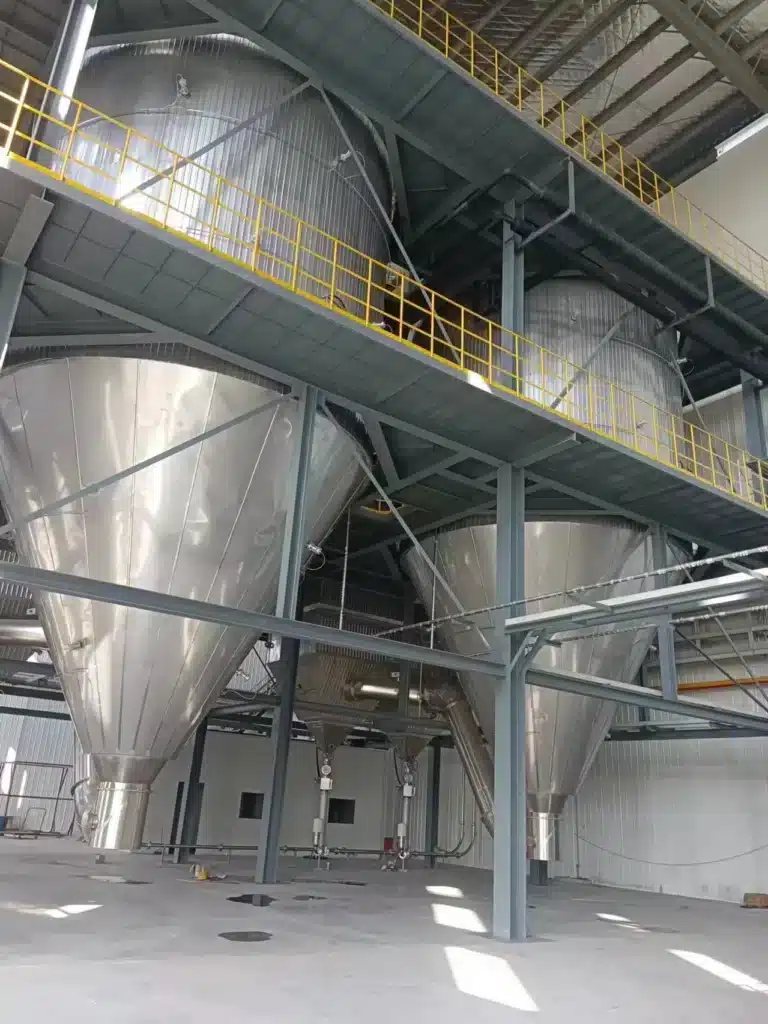
Pengering semburan industri merupakan tulang belakang pengeluaran. Kapasitinya diukur dalam puluhan, ratusan, atau ribuan kilogram penyejatan air per jam. Keutamaan reka bentuk beralih daripada fleksibiliti kepada kadar pengeluaran, kecekapan tenaga, dan masa operasi (uptime).
Kes penggunaan biasa:
- Pengeluaran rutin serbuk susu, formula bayi, kopi segera, detergen, prekursor katod, pemangkin, dan pelbagai produk lain yang dikeringkan secara semburan dalam jumlah besar
- Operasi berterusan dengan pertukaran yang terhad
- Integrasi dengan penyejatan huluan, pembungkusan hiliran, dan utiliti loji
Perkara yang dilakukan dengan baik oleh unit industri:
- Kos rendah per kilogram pada skala besar
- Operasi keadaan mantap yang sesuai untuk satu atau beberapa produk
- Pemulihan tenaga, integrasi haba, dan automasi yang sesuai untuk loji beroperasi 24/7
Perkara yang tidak dilakukan dengan baik olehnya:
- Kelompok kecil — saiz kelompok minimum yang ekonomik selalunya jauh lebih besar daripada keperluan pasukan pembangunan
- Perubahan formulasi yang kerap — pembersihan, kelayakan, dan pertukaran adalah mahal pada skala ini
- Pembangunan peringkat awal — pada masa projek mencapai skala industri, formulasi dan tetingkap proses sepatutnya sudah ditetapkan
Jika anda masih bertanya “adakah ini akan kering?”, anda belum bersedia untuk peralatan industri. Jika anda bertanya “bagaimana kita boleh menjadikan ini 5% lebih cekap tenaga?”, anda hampir pasti sudah bersedia.
Apa yang Sebenarnya Berubah Semasa Anda Meningkatkan Skala
Kapasiti adalah perbezaan yang jelas antara pengering semburan makmal, perintis, dan industri. Namun perbezaan yang lebih penting adalah dari segi fizik:
| Faktor | Makmal | Perintis | Industri |
|---|---|---|---|
| Isipadu kebuk | Kecil | Sederhana | Besar |
| Corak aliran udara | Ringkas, didominasi dinding | Lebih hampir dengan geometri pengeluaran | Geometri pengeluaran, sering dengan zon mati yang perlu diurus |
| Masa tinggal | Selalunya beberapa saat | Lebih lama, lebih hampir dengan pengeluaran | Ditetapkan oleh reka bentuk kebuk dan aliran gas |
| Kesan dinding | Dominan — setiap titisan “melihat” dinding | Dikurangkan tetapi masih ketara | Kebanyakannya dielakkan melalui geometri dan sapuan udara |
| Pilihan pengatoman | Selalunya satu muncung atau pengatom kecil | Beberapa pilihan pengatoman untuk pengujian | Satu sistem pengatoman yang dioptimumkan |
| Sistem pemulihan | Siklon atau penapis ringkas | Siklon + penapis, kadangkala scrubber | Berbilang peringkat, dioptimumkan untuk produk tertentu |
| Kekerapan pembersihan | Selalunya antara setiap larian | Berkala semasa kempen | Direka bentuk untuk kempen jangka panjang |
Implikasi praktikal: data tidak berskala secara linear. Formulasi yang memberikan pemulihan 95% pada unit atas meja mungkin memberikan 80% pada unit perintis, dan tetingkap operasi yang berbeza pada menara pengeluaran. Ini bukan kegagalan unit makmal — ini adalah sebab tepat mengapa unit makmal adalah alat penyaringan, bukan alat penskalaan naik.
Untuk penerangan lebih mendalam tentang butiran kejuruteraan penskalaan naik, lihat panduan penskalaan naik dan perbandingan pengatoman.
Cara Memilih Skala yang Tepat untuk Projek Anda
Skala yang tepat ditentukan oleh soalan yang anda cuba jawab, bukan oleh saiz bajet anda.
Pilih pengering semburan makmal jika:
- Anda sedang menyaring formulasi dan perlu membandingkan pilihan dengan cepat
- Anda mempunyai bahan yang terhad — gram, bukan kilogram
- Anda menjalankan kerja kebolehlaksanaan awal di mana tujuannya adalah “adakah ini berfungsi sama sekali?”
- Anda melatih operator atau menyokong penyelidikan akademik
Pilih pengering semburan perintis jika:
- Anda mempunyai formulasi calon dan perlu mengesahkan ia berkelakuan boleh diramal sepanjang larian yang lebih lama
- Anda memerlukan kilogram serbuk untuk sampel pelanggan, kajian kestabilan, atau kerja pengawalseliaan
- Anda sedang bersedia untuk menetapkan spesifikasi peralatan pengeluaran dan memerlukan data realistik untuk melakukannya
- Anda mahu mengenal pasti masalah lekatan dinding, isu pemulihan, dan hanyutan proses sebelum ia menjadi masalah pengeluaran
Pilih pengering semburan industri jika:
- Formulasi, pengatoman, pemulihan, dan tetingkap operasi anda telah disahkan pada peringkat perintis
- Anda mempunyai profil permintaan komersial yang mewajarkan talian pengeluaran
- Anda mempunyai infrastruktur huluan dan hiliran untuk menyokong operasi berterusan
Corak berguna yang diikuti oleh banyak pasukan: mulakan dengan kerja makmal untuk menyaring dan memilih; beralih ke kerja perintis untuk mengesahkan dan mengurangkan risiko; komited kepada industri hanya apabila projek sudah bersedia untuknya.
Kesilapan Umum Semasa Memilih Skala
Membeli unit yang lebih besar daripada keperluan projek. Pengering perintis 30 kg/h tidak “lebih baik” daripada pengering makmal 1 kg/h jika anda menyaring formulasi dengan 200 mL bahan. Ia hanya lebih mahal dan kurang efisien untuk dibersihkan.
Membeli unit yang lebih kecil daripada keperluan projek. Pengering makmal tidak dapat memberitahu anda apa yang akan berlaku semasa larian perintis selama 8 jam. Cubaan untuk membuatnya berbuat demikian membawa kepada kesimpulan yang salah tentang penskalaan naik.
Menganggap data makmal sebagai data penskalaan naik. Pengering semburan makmal sangat baik untuk membanding kedudukan formulasi antara satu sama lain. Ia tidak direka untuk meramalkan hasil pengeluaran, gelagat partikel dari semasa ke semasa, atau pengotoran dinding dalam kebuk yang lebih besar.
Melangkau peringkat perintis. Melangkah terus dari makmal ke industri adalah mungkin untuk formulasi yang sangat mudah, tetapi ia membawa risiko sebenar. Kos ujian perintis biasanya hanyalah sebahagian kecil daripada kos mengubah suai talian pengeluaran yang tidak berfungsi seperti yang diharapkan.
Soalan Lazim
Apakah perbezaan antara spray dryer makmal dan perintis?
Spray dryer makmal adalah kategori paling kecil, direka untuk penyaringan formulasi peringkat awal dengan jumlah sampel yang sangat kecil — selalunya serendah 30–500 mL setiap larian, dengan kapasiti penyejatan air sehingga kira-kira 1–2 kg/j. Spray dryer perintis lebih besar, direka untuk larian kejuruteraan yang lebih panjang dan pengesahan pra-pengeluaran, biasanya dengan kapasiti penyejatan air sekitar 2–30 kg/j. Istilah-istilah ini kadangkala digunakan secara bertukar ganti dalam perbualan biasa, tetapi ia menggambarkan peringkat kerja projek yang berbeza.
Bolehkah spray dryer perintis menggantikan spray dryer makmal?
Dalam sesetengah keadaan, ya — terutamanya jika projek anda telah melangkah melebihi peringkat penyaringan awal dan anda boleh menerima penggunaan bahan yang lebih tinggi setiap larian. Untuk penyaringan formulasi peringkat awal dengan bahan yang terhad, unit makmal sebenar biasanya lebih efisien.
Sebesar manakah spray dryer industri berbanding perintis?
Spray dryer industri biasanya beroperasi pada kapasiti penyejatan 50 kg/j hingga beberapa ribu kg/j. Spray dryer tenusu dan makanan komersial yang terbesar boleh menyejat berpuluh ribu kg/j air. Jurang antara perintis dan industri jauh lebih besar berbanding jurang antara makmal dan perintis.
Apa yang berlaku jika saya melangkah terus dari makmal ke industri?
Untuk formulasi yang mudah dan telah difahami dengan baik, ini boleh berjaya. Bagi kebanyakan produk — apa-apa yang sensitif terhadap haba, melekit, higroskopik, atau melibatkan pelbagai komponen — kekurangan pengesahan perintis biasanya akan terserlah sebagai lekatan pada dinding, kadar perolehan yang lebih rendah daripada jangkaan, atau ketidaksepadanan sifat partikel apabila pengeluaran bermula. Penyelesaiannya hampir selalu lebih mahal berbanding kos ujian perintis.
Adakah pengeringan semburan industri sentiasa lebih cekap berbanding perintis?
Bagi setiap kilogram produk, ya — spray dryer industri mendapat manfaat daripada penyepaduan haba, penggunaan tenaga spesifik yang lebih rendah, dan operasi berterusan. Bagi setiap projek, tidak — peralatan industri kurang sesuai untuk kempen jangka pendek, perubahan formulasi yang kerap, atau kerja pembangunan.
Adakah Sinothermo menawarkan ketiga-tiga kategori tersebut?
Ya. Sinothermo mengeluarkan spray dryer makmal, perintis, dan industri merentasi konfigurasi emparan, nozel tekanan, litar tertutup, dan ekstrak. Untuk maklumat produk yang lebih terperinci, sila lihat kategori produk spray dryer.
Memilih Skala yang Tepat untuk Projek Anda Seterusnya
Perbezaan makmal–perintis–industri bukanlah sekadar strategi pemasaran. Ia menggambarkan perbezaan sebenar dalam fizik kebuk, peringkat projek, dan ekonomi. Pasukan yang memilih skala yang tepat pada masa yang tepat cenderung untuk beralih daripada formulasi kepada pengeluaran dengan lebih pantas — dan dengan lebih sedikit kejutan di sepanjang perjalanan.
Tidak pasti skala manakah yang sesuai untuk projek anda pada masa ini? Pasukan kejuruteraan kami telah menyokong projek merentasi ketiga-tiga kategori, daripada penyaringan formulasi peringkat awal hinggalah pemasangan pengeluaran sepenuhnya. Hubungi kami untuk konsultasi percuma — kami akan membincangkan peringkat pembangunan, ciri-ciri bahan, dan jangka masa anda, serta membantu anda menentukan peralatan yang tepat tanpa membeli secara berlebihan atau kurang.
Untuk aplikasi khusus spray dryer makmal dan perintis merentasi pelbagai industri, sila lihat panduan aplikasi.

Mark Gu
Passionate about enhancing customer experiences and streamlining operations, Mark focuses on building strong relationships, fostering innovation, and leading teams to achieve exceptional service and efficiency.
Emel: mark.gu@sinothermo.com
Telefon: +86 18021972660