Battery Material Drying & Thermal Processing — Lithium and Sodium-Ion
SINOTHERMO builds the drying, calcination, granulation and milling equipment behind battery materials — for precursor, cathode and anode material makers, lithium and sodium salt producers, and black-mass recyclers, plus in-plant waste treatment and R&D pilot lines for cell manufacturers. One equipment family covers lithium chemistries (NCM, NCA, LFP, graphite, Si-C) and extends to sodium-ion streams — layered oxides, polyanion cathodes, Prussian-blue analogs, hard carbon and NaPF₆.
0+
Years of process engineering
0
Equipment series, one supplier
O₂ < 500 ppm
N₂ closed-loop inert drying (design value)
< 20 ppb
Magnetic-impurity target, battery-grade Li salts
Who We Serve
Battery Materials, Salts and Recycling — Not Electrode Coating
Battery cells are made from dry powders, and those powders are made by material plants — that is where our equipment works. Knowing exactly what we do (and don't do) saves you time.
Battery Material Makers — Our Core
Precursor (pCAM), cathode (CAM) and anode material plants: co-precipitated hydroxides, iron phosphate, LFP/NCM/NCA powders, graphite, silicon-carbon and hard carbon — from filter-cake dewatering to calcination and final ppm-grade drying.
Recyclers & Salt Producers
Black-mass recyclers and lithium/sodium salt plants: solvent-laden black mass with electrolyte recovery, recovered sulphates and hydroxide intermediates, battery-grade Li₂CO₃ and LiOH·H₂O with CO₂-sealed, iron-free handling.
Cell Makers — Two Specific Scopes
Inside the cell plant we serve two niches: thermal treatment of production solid waste (scrap electrodes, waste powder) and R&D / pilot-line drying. Electrode coating dryers and dry-room dehumidification are different trades — we will tell you honestly.
How It Works
From Wet Feed to Battery-Grade Powder
Wet precursor streams enter as slurry, filter cake or black mass; the right combination of drying and thermal steps turns them into the dry, uniform powders the electrode line needs.
Feed 进料
- Slurry
- Filter cake
- Wet powder
- Black mass
Drying & Process 干燥与工序
- Spray / Flash Dryer
- Paddle / Rake Dryer
- Vacuum Rotary Dryer
- Fluid Bed + Disc Dryer
- Rotary Kiln
Finished 成品
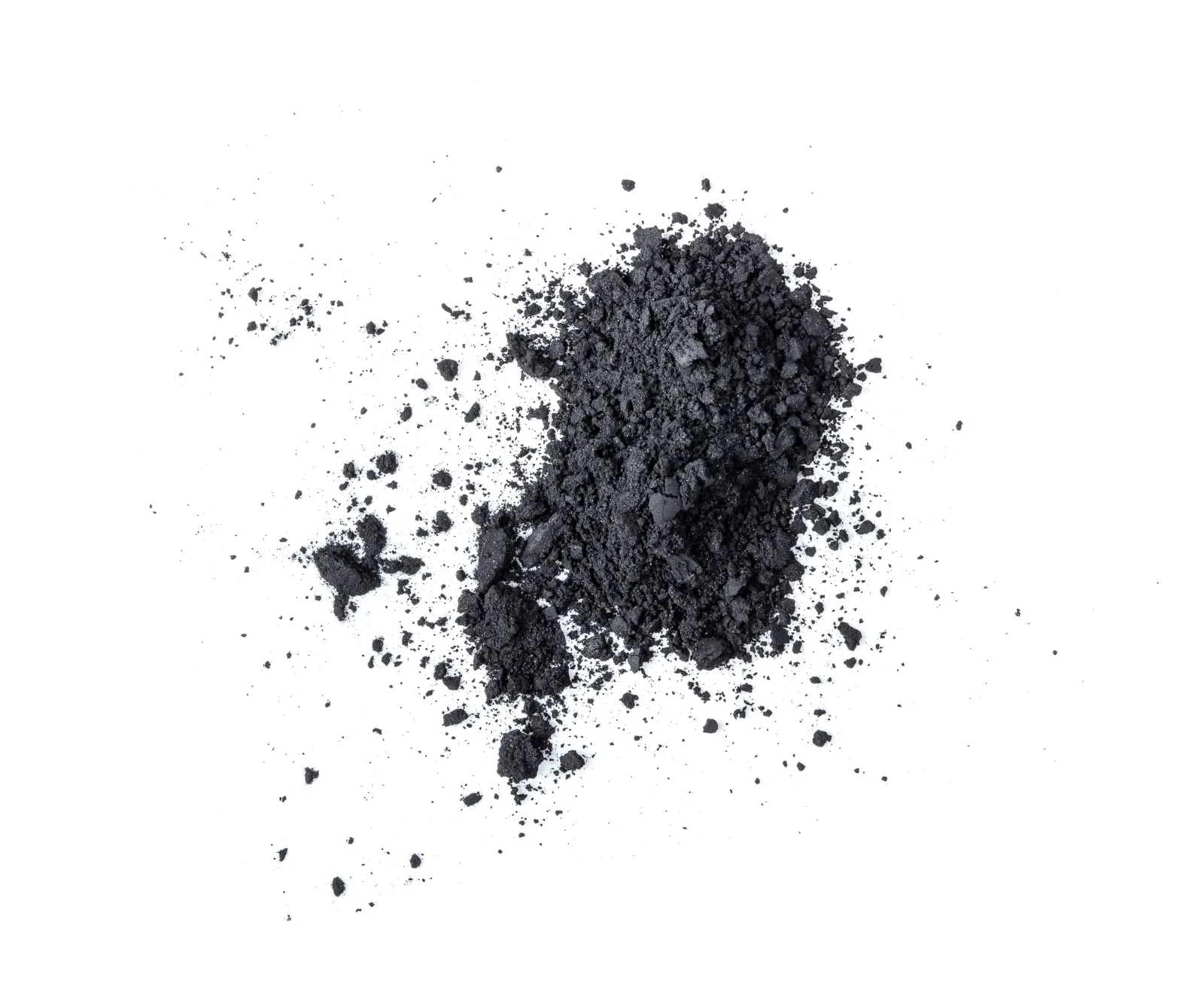
- pCAM / CAM
- LFP / C
- Graphite / Si-C
- Recovered metals
One Partner, Full Process Chain
Every Thermal Step Under One Roof
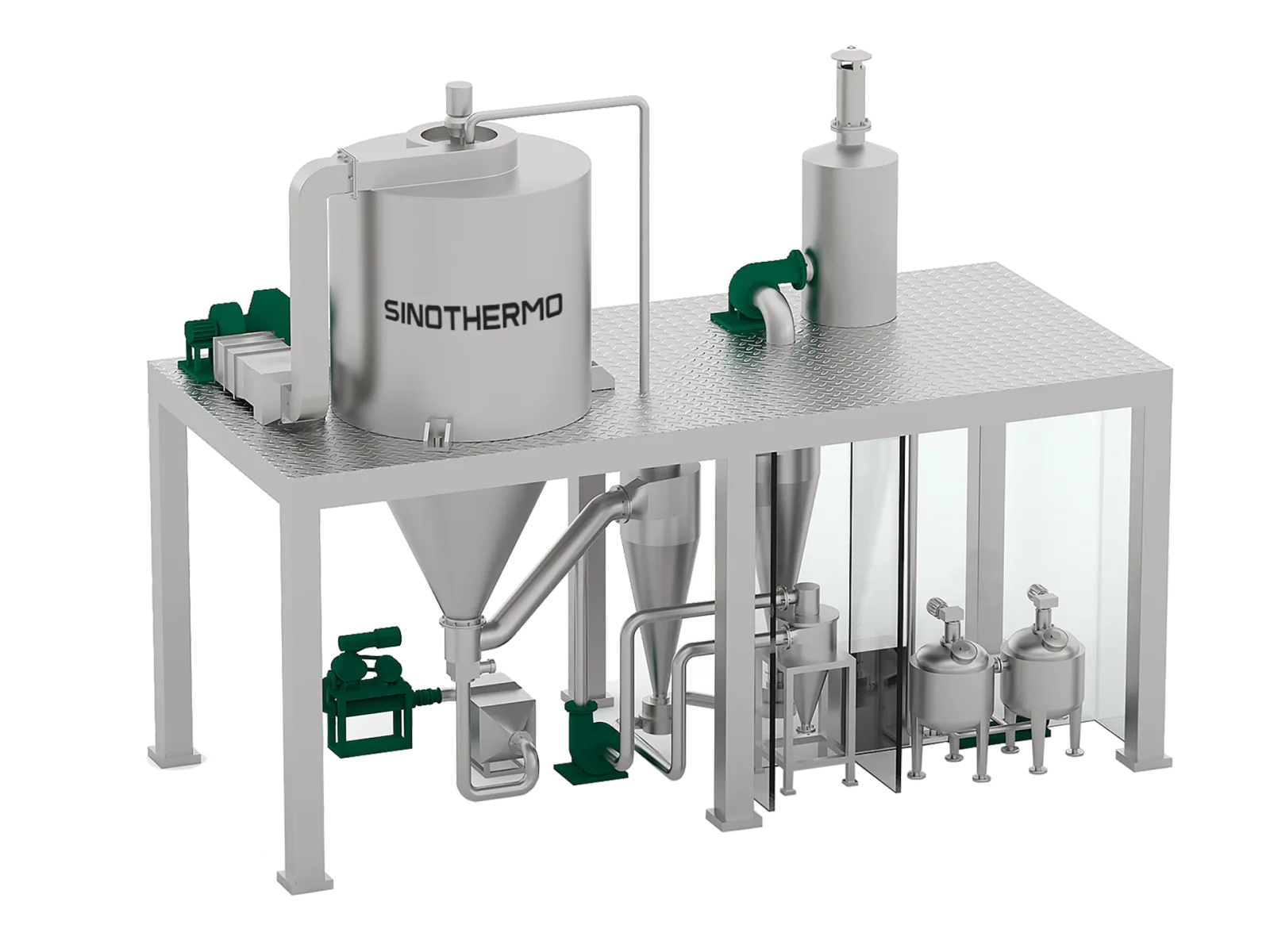
Battery materials pass through mixing, spray drying, heat treatment, milling and final drying before they reach the electrode line. SINOTHERMO covers every thermal and powder-handling step with equipment engineered to work together.
01
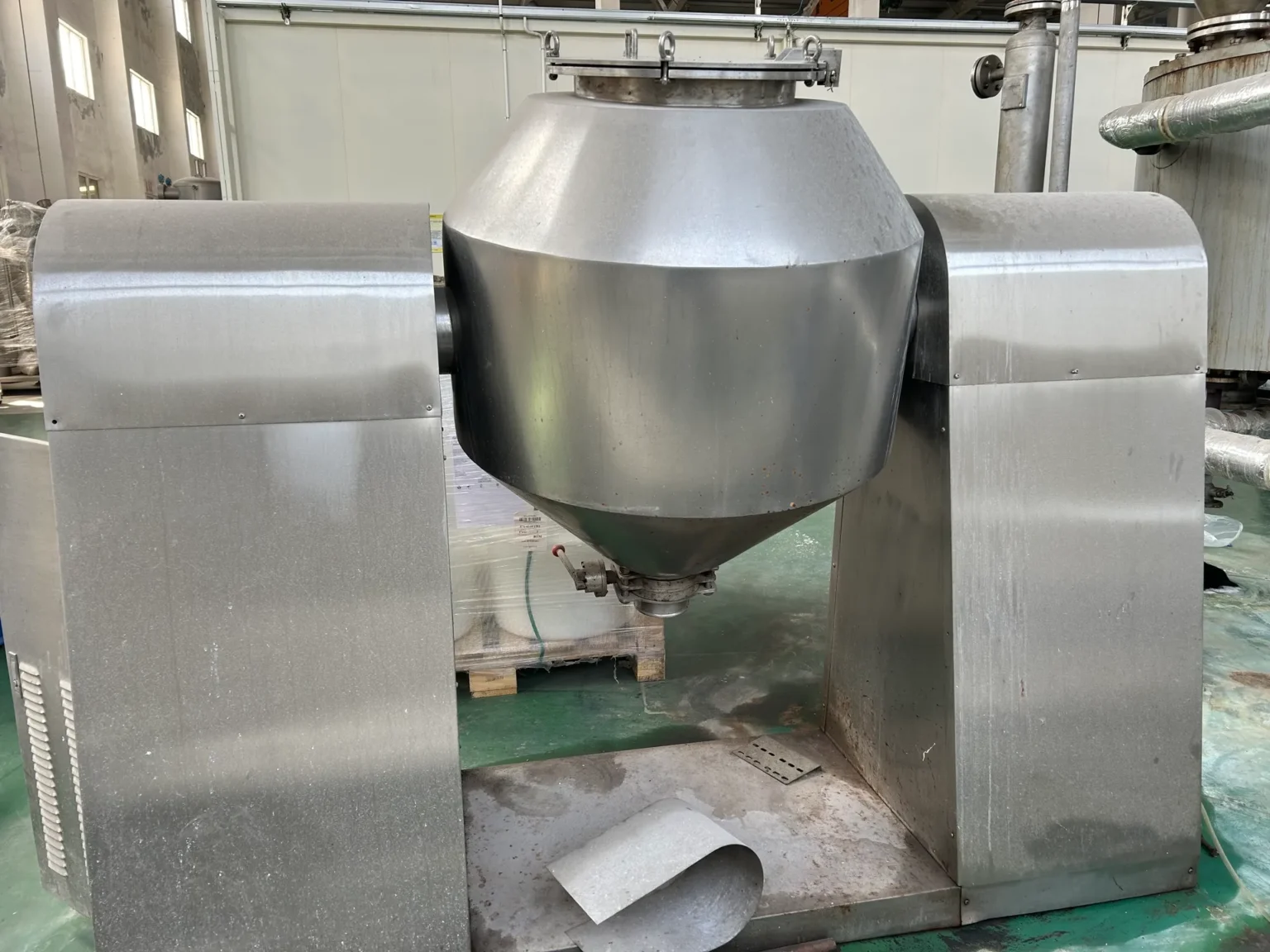
Mixing & Slurry Preparation
Rotary drum, ribbon and conical mixers homogenize precursor powders and additives into consistent, well-dispersed feeds before wet processing.
02
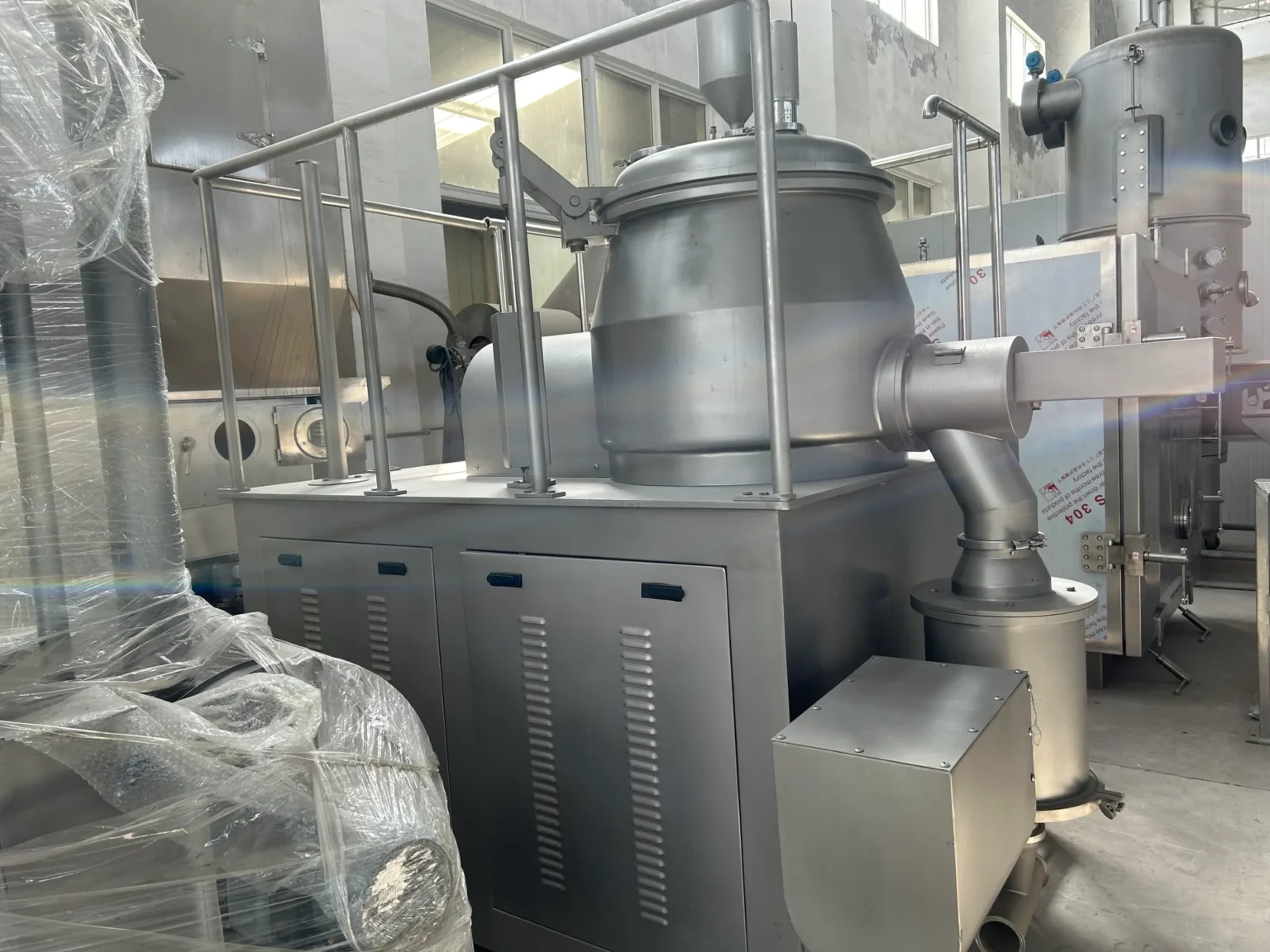
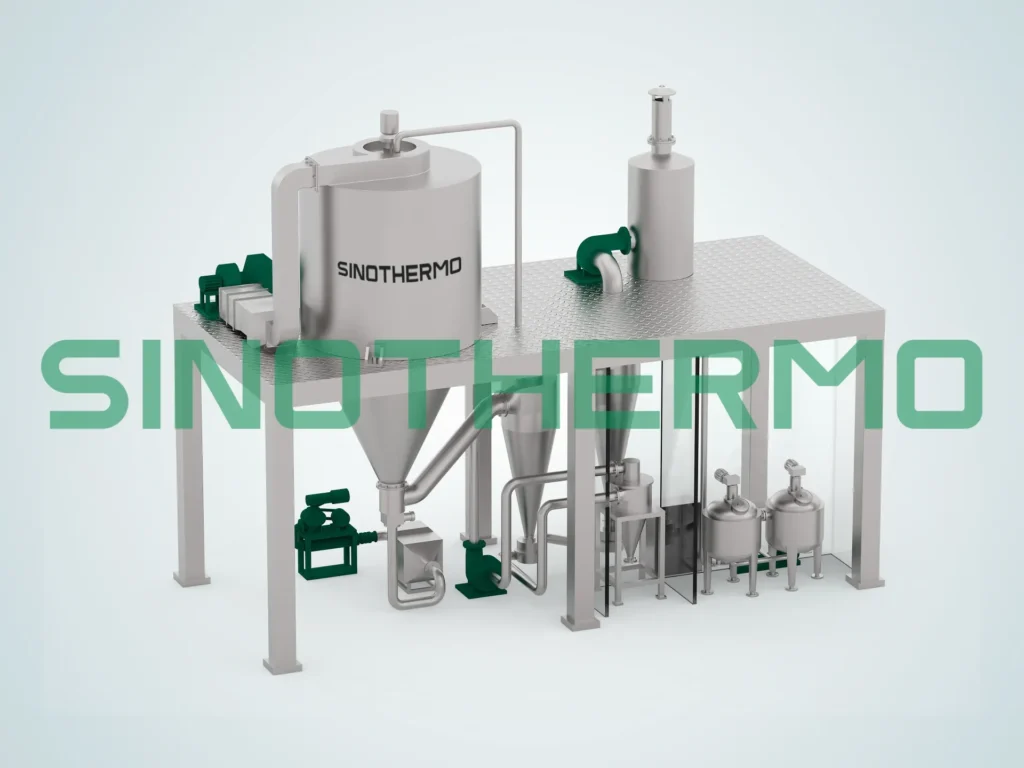
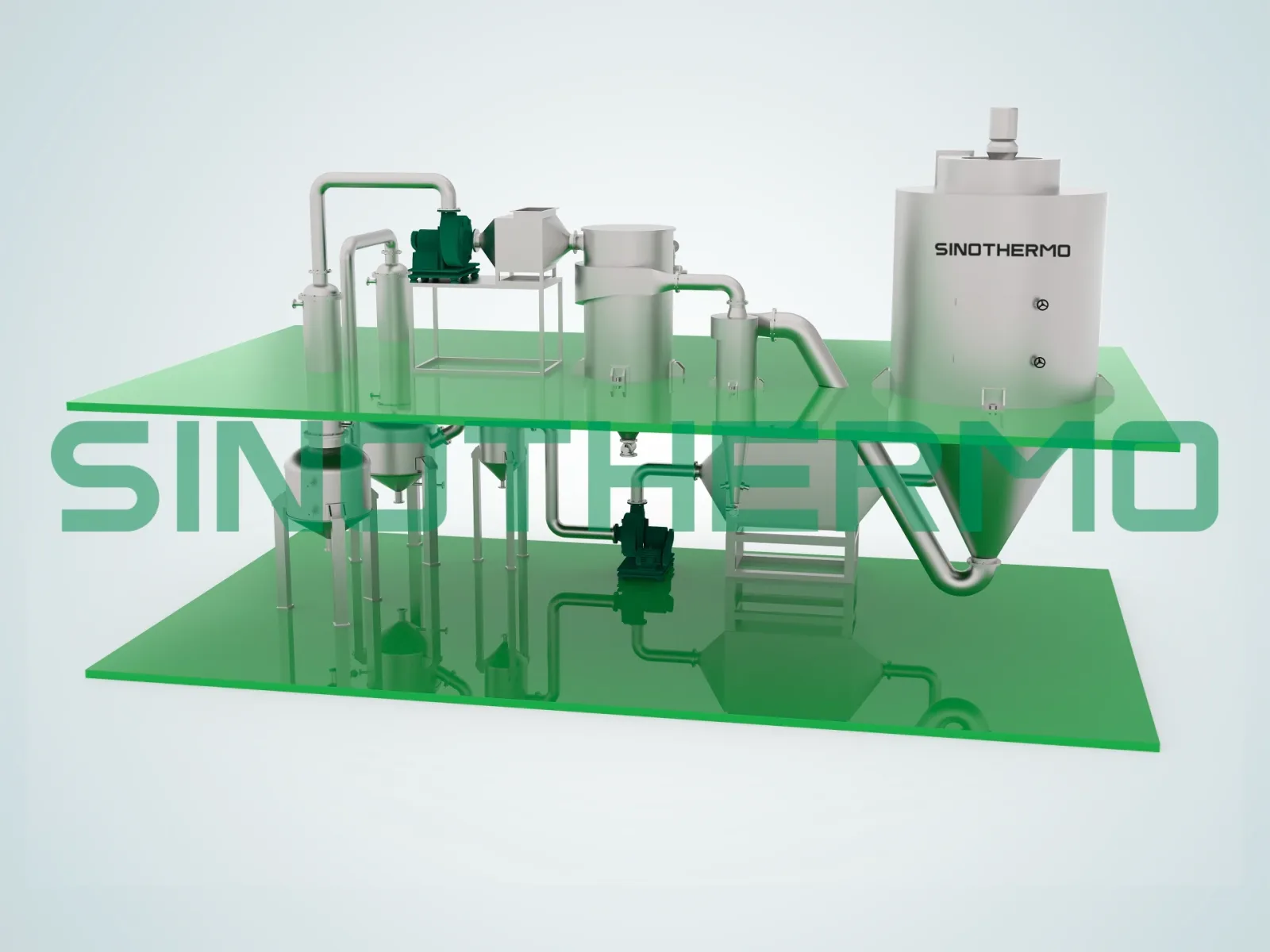
Spray Drying & Granulation
Centrifugal and pressure spray dryers convert precursor slurries and solutions into uniform spherical powders — the particle size, morphology and moisture that electrode performance depends on.
03
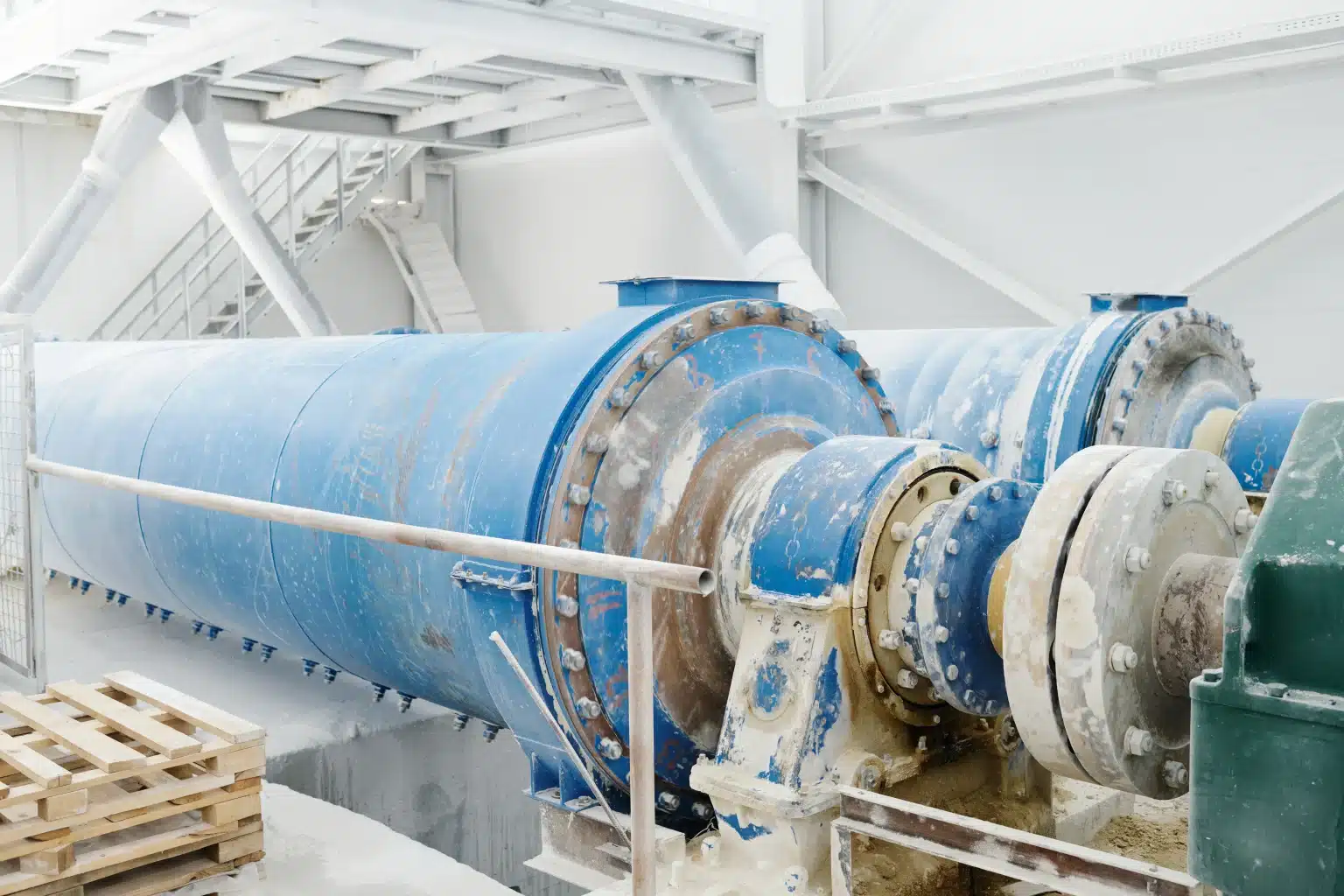
Continuous Drying & Heat Treatment
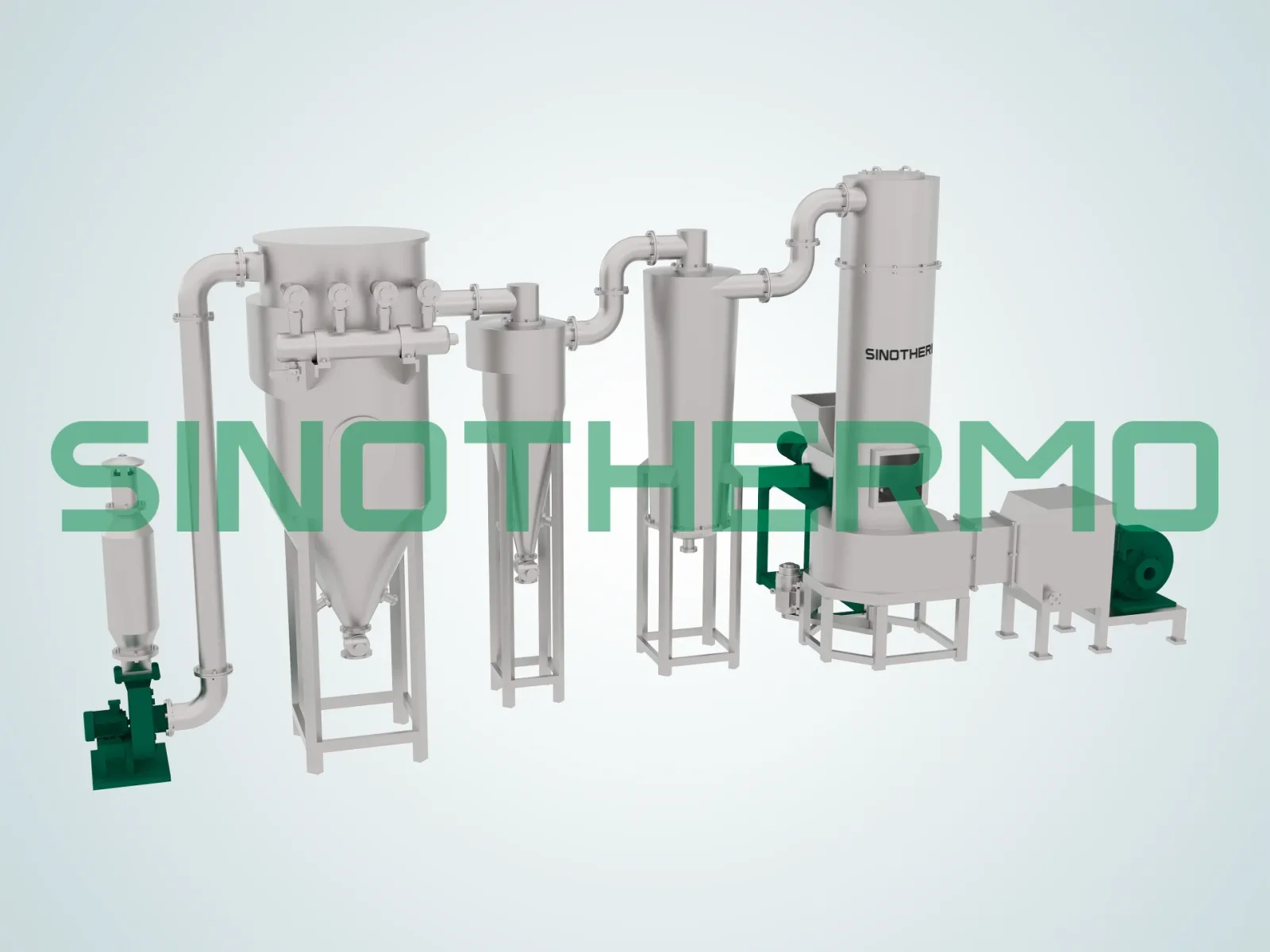
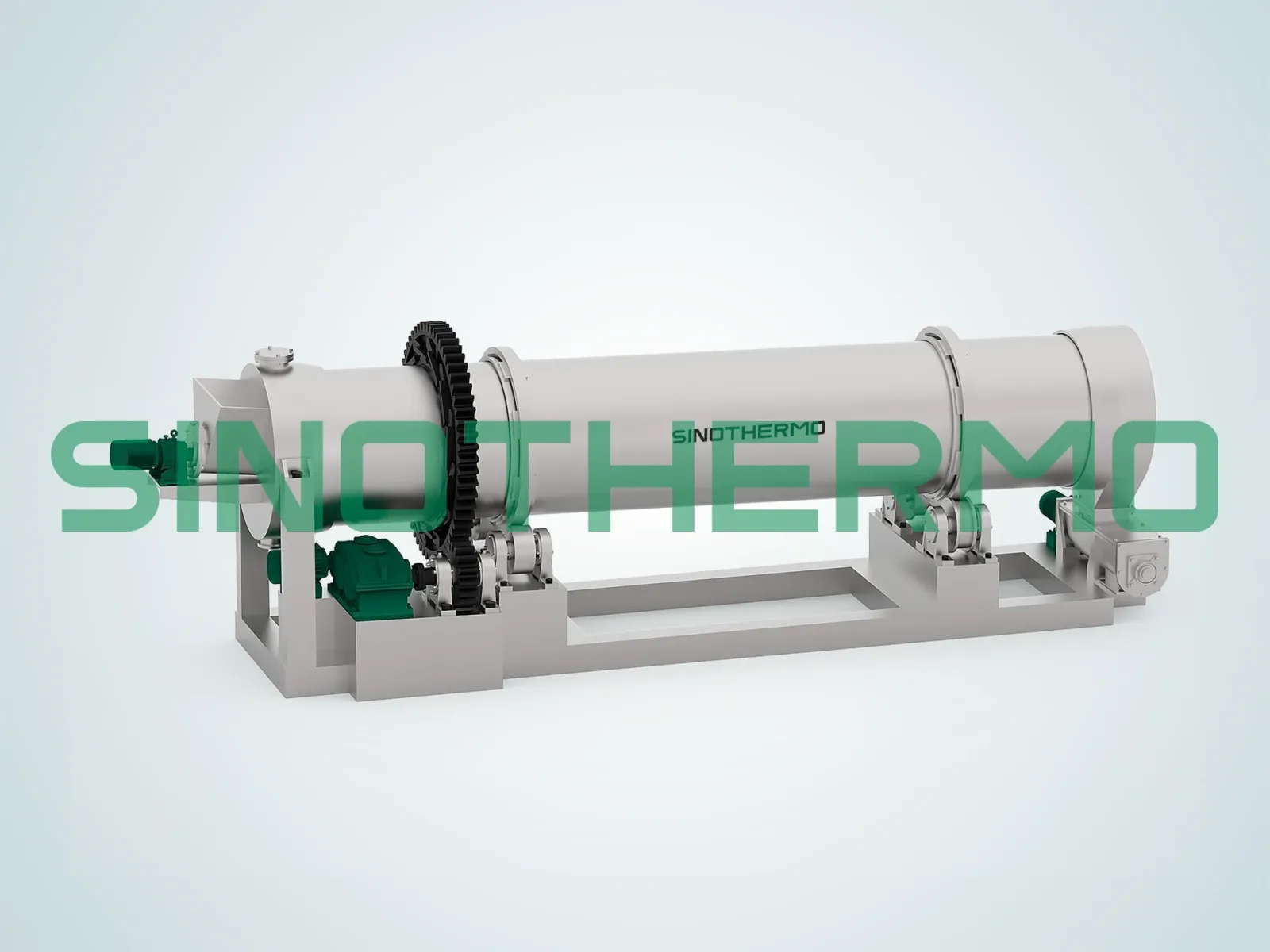
Rotary kilns tumble granular material through hot air with adjustable 1–10 RPM speed and residence time — continuous, high-throughput drying and heat treatment at inlet temperatures up to 350°C.
04
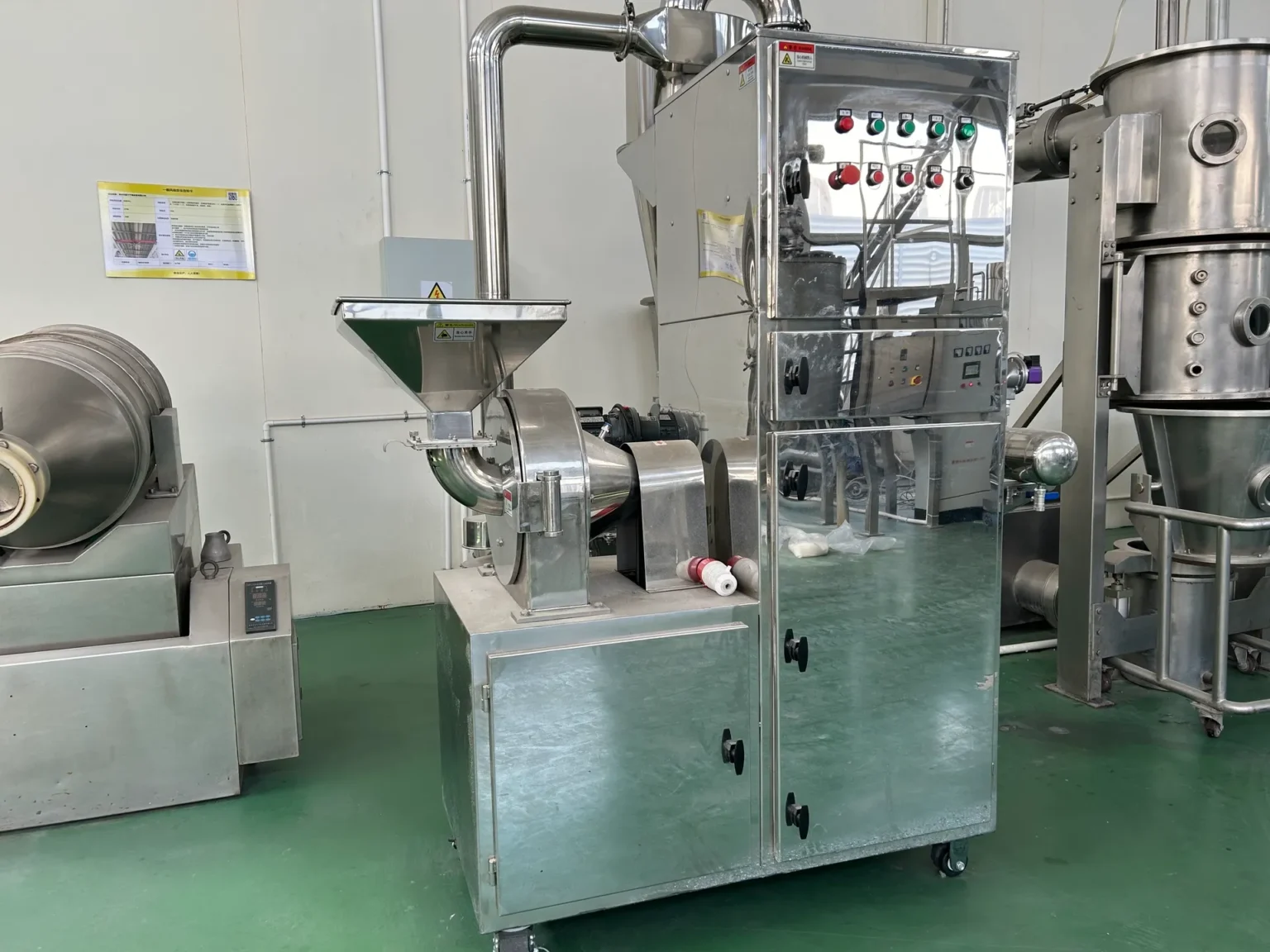
Milling & Classification
Impact pulverizers reduce material to a controlled 80–450 mesh, restoring a fine, consistent particle distribution after upstream processing.
05
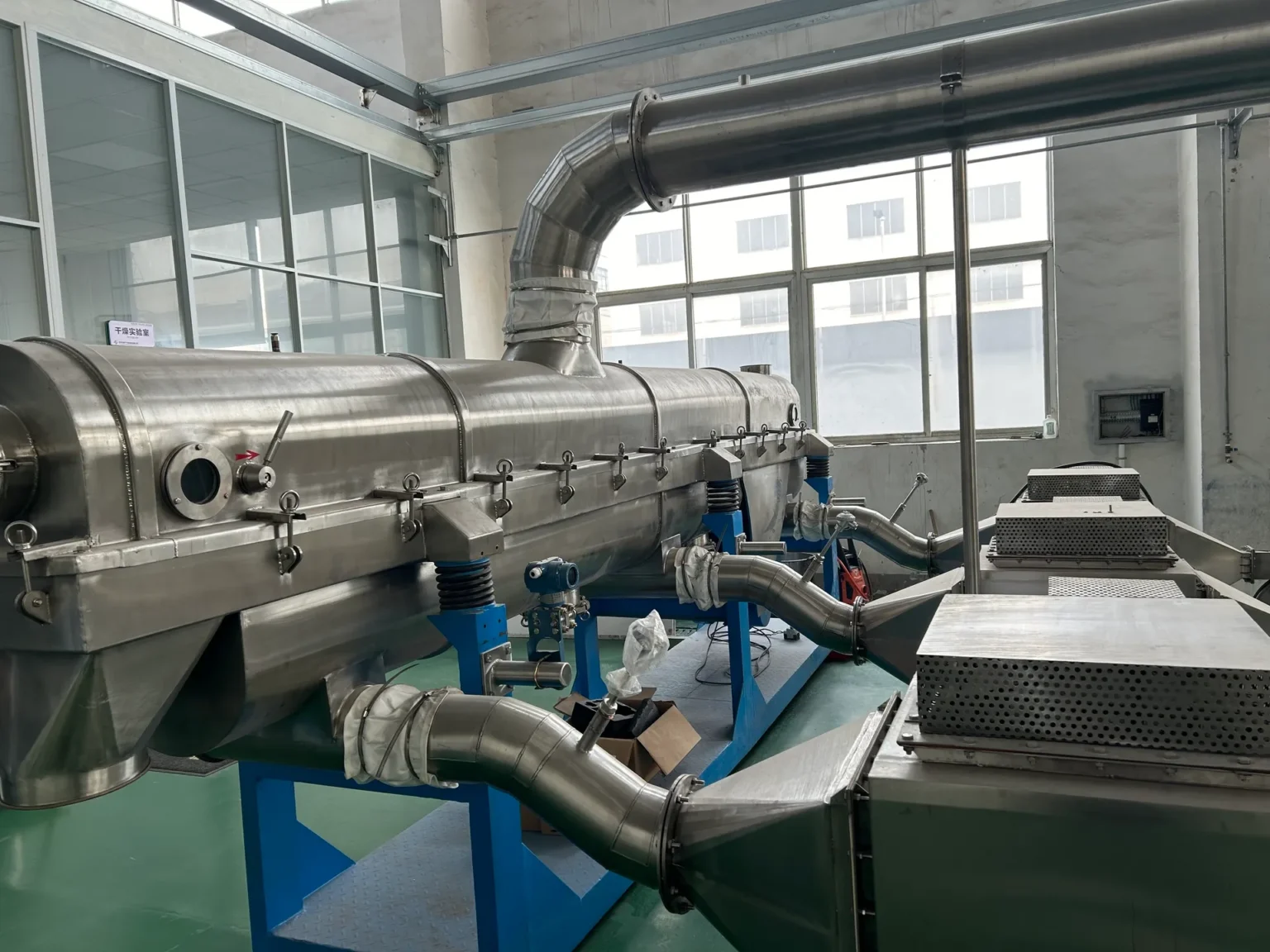
Powder Drying & Cooling
Fluidized bed dryers gently dry and cool lithium salts and finished powders to stable moisture for safe packing, storage and transport.
What Makes Battery Drying Hard
Eight Core Challenges in Battery Material Drying
Lithium and sodium chemistries share five demanding constraints — and sodium-ion adds three of its own. Every SINOTHERMO battery-material dryer is specified against this list.
01
Thermal Sensitivity
Low-temperature, gentle drying protects crystal structure, BET surface area and particle morphology — overheating coarsens particles and destroys electrochemical performance.
02
Oxidation → Inert Gas
High-nickel precursors, carbon-coated LFP, silicon-carbon and black mass oxidise in hot air. N₂ protection with O₂ below 500 ppm in spray circuits, down to 20–100 ppm at calcination.
03
Metallic Contamination
Battery-grade magnetic impurity is specified at ppb level (LiOH·H₂O typically < 20 ppb). Iron-free contact parts in SUS304/316L plus multi-stage magnetic separation.
04
Dust Explosion
Graphite, carbon and black-mass fines are combustible and electrically conductive. Explosion venting and suppression designed to EN 14491 / EN 14373, with N₂ inerting and anti-static grounding.
05
Ultra-Low Residual Moisture
Cathode targets of 80–100 ppm and anode below 50 ppm. Residual water damages the SEI layer, generates HF, causes gassing and can trigger thermal runaway.
06
HCN Off-Gas — PBA (Sodium)
Prussian-blue analog cathodes release HCN above ~200°C. Activation drying must stay at or below a hard 180°C product-temperature limit, under dynamic vacuum with HCN monitoring and alkaline scrubbing.
07
HF Hydrolysis — NaPF₆ (Sodium)
Trace water hydrolyses NaPF₆ to HF and POF₃. Two-stage vacuum drying to KF ≤ 50 ppm in corrosion-resistant contact materials, with HF off-gas scrubbing.
08
High-T Inert Carbonization (Sodium)
Hard-carbon anodes carbonize at 1000–1400°C under N₂/Ar with O₂ below 10 ppm — indirect-heating kilns keep combustion gases away from the powder.
Lithium Battery Materials
Material × Equipment Quick-Reference — Lithium
Typical drying targets, temperature windows and atmospheres for the main lithium-battery material streams, with the SINOTHERMO equipment normally selected for each. Exact parameters are confirmed by material testing.
| Material | Target | Temperature | Atmosphere | Preferred Equipment |
|---|---|---|---|---|
| NCM/NCA precursor (pCAM) | before calcination | 150–180°C | N₂ | Spray Dryer · Vacuum Paddle/Rake · Spin Flash Dryer |
| NCM/NCA cathode (CAM) | ppm-grade | 150–180°C · calcine 700–1000°C | N₂ | Vertical Disc Dryer · Rotary Kiln |
| Iron phosphate FePO₄·2H₂O | remove 2H₂O | 200–300°C | Air / N₂ | Spin Flash · Vacuum Rake · Disc · Rotary Kiln |
| LFP finished LiFePO₄/C | spheroidised granules | spray outlet ~125°C · calcine | N₂ / Ar | Spray Granulation (LPG/YPG/GXP) · Rotary Kiln |
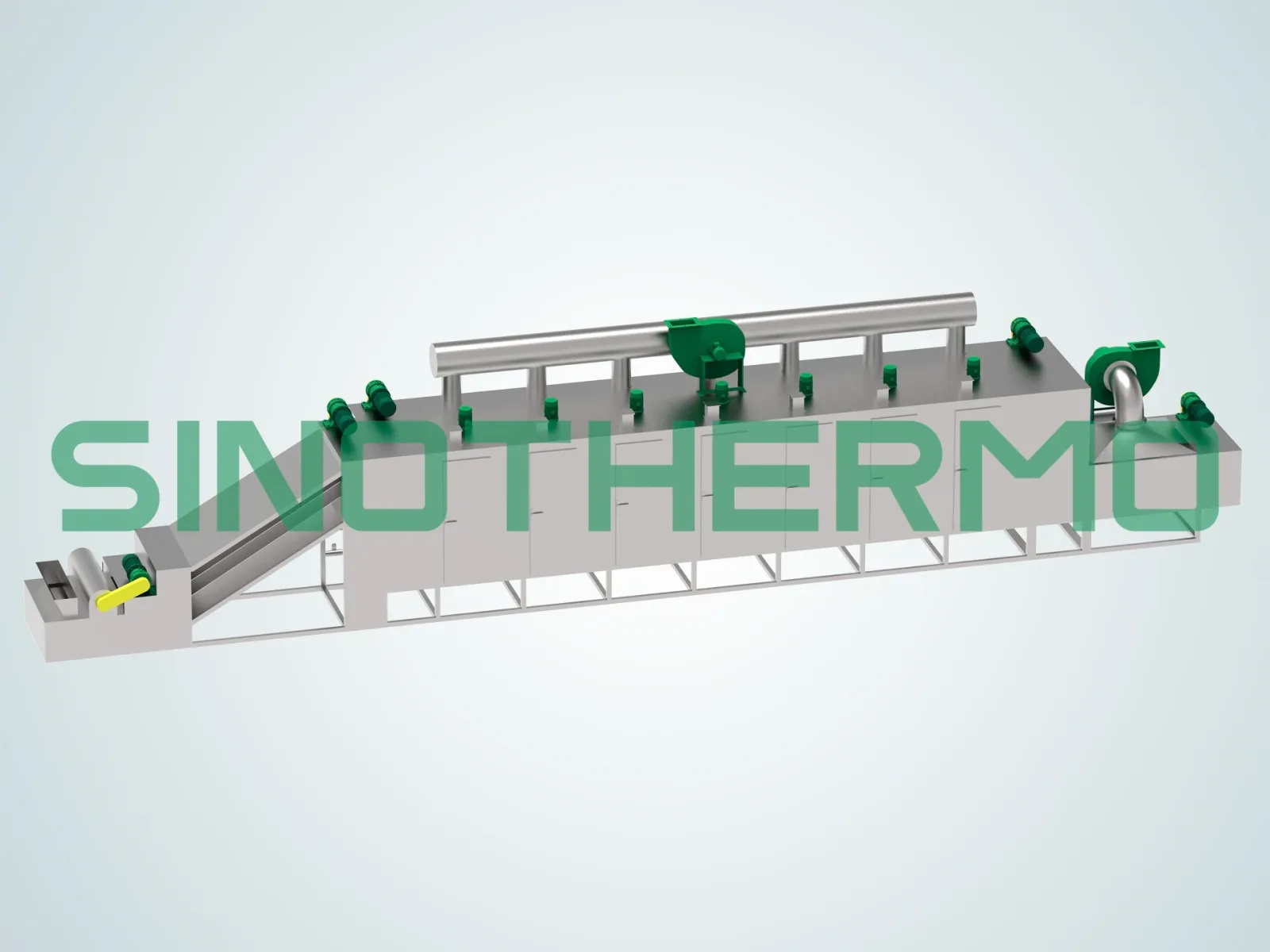
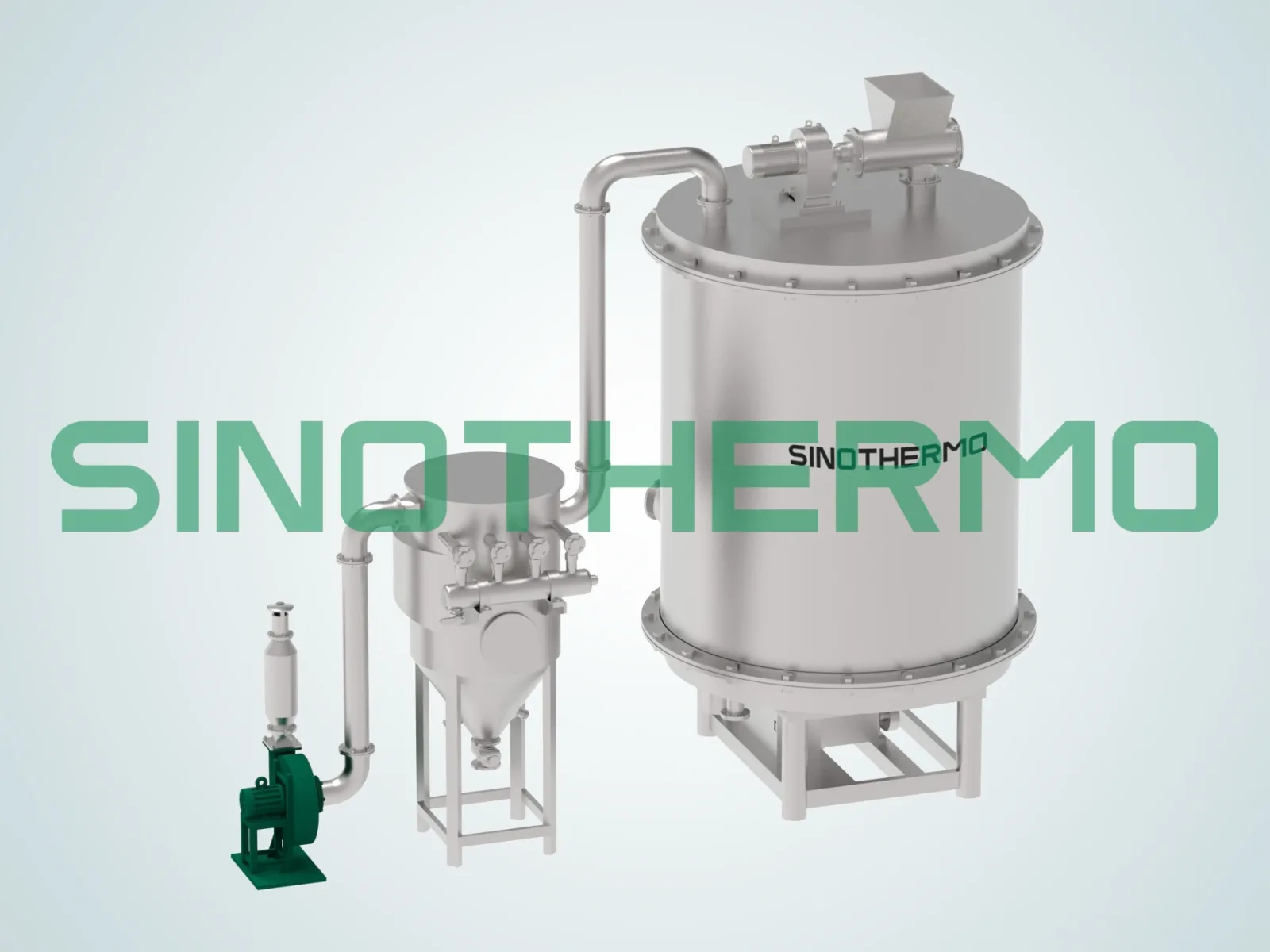
| Graphite / Si-C anode | < 50 ppm | 110–130°C | N₂ / explosion-proof | Fluid Bed + Vacuum Disc · Belt Dryer · Rotary Kiln |
| Black mass (recycling) | low + solvent recovery | ≤ 200°C vacuum (up to 650°C) | N₂ + vacuum | Vacuum Paddle/Rake · Double Cone · Rotary Kiln |
| Production waste (scrap electrodes, powder) | binder burnout / pyrolysis | 300–800°C | N₂ / vacuum, low-O₂ | Electrically Heated Indirect Rotary Kiln |
| Waste-powder re-granulation | D50 200–500 μm | ambient | air | Oscillating Granulator · Roller Compactor |
| Li₂CO₃ / LiOH·H₂O salts | battery-grade, < 20 ppb magnetic | LiOH 80–95°C · anhydrous 300–450°C | N₂ + CO₂-seal | Sealed Disc/Plate · Rake/Paddle · Fluid Bed |
Sodium-Ion Battery Materials
Sodium-Ion (SIB) Drying: The Lithium Playbook, Stricter Rules
Sodium-ion cathodes are produced with the same co-precipitation → drying → calcination sequence as lithium chemistries, and drop-in polyanion cathodes (NVP, NVPF, NFPP, NFS) run on LFP-type spray-granulation lines. The drying envelope, however, is stricter in three places: Prussian-blue analogs must stay below a hard 180°C limit with HCN off-gas scrubbing, NaPF₆ hydrolyses to HF on trace moisture, and hard carbon carbonizes at 1000–1400°C under oxygen-free inert gas. The same SINOTHERMO equipment family that dries lithium materials covers six of the eight core sodium material streams end-to-end.
| Material | Target | Temperature | Atmosphere | Preferred Equipment |
|---|---|---|---|---|
| Layered-oxide precursor | < 0.5 wt% | ~120°C | N₂ / vacuum | Vacuum Paddle/Rake · Double-Cone |
| Layered-oxide cathode (CAM) | ppm-grade | calcine 800–950°C · rebake 200–300°C | O₂ / dry air, then N₂ | Rotary Kiln · Vacuum Paddle |
| Prussian white (PBA) | ~2 wt% activated | 120–180°C (≤ 180°C hard limit) | vacuum + N₂ | Vacuum Paddle/Rake + HCN scrubber |
| Polyanionic NVP · NVPF · NFPP · NFS | spheroidised granules | spray outlet ~90°C · calcine 500–900°C | Ar (Ar/H₂ for NVPF) | Spray Dryer · Rotary Kiln (Ar) |
| Hard-carbon carbonization | d₀₀₂ control | 1000–1400°C | N₂/Ar, O₂ < 10 ppm | Indirect-Heating Rotary Kiln |
| Hard-carbon powder finish | < 200 ppm electrode-grade | 120–200°C vacuum | N₂ + vacuum, LOC O₂ < 8% | Vacuum Double-Cone · Fluid Bed |
| NaPF₆ electrolyte salt | KF ≤ 50 ppm | 120–180°C → 60–100°C vacuum > 12 h | N₂ → vacuum | Vacuum Conical/Paddle + HF scrubber |
Also handled: NaFSI / NaTFSI electrolyte salts, Na₂CO₃ and NaOH·H₂O precursor salts with CO₂-sealed, iron-free drying — contact us with your material specification.
Key Equipment
The Machines Behind Battery Materials
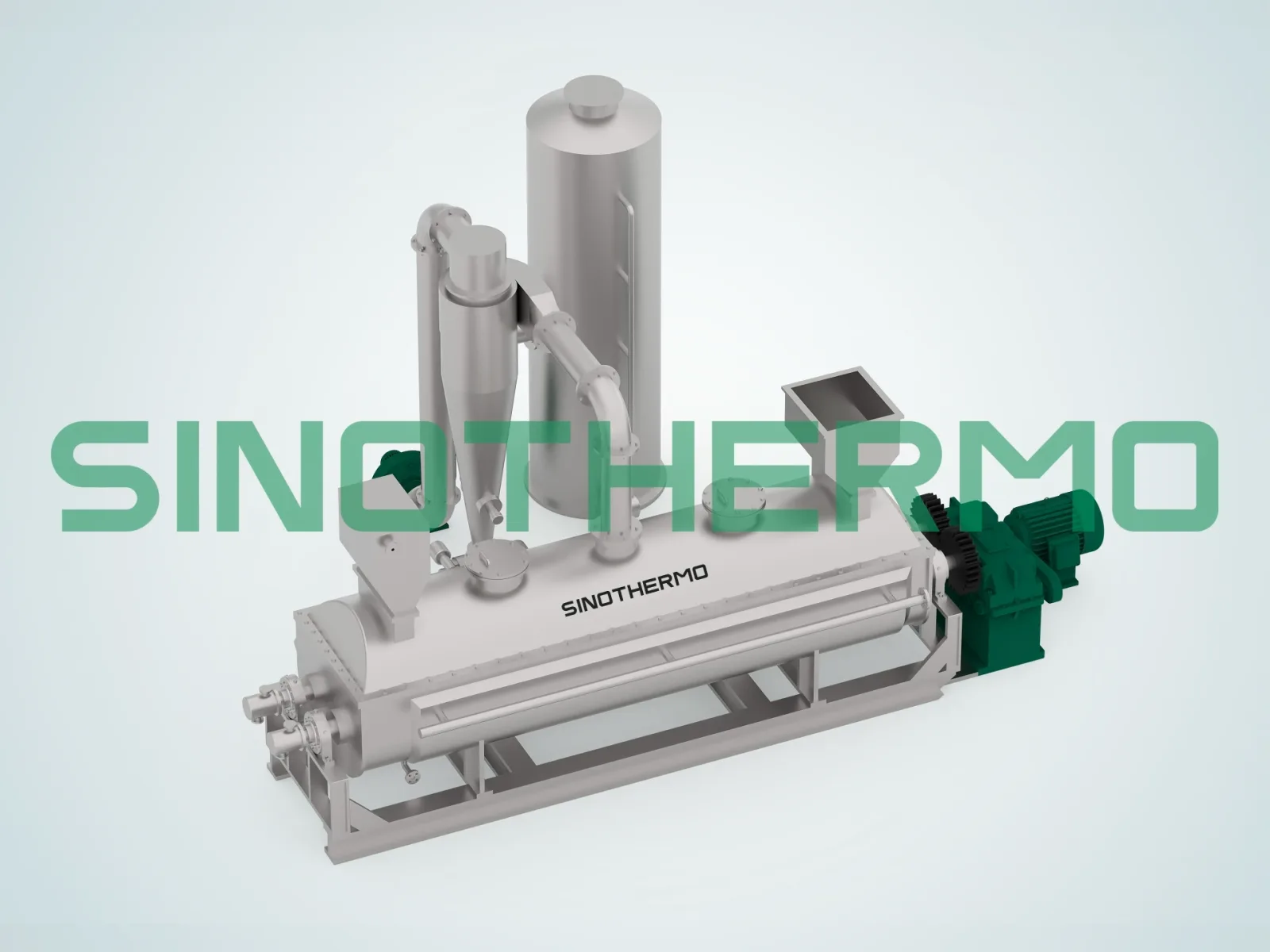
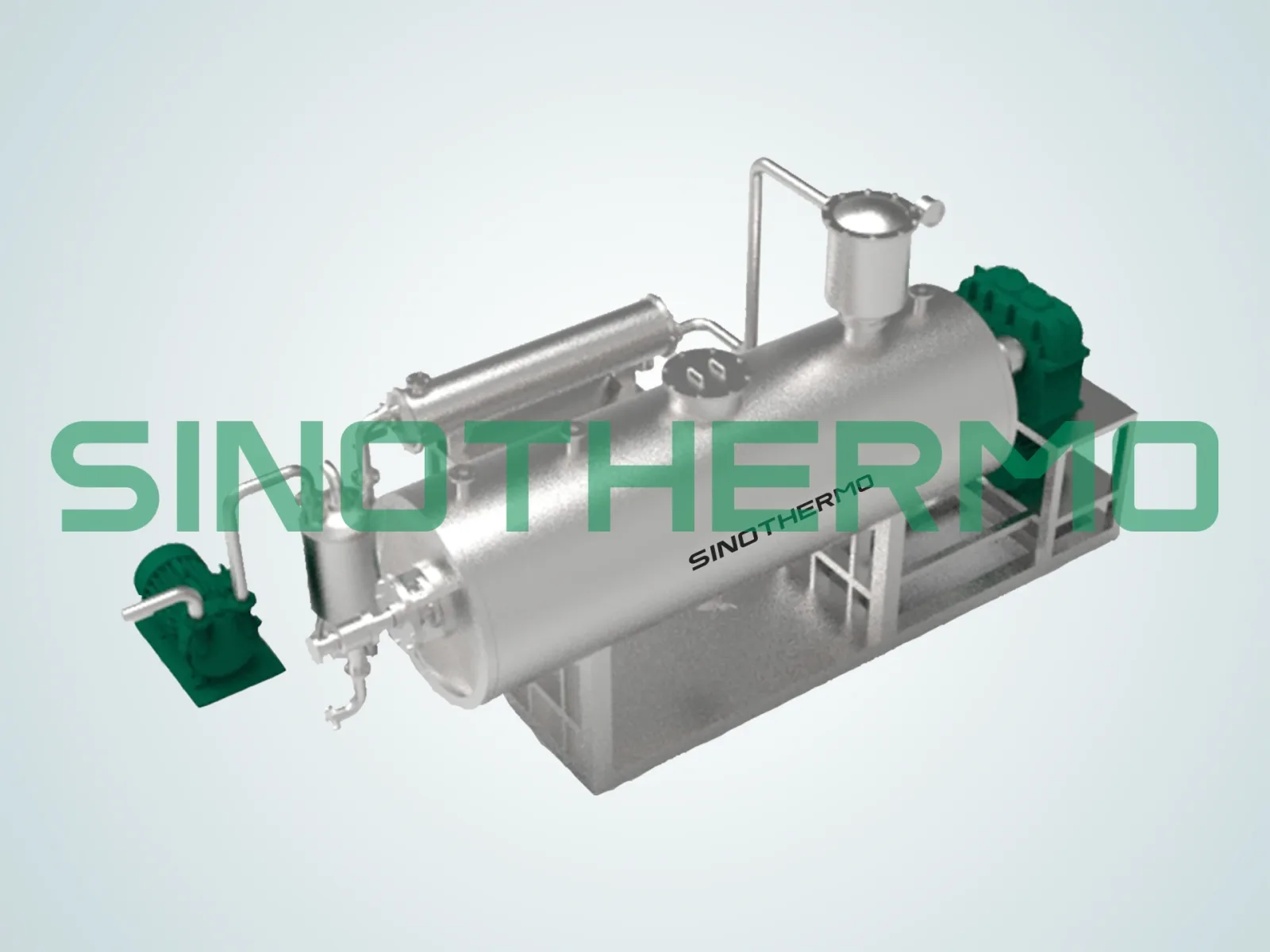
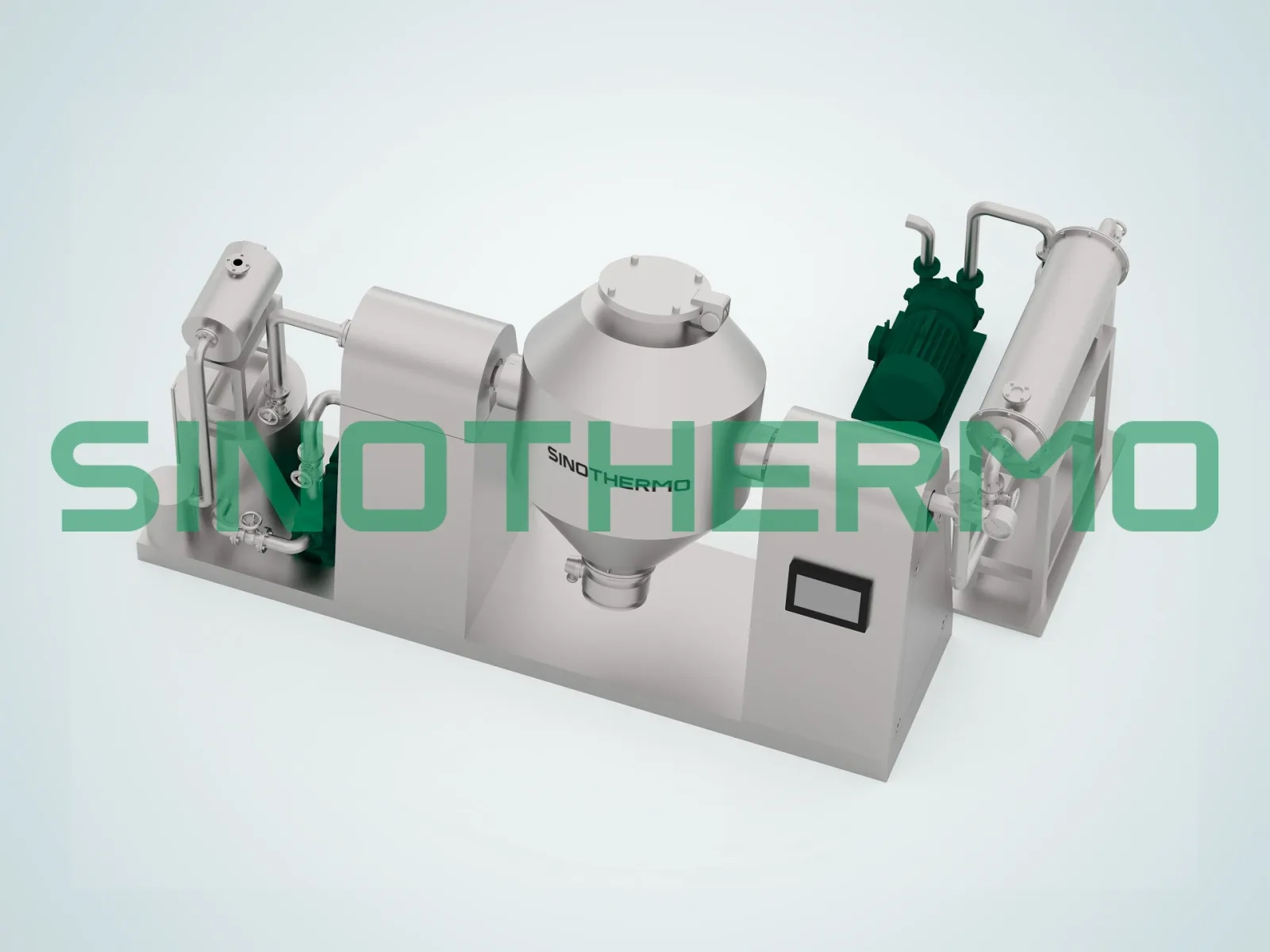
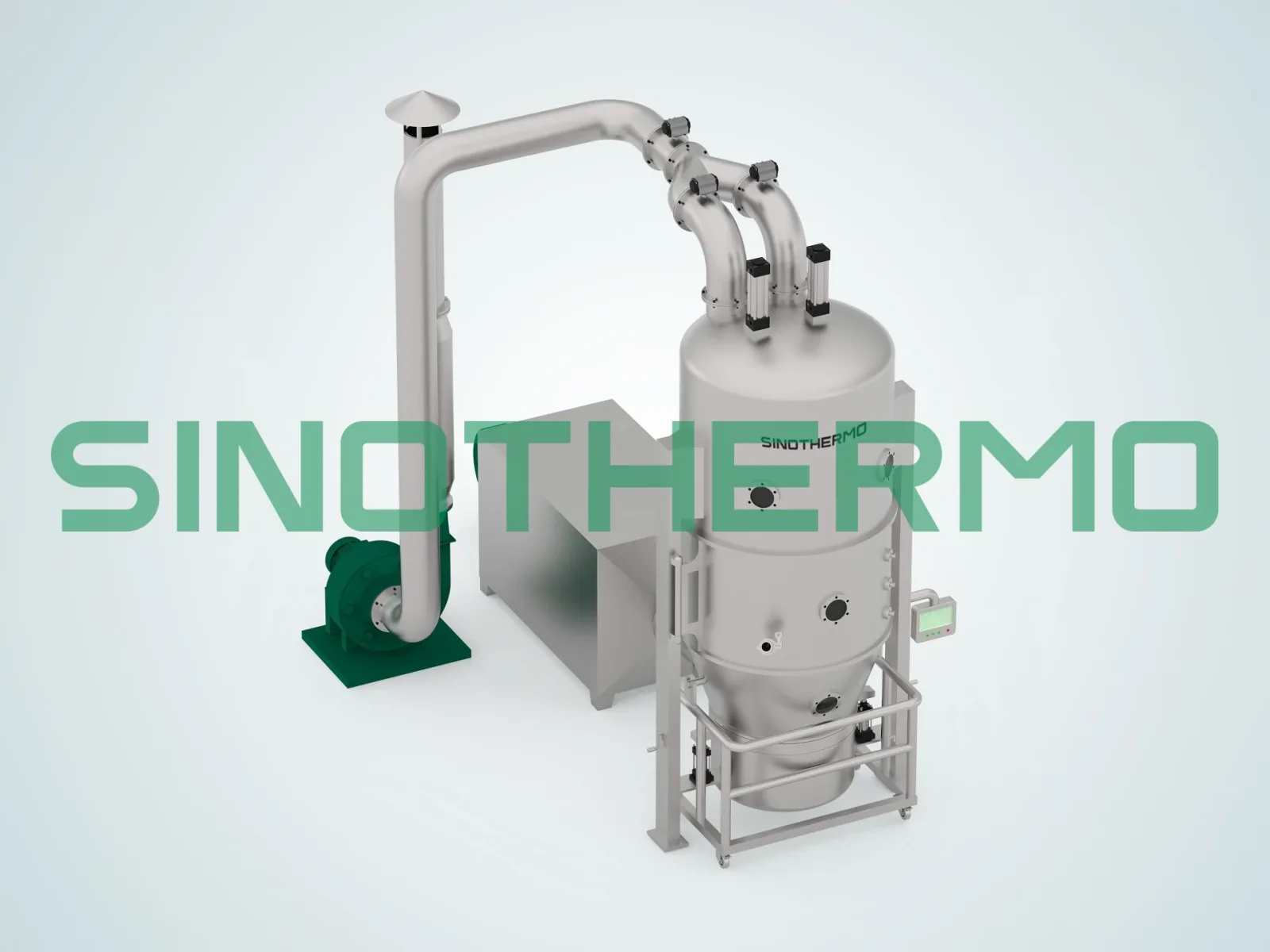
Ten workhorses of battery material production and recycling — each engineered, built and tested in our own Changzhou factory. A single-cone vacuum vessel and other variants are also available; talk to us about your exact feed and process window.
Dewatering & Solvent Recovery
Spray Drying & Granulation
Continuous Drying & Heat Treatment
Final Drying to ppm & Cooling
Battery Recycling
Closing the Loop: Drying Recovered Battery Materials
Battery recycling is one of the fastest-growing parts of the lithium industry. After leaching, extraction and precipitation, recovered materials — lithium salts, nickel-cobalt-manganese compounds and hydroxide precursors — leave the plant as wet filter cakes, slurries and solutions that must be dried before they can re-enter the supply chain as qualified battery raw materials.
Black mass itself carries residual electrolyte (EC/DMC/EMC) and water, so it is dried under inert N₂ with indirect heating and staged vacuum from 0.2 to 500 mbar — condensing and recovering each solvent selectively as the powder dries. SINOTHERMO supplies this stage end to end: vacuum paddle and rake dryers for solvent-laden cakes, spin flash dryers that convert filter cakes straight to powder, and spray dryers that rebuild dissolved salts into uniform, free-flowing powders ready for re-use.
In-Plant Waste Treatment
Electrically Heated Rotary Kilns for Battery Production Waste
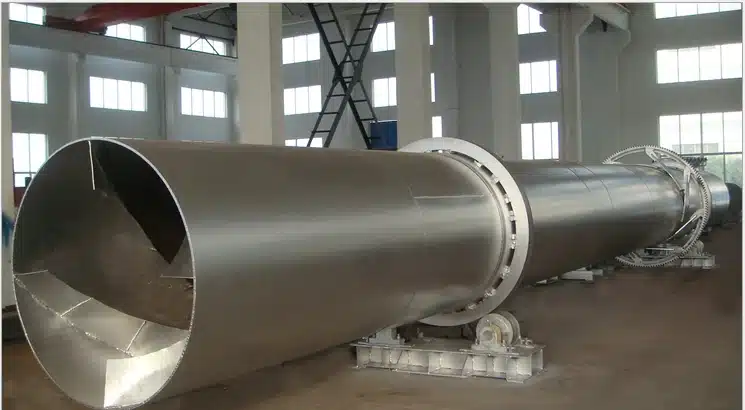
Cell plants generate scrap electrodes, waste electrode powder and trim from coating, notching and formation. An electrically heated indirect rotary kiln burns out binders and electrolyte residues at 300–800°C under N₂ or vacuum — recovering metal value or reducing volume for downstream recycling. For waste fines too dusty to convey, oscillating granulators and roller compactors re-agglomerate the powder to D50 200–500 μm without re-dissolving it.
No Combustion Flue Gas
Electric resistance heating keeps burner exhaust away from the material — no CO₂, H₂O or SO₂ contamination of battery-grade streams during binder burnout.
±5°C Zoned Temperature Control
Independently controlled electric heating zones hold the pyrolysis curve precisely — 300–400°C for electrolyte solvents, 400–600°C for PVDF/CMC/SBR binder decomposition, up to 800°C for full organic removal.
Clean, Simple Off-Gas Train
The exhaust contains only process gas plus binder-decomposition products — HF/POF₃ go to an alkaline scrubber with on-line F⁻ monitoring, CO to after-burning, solvents to condensation recovery.
Featured Equipment
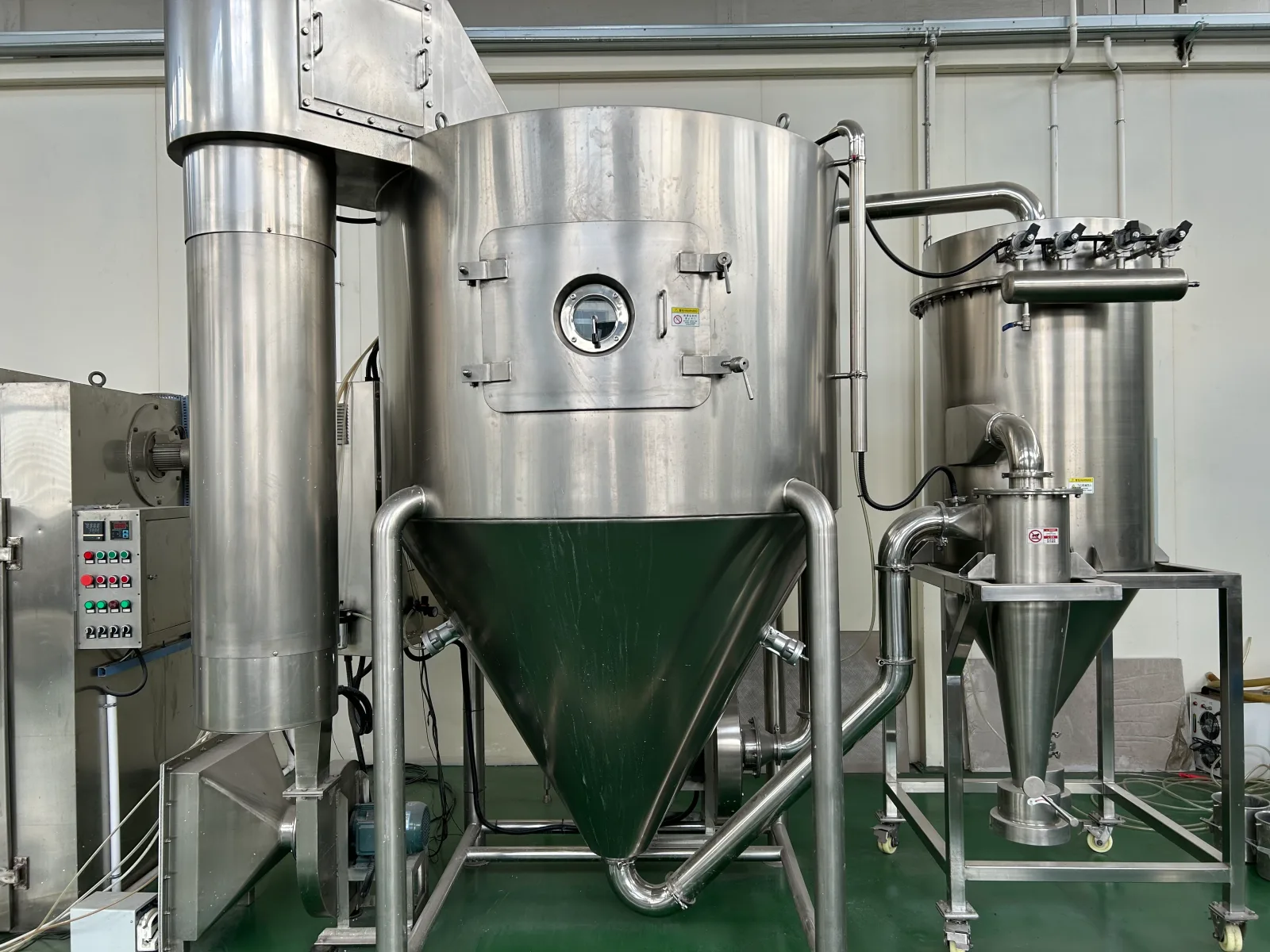
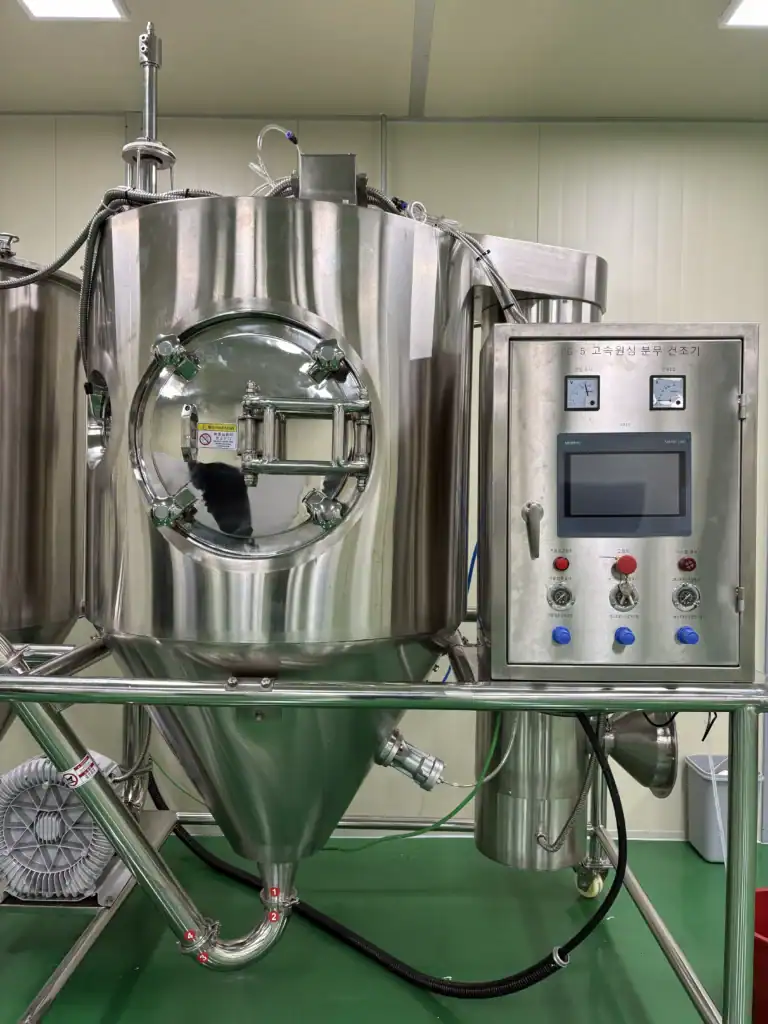
LPG-5 Centrifugal Spray Dryer: Where Battery R&D Starts
Spray drying converts battery-material slurries and precursor solutions into fine, uniform powders in a single continuous step — and the LPG-5 laboratory unit brings that capability to the R&D bench, with results that scale directly to production-size LPG dryers.
Our experience serving the demanding Korean battery industry — including on-site commissioning and operator training for LPG-5 laboratory spray dryers on LFP-related applications — lets us support your team from first trial to stable daily operation.
Why SINOTHERMO
Engineered for Battery-Grade Safety, Purity and Moisture
Inert-Gas Protection
N₂ atmosphere with O₂ below 500 ppm (design value) in closed-loop spray circuits — protects high-nickel precursors, carbon-coated LFP, Si-C anode and black mass while suppressing dust-explosion risk.
Iron-Free, ppb-Grade Design
SUS304/316L contact parts, electro-polished surfaces and multi-stage magnetic separation — battery-grade magnetic-impurity control proven on LFP and lithium-salt lines.
Ultra-Low Residual Moisture
Vacuum plus low-temperature drying reaches the ppm-grade residual moisture cathode and anode powders demand (material-dependent).
Explosion Safety Engineering
Explosion venting and suppression designed to EN 14491 / EN 14373, anti-static grounding, negative-pressure dust containment and N₂ inerting for combustible carbon fines.
Solvent Recovery
Staged vacuum control from 0.2 to 500 mbar recovers electrolyte carbonates and process solvents selectively as the material dries — recovery rates up to 99% (design value).
Lab-to-Line Scale-Up
The same equipment envelope runs from the LPG-5 laboratory spray dryer to full production scale — pilot results transfer directly, with our testing lab validating your material first.
Selected Experience
Proven on Real Battery Materials
A sample of delivered battery-material applications — client names withheld under confidentiality. Full references available in a direct conversation, subject to each client's consent.
Spray Dryer
LFP cathode powder — Korea
Pilot-scale LFP-related spray drying (LPG-5, 2025), with on-site commissioning and operator training.
Double Cone Vacuum
Sodium-ion cathode material
SZG-5000 double-cone rotary vacuum drying — low-temperature, oxygen-free, gentle batch handling.
Spray Dryer
Solid-state electrolyte powders
LPG-5 spray drying for solid-state battery key materials on an R&D pilot line.
Electric Rotary Kiln
Cell-plant production waste
Thermal treatment of scrap electrodes and waste electrode powder for a leading cell manufacturer — controlled atmosphere, no flue gas.
Plate Dryer
Battery-grade Li₂CO₃ (> 99.5%)
Continuous vertical plate drying — contamination-free, stable residual moisture.
Spray & Vacuum Dryers
NCM cathode, precursor & LFP/LMFP
Ternary cathode and precursor drying, nickel/manganese/cobalt sulphates, iron phosphate and LFP/LMFP powders.
Spray Dryer
CNT conductive agent & graphene
Low-solids nano-slurry spray drying with powder morphology and dispersibility control.
Granulator
Supercapacitor electrode waste
Dry granulation of waste electrode powder — re-agglomeration without re-dissolving the material.
Adjacent Chemistries
The Same Platform Extends Further
The inert-loop spray granulation, vacuum drying and calcination platform behind lithium and sodium materials also serves solid-state battery electrolyte powders (spray-granulated under inert gas ahead of high-temperature sintering), ceramic-coated-separator powders such as boehmite and alumina, supercapacitor electrode materials, and industrial slurry and sludge drying.
Prove It on Real Material
Test Your Slurry Before You Invest
Send us your precursor slurry, filter cake or recovered salts — our testing lab runs trials on laboratory and pilot equipment, so you see real particle size, moisture and yield data before committing to a production line.