Drying battery-grade lithium carbonate (Li₂CO₃) and lithium hydroxide monohydrate (LiOH·H₂O) is difficult for two reasons that almost no other industrial powder combines: LiOH reacts with atmospheric CO₂ and converts itself into Li₂CO₃ contamination while it is being dried, and battery-grade purity is specified with magnetic-impurity limits commonly quoted in the parts-per-billion range. A dryer that solves one and ignores the other still produces off-spec material. Getting both right — a sealed, CO₂-excluded atmosphere plus a genuinely iron-free wetted-part design — is what separates battery-grade output from technical-grade.
If you are converting brine- or spodumene-derived lithium salt to battery grade, or re-drying purchased salt before it enters a cathode precursor line, the drying step is not a commodity utility. It is the last unit operation that can either preserve or destroy the purity you paid the whole refining train to achieve. This guide covers what actually goes wrong, the six rules that decide the outcome, how the salts differ from each other, and the specification mistakes that usually surface only after commissioning.
Why lithium salts are not ordinary powders
Three material properties drive every design decision downstream. Miss any one of them and the dryer will run beautifully while producing material that fails incoming inspection at the cell plant.
CO₂ reactivity — LiOH is chemically unstable in air
Lithium hydroxide reacts readily with carbon dioxide in ambient air, converting to lithium carbonate at the particle surface. Ambient air contains enough CO₂ to do this continuously, and the reaction accelerates when the material is warm, freshly exposed, and presenting a large surface area — which is precisely the condition inside a dryer.
The consequence is counter-intuitive: the drying step itself is the point of maximum contamination risk. A LiOH·H₂O batch that entered the dryer within spec can leave it carrying carbonate contamination that no downstream step removes. This is why open-air convective drying — the default answer for most inorganic salts — is the wrong starting point here, and why the process is normally run sealed under dry, CO₂-scrubbed air or nitrogen. The same atmosphere logic that governs cathode and anode materials applies, and the underlying engineering is covered in our guide to inert-gas drying for battery materials.
Crystal water — LiOH·H₂O is a hydrate, not a wet powder
LiOH·H₂O carries structurally bound water inside the crystal lattice, in addition to whatever free surface moisture arrives from centrifugation or filtration. Those are two different jobs, and they are removed at different energy levels.
Drying the monohydrate means removing free moisture without starting to strip crystal water. Push the product temperature too high or hold it too long and you begin partial, uneven dehydration: some particles convert toward anhydrous LiOH, others do not, and the batch drifts off its assay specification while also becoming physically inconsistent. Partially dehydrated material is also more chemically aggressive and more prone to caking on hot surfaces.
Under-drying is the opposite failure and is not harmless either. Residual free moisture causes caking in storage, promotes further carbonate formation, and shows up as a moisture deviation at incoming inspection.
Published dehydration onset temperatures for LiOH·H₂O are commonly cited industry design targets, not a universal specification. The safe product-temperature ceiling depends on your crystal habit, particle size distribution, residence time, and vacuum level, and must be confirmed against your own material rather than taken from a table.
Magnetic impurity — a ppb-level specification
Battery-grade lithium salts are specified with very low magnetic (particularly iron) impurity limits, commonly quoted in the parts-per-billion range, because trace metallic particles carried into a cathode or electrolyte precursor can seed internal short circuits or accelerate cell degradation. This is a far tighter requirement than the food, pharmaceutical, or fine-chemical standards most dryer designs are built to.
At this level, contamination is generated by the equipment itself: abrasion between the powder and agitator blades, wear at seal faces, particle shedding from weld beads and rough surface finishes, and metal fines released by any component that rubs. The dryer is a candidate contamination source, not a neutral vessel.
The 6 proven rules for battery-grade lithium salt drying
Rule 1 — Seal the whole path, not just the dryer
A gas-tight drying chamber connected to an open discharge chute is not a sealed process. CO₂ ingress and moisture pickup happen wherever the warm product meets room air: feed ports, sight glasses, sampling points, the discharge valve, the cooling stage, conveying, and the packing station.
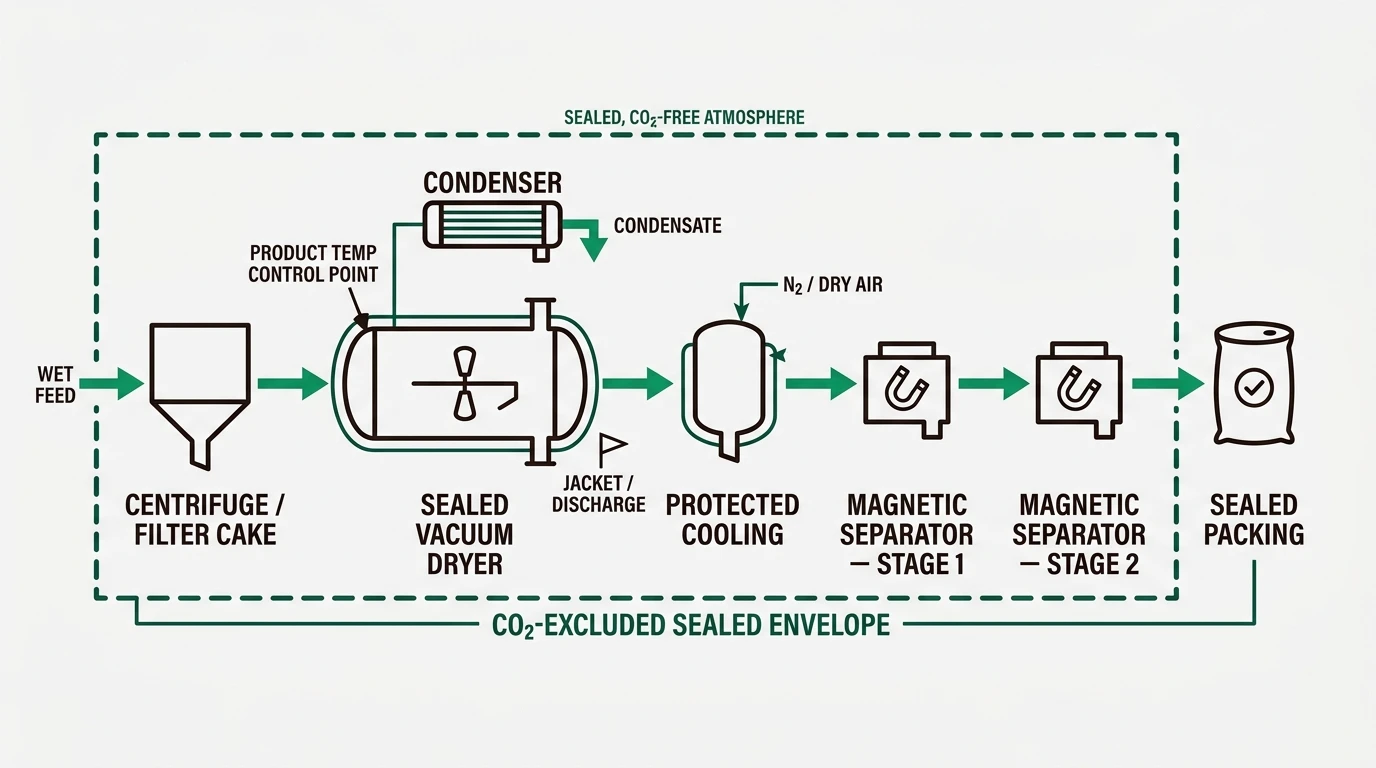
Design the protected envelope to run from feed inlet to sealed package. In practice this means a closed dry-air or N₂ loop over the dryer, leak-tight rotary or double-flap discharge valves, blanketed intermediate hoppers, and packing under the same protected atmosphere. Specify leak-tightness as a number on the datasheet, and specify where it is proven.
Rule 2 — Treat crystal water as a controlled variable, not a by-product
Because free moisture and crystal water sit on a continuum, the only reliable control is product temperature — not inlet gas temperature, and not drying time alone. Indirect (conductive) drying under vacuum gives you that control: vacuum lowers the evaporation temperature so free moisture leaves at a product temperature well below the dehydration window, and the jacket temperature sets a hard ceiling the material cannot exceed.
Direct hot-gas contact does the opposite. It creates a temperature distribution across the bed, and the hottest fraction defines your quality risk. For LiOH·H₂O this is the single strongest argument for indirect vacuum equipment over convective equipment.
Rule 3 — Engineer iron-free from the wetted surface to the magnet bank
Iron-free is a system property, not a material callout on a drawing. It requires, together:
- Contact-part material selection — stainless grades chosen for low particle shedding in an alkaline, abrasive service, with attention to LiOH's caustic behaviour at temperature.
- Surface finish — polished and passivated wetted surfaces, ground and blended weld seams, no rough internal corners that abrade powder and hold residue.
- Mechanical clearance discipline — agitator-to-wall clearances set so the blade never contacts the shell; wear parts specified and inspected on a schedule.
- Multi-stage magnetic separation — high-intensity magnets positioned downstream of the dryer and again before packing, so anything generated inside the machine is captured before it reaches the customer.
Do not accept "stainless steel construction" as an answer to a ppb magnetic-impurity specification. Ask which grade, which finish, which clearances, and where the magnets sit.
Rule 4 — Match the dryer type to the salt, not to the plant's habit
Li₂CO₃ and LiOH·H₂O behave differently enough that copying an existing installation across is a common and expensive error. Li₂CO₃ is comparatively free-flowing and is mainly a surface-moisture problem with an iron-control overlay. LiOH·H₂O is CO₂-sensitive, hydrate-bearing, caustic, and inclined to compact — a much narrower process window. Rule 5 covers the selection logic in detail.
Rule 5 — Eliminate dead zones and hot spots inside the vessel
Any volume where product sits longer than the design residence time will over-dry, and any surface hotter than the design ceiling will locally dehydrate or cake the material. In an alkaline salt service, caked material on a heated surface also becomes a cleaning and cross-contamination problem between campaigns.
Look specifically at agitator geometry and sweep coverage, shaft-seal purge arrangements, discharge geometry (does the last of the batch actually leave?), and whether the heating surfaces are zoned so the jacket ceiling can be held below the dehydration window across the whole vessel — not just on average.
Rule 6 — Validate the window on your own material before you specify
The three numbers that decide whether a lithium salt dryer performs — the product-temperature ceiling before crystal-water loss begins, the atmosphere quality needed to hold carbonate formation within spec, and the residence time to reach target moisture without over-drying — are properties of your specific crystal, not of the salt in general. Brine-derived and ore-derived material with different crystal habits and particle size distributions do not dry the same way. Rule 6 exists because rules 1 to 5 can all be implemented correctly against the wrong set-points.
How the three lithium salt streams differ
| Stream | Dominant constraint | Typical drying approach |
|---|---|---|
| LiOH·H₂O (monohydrate) | CO₂ exclusion; crystal water must be preserved; caustic and prone to compaction | Sealed, indirect, low-temperature drying under vacuum or a dry CO₂-scrubbed / N₂ atmosphere, with product temperature held below the dehydration window and no dead zones |
| Anhydrous LiOH | Deliberate, complete dehydration at higher temperature; still CO₂-sensitive throughout | Continuous or batch heat treatment above the dehydration window under a controlled, CO₂-excluded atmosphere, with protected cooling and packing |
| Li₂CO₃ | Surface moisture removal; iron/magnetic impurity control; product consistency | Lower-temperature drying with iron-free contact parts and in-line magnetic separation; less atmosphere-critical than LiOH but still handled dry and clean |
The practical implication: a plant producing both salts should not assume one machine covers both duties. Anhydrous LiOH in particular is a different unit operation from monohydrate drying — it is a controlled dehydration step, and it is normally executed on different equipment.
Equipment selection: what actually gets specified
| Duty | Common equipment choice | Why |
|---|---|---|
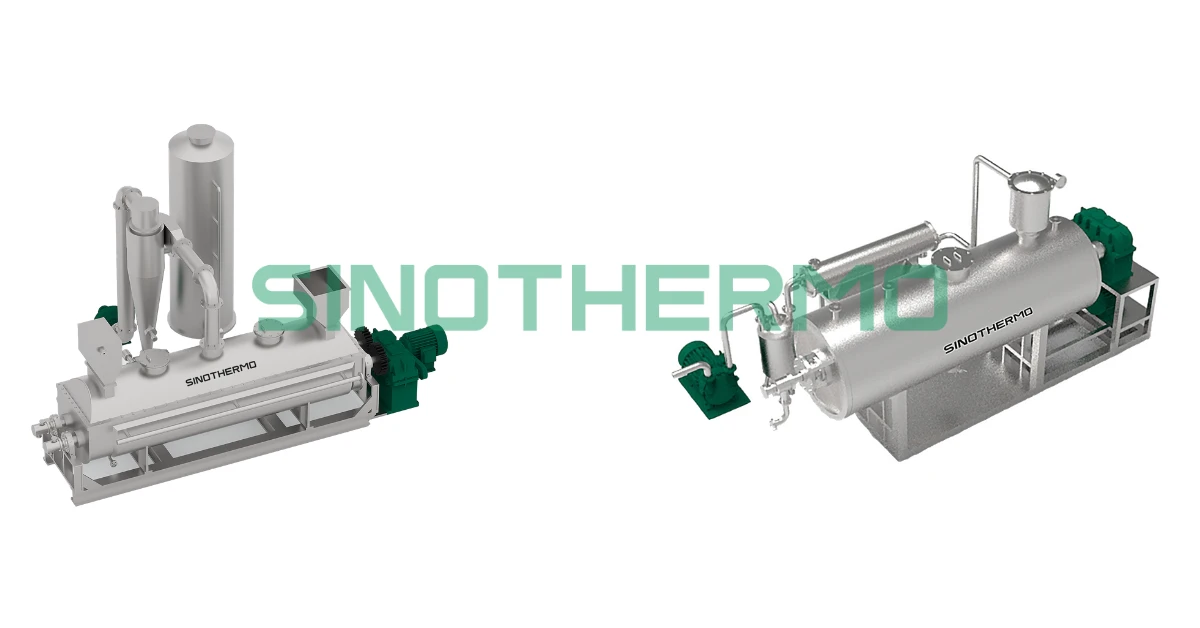
| LiOH·H₂O final drying, batch campaigns | Vacuum paddle dryer or vacuum rake dryer | Sealed by design, indirect heating with a hard temperature ceiling, vacuum lowers the evaporation temperature, gentle agitation avoids dead zones |
| Li₂CO₃ / LiOH·H₂O continuous drying, larger volume | Vacuum horizontal disc dryer | Large indirect heating area in a compact sealed vessel, controlled residence time, suits steady high-throughput operation |
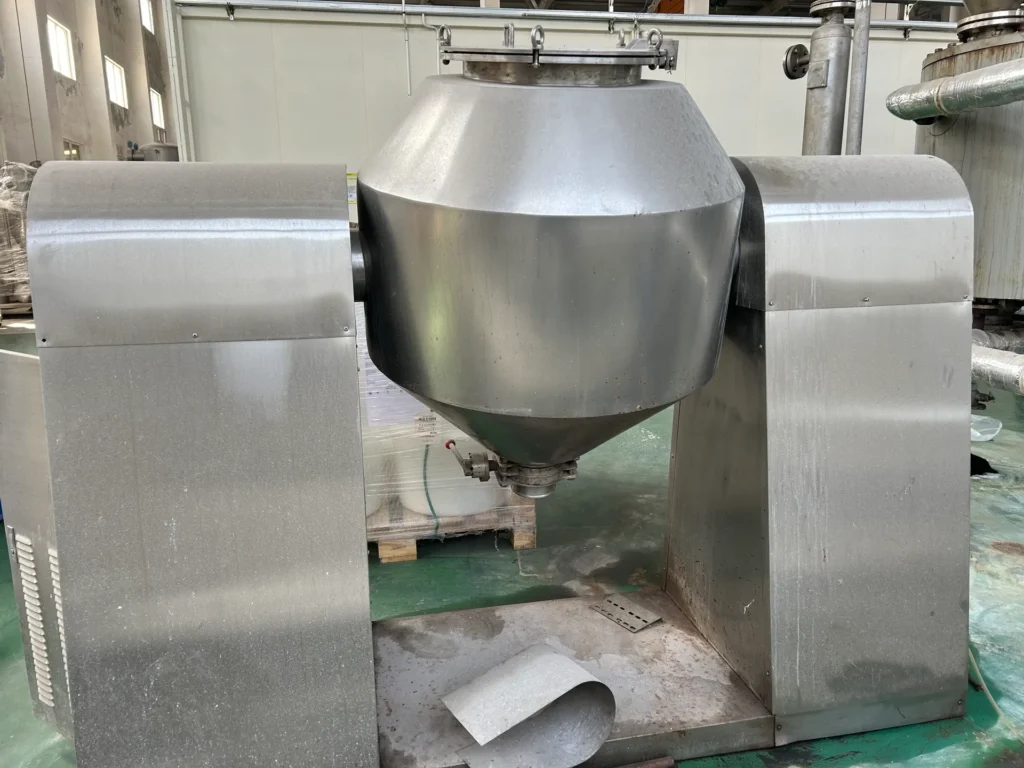
| Gentle batch drying of friable or easily-compacted crystal | Double cone rotary vacuum dryer | Whole-vessel rotation with no internal agitator — minimal shear, minimal internal wear surfaces, easy to clean between campaigns |
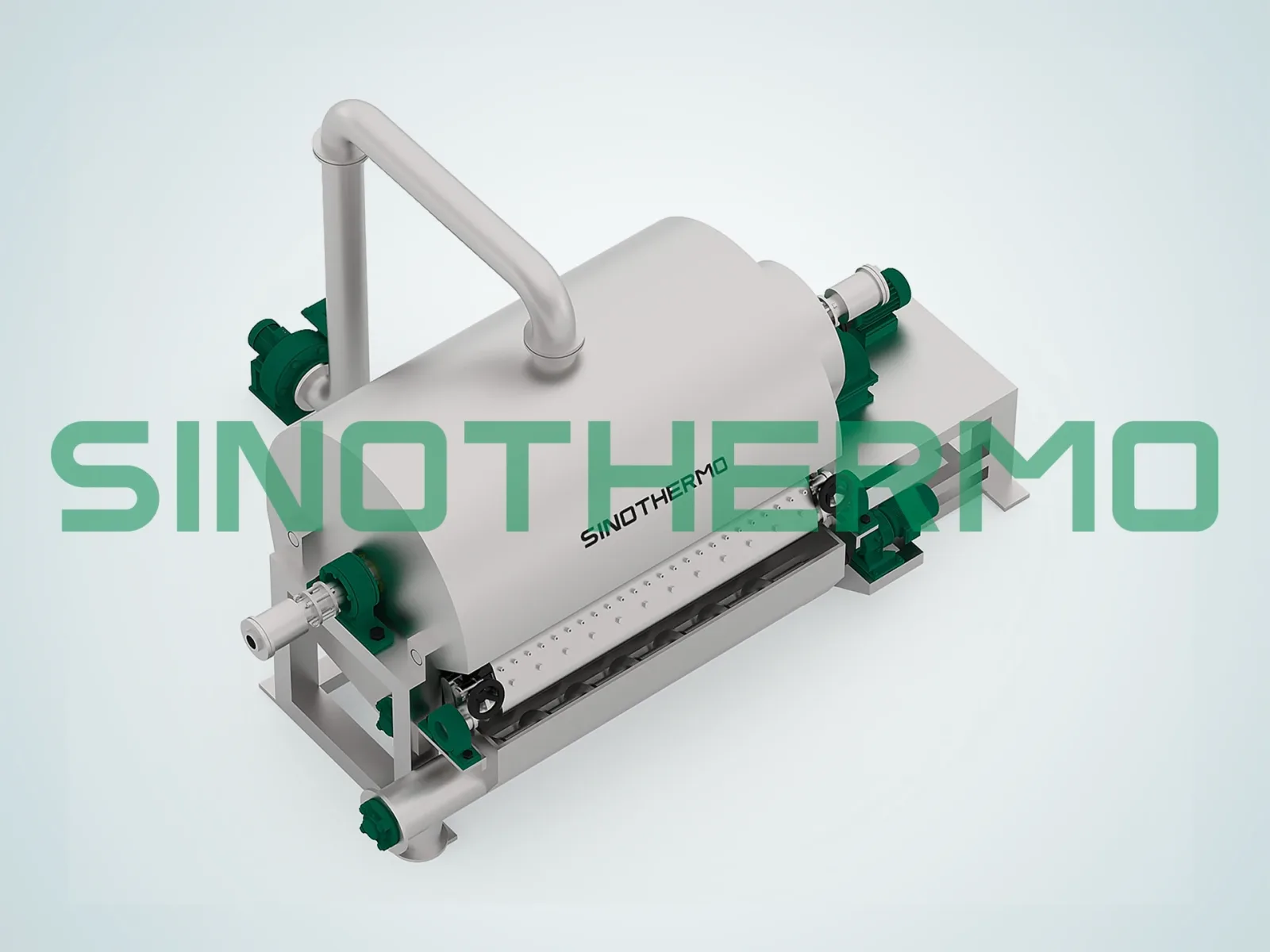
| Dehydration to anhydrous LiOH | Rotary kiln with atmosphere control | Continuous high-temperature duty with a sealed, CO₂-excluded gas circuit and protected cooling |
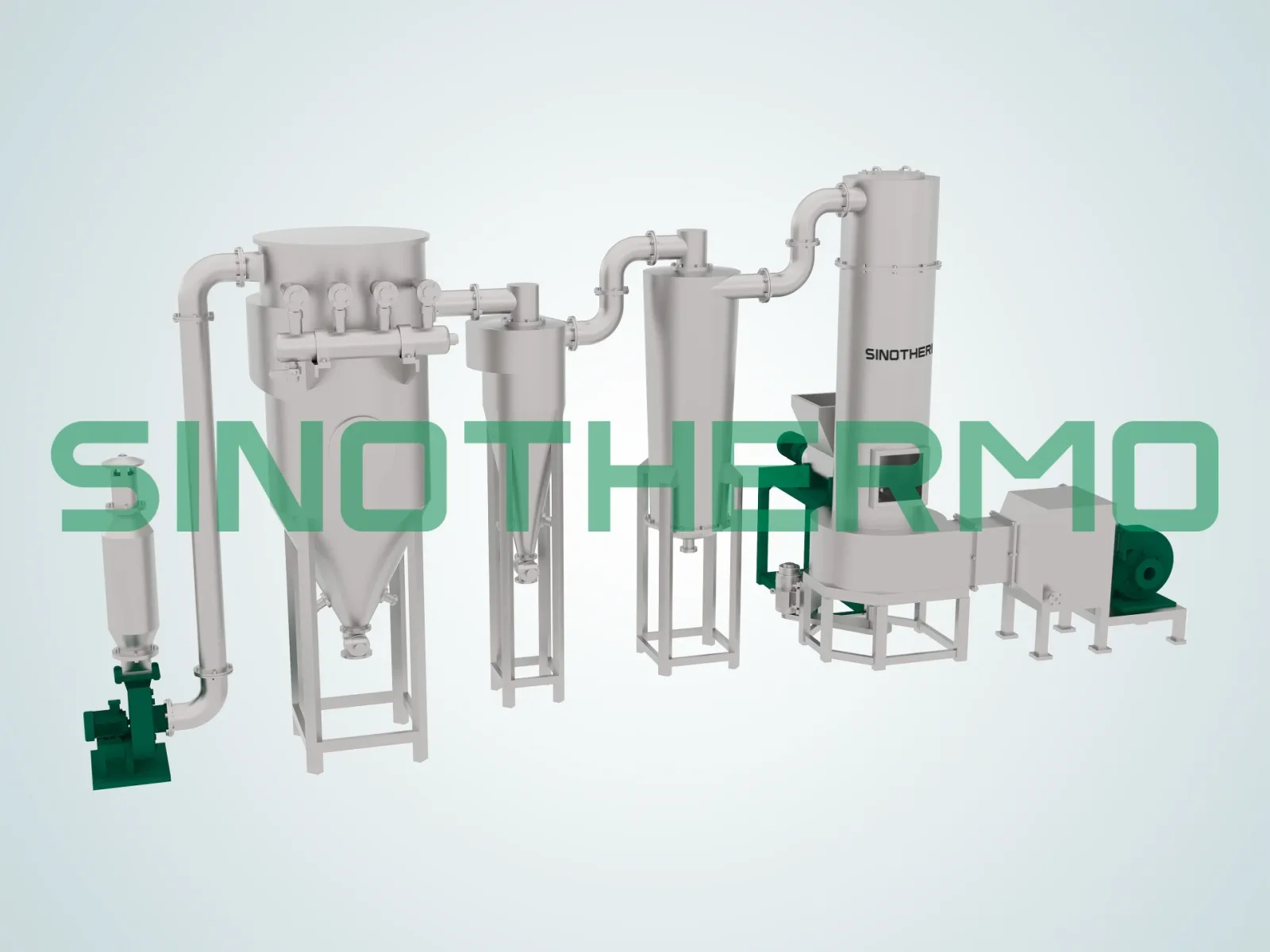
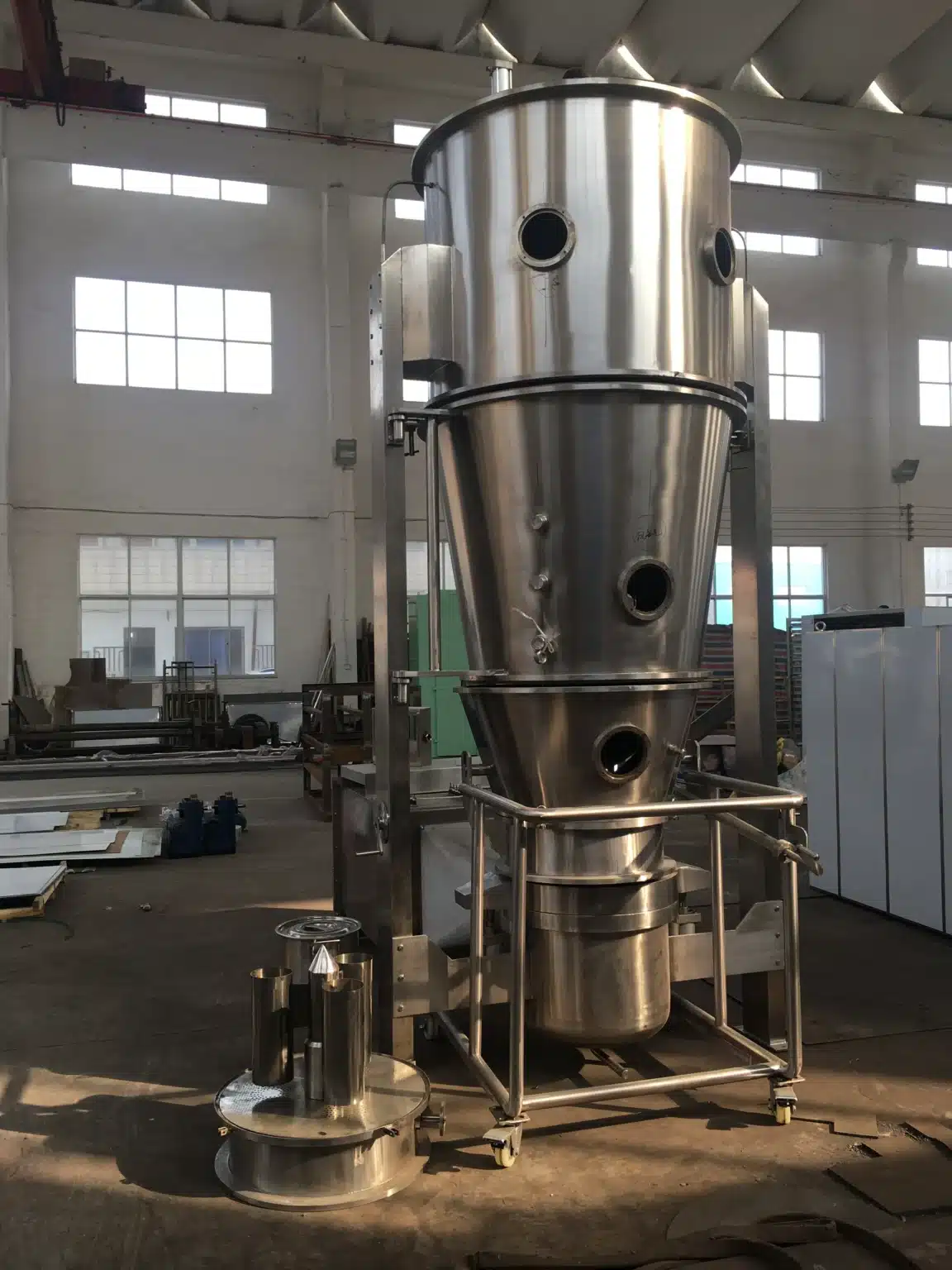
| Li₂CO₃ surface-moisture removal, high throughput, non-critical atmosphere | Horizontal vibrating fluidized bed dryer | Efficient, gentle, well-defined residence time for a free-flowing powder — appropriate only where CO₂ exposure is not the governing constraint |
Two selection notes worth stating plainly. First, convective and fluid-bed equipment is a legitimate choice for Li₂CO₃ and a poor default for LiOH·H₂O — the same machine that dries carbonate efficiently will expose hydroxide to a large volume of moving gas, which is exactly what you are trying to avoid. Second, spray drying appears in lithium processing upstream of these steps, in precursor and slurry routes rather than in salt finishing; if that is your process step, see our overview of spray processing in lithium battery materials and the wider vacuum dryer guide for the batch end. For a first-principles walk through dryer families in general, start with how to choose an industrial dryer.
SINOTHERMO builds across both routes — sealed vacuum paddle, rake, disc and double-cone dryers for the batch and finishing duties, and rotary kilns, spin flash and pneumatic dryers for the continuous end — so the atmosphere and temperature strategy can be matched to each step instead of forced onto one machine. The full equipment map across cathode, anode, salt, and recycling routes is on our battery material drying solutions page.
Common mistakes to avoid
- Sealing the dryer and leaving the discharge open. The most frequently repeated error in lithium hydroxide plants. Carbonate formation and moisture re-pickup happen wherever warm product meets room air, and the discharge, cooling, conveying, and packing stages are all room air unless you specify otherwise. Define the protected envelope end to end.
- Specifying "stainless steel" as the answer to a ppb magnetic-impurity limit. Grade, surface finish, weld treatment, agitator clearance, and magnet placement are what actually deliver the number. A generic material callout on a purchase order does not.
- Controlling inlet gas or jacket temperature instead of product temperature. For a hydrate, the variable that decides whether crystal water survives is the temperature the particle actually reaches — including the hottest fraction of the bed, not the average.
- Reusing the Li₂CO₃ process for LiOH·H₂O. They are different problems. Carbonate drying is a surface-moisture and cleanliness duty; hydroxide drying is an atmosphere and hydrate-stability duty. Equipment that suits one may be actively wrong for the other.
- Sizing the dry-gas or nitrogen supply from steady-state consumption only. Purge-down at start-up and recovery after an upset both demand far more gas than steady running. Undersized supplies produce long start-ups and, worse, the temptation to start feeding before the atmosphere is actually in spec.
- Scaling from a supplier datasheet rather than a trial on your own crystal. Brine-derived and ore-derived salts, and different crystallisation routes for the same salt, do not share a drying curve. Generic tables do not capture particle size distribution, crystal habit, or how your material behaves at the discharge stage.
Prove the window in a pilot trial before you specify
The set-points that make a lithium salt dryer work cannot be read off a table. They have to be measured on your feed, in equipment that reproduces the sealed, indirect conditions the production machine will run.
That is why SINOTHERMO operates an in-house pilot laboratory: bring your Li₂CO₃ or LiOH·H₂O — filter cake, centrifuge discharge, or purchased salt for re-drying — and trial it before you commit to a specification. We measure the drying curve, establish the product-temperature ceiling before crystal-water loss begins, confirm the atmosphere quality needed to hold carbonate formation within spec, and check how the material behaves at discharge, cooling, and packing, which is where purity is most often lost after a technically correct drying step. Backed by 20+ years of experience and deep customization capability, our engineers use that trial data to size the vessel, the heating surface, the gas circuit, the seals, and the magnetic separation train correctly the first time — rather than discovering the gap at commissioning. You can see the facility and how a trial is arranged on our testing lab page.
SINOTHERMO — Process Engineering Infrastructure. We solve the process problem, not just sell a machine.
Conclusion
Battery-grade lithium salt drying is not a temperature-and-time problem. It is an atmosphere problem, a hydrate-stability problem, and a contamination problem that happen simultaneously in the same vessel — and the equipment either addresses all three by design or fails on the one it ignored. Seal the whole path, control product temperature rather than gas temperature, engineer iron-free from the wetted surface to the magnet bank, choose equipment per salt rather than per plant habit, eliminate dead zones, and validate the window on your own crystal before the specification is frozen.
Processing lithium carbonate or lithium hydroxide to battery grade — and unsure what temperature ceiling and atmosphere your material actually needs? Send us a sample: our pilot lab establishes the drying curve and the safe window so the production machine is right the first time. Or simply get in touch with your process data and we will tell you what we would need to test.
✉️ mark.gu@sinothermo.com · 📱 WhatsApp: +86 180 2197 2660 · 🌐 www.sinothermo.com
SINOTHERMO — Process Engineering Infrastructure.
FAQ
Why does lithium hydroxide need to be dried in a sealed system?
Because LiOH reacts with carbon dioxide in ambient air to form lithium carbonate, which directly contaminates the product and cannot be removed downstream. A sealed system supplied with dry, CO₂-scrubbed air or nitrogen prevents that exposure during drying, cooling, conveying, and packing — the drying step is the point of maximum risk because the material is warm and presenting a large surface area.
What is the difference between drying LiOH·H₂O and producing anhydrous LiOH?
Drying LiOH·H₂O means removing free surface moisture while preserving the structurally bound crystal water, which requires holding product temperature below the dehydration window. Producing anhydrous LiOH is the opposite objective: a deliberate, complete dehydration at higher temperature. Both must exclude atmospheric CO₂, but they are different unit operations and are normally executed on different equipment.
What magnetic impurity level is required for battery-grade lithium salts?
Battery-grade lithium salts are specified with very low magnetic impurity limits, commonly quoted in the parts-per-billion range, because trace metallic particles carried into a cathode or electrolyte precursor can seed internal short circuits or accelerate cell degradation. Meeting that level requires low-shedding contact materials, polished and passivated surfaces, controlled agitator clearances, and multi-stage magnetic separation before packing.
Can a standard industrial dryer handle battery-grade lithium carbonate?
Not without modification. Standard dryers generally lack the sealed, CO₂-excluding atmosphere that lithium hydroxide requires and the iron-free contact-part design that battery-grade purity requires. A machine built for open-air operation cannot be made gas-tight by adding a nitrogen line, and a generic stainless-steel construction does not by itself meet a parts-per-billion magnetic impurity limit.
Which dryer type is best for lithium carbonate and lithium hydroxide?
For LiOH·H₂O, sealed indirect equipment is the usual answer — vacuum paddle, rake, horizontal disc, or double cone rotary vacuum dryers — because vacuum lowers the evaporation temperature and the heating jacket sets a hard temperature ceiling. Li₂CO₃ is a more forgiving, free-flowing surface-moisture duty where convective or vibrating fluid bed equipment can be appropriate, provided iron control and magnetic separation are designed in.
What drying temperature should be used for lithium hydroxide monohydrate?
There is no single correct figure. The product-temperature ceiling must sit below the point at which crystal water begins to leave the lattice, and published dehydration onset temperatures are commonly cited industry design targets rather than a universal specification. The safe window depends on crystal habit, particle size distribution, residence time, and vacuum level, and should be confirmed by trial on your own material.

Mark Gu
Passionate about enhancing customer experiences and streamlining operations, Mark focuses on building strong relationships, fostering innovation, and leading teams to achieve exceptional service and efficiency.
Email: mark.gu@sinothermo.com
Phone: +86 18021972660