Battery materials are dried under nitrogen (N₂) instead of air because most of them — high-nickel precursors, carbon-coated LFP, graphite, silicon-carbon, and black mass — oxidize or ignite when heated in the presence of oxygen. Typical process specifications hold oxygen below 500 ppm in spray-drying circuits, and as low as 20–100 ppm during high-temperature calcination. That single requirement reshapes almost every piece of equipment in a battery-material production line.
If you are specifying a dryer or calciner for cathode precursor, anode material, or recycled black mass, inert-gas capability is not an optional upgrade you bolt on later — it determines the vessel design, the gas circuit, the seals, the instrumentation, and the safety case. This guide explains what actually goes wrong in air, what oxygen levels the industry designs to, how equipment delivers that atmosphere, and the specification mistakes that most often surface only after commissioning.
Quick context: why this matters more every year
Battery-material production has moved from pilot lines to gigafactory-scale plants in under a decade, and the materials themselves have become harder to process. Nickel content in cathode chemistries keeps rising — and high-nickel material is more oxidation-sensitive, not less. Silicon-carbon anode materials are entering volume production. Recycling lines are generating large volumes of black mass, a fine, conductive, combustible powder that did not exist as a bulk industrial stream fifteen years ago.
Each of these trends pushes in the same direction: less tolerance for oxygen, and a bigger safety consequence when it is present. Equipment specified against a generic "industrial dryer" datasheet will not meet these requirements.
4 things that go wrong when you dry battery materials in air
1. Oxidation of the active material
High-nickel cathode precursors and reduced-metal intermediates oxidize in air at drying and calcination temperatures. The damage is not visible as scorching or discoloration — it shows up as degraded electrochemical performance in a finished cell, long after the drying step is complete and the batch has moved downstream. By then the cost of the failure includes everything added after drying.
2. Loss of the conductive carbon coating
LFP and other carbon-coated cathode materials rely on a thin conductive carbon layer created during processing. That carbon oxidizes — burns off — in air at elevated temperature. The material may still look correct and hit its moisture spec while the functional coating that justified the process step has been partially destroyed.
3. Dust-explosion risk
Graphite, silicon-carbon anode material, hard carbon, and black mass are fine combustible powders. Heat, a dispersed fine powder, and oxygen together are the classic ignition triangle. A dryer is a machine whose entire purpose is to disperse a fine powder in a hot gas stream, which makes atmosphere control a safety requirement, not only a quality one.
4. Moisture re-pickup during handling
Many battery materials are hygroscopic. A material dried to specification and then discharged into ambient air can reabsorb moisture before packing, quietly undoing the drying step. This is why nitrogen blanketing usually extends past the dryer into cooling, conveying, and packing.
Typical oxygen limits across the process chain
| Process step | Typical oxygen target | Why this level |
|---|---|---|
| Spray drying (precursor / slurry) | O₂ < 500 ppm, closed N₂ loop | Prevent oxidation of the material while it is atomized and dried |
| High-temperature calcination | O₂ as low as 20–100 ppm | Oxidation rate rises sharply with temperature; carbon coating and metal oxidation state need tighter protection |
| Cooling and powder handling | N₂ blanketing | Prevent oxidation and moisture pickup before the material is sealed |
| Packing and storage | N₂ blanketing / sealed packaging | Protect the material through transport to the cell plant |
These figures are commonly cited industry design targets, not a universal specification. The correct limit for your material must be confirmed against its own oxidation sensitivity — that is a measurement, not a lookup.
How equipment actually delivers an inert atmosphere
Buying "a nitrogen dryer" is not a single decision. Four elements have to work together:
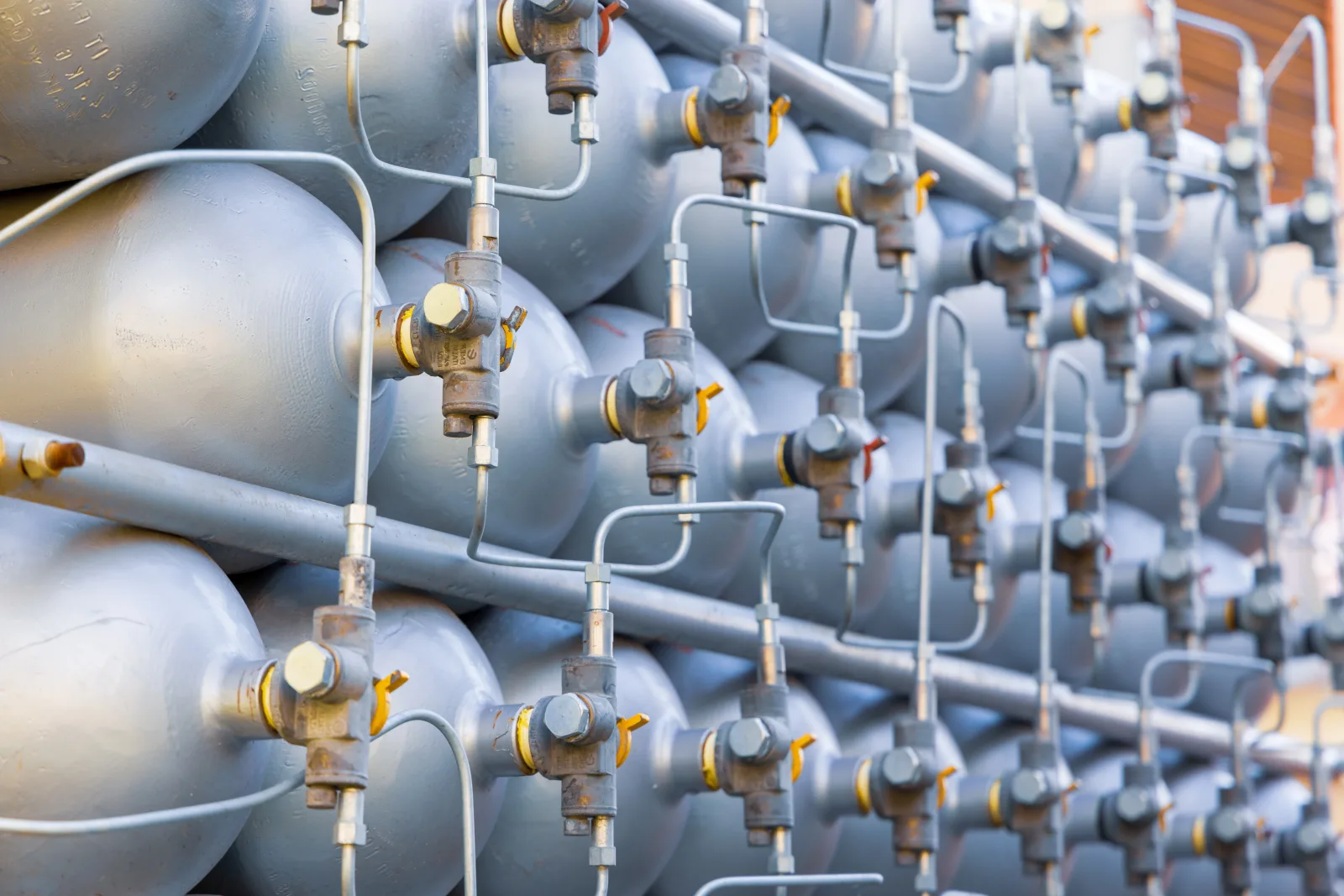
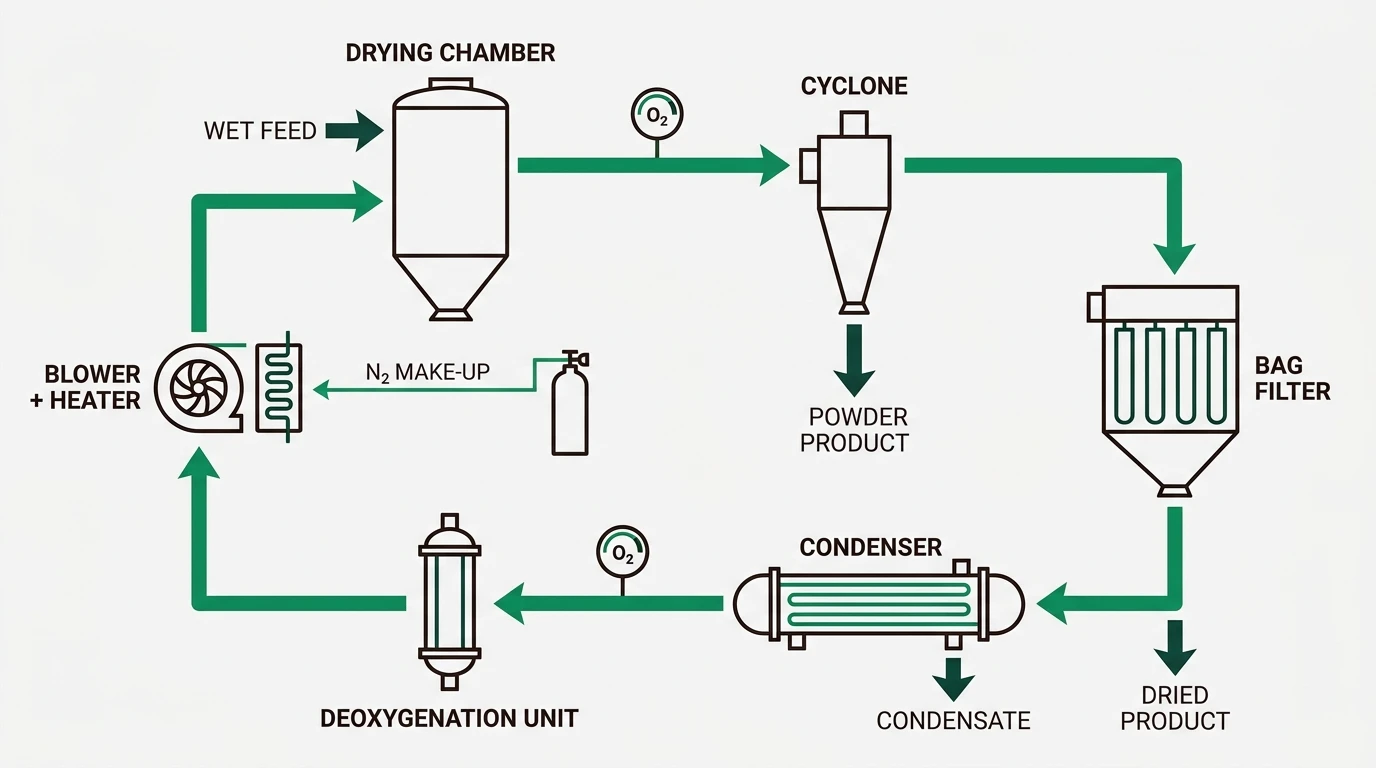
- Closed-loop gas circuit. Instead of an open dryer exchanging with room air, a closed N₂ loop recirculates gas through the drying chamber. The loop continuously removes evaporated moisture (usually by condensing) and any oxygen that leaks in, then returns dry, oxygen-poor gas to the inlet. This is also what makes nitrogen affordable at scale — you are recirculating a charge, not continuously venting it.
- Sealed mechanical design. The gas supply is only half the problem. Every seal, feed point, discharge valve, and inspection port is a potential air-ingress path. On a large machine, cumulative small leaks can easily overwhelm the oxygen budget. Rotary valves, double-flap discharge, and shaft seals are specified for leak-tightness, not just for material handling.
- Continuous oxygen monitoring with interlocks. An oxygen analyser on the loop, interlocked to stop feed or heating when the level drifts, converts the design target into an operating guarantee. Without it you have an intention, not a control.
- Explosion protection alongside inerting. Inerting reduces ignition risk but does not eliminate every pathway — static discharge and hot surfaces remain. Standard practice combines inert atmosphere with explosion venting or suppression, and with anti-static grounding throughout.
Which battery materials need inert-gas drying
| Material | Why it needs N₂ |
|---|---|
| High-nickel NCM / NCA precursor and cathode | Oxidation-sensitive; protects the metal's oxidation state through drying and calcination |
| Carbon-coated LFP | The conductive carbon coating burns off in air at calcination temperature |
| Graphite anode material | Fine combustible powder — dust-explosion protection |
| Silicon-carbon anode material | Combustible and oxidation-sensitive |
| Hard carbon (sodium-ion anode) | High-temperature carbonization under inert atmosphere; combustible fine powder |
| Black mass (recycling) | Combustible, conductive fine powder; often solvent-wet as well |
Hard carbon's inert-gas needs are only part of the sodium-ion picture — its cathode materials carry their own constraints, including a hard temperature ceiling that has no lithium equivalent. See our guide to sodium-ion battery material drying for the full picture.
Inert gas or vacuum? Choosing the protection strategy
Nitrogen is not the only way to keep oxygen away from a material. Vacuum drying removes the atmosphere instead of replacing it, and for some steps it is the better answer:
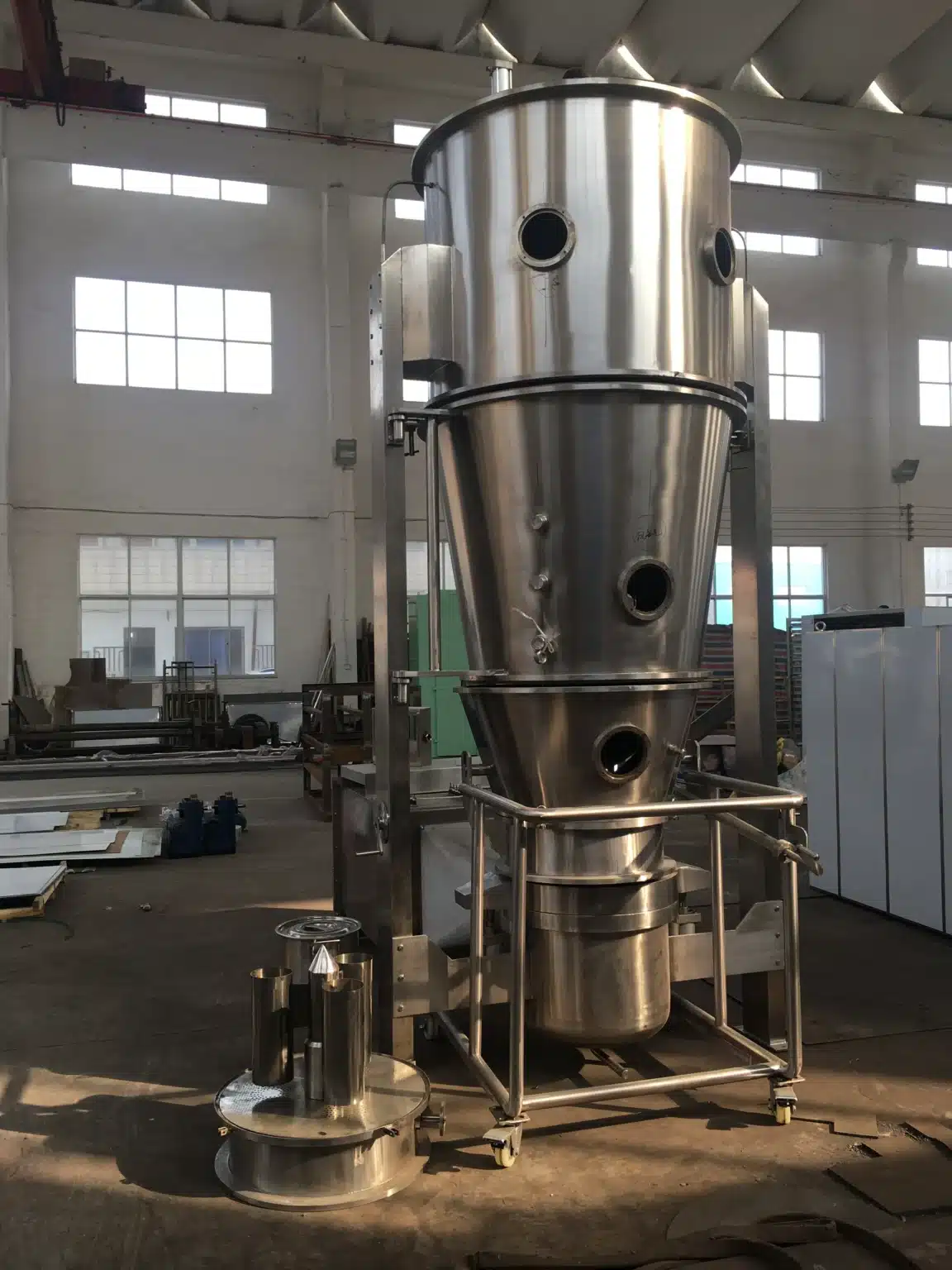
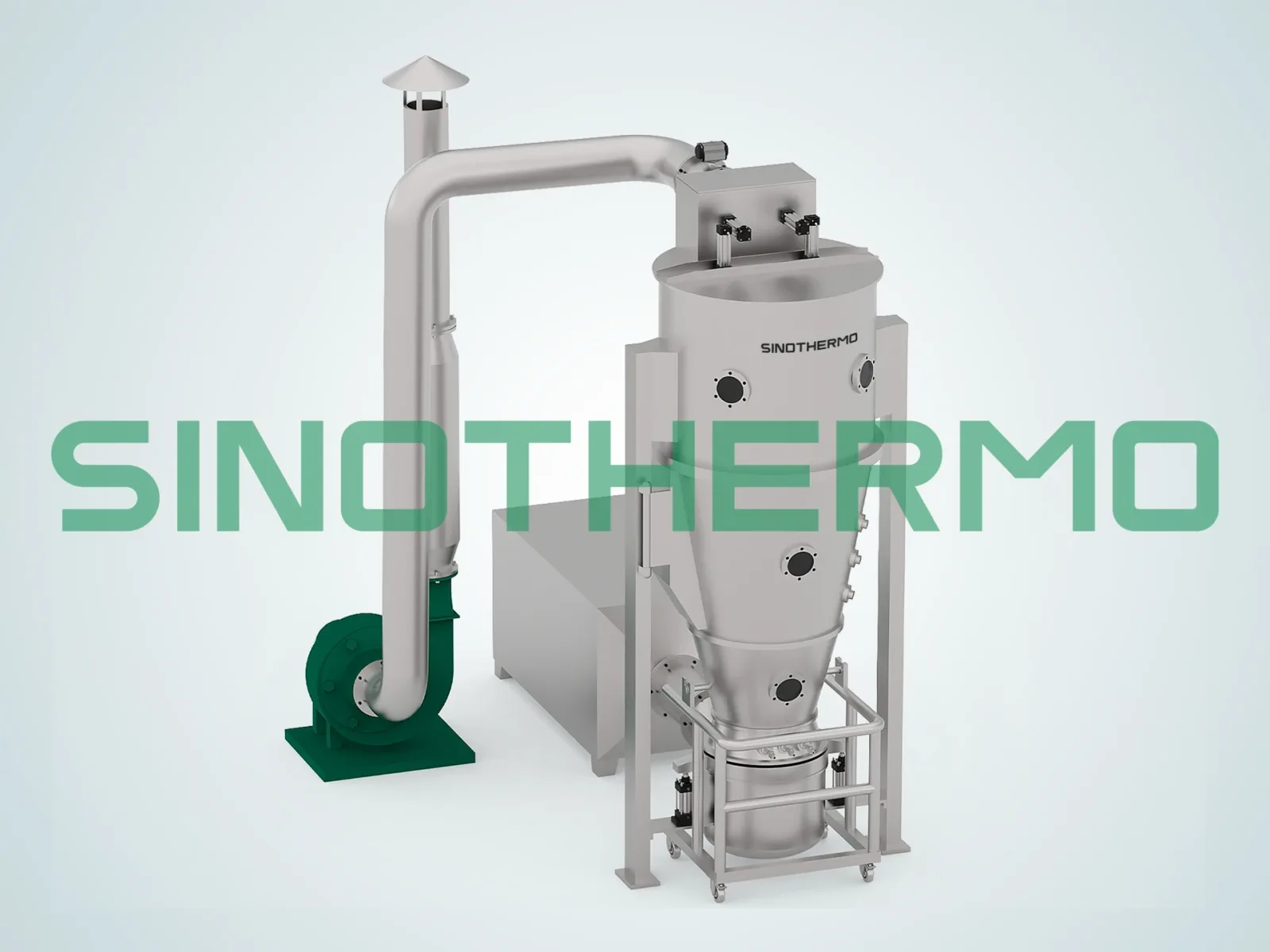
- Inert gas (N₂) suits continuous, high-throughput steps — spray drying, flash drying, fluid-bed drying, rotary calcination — where a gas stream is doing the drying work and you need it to be oxygen-free.
- Vacuum suits batch steps with heat-sensitive or solvent-wet material, where the goal is to lower the boiling point and recover solvent cleanly. A vacuum paddle dryer or vacuum rake dryer is a common choice for final drying of solvent-wet electrode materials and recycled powders.
- Both together is common in practice: inert-gas protection through the continuous front end, vacuum for the final low-moisture polish. For a wider view of the vacuum family, see our vacuum dryer guide.
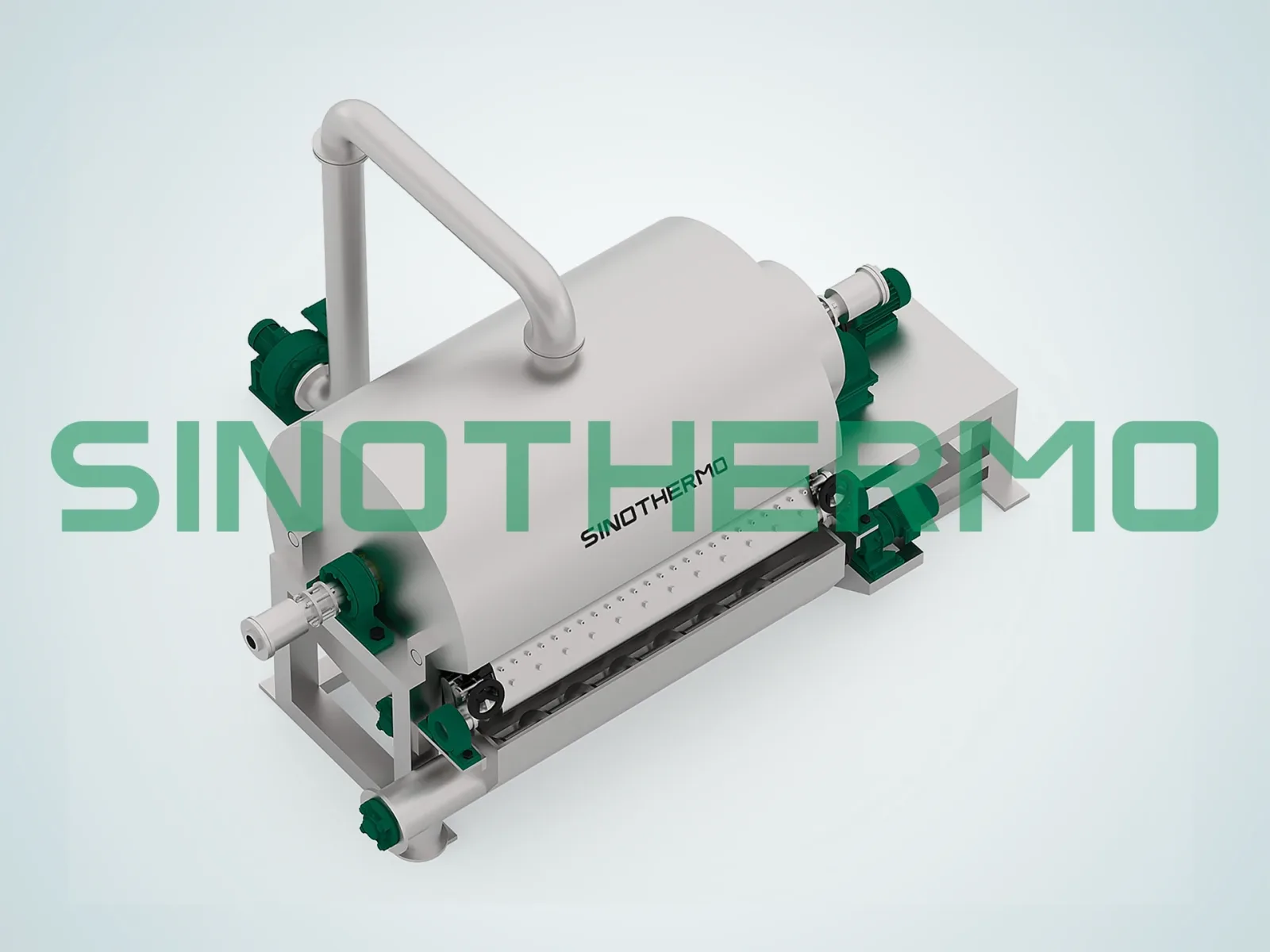
SINOTHERMO builds both routes — from centrifugal spray dryers and rotary kilns for the continuous inert-gas line, to vacuum paddle and rake dryers for the batch end — so the atmosphere strategy can be matched to each step rather than forced onto one machine. For the full equipment map across cathode, anode, and recycling routes, see our battery material drying solutions.
Common mistakes to avoid
- Treating inerting as an add-on to a standard dryer. A machine designed for open-air operation cannot be made gas-tight by adding a nitrogen line. Leak-tightness has to be in the vessel and valve design from the start.
- Sizing the nitrogen supply from steady-state consumption only. Purge-down from air to target oxygen at start-up, and recovery after an upset, both demand far more gas than steady running. Plants that size only for steady state face long start-ups or an undersized supply.
- Specifying an oxygen target without specifying where it is measured. "O₂ < 500 ppm" at the gas inlet and at the chamber outlet are different guarantees. Define the measurement point, and interlock it.
- Assuming inerting removes the need for explosion protection. It reduces risk; it does not discharge the obligation. Venting/suppression and grounding stay in scope.
- Carrying lithium-ion parameters straight over to a new chemistry. Sodium-ion materials, and Prussian Blue Analogs in particular, have different temperature ceilings. Re-validate rather than assume.
- Scaling from a datasheet instead of a trial. Oxidation sensitivity and the safe temperature window are properties of your material. Generic tables do not capture them.
Prove the atmosphere in a pilot trial before you specify
The two numbers that decide whether an inert-gas line performs — the oxygen level your specific material actually needs, and the temperature it tolerates at that oxygen level — cannot be read off a table. They have to be measured on your feed.
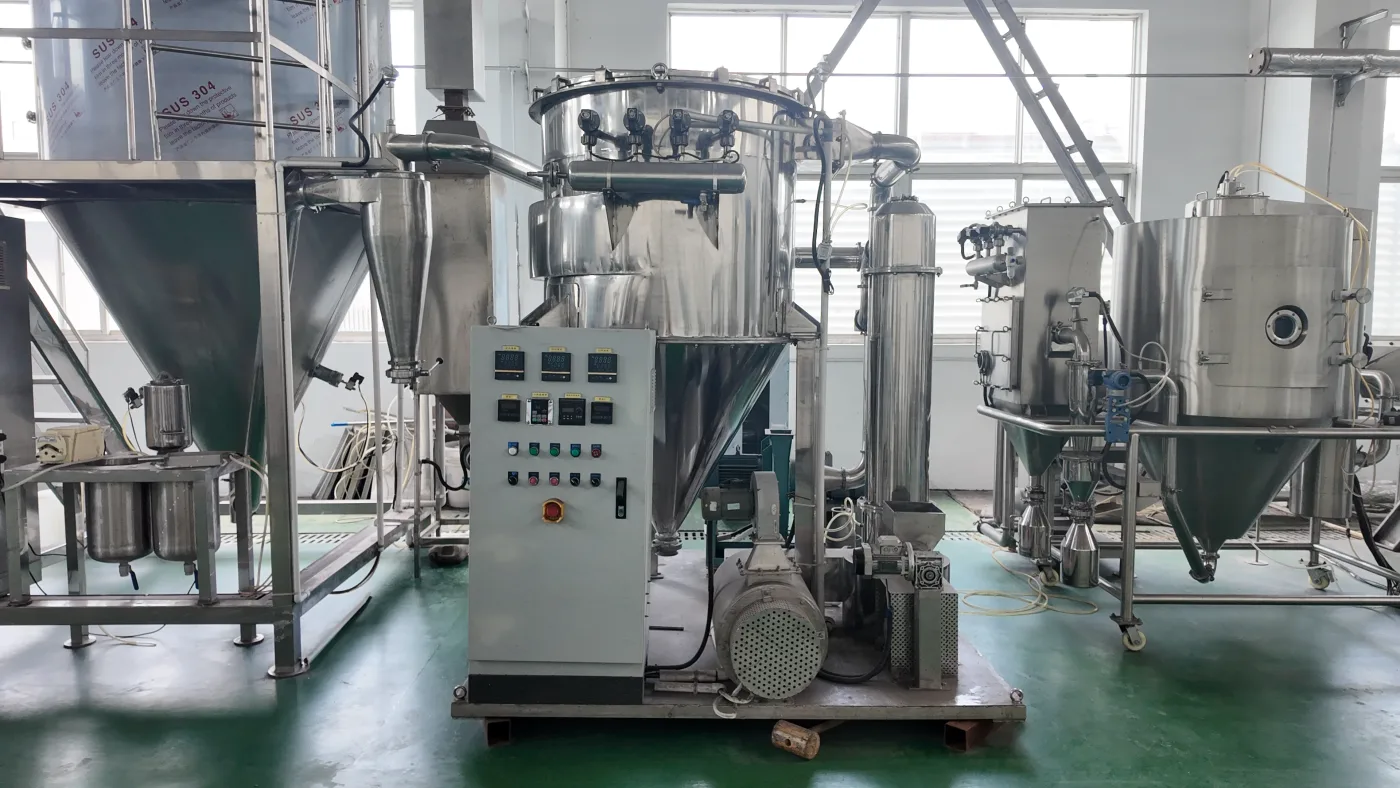
That is why SINOTHERMO runs an in-house pilot laboratory with controlled-atmosphere capability: bring your precursor, coated cathode material, anode powder, or black mass, and trial it before you specify. We measure the drying curve, confirm the oxygen and temperature window, and check how the material behaves at the discharge and handling stages where re-oxidation usually happens. Backed by 20+ years of experience and deep customization, our engineers use that trial data to size the gas loop, the seals, and the separation train correctly the first time.
SINOTHERMO — Process Engineering Infrastructure. We solve the process problem, not just sell a machine.
Conclusion
Inert-gas drying is not a premium feature on a battery-material line — it is the baseline condition that keeps the active material, the carbon coating, and the plant itself intact. Get the oxygen target, the loop design, the seals, and the explosion case right together, and specify all four against your own material rather than a generic figure.
Processing a high-nickel precursor, a carbon-coated cathode, an anode powder, or black mass — and unsure what oxygen level you actually need? Send us a sample: our pilot lab confirms the atmosphere and temperature window so your line is right the first time.
✉️ mark.gu@sinothermo.com · 📱 WhatsApp: +86 180 2197 2660 · 🌐 www.sinothermo.com
SINOTHERMO — Process Engineering Infrastructure.
FAQ
Why do battery materials need to be dried under nitrogen instead of air?
Because many battery materials — high-nickel precursors, carbon-coated cathode materials, graphite, silicon-carbon, and black mass — oxidize or pose a dust-explosion risk when heated in the presence of oxygen. Nitrogen displaces oxygen to prevent both the quality loss and the safety hazard.
What oxygen level is typically required for battery material drying?
Spray-drying circuits commonly target oxygen below 500 ppm, while high-temperature calcination often requires 20–100 ppm, because oxidation rate rises sharply with temperature. The correct figure for a specific material should be confirmed by trial rather than assumed.
Does inert-gas drying replace the need for dust-explosion protection?
No. Inerting reduces oxidation and ignition risk but does not eliminate every ignition pathway, so it is used alongside explosion venting or suppression and anti-static grounding for combustible powders.
Which battery materials are most sensitive to oxidation during drying?
High-nickel NCM/NCA precursors and carbon-coated LFP are particularly sensitive, since both the metal's oxidation state and the conductive carbon coating can be degraded by oxygen at process temperature.
Is nitrogen drying expensive to run?
Cost is manageable when the gas is recirculated in a closed loop rather than vented, so steady-state nitrogen consumption is mainly make-up for leakage. The larger demands are start-up purge-down and recovery after an upset, which should be included when sizing the supply.
Should I use inert gas or vacuum drying for battery materials?
Inert gas suits continuous, high-throughput steps such as spray drying and rotary calcination. Vacuum suits batch steps with heat-sensitive or solvent-wet material where solvent recovery matters. Many production lines use both — inert gas through the continuous front end, vacuum for the final drying stage.

Mark Gu
Passionate about enhancing customer experiences and streamlining operations, Mark focuses on building strong relationships, fostering innovation, and leading teams to achieve exceptional service and efficiency.
Email: mark.gu@sinothermo.com
Phone: +86 18021972660