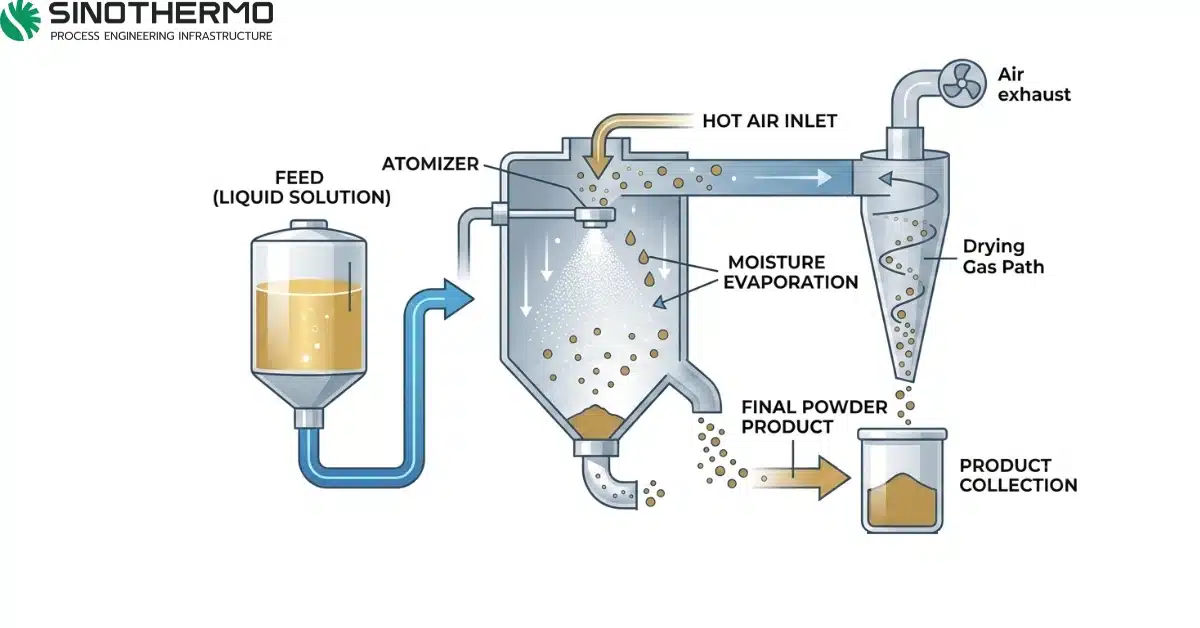
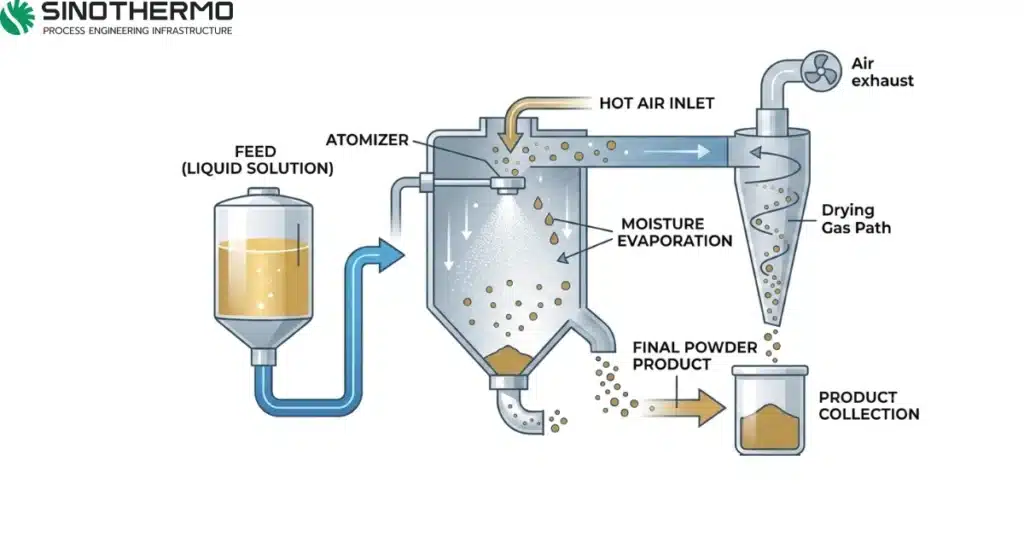
スプレードライは、液体を数百万個の微細な液滴に噴霧し、高温の気流中で瞬時に乾燥させることで、溶液・懸濁液・エマルションを数秒で乾燥粉末に変える技術です。各液滴は表面積が非常に大きく、蒸発によって表面温度が低く保たれるため、スプレードライは極めて高速でありながら、牛乳、コーヒー、酵素、医薬品原薬といった熱に弱い材料にも適用できるほど穏やかなプロセスです。
この「瞬時に乾燥しながらも表面温度は給気温度より大幅に低い」という特性こそが、スプレードライが液体から粉末への変換工程として広く採用されてきた理由です。そして同じ原料であっても、アトマイザー、気流、温度の設定次第で、微細で凝集性のある粉末になるか、粗く自由流動性の高い顆粒になるか、あるいは焦げついた規格外品になるかが変わってくるため、細部の設定が極めて重要になります。本ガイドでは、4つの工程段階を解説し、製品を保護する物理的メカニズムを説明し、気流方式を比較検討したうえで、目標とする粉末仕様を実現するために調整すべきプロセス変数を具体的に示します。機械選定・規模・コストについて購入者視点で解説した記事もあわせてご覧ください:スプレードライヤー機器ガイド。
スプレードライの4つの工程段階
スプレードライヤーは、規模やメーカーを問わず、いずれも同じ4段階のシーケンスで運転されます。各段階を理解することが、「スプレードライはどのように機能するのか」という問いに答える最も効果的な方法であり、また想定通りの粉末が得られなかった場合の原因診断にも役立ちます。
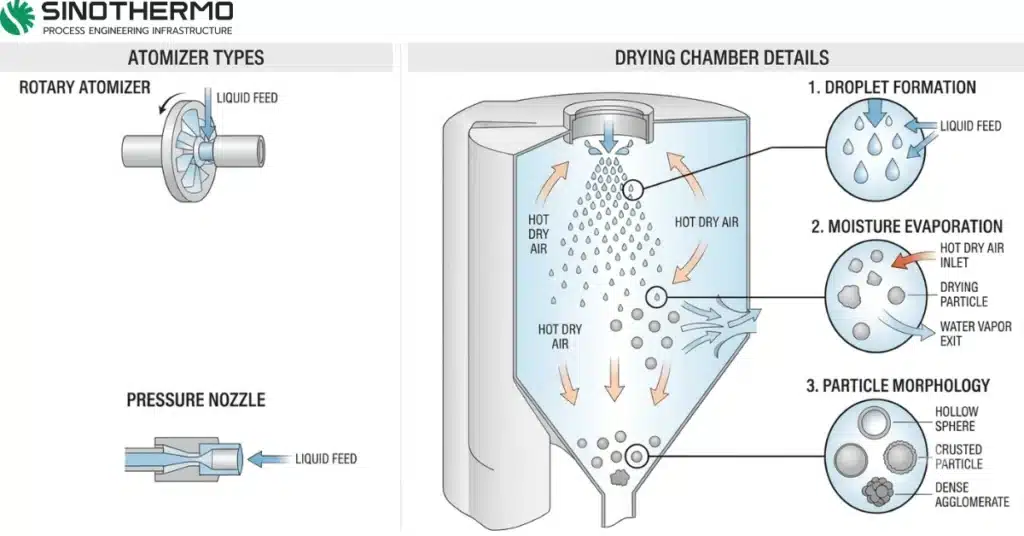
- 1.噴霧(アトマイゼーション)— 液体原料は制御された流量でポンプ供給され、高速回転する遠心(ロータリー)アトマイザーまたは高圧ノズルによって微細な液滴に分散されます。液滴サイズは、全工程の中で最も影響力の大きい変数です。液滴が小さいほど単位質量あたりの表面積が大きくなり、乾燥が速く進み、より微細な粉末が得られます。したがって、液滴が乾燥ゾーンに入る前の段階で、アトマイゼーションが実質的に粒子径分布を決定づけていることになります。高速回転するロータリーディスクは液体を均一で狭い範囲の液滴群にせん断し、圧力ノズルは液体を小さなオリフィスから押し出すことで、より粗く自由流動性の高い液滴を生成します。
- 2.液滴と気流の接触 — 液滴は乾燥チャンバー内で、制御された高温気流に即座に接触します。数百万個の液滴が同時に分散されるため、その合計表面積は非常に大きく、単一のタワー内で数百平方メートルに相当する蒸発表面積を持つこともあります。これにより、熱と水分の移動がほぼ瞬時に行われます。エアディスパーサーの形状と気流の方向(後述)によって、この接触がどれだけ均一かつ穏やかに行われるかが決まります。
- 3.乾燥(蒸発)— 各液滴からの水分蒸発は数秒、場合によっては1秒未満で完了します。この間、蒸発冷却効果によって液滴表面の温度は給気温度よりも大幅に低く保たれます。表面の水分が失われると固体の皮膜が形成され、原料や乾燥速度に応じて、中空の球状粒子、しわのある「レーズン状」の形状、あるいは緻密な固体粒子など、最終的な粒子形態が決まります。
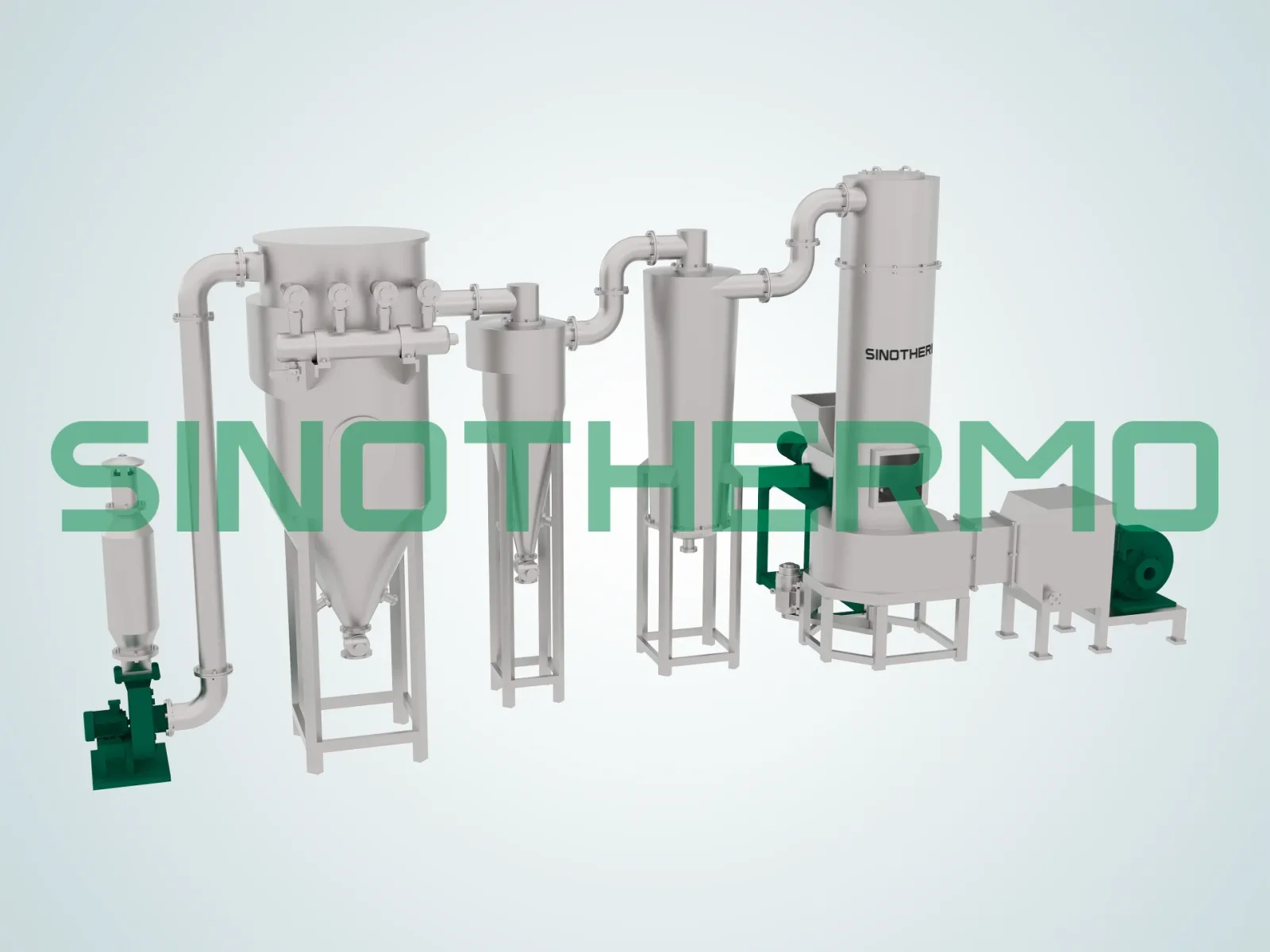
- 4.分離・回収 — 乾燥した粉末は、サイクロン、バグフィルター、あるいはその両方を直列に用いて、湿気を含んだ排気から分離されます。粉末は製品として排出され、使用済みの空気は排出または循環利用されます。ここでの微粉回収は収率に直接影響するため、分離システムは後回しにできる要素ではなく、製品品質を管理するシステムの一部です。
スプレードライが熱に弱い材料を保護する理由
「スプレードライはどのように機能するのか」という質問の次によく聞かれるのが、入口温度が150〜300℃にも達する熱風の流れが、なぜタンパク質やビタミン、香料、医薬品有効成分を“加熱調理”してしまわないのか、という疑問です。その答えは蒸発冷却にあります。液滴に自由水分が残っている限り、熱風から供給されるエネルギーは固形分を加熱するのではなく、その水分を蒸発させるために消費されます。液滴表面は湿球温度計のように振る舞い、周囲の熱風温度よりも数十度低い状態を保ち続けます。
Two factors reinforce this protection. First, residence time in the drying zone is only seconds, so even after the droplet dries and its temperature begins to rise toward the outlet air temperature, there is very little time for thermal degradation. Second, it is the outlet temperature — typically far lower than the inlet — that the finished powder actually experiences, and that outlet value is what a good process engineer controls to protect the product. This is why milk retains its solubility, coffee keeps its aroma, enzymes keep their activity, and inhalable pharmaceutical powders keep their potency after spray drying.
並流方式と混合・逆流方式のエアフロー比較
液滴と熱風がチャンバー内をどの方向に流れるかは、乾燥の穏やかさと残留水分の両方に影響を与える最大の要因の一つです。
| 気流方式 | 仕組み | 最適な用途 | トレードオフ |
|---|---|---|---|
| 並流式 | 空気と液滴が同方向に流れ、最も高温の空気が最も湿った液滴と接触し、最も乾いた粉末が最も低温の空気と接触する | 熱に敏感な食品・医薬品 — 牛乳、コーヒー、酵素、原薬(API) | 最も穏やかな方式だが、残留水分がわずかに高くなる場合がある |
| 対向流式 | 空気と液滴が逆方向に流れ、最も乾いた粉末が最も高温の空気と接触する | 粗粒で熱的に安定した粉末(一部の洗剤、セラミックスなど) | 残留水分は低くなるが、排出付近で粉末が高温の空気にさらされる |
| 混合流式 | 両方式を組み合わせ、コンパクトな塔内で噴水状ノズルを用いることが多い | 設置スペースが限られる場合の粗粒製品 | 熱への暴露は中間的だが、流動パターンはより複雑になる |
スプレードライに関する問い合わせの大半を占める海外の食品・医薬品エンジニアにとって、並流方式は熱による品質低下を最小限に抑えられるため標準的な選択肢となっています。一方、向流方式や混合流方式は、原料の耐熱性が高く、最終水分をできるだけ絞り切ることを優先する場合に指定されます。
最終的な粉末の品質を決定する要因とは?
スプレードライが好まれる理由は、粉末の仕様を自在に調整できる点にあります。どのつまみがどの特性を制御しているかを理解すれば、出てきたものをそのまま受け入れるのではなく、目標に向けて設計することができます。主な関係性は以下の通りです。
- Atomization (disc speed or nozzle pressure) → particle size. Higher rotary speed or higher nozzle pressure → smaller droplets → finer powder.
- Feed concentration (solids content) → particle size and bulk density. Higher solids generally give larger, denser particles and improve energy efficiency, but raise viscosity.
- Inlet/outlet temperature → residual moisture and product temperature. Outlet temperature is the primary control for final moisture; inlet temperature and airflow set the drying rate.
- Airflow pattern → heat exposure for sensitive products (see the table above).
- Feed viscosity and surfactants → droplet formation and particle morphology (hollow vs solid).
A useful mental model: atomization and feed set what the particle is, while temperature and airflow set how gently it gets there. Get both sides right and the same tower can make everything from an ultrafine inhalation powder to a coarse instant-beverage granule.
スプレードライヤーの用途
スプレードライは、原理上ポンプで送液できる液体であればほぼすべて粉末化できるため、非常に幅広い業界で採用されています。代表的な用途は以下の通りです。
- 食品:粉乳、インスタントコーヒー、フレーバー、植物性タンパク質、ココナッツミルクパウダー、卵粉
- 医薬品:原薬(API)、添加剤、吸入用粉末、封入活性成分、非晶質分散体
- 化学品:触媒、セラミックス、染料、顔料、洗剤
- 新エネルギー:リチウムイオン電池の正極材料および前駆体材料。球形形状と粒度分布の厳密な制御が重要となる分野
お使いの原料がこのリストに含まれていない場合でも、それこそがパイロット試験によって明らかになる点です — 詳細は下記のプロセスエンジニアリングのセクションをご覧ください。スプレードライ以外の乾燥技術全般については、産業用乾燥設備ガイドで対流式・伝導式・真空式の各方式を比較しています。
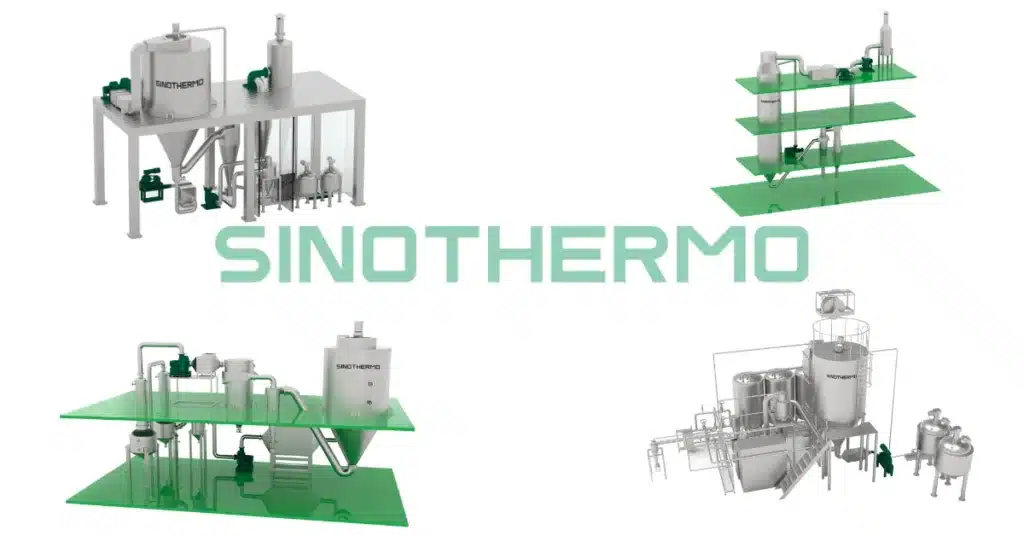
スプレードライヤーの種類(クイックリファレンス)
| 種類 | アトマイザー | 最適な用途 | SINOTHERMOシリーズ |
|---|---|---|---|
| 遠心式(ロータリー) | 高速回転ディスク | 微細で均一な粉末;原料の変動にも強い | 遠心式スプレードライヤー(LPG) |
| 加圧ノズル式 | 高圧ノズル | 粗めで流動性の良い顆粒 | 加圧式スプレードライヤー(YPG) |
| 二段式/エキス用 | ノズル+一体型流動層 | 熱に敏感なエキス;高スループット | エキス用スプレードライヤー(ZLPG) |
溶剤の回収が必要な場合や雰囲気を不活性に保つ必要がある場合には、密閉循環スプレードライヤーが乾燥ガスを密閉した窒素循環ループ内で運転します。原料がポンプ送液可能な液体ではなくペーストやフィルターケーキである場合、スプレードライは適した手法ではありません — そのような場合はスピンフラッシュ乾燥機または気流式乾燥機が対応します。また、スプレードライ後の粉末の水分がわずかに目標値を上回る場合は、後段の流動層乾燥機による仕上げ乾燥が標準的な第二段の処理となります。
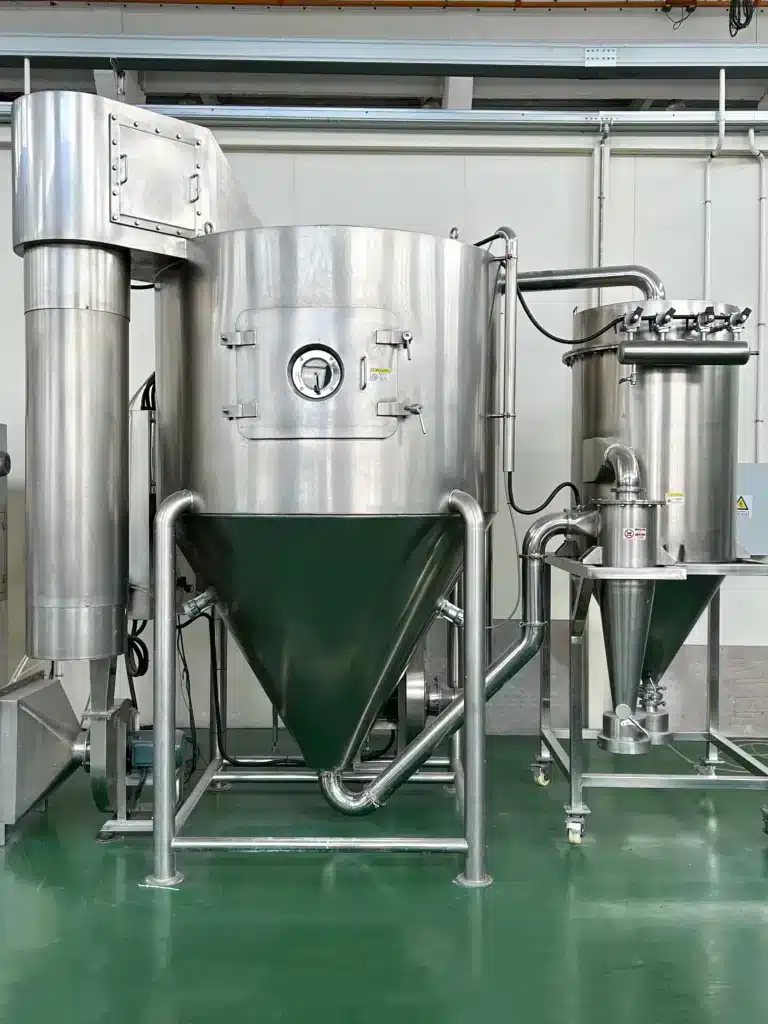
避けるべき一般的な誤り
優れた設計のスプレードライヤーであっても、プロセス設定が誤っていれば期待する結果は得られません。スプレードライに不慣れなエンジニアによく見られる誤りは次の通りです。
- 出口温度をやみくもに低く設定してしまう。出口温度が低すぎると、粉末が湿った状態でタワーから排出され、凝集しやすくなり、壁面に付着し、保管中に固結します。出口温度は、単に低ければよいというものではなく、原料のガラス転移点や粘着性挙動に合わせて設定する必要があります。
- 供給液の固形分濃度を軽視する。希薄な原料を送液すると、あらかじめ安価に除去できたはずの水分(蒸発濃縮や膜濃縮など)をエネルギーをかけて蒸発させることになり無駄が生じ、さらに粒子が細かく密度の低い粉末になってしまいます。粘度が許す範囲でできるだけ原料を濃縮してからスプレーすることが重要です。
- 分離システムの容量不足。サイクロン単体では微粉が漏出しやすく、収率の低下や排出物の問題を引き起こします。微細または高価値な粉末の場合、通常はサイクロンの後段にバグフィルターが必要です。
- 壁面への付着や粘着性の問題を見落とす。非晶質の糖類や一部のエキスは、狭い温度帯で粘着性を持つようになります。これは処方およびプロセス上の課題であり、マルトデキストリンなどのキャリア剤の使用、エアブルームや冷却壁構造の採用、出口温度の精密な制御などによって対応できます。
- パイロット試験を省略する。データシートのみに基づいて実機スケールのタワーを仕様決定することは、最も高くつく誤りです。液滴の乾燥挙動、形態、粘着性は原料の化学的性質だけから予測することが難しく、実際に測定する必要があります。
実験室から生産現場へ:プロセスエンジニアリングのステップ
「この液体はスプライ乾燥できるはず」という段階から「この乾燥塔で規格通りの粉末をトン単位で安定生産できる」という段階までのギャップを埋めるのが、パイロット試験です。ここが、SINOTHERMOがカタログ販売業者と一線を画す点です。SINOTHERMO — プロセスエンジニアリング・インフラストラクチャー。私たちは単に機械を販売するのではなく、プロセスの課題そのものを解決します。
お客様の原料を弊社の自社パイロット実験室に持ち込んでいただければ、仕様確定前に実際に試験を行います。実際の原料フィードを噴霧し、入口・出口温度を調整しながらスキャンし、並流方式と混合流方式を比較検証し、実際に得られる粉末——粒子径、かさ密度、残留水分、流動性、収率——を測定します。20年以上の経験を持つ弊社エンジニアが、これらのパイロット試験の結果を、想定ではなく実証済みのパラメータを備えた量産塔へと落とし込みます。高いカスタマイズ性により、アトマイザー、加熱源、構成材質(304と316L)、気流構成、二次乾燥工程のすべてが、標準機種ではなくお客様の原料に合わせて specified されます。
結論
では、スプレードライ(噴霧乾燥)はどのように機能するのでしょうか。液体は数百万個の微小な液滴に噴霧され、チャンバー内で熱風と接触し、数秒で乾燥粉末へと蒸発します。この際、蒸発冷却作用によって固形分は保護され、その後粉末は分離・回収されます——4つの工程からなり、目標とする粉末特性に到達させるため、各工程を細かく調整できます。
物理的な原理は共通していますが、成果を左右するのはお客様固有の原料に合わせてパラメータを最適化できるかどうかです。お客様の液体がスプレードライに適しているか、あるいはどのような粉末が得られるか、まだわからない場合は——原料を弊社にお送りください。パイロット実験室で実証いたします。実際の数値データをもとに、機械導入をご検討いただけます。
✉️ mark.gu@sinothermo.com · 🌐 www.sinothermo.com
SINOTHERMO — プロセスエンジニアリング・インフラストラクチャー。
FAQ
スプレードライ(噴霧乾燥)の仕組みを簡単に教えてください。
液体は微細な液滴として噴霧され、その液滴が熱風と接触することで、水分は数秒以内に蒸発します。生成された乾燥粉末は空気から分離され、最終製品として回収されます。
スプレードライ(噴霧乾燥)の4つの工程とは何ですか。
噴霧(アトマイゼーション)、液滴と空気の接触、乾燥(蒸発)、分離・回収の4工程です。噴霧によって粒子径が決まり、空気との接触によって急速な熱・水分の移動が起こり、蒸発によって水分が除去され、サイクロンまたはバグフィルターによって粉末が回収されます。
スプレードライ(噴霧乾燥)が熱に敏感な製品を損なわないのはなぜですか。
液滴が水分を保持している間は、蒸発によって表面が冷却されるため、製品温度は高温の入口空気温度よりもはるかに低く保たれます。完成した粉末が経験するのは、それよりもさらに低い出口温度のみであり、全体の処理は数秒で完了します。そのため、タンパク質、ビタミン、香味成分、医薬品有効成分などが損なわれることなく保持されます。
並流方式と対向流方式のスプレードライ(噴霧乾燥)の違いは何ですか。
並流方式では、空気と液滴が同じ方向に流れるため、最も高温の空気が最も水分を多く含む液滴と接触します——これは最も穏やかな方式であり、熱に敏感な食品・医薬品分野の標準となっています。対向流方式は、より低い残留水分を達成できますが、完成した粉末がより高温の空気にさらされることになります。
最終的な粉末特性を決定する要因は何ですか。
主に4つの変数が関係します。噴霧方式(ディスク回転速度またはノズル圧力)が粒子径を決定し、原料フィードの固形分濃度が粒子径とかさ密度を決定し、入口・出口温度が残留水分と製品温度を決定し、気流パターンが熱に敏感な製品への熱暴露を決定します。
スプレードライ(噴霧乾燥)で製造される製品にはどのようなものがありますか。
粉乳、インスタントコーヒー、香味成分、植物性タンパク質、医薬品有効成分および吸入用粉末、触媒、セラミックス、染料、洗剤、リチウムイオン電池の正極材料および前駆体材料などです。
自社の液体がスプレードライ(噴霧乾燥)に適しているかどうかを知るには、どうすればよいですか。
確実な方法は、パイロット試験を実施することです。SINOTHERMOの自社パイロット実験室では、お客様の実際の原料を用いて噴霧を行い、温度と風量をテストし、粒子径・水分・密度・収率といった実際の粉体の特性を測定します。これらのデータを踏まえてから、初めて本格的な設備の仕様を決定します。

Mark Gu
Passionate about enhancing customer experiences and streamlining operations, Mark focuses on building strong relationships, fostering innovation, and leading teams to achieve exceptional service and efficiency.
メールアドレス: mark.gu@sinothermo.com
電話: +86 18021972660