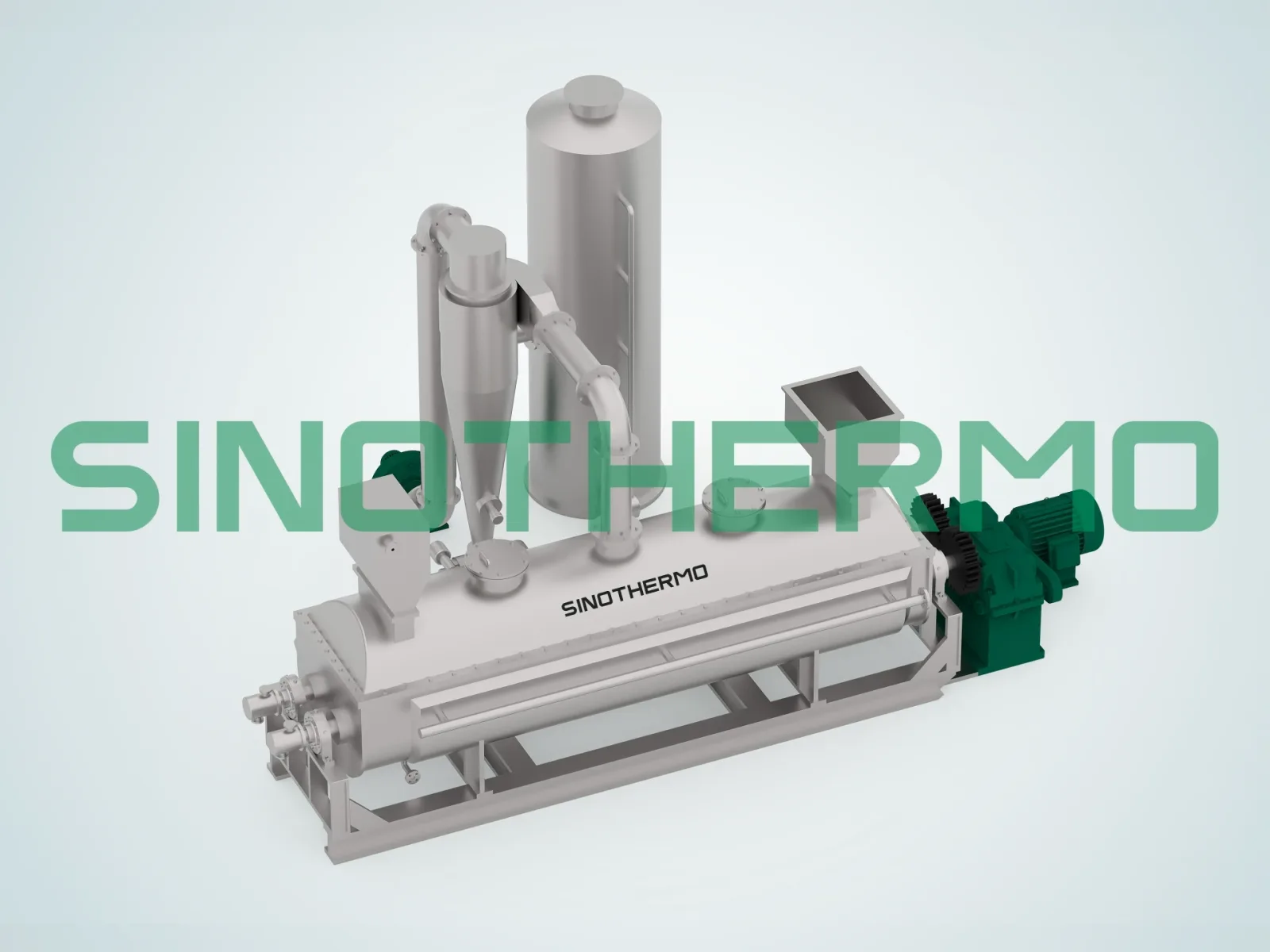
Black mass — the mixed cathode, anode and carbon powder left after spent lithium-ion batteries are discharged, shredded and separated — reaches the dryer wet with residual electrolyte solvent and moisture, while being combustible, electrically conductive and chemically reactive all at once. That is why black mass drying is never simply a moisture-removal step: the same machine has to recover flammable solvent, hold an oxygen-poor atmosphere, contain a conductive fine powder, and hand the downstream metal-recovery plant a stable, free-flowing material.
Get one of those wrong and the consequence is not a slow batch. It is a solvent stream you paid for and then vented, a deflagration in a dust collector, an off-gas excursion that puts the permit at risk, or a caked product that will not discharge. This guide covers what makes black mass a distinct drying problem, why vacuum with indirect heating became the default answer, how the solvent recovery train is actually built, and the specification mistakes that usually surface only at commissioning.
What black mass actually is — and why it is not an ordinary powder
Recycling lines discharge, shred and mechanically separate spent cells and production scrap. Casings, foils, separator film and plastics are removed; what falls through is black mass — a fine, dark powder containing cathode active material, graphite or other anode carbon, binder residue, and traces of the metals and polymers that survived separation.
Four properties make it behave unlike a generic industrial powder:
- It is solvent-wet, not just water-wet. The residual electrolyte carries organic carbonate solvents. Their volatility spans a wide range — commonly cited atmospheric boiling points run from roughly 90 °C for dimethyl carbonate through to well over 200 °C for ethylene carbonate. A single drying temperature will not treat them equally.
- It is combustible and electrically conductive. Carbon-rich fines are a recognised dust-explosion hazard, and conductivity affects how filters, cyclones and collectors must be bonded and grounded.
- It can be chemically reactive. Depending on how thoroughly cells were discharged and how the electrolyte salt has aged, black mass can contain species that react with moisture or self-heat. Fluorinated salt residues in particular are known to hydrolyse in the presence of water and generate corrosive, hazardous decomposition products.
- It is heterogeneous, and it changes. Feedstock composition varies with cell chemistry, state of charge, shredding route and separation efficiency — batch to batch, and season to season as the scrap mix shifts.
That last point is the one specification engineers underestimate. A dryer sized on one campaign's black mass may be feeding a noticeably different material six months later.
The 6 controls a black mass drying step must deliver
1. Remove moisture and residual electrolyte solvent
The target is not a moisture number alone. Residual carbonate solvent left in the powder keeps the material flammable, keeps it off-spec for storage and transport, and follows it into downstream processing. The drying step has to strip both the water and the organics, which is harder than it sounds because the two evaporate under different conditions.
2. Recover the solvent, do not vent it
Evaporated carbonate solvent has both cost value and regulatory weight. A closed, evacuated system routes vapour to a condenser and a receiver instead of to atmosphere. This is the single biggest reason the industry converged on vacuum drying rather than a hot-air route: an open-air dryer dilutes the solvent into a large gas stream, and diluted solvent is far harder — and more expensive — to condense back out.
3. Keep oxygen out
Nitrogen inerting and vacuum both work by denying the ignition triangle its oxidiser. Most black mass installations use both: vacuum for the evaporation duty, N₂ for purging, for breaking vacuum, and for blanketing the discharge and packing stages. The reasoning behind oxygen targets across battery-material processing is covered in our guide to inert-gas drying for battery materials.
4. Design the explosion case for conductive fines
Combustible dust protection is standard practice for carbon powders. Conductivity adds a second problem: it changes how dust collectors, filter media and bonding are specified, because conductive dust bridges and holds charge differently from an insulating powder. Explosion venting or suppression, inert atmosphere, and continuous bonding and grounding of every vessel, chute and collector are complementary — not alternatives.
5. Treat the off-gas
Non-condensable off-gas from black mass drying can carry light organics and, depending on feed condition, acidic or fluorinated species. Scrubbing before release is common practice, and the scrubber medium has to match what the analysis actually finds rather than what the generic flowsheet assumed. Emission limits and permit conditions are site- and jurisdiction-specific; treat any figure in a vendor proposal as provisional until your own off-gas analysis confirms it.
6. Deliver a product the next step can actually use
Downstream leaching, refining or resale all care about handling behaviour, not just dryness. Over-dried, over-agitated black mass generates more airborne fines. Under-dried black mass cakes on the discharge valve and blocks the big-bag station. The right endpoint is the one that suits the next unit operation, and it is a process decision rather than a machine setting.
Why vacuum with indirect heating is the default route
Black mass drying runs almost universally under vacuum with indirect (conductive) heating — heat transferred through a jacketed vessel wall, hollow paddles or heated discs, rather than by blowing hot gas through the powder. Four reasons stack up:
Lower evaporation temperature. Vacuum reduces the boiling point of every component in the wet cake. Higher-boiling carbonates that would need aggressive heat at atmospheric pressure come off at moderate jacket temperature, which matters because black mass contains species that are better not pushed to high temperature.
Solvent that is easy to condense. With little or no carrier gas, the vapour leaving the dryer is mostly solvent and water. That concentrated stream condenses efficiently. Contrast this with a direct hot-air machine such as a rotary drum dryer, which is excellent for bulk water removal from inert minerals but disperses solvent into a very large exhaust volume — the wrong physics for a recovery duty.
A naturally closed envelope. A vessel already built to hold vacuum is already built to keep air out and vapour in. Inerting and solvent containment come from the same design work rather than from bolt-on measures.
Gentle, controllable agitation. Indirect dryers move the powder to renew the heat-transfer surface, not to fluidise it. Less dispersion means less airborne conductive dust inside the machine.
For a broader view of the vacuum family and how the machine types differ, see our industrial vacuum dryer guide.
The solvent recovery train, component by component
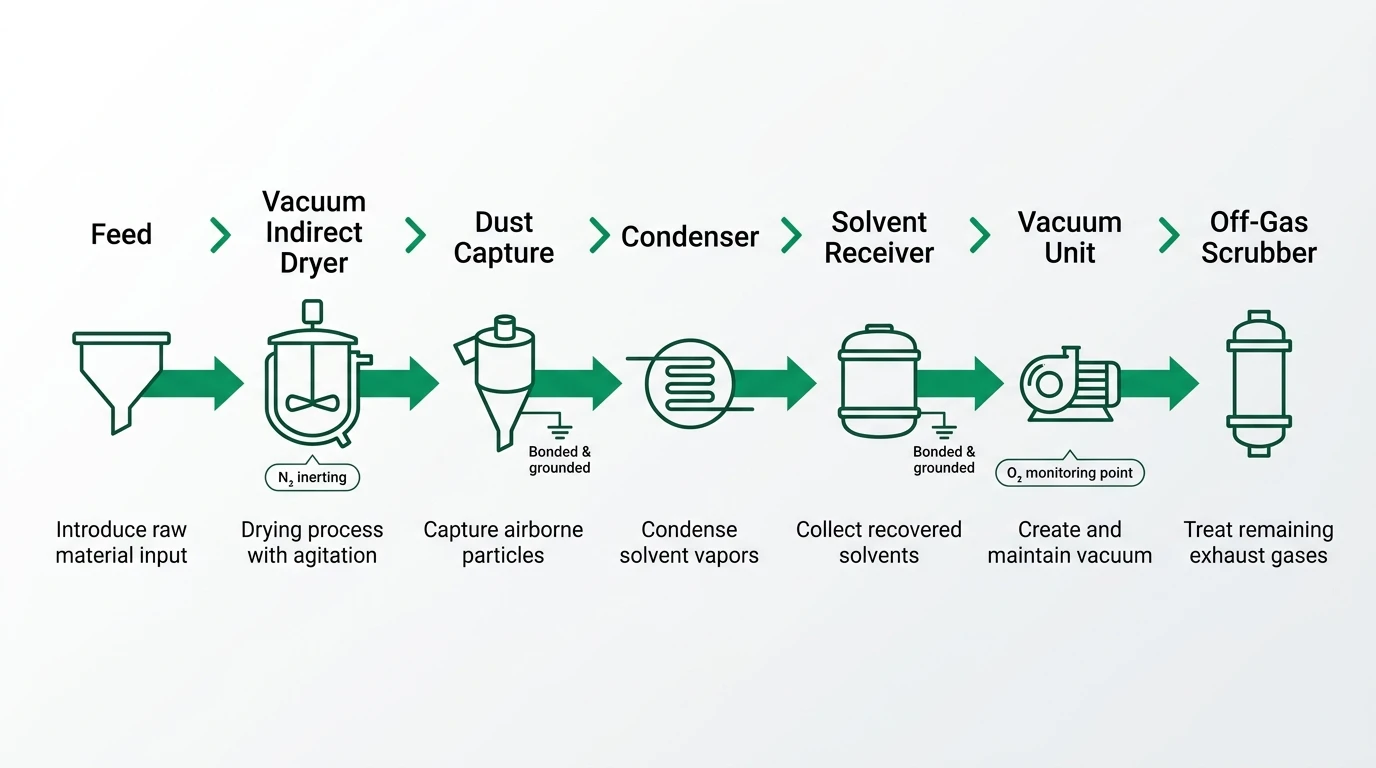
The dryer is only the first item on the list. A black mass line that actually recovers solvent needs the whole train sized together:
- Dust capture ahead of the condenser. Fines carried over into a condenser foul the surface and contaminate the recovered solvent. An internal filter or an external dust separator sits between the dryer and the condenser, and on a conductive powder it is bonded and grounded like every other item.
- Condenser sized for the real vapour load. The duty is set by the peak evaporation rate, not the batch average. Early in a batch, when free solvent is still present, vapour flow can be several times the mean — a condenser sized on averages simply passes solvent through to the vacuum pump.
- A receiver with the right materials of construction. Recovered condensate is a mixture of carbonates and water, potentially with acidic decomposition products. Material selection follows the analysis.
- A vacuum system that tolerates solvent. Liquid-ring, dry screw and steam-ejector systems each behave differently with condensable organic loads. The choice affects seal-fluid handling, service intervals and how much solvent ends up where you did not want it.
- Off-gas treatment on the non-condensables. Whatever the condenser does not catch still has to be handled.
The recurring failure is a well-specified dryer bolted to an undersized recovery train. The machine hits its moisture spec, and the solvent recovery rate quietly disappoints.
Equipment options and where each one fits
| Equipment type | Where it fits in black mass processing | Watch-outs |
|---|---|---|
| Vacuum paddle dryer | The common first choice — hollow-paddle indirect heating, continuous agitation, handles pasty and caking feed through the sticky phase | Agitation power rises sharply in the sticky phase; drive and shaft seals must be specified for it |
| Vacuum rake dryer | Batch drying of filter-cake-like black mass; robust, well-proven for solvent-wet cakes | Batch cycle time governs plant throughput; size against the slowest expected feed |
| Vacuum horizontal disc dryer | High heat-transfer area per unit volume where footprint is constrained | More internal surface also means more surface to clean between campaigns |
| Double cone rotary vacuum dryer | Gentle tumbling for batch loads where solvent recovery and low attrition both matter | Lower shear means less help breaking up agglomerates |
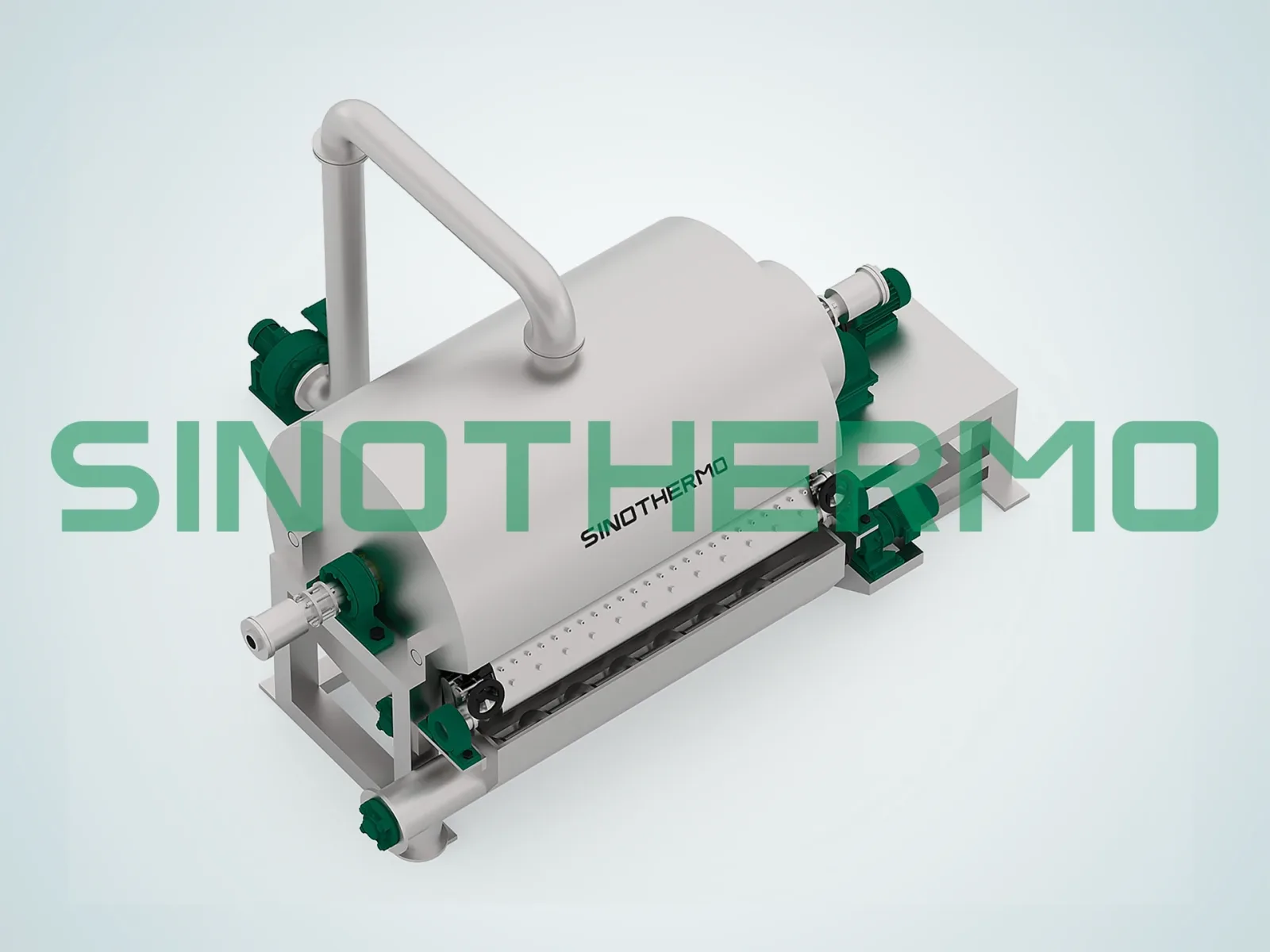
| Rotary kiln | Higher-temperature inert thermal treatment where a process route calls for removing binder or organics beyond simple drying | A different unit operation with a different safety case — not a substitute for the vacuum drying step |
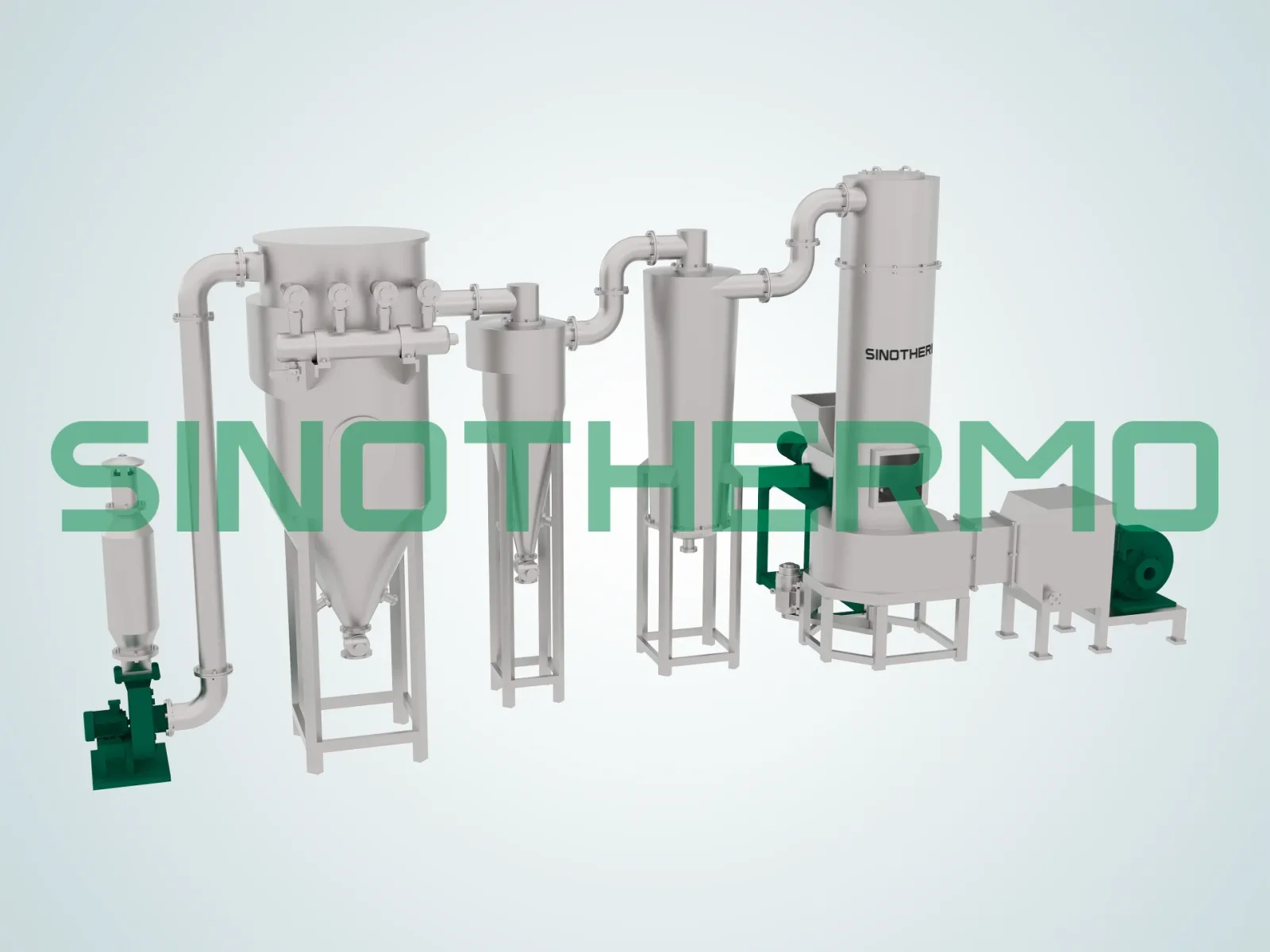
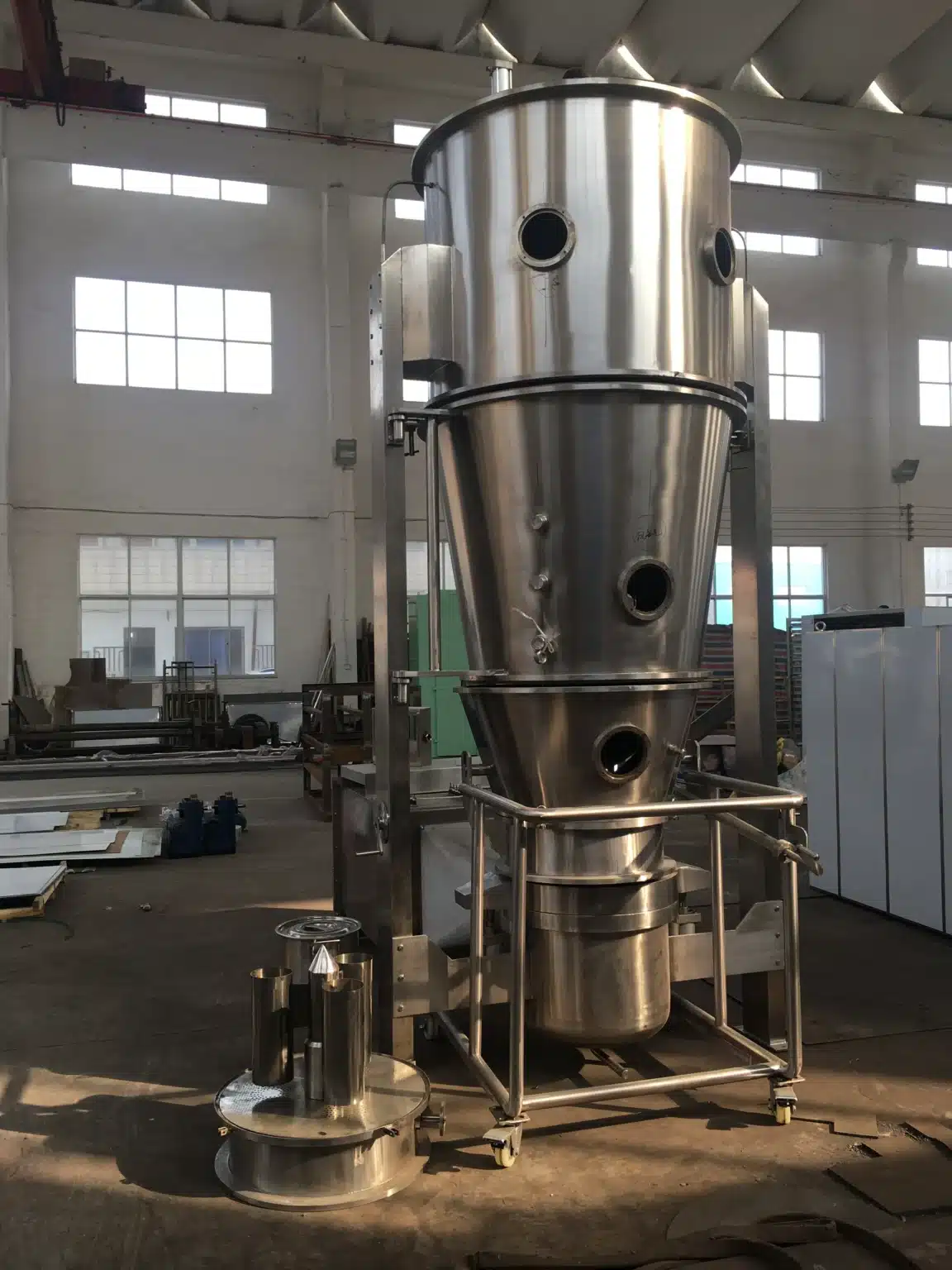
| Pneumatic dryer / vibrating fluid-bed dryer | Closed-loop inert-gas polishing or cooling of already-dry powder in some continuous flowsheets | Gas-dispersion machines on combustible conductive fines require a full inerting and explosion-protection case |
The paddle and disc families are compared in detail in our paddle and disc dryer guide, and the general selection logic in how to choose an industrial dryer.
Equipment referenced above: vacuum paddle dryer, vacuum rake dryer, vacuum horizontal disc dryer, double cone rotary vacuum dryer, rotary kiln, pneumatic dryer, and horizontal vibrating fluidized bed dryer.
Batch or continuous? The selection logic
Batch — rake, double-cone and most paddle installations — suits variable feedstock, moderate tonnage, and any operation that must keep material traceable by campaign. Recycling lines fed from mixed scrap streams usually fall here, because batch integrity is also how you keep an assay meaningful.
Continuous makes sense once feed composition is stable and tonnage is high enough that batch turnaround dominates the schedule. The trade-off is that a continuous vacuum system needs gas-tight feed and discharge under differential pressure, which is a harder mechanical problem than a batch charge-and-discharge cycle.
In practice the deciding questions are: how consistent is your feed, do you need batch-level traceability for assay and offtake, and is your bottleneck the drying rate or the changeover? These are answered with trial data, not with a catalogue.
Where black mass drying sits in the recycling chain
Spent cells and scrap → discharge and shredding → mechanical separation → drying with solvent recovery (this step) → hydrometallurgical leaching, refining or sale as a black mass product.
The drying step is what turns a hazardous, solvent-wet, variable intermediate into a material that can be safely stored, weighed, assayed, transported and sold. It is also where the electrolyte solvent is either captured as a recovered stream or lost as an emission — which is why it deserves more engineering attention than its position in the flowsheet suggests. Upstream, the same discipline applies to virgin material: see our notes on lithium carbonate and hydroxide drying and LFP precursor drying and calcination. The full equipment map across cathode, anode and recycling routes is on our battery material drying solutions page.
Common mistakes to avoid
- Specifying the dryer and treating the condenser as an accessory. Solvent recovery rate is set by the recovery train, not by the dryer nameplate. Size the condenser on the peak vapour load early in the batch, not the batch average — this is the most common reason a line meets its moisture spec and misses its recovery target.
- Assuming one temperature strips every solvent. The residual electrolyte is a mixture with a wide volatility spread. A single set point tuned on the light fractions leaves the heavy ones behind, and the residual only shows up in the product analysis.
- Treating inerting as a substitute for explosion protection. Nitrogen reduces ignition risk; it does not discharge the obligation. Venting or suppression, bonding and grounding, and ignition-source control stay in scope — and conductive dust changes how the collector and filter media are specified.
- Sizing on a single feedstock sample. Black mass composition moves with cell chemistry, state of charge, shredding route and separation efficiency. A machine sized on one favourable campaign will struggle when the scrap mix shifts.
- Under-scoping the off-gas. Non-condensables can carry light organics and, depending on feed condition, acidic species. Deciding the scrubber after the dryer is ordered is how projects acquire an unbudgeted line item and a permit delay.
- Copying parameters from a different recycler. Two plants with the same nominal feedstock can have very different drying curves, sticky-phase behaviour and solvent split. Those are properties of your material and your upstream process, not of the category.
Prove it on your own material before you specify
Three numbers decide whether a black mass drying line performs: the drying curve of your actual feed, the point at which it passes through the sticky phase and how much torque that costs, and the split between water and each solvent fraction in the vapour. None of them can be read off a table, and all three change the machine you should buy.
That is why SINOTHERMO runs an in-house pilot laboratory: bring your black mass, filter cake or recycling intermediate and trial it before you commit to a specification. We measure the drying curve under vacuum, observe the sticky-phase behaviour that governs agitator design, and characterise the condensate so the recovery train is sized on evidence rather than assumption. Backed by 20+ years of experience in industrial drying and deep customisation capability, our engineers turn that trial data into a dryer, condenser, vacuum system and off-gas train that work together the first time — not three separately optimised items that meet at site. You can see how trials are run on our testing lab page.
SINOTHERMO — Process Engineering Infrastructure. We solve the process problem, not just sell a machine.
Conclusion
Black mass drying is a four-way problem wearing the costume of a one-way problem. Moisture removal is the visible duty; solvent recovery, atmosphere control, explosion protection and off-gas treatment are the ones that decide whether the installation is economic and permittable. Vacuum with indirect heating is the default route because it solves several of those at once — but only if the condenser, the vacuum system and the off-gas train are engineered alongside the dryer rather than after it.
Commissioning a black mass line, or fixing a solvent recovery rate that never met the proposal? Send us a sample: our pilot lab measures the drying curve and the condensate split on your actual material, so the whole train is sized correctly the first time. Or simply get in touch with your feedstock analysis and target throughput.
✉️ mark.gu@sinothermo.com · 📱 WhatsApp: +86 180 2197 2660 · 🌐 www.sinothermo.com
SINOTHERMO — Process Engineering Infrastructure.
FAQ
Why does black mass drying need solvent recovery and not just moisture removal?
Because black mass from shredded lithium-ion batteries carries residual electrolyte solvent as well as water. Those organic carbonates are flammable and regulated, so capturing them in a condenser has both cost value and environmental value, and it also removes the flammability that would otherwise follow the powder into storage and transport.
Why is vacuum drying with indirect heating the standard route for black mass?
Vacuum lowers the boiling point of both the water and the residual solvents, so evaporation happens at moderate jacket temperature. Because there is little or no carrier gas, the vapour leaving the dryer is concentrated and condenses efficiently, whereas a direct hot-air dryer dilutes the same solvent into a very large exhaust stream that is far harder to recover from.
Is black mass dangerous to dry?
It requires a proper safety case. Black mass is a combustible and electrically conductive fine powder that can also contain moisture-reactive residues, so installations normally combine explosion venting or suppression, continuous bonding and grounding of all equipment, inert-gas atmosphere control, and off-gas treatment, with the specifics set by the site's own hazard assessment.
What equipment is used to dry black mass?
Vacuum paddle dryers, vacuum rake dryers, vacuum horizontal disc dryers and double cone rotary vacuum dryers are the usual choices, all operating under vacuum with indirect heating, a dust separator, a condenser sized for the peak vapour load, and appropriate explosion protection. Higher-temperature inert thermal treatment in a rotary kiln is a different unit operation, used only where the process route calls for it.
Does black mass drying off-gas need treatment?
Usually yes. The non-condensable fraction can carry light organics and, depending on the feed condition, acidic or fluorinated species, so scrubbing before release is common practice. The scrubber medium should be selected from an actual off-gas analysis, and emission limits are site- and jurisdiction-specific.
How dry does black mass need to be?
There is no universal figure. The endpoint is set by what happens next — storage and transport requirements, the buyer's specification if the material is sold, and the tolerance of the downstream leaching or refining step. Over-drying generates more airborne fines and wastes energy, while under-drying causes caking at discharge, so the target should be established on your own material rather than copied from another plant.

Mark Gu
Passionate about enhancing customer experiences and streamlining operations, Mark focuses on building strong relationships, fostering innovation, and leading teams to achieve exceptional service and efficiency.
Email: mark.gu@sinothermo.com
Phone: +86 18021972660